How Much an Abyssinian Should Weigh at Its Frame
Many Abyssinian owners find themselves staring at their cat, wondering if that sleek, athletic build is truly healthy, or if their energetic companion might be a little too lean or, heaven forbid, carrying an extra ounce or two. It's a common worry, especially with a breed known for its boundless energy and often deceptive appearance. This guide is here to walk you through exactly how to assess your Abyssinian's ideal weight, not just by numbers on a scale, but by understanding their unique body structure and how to feel for their healthy frame.
Understanding the Abyssinian Physique: Built for Action, Not for Bulk
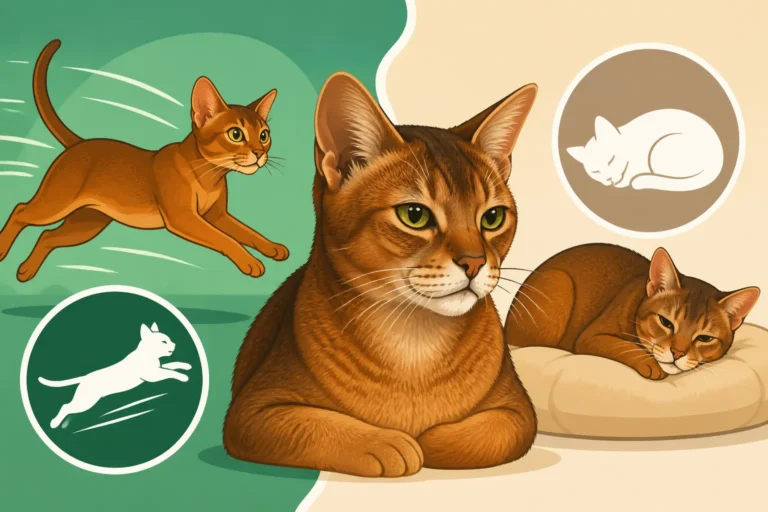
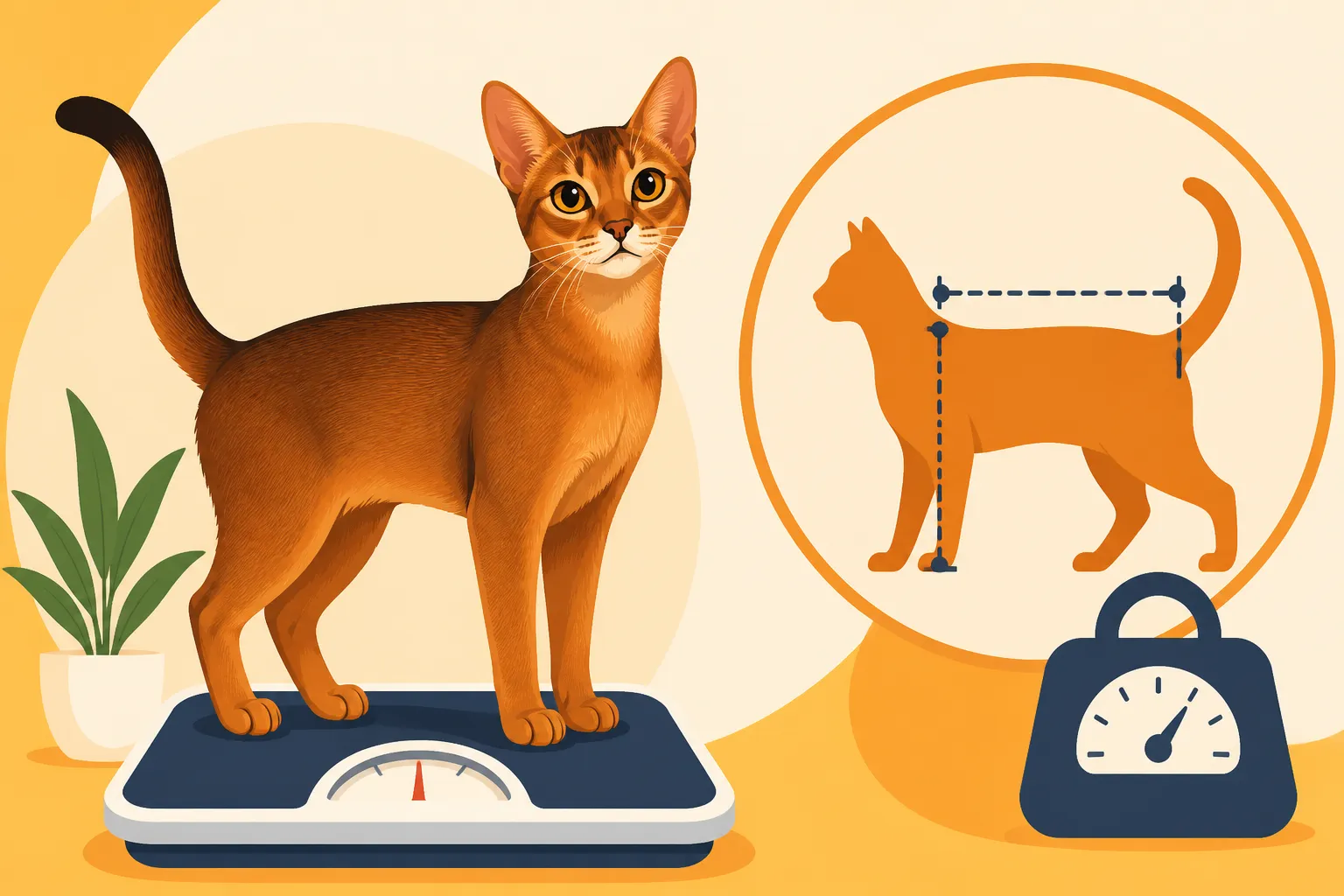
The Abyssinian is often described as a "medium-sized" cat, but that description can be incredibly misleading if you're picturing the stocky build of some other popular breeds. These cats are not built for bulk; they are athletes, pure and simple. Their physique is one of elegant power and agility, designed for jumping, climbing, and exploring every nook and cranny of your home. When you look at an Abyssinian, you should see lean muscle, a lithe body, and a gracefully arched neck.
Their short, ticked coat also contributes to this lean appearance. Unlike cats with dense undercoats or long, flowing fur, there's no fluff to hide what's underneath. This means you get a very clear view of their body condition, which can sometimes make them appear thinner than a cat of the same weight but with a more voluminous coat. Their deep chest and slender legs further emphasize this athletic build. It's easy to look at a healthy Abyssinian and think they might be underweight if you're used to the more rounded forms of breeds like Persians or even some domestic shorthairs. But for an Aby, that svelte outline is exactly what you want to see. They are creatures of motion, and their bodies reflect that active lifestyle.
More Than Just the Scale: Typical Weight Ranges for Abyssinians
While a scale can give you a number, that number alone doesn't tell the whole story for an Abyssinian. Just like people, cats come in different frames. A lanky male with a larger bone structure will naturally weigh more than a petite female, even if both are at their ideal body condition. The goal isn't to hit a specific number, but to maintain a healthy range that supports their energetic lifestyle and overall well-being.
Generally speaking, an adult male Abyssinian might weigh anywhere from 8 to 12 pounds (approximately 3.6 to 5.4 kg), while an adult female Abyssinian typically falls into the 6 to 9 pound (approximately 2.7 to 4.1 kg) range. However, these are just averages, and there can be healthy exceptions on either side. It’s far more important to understand the visual and tactile cues of a healthy Abyssinian than to fixate on a strict weight figure. What an Abyssinian should weigh at one year old can give you a baseline, but their frame matures, and their weight might fluctuate slightly based on activity levels, age, and individual metabolism.
To illustrate these variations and what to look for, here's a table outlining general guidelines for Abyssinian weight and what a healthy body condition generally means. Remember, these are approximations, and your vet remains the best source for personalized advice.
| Abyssinian Sex | Average Weight Range | Body Condition Description (Ideal) |
|---|---|---|
| Male | 8-12 lbs (3.6-5.4 kg) | Lean, muscular, ribs easily felt with slight fat cover, visible waist. |
| Female | 6-9 lbs (2.7-4.1 kg) | Sleek, athletic, ribs easily felt with slight fat cover, visible waist. |
It's also worth noting that their weight often remains quite stable once they reach maturity, usually around 12 to 18 months. Significant changes after this point warrant attention.
The Hands-On Approach: Body Condition Scoring for Your Abyssinian
This is where the real assessment happens, and it’s something you can (and should) do regularly at home. Because an Abyssinian's coat is so short and close-lying, it's actually easier to assess their body condition by feel than it might be for a long-haired breed. You're essentially looking for a balance between muscle, bone structure, and a minimal fat layer.
The goal is to learn how to read an Abyssinian's body condition through that coat. The most reliable method is through a process called Body Condition Scoring (BCS), which involves both visual inspection and tactile examination.
Feeling for Ribs and Spine
When you run your hands along your Abyssinian's sides, you should be able to easily feel their ribs. They shouldn't be sharply protruding, like feeling a washboard, but rather like feeling the knuckles of your hand with a thin layer of skin over them. There should be a slight, palpable layer of muscle and fat over the ribs. If you can't feel the ribs at all without pressing, your Aby is likely carrying too much weight. Conversely, if the ribs feel very distinct and sharp with no cushioning, they might be too lean. Learning how to feel an Abyssinian's ribs under a ticked coat is a skill that comes with practice.
Similarly, as you gently run your hand along their spine, you should be able to feel the individual bumps of the vertebrae without them feeling like sharp points. Again, a thin layer of muscle and fat should cover them. If the spine feels prominent and bony, it’s a sign of being underweight. If you can’t easily distinguish the vertebrae, they might be overweight.
Assessing the Waistline and Abdomen
Another key area to check is their waist. When you look down at your Abyssinian from above, you should see a clear "tuck" or indentation behind their ribs, before their hips. This is their waistline. A visible waist indicates a healthy body condition. If your Aby looks more like a straight cylinder from ribs to hips, or if the sides bulge out, they are likely overweight. You can also feel an Abyssinian's waist under its coat by gently palpating the area.
From the side, their abdomen should also tuck up slightly, rather than hanging down. There shouldn't be a prominent "belly flap" unless they are an older, spayed female who might have developed a small primordial pouch, which is normal. However, if that pouch feels full of fat rather than just skin, it’s a sign of excess weight. A healthy Abyssinian's abdominal area should appear tight and fit.
Consistency is key. By regularly feeling these areas, you'll get a very accurate sense of your individual Abyssinian's ideal condition, which is much more valuable than any generalized weight chart.
When Weight Becomes a Warning Sign: Recognizing Changes and Seeking Help
Any significant change in your Abyssinian's weight – either loss or gain – warrants attention. These cats are incredibly adept at hiding illness, so a change in their physical condition can often be the first real indicator that something is amiss.
Unexplained Weight Loss: A Serious Concern
If you notice your Abyssinian losing weight, especially if they are still eating, it's never something to shrug off. Why an Abyssinian's weight loss is never minor is because their metabolism is so high, and they are naturally lean. Rapid or unexplained weight loss can be a symptom of various underlying health issues, ranging from dental problems (making eating painful) to more serious conditions like hyperthyroidism, kidney disease, or even certain cancers. These conditions can cause them to burn through calories faster than they can consume them, or simply reduce their appetite. How fast an Abyssinian drops weight when ill can be quite alarming, given their already slender build.
You might notice a dulling of their coat, a loss of muscle mass over their hindquarters, or that their spine and ribs become much more prominent. They might also show subtle behavioral changes, like being a little less enthusiastic about play or seeking more warmth. If you suspect weight loss, a prompt visit to your veterinarian is crucial for diagnosis and treatment. Early intervention can make a significant difference in outcomes for many conditions.
Weight Gain: Addressing the Risks of Obesity
While less common in the typically high-energy Abyssinian, weight gain can still occur, especially if their activity levels drop as they age, or if their diet isn't properly managed. Why an Abyssinian should never be allowed to get heavy is because, even a few extra pounds on their lithe frame can put undue stress on their joints, contribute to conditions like diabetes, and increase the risk during anesthesia if they ever need surgery. It also just makes it harder for them to do what they love – jump, climb, and play!
If your Abyssinian starts to gain weight, first review their diet. Are they getting too many treats? Is their portion size appropriate for their activity level? Remember, how many calories an adult Abyssinian burns is significant, but it can still be outpaced by overfeeding. Consider switching to a puzzle feeder to slow down eating and provide mental enrichment. Increasing playtime can also help.
The Importance of Regular Vet Check-ups and Preventative Care
Regardless of whether your Abyssinian's weight is stable or fluctuating, regular veterinary check-ups are paramount. Your vet can perform a professional body condition assessment, weigh your cat accurately, and discuss any concerns you have. They can also run routine bloodwork, which can catch many underlying health issues before they become severe, potentially explaining any weight changes.
Investing in a good pet insurance plan, such as one from Healthy Paws, can also provide peace of mind. Should your Abyssinian develop a condition causing weight changes—be it kidney disease, hyperthyroidism, or an injury that limits activity—the costs of diagnostics, treatments, and ongoing care can quickly add up. A robust plan can help you focus on your cat's health rather than worrying about the financial burden, especially when considering the significant costs associated with long-term conditions. Being proactive about their health, both through home observation and professional medical care, ensures your active Abyssinian can continue to thrive at their ideal weight and live a long, happy life.
Disclaimer
This article is intended for informational purposes only and does not constitute veterinary advice. Always consult with a qualified veterinarian for any health concerns or before making any decisions about your pet's health or treatment.