Why Abyssinian Carrier Rates for PK Are So High
It can be incredibly disheartening to learn that a breed you adore, like the Abyssinian, carries a genetic predisposition to certain health issues. Many Abyssinian owners and prospective parents are often left wondering why a disease like Pyruvate Kinase Deficiency (PKD) has such high carrier rates within the breed, making the search for a truly "clear" kitten feel like an uphill battle. This guide aims to pull back the curtain on the historical and genetic factors contributing to these high carrier numbers and offer insight into how responsible breeding practices are working to manage it.
Understanding Pyruvate Kinase Deficiency in Abyssinians
Pyruvate Kinase Deficiency (PKD) is one of those frustrating, inherited health conditions that can genuinely impact an Abyssinian's quality of life. Unlike some vague genetic predispositions, PKD is a specific genetic mutation that directly affects the red blood cells, which are absolutely vital for oxygen transport throughout the body.
What is Pyruvate Kinase Deficiency (PKD)?
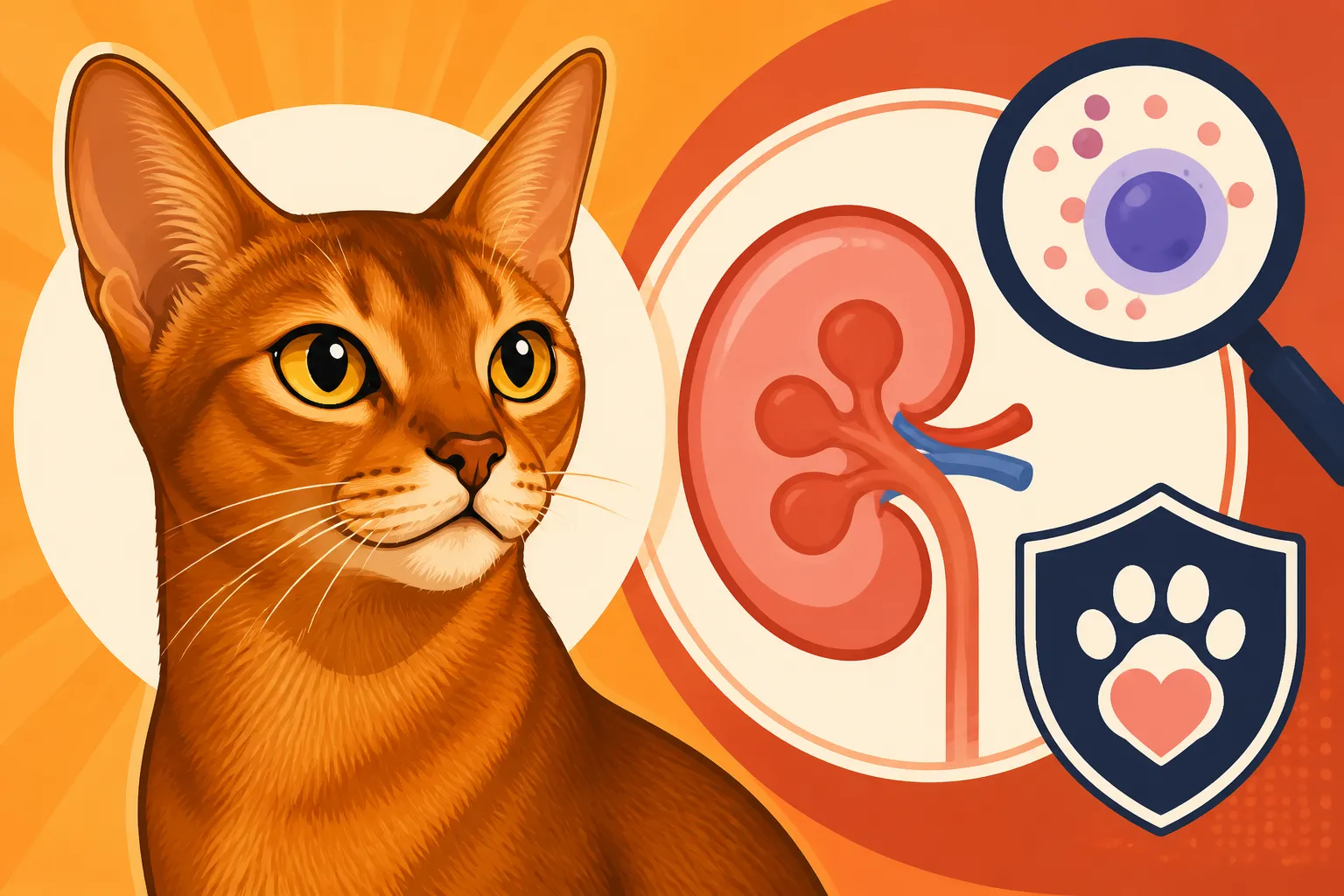
At its core, PKD is a metabolic disorder caused by a defective gene that fails to produce a functional enzyme called pyruvate kinase. This enzyme plays a crucial role in glycolysis, a process that provides energy to red blood cells. Think of it like a tiny, indispensable engine part. When this enzyme isn't working correctly, or isn't present in sufficient quantities, the red blood cells become fragile and have a much shorter lifespan than they should. Instead of circulating happily for months, they break down prematurely, leading to a type of anemia known as hemolytic anemia.
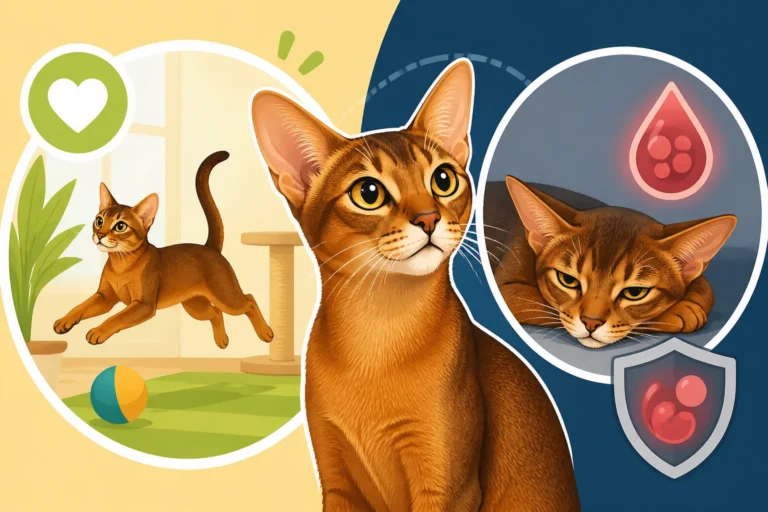
For an Abyssinian, this can manifest in various ways, from mild, intermittent fatigue to severe, life-threatening crises. It’s not just a subtle thing; it can genuinely make a cat feel unwell, making them lethargic, weak, and sometimes even showing visible signs of jaundice. Understanding what PK Deficiency does to an Abyssinian's red cells is key to grasping the seriousness of this condition, even if you only encounter a carrier.
How PKD is Inherited Autosomal Recessive
The inheritance pattern of PKD is autosomal recessive. This means an Abyssinian must inherit two copies of the defective gene – one from each parent – to actually develop the disease. If a cat inherits only one copy of the defective gene and one normal gene, it won't show any symptoms of the disease itself. These cats are called carriers. They are perfectly healthy, live normal lives, and you'd never know they harbored the gene without a specific DNA test.
Here's where the problem of high carrier rates really begins. When two carriers are bred together, there's a 25% chance that each kitten in the litter will inherit two defective genes and therefore be affected by PKD. There's a 50% chance they'll be a carrier like their parents, and only a 25% chance they'll be completely clear of the gene. This ratio is why testing is so incredibly important, because carriers are the silent spreaders. They look and act entirely normal, but they carry the potential to pass on a serious health issue.
The Silent Spread: Why Carrier Rates Soared
The high carrier rates for Pyruvate Kinase Deficiency in the Abyssinian breed aren't some recent anomaly. They are a complex result of the breed's history, popularity, and the unfortunate timing of genetic testing availability. It’s a classic case of what happens when a genetic predisposition exists within a breed and isn't actively managed.
Early Breeding Practices and Lack of Testing
Before the development of modern genetic tests, particularly the DNA test for PK Deficiency that became widely available around the early 2000s, breeders simply had no way of knowing if their beloved cats were carriers. They could only observe if a cat developed symptoms. Since carriers appear perfectly healthy, countless magnificent Abyssinian cats, including many highly sought-after show champions, were unknowingly carrying and passing on the defective gene through generations.
Imagine a stunning male Abyssinian, let's call him "King Leo," with a perfect coat, beautiful conformation, and an incredible personality. He wins all the ribbons, becomes a top stud, and sires dozens of litters with various queens. What nobody knew at the time was that King Leo was a carrier for PKD. Each time he was bred, half of his kittens would likely also be carriers, silently propagating the gene further into the breed's gene pool. This widespread use of popular, untested lines acted like a genetic super-spreader event, inadvertently embedding the gene deeply within the breed. It wasn't malice, but a lack of knowledge that truly set the stage for the high carrier rates we see today.
The Founder Effect and Breed Bottlenecks
The genetic history of the Abyssinian breed itself also played a significant role. Like many purebred cats, Abyssinians originated from a relatively small number of founding cats. This is known as the "founder effect." When a small group forms the basis of an entire breed, any genetic mutations present in those original founders – even recessive ones – become disproportionately common within the future generations. It's like starting a new population with a limited deck of cards; if a certain card is common in that initial deck, it will likely remain common.
Furthermore, the Abyssinian breed faced severe population bottlenecks at various points in its history. For instance, the two World Wars devastated many European cat breeds, including the Abyssinian. British Abyssinian lines nearly died out, as did many others. To rebuild the breed, breeders often had to rely on a very limited number of surviving cats, effectively concentrating any existing genetic issues. When American breeders stepped in to help revive the breed, they too worked with a restricted gene pool, further cementing these genetic predispositions. This reduction in genetic diversity, while necessary for the breed's survival, unfortunately meant that the PK Deficiency gene, already present, became even more widespread as breeders worked to bring the numbers back up.
The Mechanics of Abyssinian PK Deficiency and Its Carrier State
Understanding the high carrier rates of Pyruvate Kinase Deficiency (PKD) in Abyssinians means diving a bit deeper into the genetic nuts and bolts. It's not just about a "bad gene," but about how that gene behaves and how we identify its presence.
Identifying a Carrier vs. an Affected Abyssinian
This is where the term "carrier" can sometimes be confusing for new owners. A carrier Abyssinian is, by all outward appearances, a completely healthy cat. They don't show any signs of anemia, lethargy, or other symptoms associated with PKD. They have one normal copy of the PKLR gene, which is enough for their red blood cells to function properly. This is why the condition went undetected for so long in the breeding population. It's only through genetic testing that their carrier status is revealed.
An affected Abyssinian, on the other hand, inherits two copies of the faulty gene and will develop the disease. The severity and onset of symptoms can vary, but generally, affected cats experience chronic to intermittent anemia due to the premature destruction of their red blood cells. Symptoms might include lethargy, exercise intolerance, pale gums, weight loss, and sometimes jaundice (yellowing of the skin or eyes). Recognizing how a carrier Abyssinian differs from an affected one is crucial for both breeders and pet owners. For instance, if you notice your otherwise energetic Abyssinian becoming unusually quiet or their gums look paler than usual, it's a definite red flag that warrants an immediate vet visit.
The PKLR Gene Mutation
The specific gene responsible for Pyruvate Kinase Deficiency in Abyssinians, as well as in Somalis and some domestic shorthairs, is the PKLR gene. This gene provides instructions for making the pyruvate kinase enzyme. The mutation common in Abyssinians is a specific single nucleotide polymorphism (SNP) within this gene. This tiny change in the DNA sequence is enough to disrupt the enzyme's structure and function, leading to the problems we see.
The amazing thing about modern veterinary science is that we can now pinpoint this exact mutation. The genetic test for PKD specifically looks for this altered sequence in a cat's DNA. It's not looking for the disease itself, but for the genetic potential for the disease or the carrier status. This test, often part of the Abyssinian's DNA panel, provides a definitive answer: "Clear" (two normal genes), "Carrier" (one normal, one faulty gene), or "Affected" (two faulty genes). This direct genetic testing means no more guesswork and offers a clear path forward for responsible breeding and informed pet ownership. Understanding how the PKLR mutation reaches an Abyssinian helps demystify the inheritance pattern.
The Impact of High Carrier Rates on the Breed
The prevalence of Pyruvate Kinase Deficiency carriers within the Abyssinian breed presents a unique set of challenges and responsibilities for everyone involved, from dedicated breeders to loving pet owners. It's not just a genetic footnote; it directly influences breeding decisions and potentially impacts the health outlook for many kittens.
Challenges for Responsible Breeders
For a responsible Abyssinian breeder, a high carrier rate for a genetic disease like PKD creates a significant dilemma. On one hand, the ultimate goal is to eliminate serious genetic diseases from the breed. On the other hand, indiscriminately removing all carriers from the breeding pool could severely deplete the breed's overall genetic diversity. Many carriers might possess other highly desirable traits, such as excellent temperament, outstanding conformation, or rare and beautiful colors, that are vital to the breed's health and future. If these carriers are removed, those valuable genetic contributions could be lost forever, potentially leading to new, unforeseen genetic problems due to a shrinking gene pool.
Therefore, breeders must walk a fine line. The accepted strategy is to not breed two carriers together. This prevents the birth of affected kittens. Instead, carriers are carefully bred to "clear" cats (those with two normal copies of the gene). When a carrier is bred to a clear cat, statistically, half the litter will be clear and half will be carriers, but none will be affected. This allows breeders to slowly "breed out" the defective gene over generations, gradually reducing its frequency in the population, while still preserving important genetic diversity. It requires meticulous record-keeping and a deep understanding of pedigrees, ensuring that every breeding decision is made with the long-term health of the breed in mind. This thoughtful approach ensures that Pyruvate Kinase Deficiency is the Abyssinian's best known test and is utilized effectively.
Implications for Pet Owners
For pet owners, understanding the high carrier rates means being an informed consumer. When acquiring an Abyssinian kitten, it's absolutely essential to inquire about the genetic testing status of both parents. A reputable breeder will always be transparent and provide documentation for the PK Deficiency test results for both the sire and dam. Even if your kitten is destined to be a beloved pet and never bred, knowing its genetic status for PKD provides peace of mind. A "clear" kitten means you don't have to worry about this specific disease. A "carrier" kitten is also perfectly fine as a pet, as they will never develop PKD themselves. The important thing is just knowing.
However, if, by some unfortunate circumstance, you unknowingly acquire an affected kitten, or perhaps an older rescue, the implications are much more serious. Affected Abyssinians will require lifelong veterinary care to manage their anemia. This could involve regular blood tests to monitor red blood cell counts, special diets, medications, and in severe cases, even blood transfusions. These treatments can be costly and ongoing. This is where comprehensive pet insurance, such as a plan from Healthy Paws, can be an absolute lifesaesaver, helping to cover the often significant expenses associated with managing chronic conditions like PKD in an affected cat. It's wise to consider pet insurance well before any symptoms arise.
Genetic Testing and Managing PK Deficiency
Given the high carrier rates and the potential severity of Pyruvate Kinase Deficiency, proactive genetic testing is not just a recommendation; it's an ethical imperative for Abyssinian breeders and a crucial piece of information for future pet parents.
How DNA Testing Works
Thankfully, getting an Abyssinian tested for PK Deficiency is incredibly straightforward and non-invasive. The most common method involves a simple cheek swab. A small brush or sterile cotton swab is gently rubbed inside the cat's mouth against the cheek to collect epithelial cells, which contain their DNA. This sample is then sent to a specialized veterinary genetics laboratory.
Labs like Optimal Selection, for example, offer comprehensive genetic panels that include testing for PKD. The DNA is extracted from the cells, and technicians look specifically for the known mutation in the PKLR gene. The results typically come back within a few weeks and will clearly state one of three possible outcomes:
- N/N (Clear): The cat has two normal copies of the gene and will not develop PKD, nor will it pass the mutated gene to its offspring.
- N/K (Carrier): The cat has one normal copy and one mutated copy of the gene. It will not develop PKD, but it can pass the mutated gene to its offspring.
- K/K (Affected): The cat has two mutated copies of the gene and is expected to develop PKD.
This clear, definitive information allows breeders to make informed pairing decisions and provides pet owners with a full understanding of their cat's genetic health. Knowing how to read an Abyssinian's normal test result or any other result empowers you to understand your cat's health outlook.
Ethical Breeding and Future of the Breed
The ultimate goal for ethical Abyssinian breeders is to reduce the frequency of the PK Deficiency gene in the breed's gene pool without sacrificing overall genetic diversity. This is a long-term project that requires dedication and responsible breeding practices. As mentioned, the cornerstone of this approach is to avoid breeding two carriers together at all costs, as this is the only pairing that can produce affected kittens. If a breeder has a valuable carrier cat, they will only breed it with a cat that has tested "clear." This ensures that no affected kittens are born.
Breeders committed to the health of the Abyssinian understand that why two carrier Abyssinians should never be bred is non-negotiable. They meticulously track pedigrees and test results, often sharing this information publicly through registries like the Cat Fanciers' Association (CFA) or The International Cat Association (TICA). This transparency allows prospective buyers to verify the health claims. By consistently breeding carriers to clear cats, and then testing the offspring, breeders can selectively keep "clear" cats for future generations, slowly diminishing the presence of the faulty PKLR gene while still maintaining the incredible traits that make the Abyssinian such a captivating breed. The journey to a lower carrier rate is a testament to the dedication of the Abyssinian community.
For further clarity on the different statuses:
| Status | Genetic Makeup | Symptoms | Breeding Impact | Recommended Action |
|---|---|---|---|---|
| Clear | Two normal genes | No symptoms | Can be bred with any other clear or carrier Abyssinian. | Ideal for breeding. Essential partner for carrier cats to reduce gene frequency. |
| Carrier | One normal gene, one mutated gene | No symptoms | Should only be bred with a "Clear" Abyssinian. Never breed with another carrier. | Can be carefully integrated into a breeding program to maintain genetic diversity, but always with a clear mate. Essential to test all offspring. As pets, they are perfectly healthy. Healthy Paws can cover potential health issues for their offspring if they were affected. |
| Affected | Two mutated genes | Will develop PKD symptoms | Should never be bred. | Requires lifelong veterinary care for anemia. Pet insurance, like that offered by Healthy Paws, is highly recommended to help manage ongoing treatment costs for conditions like those mentioned in How an Anemic Abyssinian Is Treated. |
Disclaimer
This article is for general informational purposes only and does not constitute professional advice. Laws, prices and regulations vary by location and change over time. Consult a qualified professional for guidance on your specific situation.