What Twenty Minutes a Day Does for an Abyssinian
Dedicated daily playtime explains how twenty minutes of structured wand toy interaction stops destructive cat behavior and improves Abyssinian health.
Change the room, not the cat.
Litter box avoidance, scratching and furniture, multi-cat tension and night activity — and the vertical space, play routines and feeding puzzles that solve more than correction does.
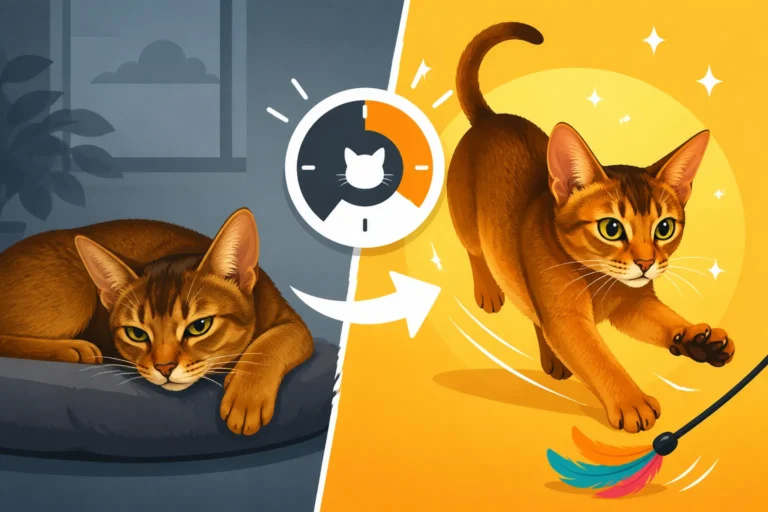
Dedicated daily playtime explains how twenty minutes of structured wand toy interaction stops destructive cat behavior and improves Abyssinian health.
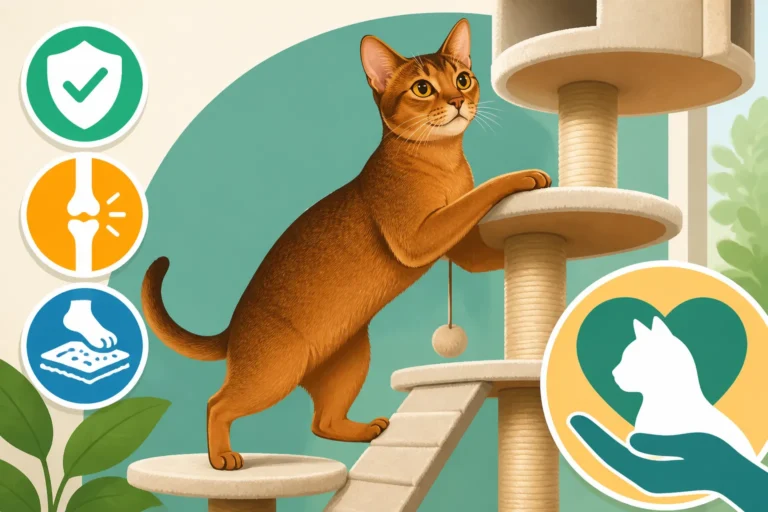
Senior Abyssinian cats experience arthritis and muscle loss, needing ramps, steps, and non-slip surfaces for safe climbing.
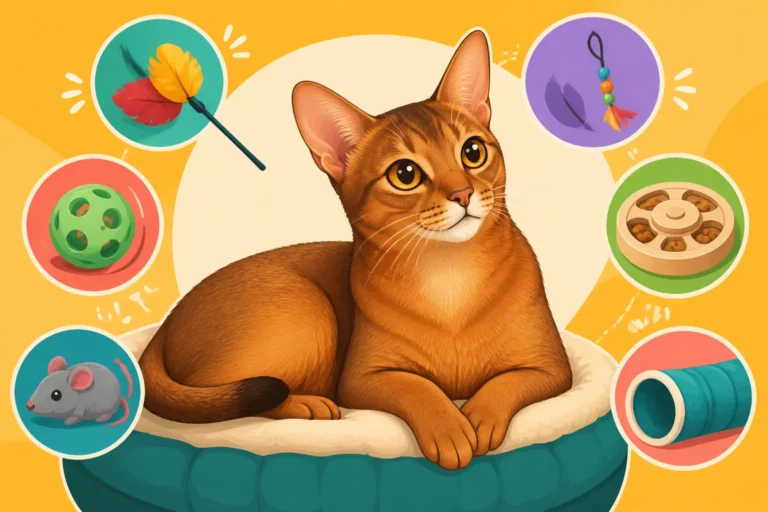
Senior Abyssinian cats enjoy gentle ground-level games, puzzle feeders, and low-impact toys that provide safe mental and physical stimulation.
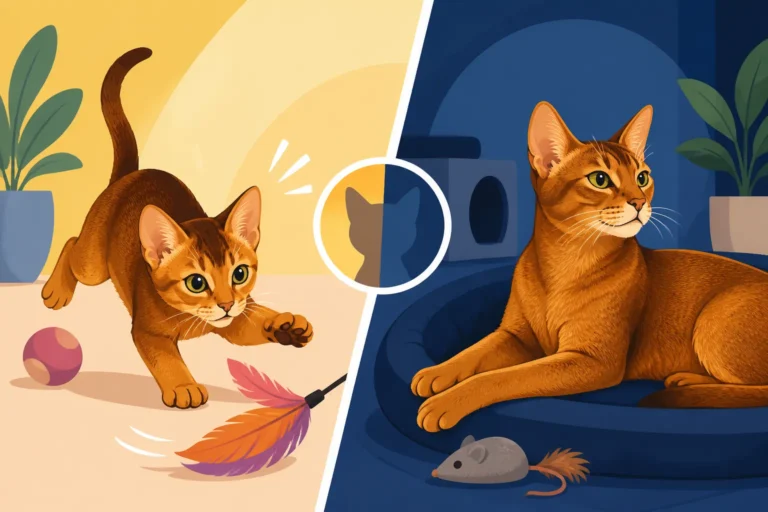
Senior Abyssinian cats transition to ground-level play around age ten, requiring adapted toys, ramps, and veterinary checks for pain.
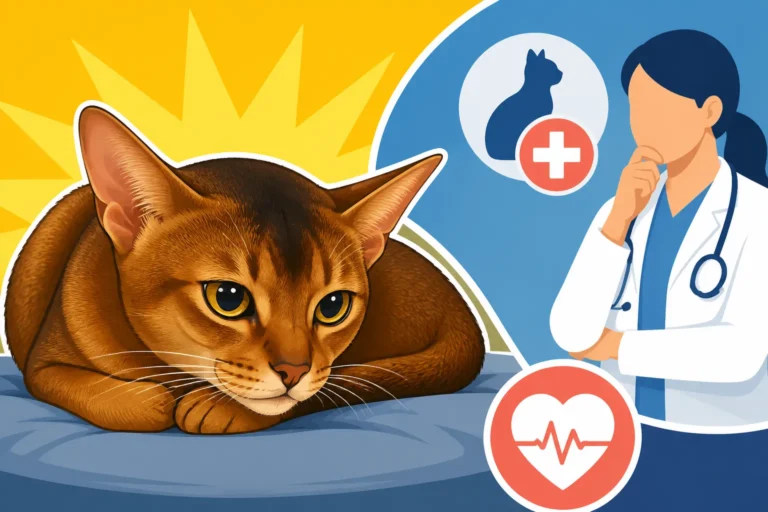
Abyssinian lethargy signals underlying illness. Learn to spot subtle signs of feline illness and when to seek emergency veterinary care.
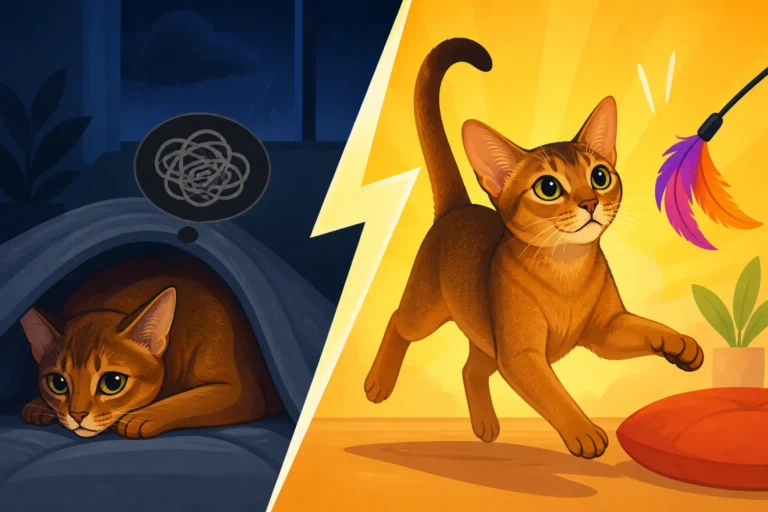
Sudden Abyssinian behavioral shifts often stem from hidden illnesses like kidney disease or dental pain, environmental stress, or aging.
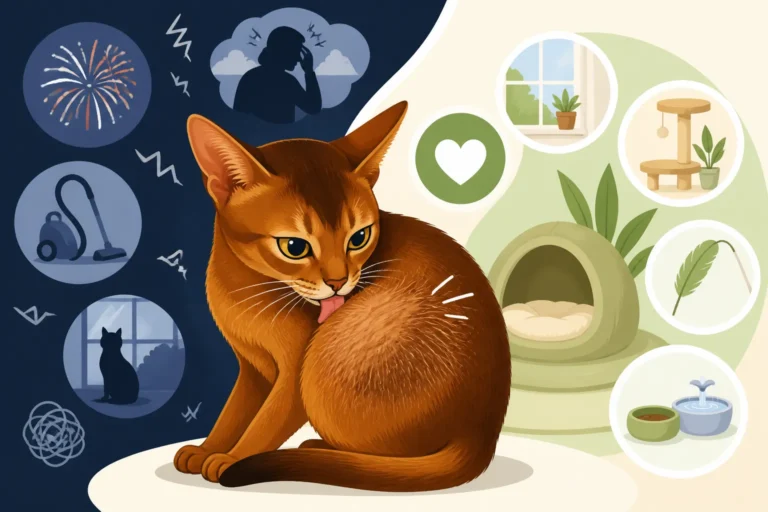
An Abyssinian overgrooming from stress needs identification, medical checks, and environmental changes to help them calm down.
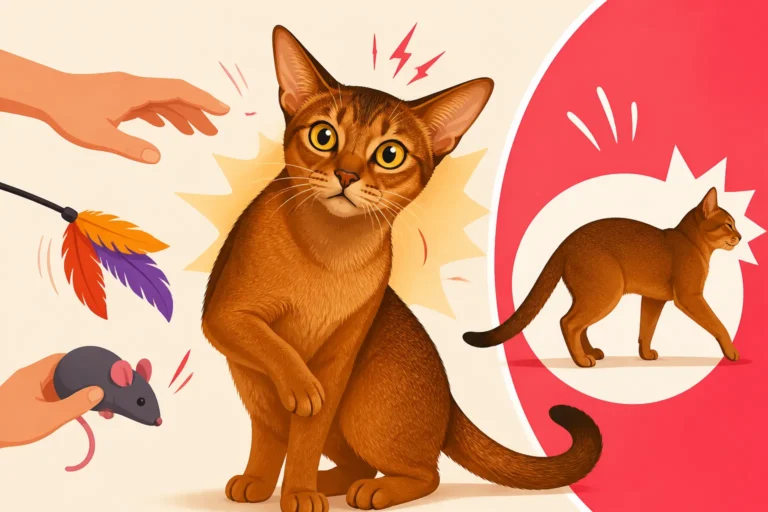
Abyssinian cat overstimulation signs include flattened ears, dilated pupils, and tail twitching during long play sessions.
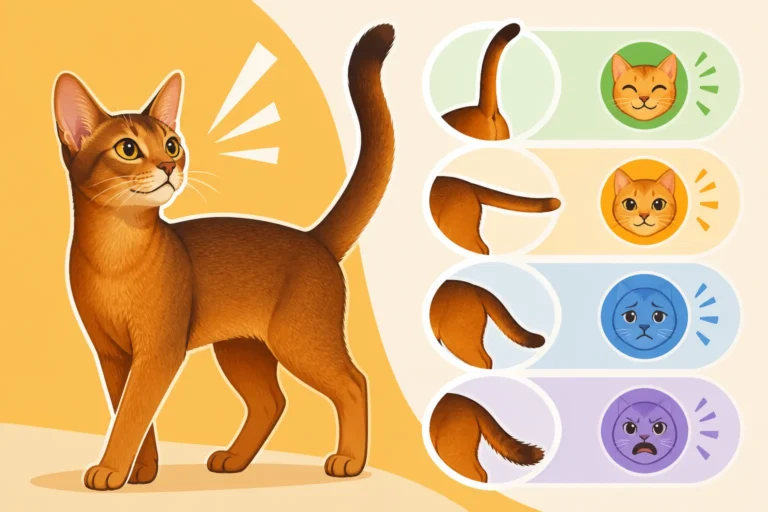
Abyssinian tail movements reveal moods, happiness, uncertainty, and irritation, helping owners anticipate feline needs and avoid overstimulation.
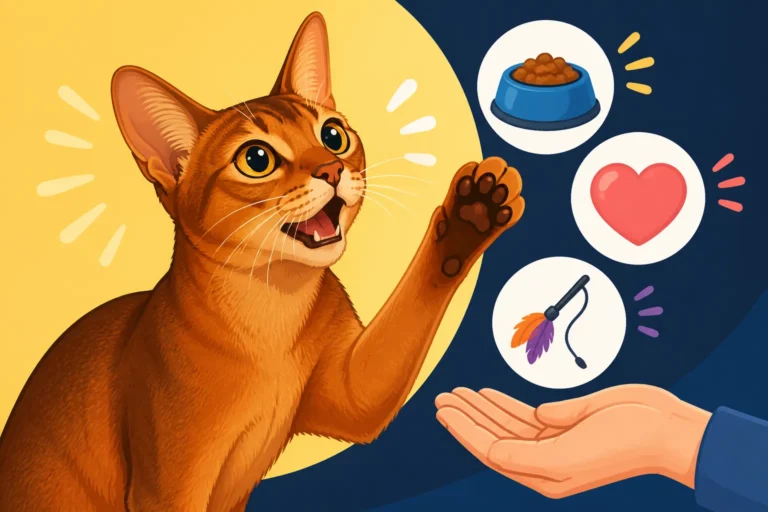
Abyssinian cat communication involves tail movements, chirps, pawing, and environmental manipulation to signal their desires.