Why a Stressed Abyssinian Overgrooms
It’s truly disheartening when you notice your active, vibrant Abyssinian starting to look a little… patchy. You see them constantly licking, grooming themselves with an intensity that seems more obsessive than relaxing, and before you know it, their beautiful ticked coat is thinning in places, or worse, there are bald spots appearing. This isn’t just a cosmetic issue; it's a clear signal that your beloved cat is struggling with stress, and it’s a problem that requires your compassionate attention. This guide will help you understand why your Abyssinian might be overgrooming, how to identify the signs, rule out other causes, and most importantly, what you can do to help them find their calm again.
Deciphering Overgrooming in Your Abyssinian
When your Abyssinian starts overgrooming, it's not simply being a little too fastidious. This behavior goes beyond the normal meticulous self-care that all cats perform. Abyssinians are typically very clean cats, and their short, fine coats with minimal undercoat mean that their grooming usually looks efficient and quick. However, when stress enters the picture, this natural instinct can become a compulsive coping mechanism, leading to significant physical changes in their appearance and often, underlying skin irritation.
What Excessive Grooming Looks Like
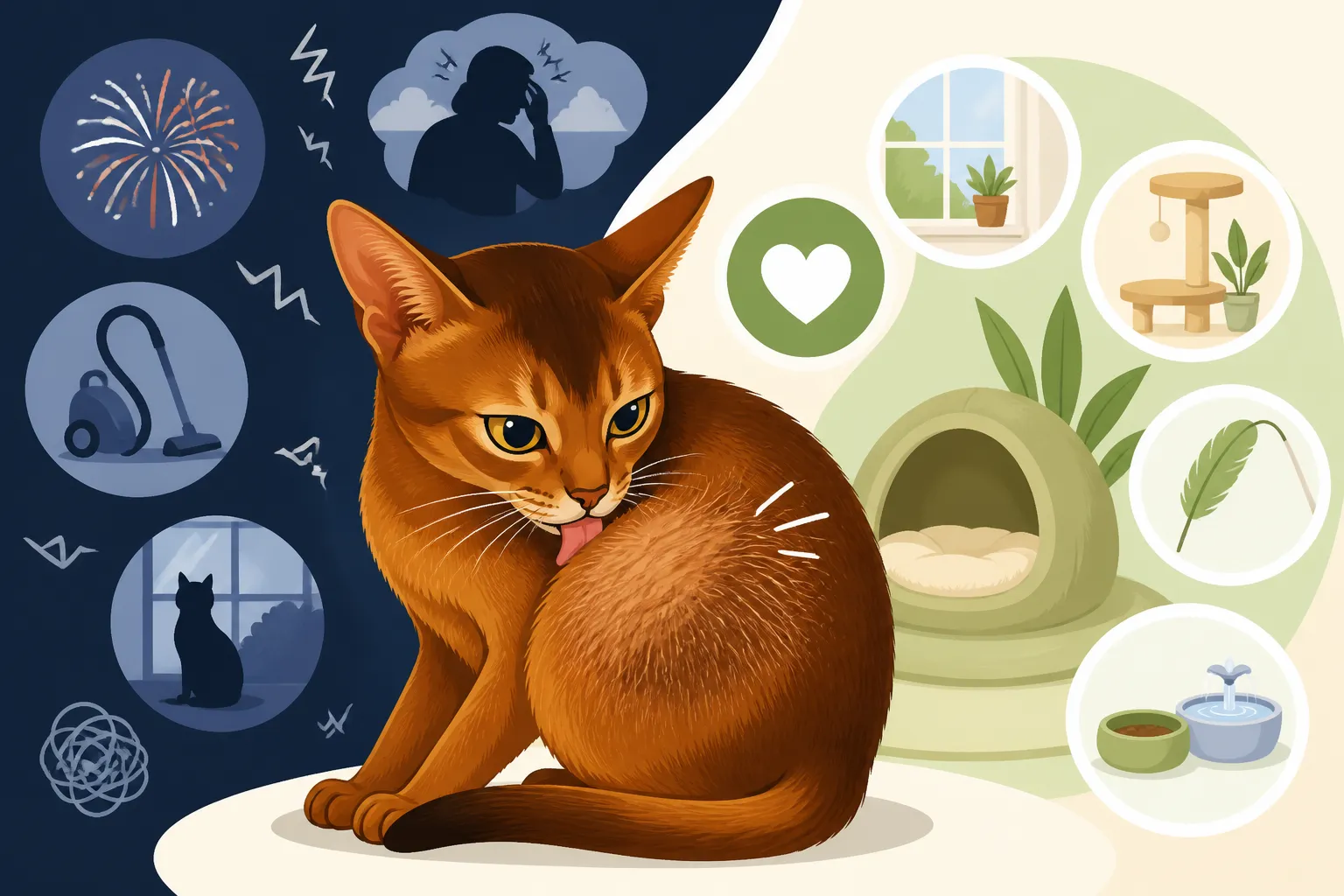
You might first notice your Abyssinian licking a particular spot with unusual focus, perhaps on their belly, inner thighs, or even their front legs. It’s not just a few licks here and there; it’s a prolonged, repetitive action, sometimes accompanied by actual fur pulling. You might hear the distinctive sound of their rough tongue rasping against their fur for extended periods, even when they should be resting or playing. This isn't just a brief tidy-up after a meal; it's an intense, almost trance-like grooming session that seems to have no end. Eventually, you’ll start seeing the evidence: hair that looks broken and sparse, especially around the areas they target most, or distinct bald patches. The skin underneath might appear red, inflamed, or even have tiny scabs from the constant abrasion. It's a stark contrast to their usual sleek, shimmering coat, and it's something that often catches owners off guard because it develops gradually.
What makes it particularly tricky with Abyssinians is their natural energy and tendency to "hide" discomfort. A lean Abyssinian, much like a lean person, can often mask physical issues or pain more effectively than a heavier animal. Why a Lean Abyssinian Hides Illness Longer Than a Heavy Cat delves into this, and it applies to behavioral signs too. They might still zoom around the house, play with toys, and appear outwardly "normal" even while they're compulsively licking themselves in quiet moments, making the initial signs of overgrooming easy to miss until the fur loss is quite pronounced.
Why Abyssinians Are Prone to Stress-Related Overgrooming
Abyssinians are incredibly intelligent, sensitive, and high-energy cats. They thrive on routine, interaction, and mental stimulation. Because they are so attuned to their environment and their human companions, they can be particularly susceptible to stress when things go awry. Think of them as the finely-tuned sports cars of the feline world; they perform beautifully under ideal conditions, but even small disturbances can throw them off balance. When an Abyssinian feels anxious, uncertain, or simply under-stimulated, that excess energy and internal tension can manifest as a self-soothing behavior: overgrooming.
It's a displacement activity, a way for them to channel their internal turmoil into an outwardly repetitive action. It's similar to how some humans might bite their nails or fidget when stressed. For an Abyssinian, the act of licking releases endorphins, creating a temporary sense of calm. The problem is, this temporary relief doesn't address the root cause of the stress, and the behavior becomes a learned coping mechanism that can quickly escalate, causing skin damage and further anxiety. Their thin, close-lying coat also means that any fur loss becomes visible much faster than on a long-haired or dense-coated breed, highlighting the problem earlier, for better or worse.
Unpacking the Stressors in Your Abyssinian's World
Understanding why your Abyssinian is overgrooming means taking a really close look at their environment and daily life. These cats are creatures of habit, and their keen senses make them highly aware of even subtle shifts. What might seem like a minor change to us can be a major source of anxiety for them.
Environmental Upheavals and New Faces
One of the most common triggers for stress in an Abyssinian is a change in their environment. Did you recently move to a new house or apartment? Even a change of furniture can be unsettling. Abyssinians map their territory meticulously, and altering their familiar landscape can make them feel insecure. A new pet, whether another cat, a dog, or even a small animal, can throw their world into disarray. They might feel their territory is being invaded, or that their access to resources like food, water, or your attention is threatened. How an Abyssinian Behaves With Children and Dogs offers great insights into how they adjust to new family members, but even with careful introductions, some Abyssinians will struggle.
Similarly, new human faces in the household can be stressful. This could be a new partner, a baby, or even a long-term houseguest. Your Abyssinian, who might be used to having your undivided attention or a very specific routine, can feel displaced or overwhelmed by the new dynamics. Even something as simple as construction noise from next door or a new, loud appliance can create a persistent, low-level anxiety that builds up over time and manifests as compulsive grooming. Their sensitive hearing picks up sounds we barely notice, and constant noise can be truly draining for them.
The Problem of Boredom and Under-Stimulation
An Abyssinian is not a decorative cat. They are intelligent, curious, and incredibly active. If their sharp minds and energetic bodies aren't given adequate outlets, they will become bored, and boredom is a significant stressor. Imagine being stuck in a room with nothing to do, all day, every day – it would drive anyone stir-crazy! For an Abyssinian, this can lead to destructive behaviors, vocalization, and yes, overgrooming.
They need interactive playtime that challenges them physically and mentally. Simply leaving out a few static toys isn't enough. What an Abyssinian Does When It Is Bored really highlights how these cats can get into trouble when their needs aren't met. They love to chase, stalk, and "hunt," and if they don't get these opportunities with you, they'll find other ways to occupy themselves, often in less-than-ideal ways. This is why Why an Abyssinian Should Not Be Left Alone All Day is such crucial reading; their need for engagement is profound. Without enough mental and physical exercise, that pent-up energy has to go somewhere, and often, it goes into obsessive grooming.
Shifts in Routine
Abyssinians are creatures of habit. They thrive on predictability, from their feeding times to your arrival home, to their playtime schedule. Any disruption to this established routine can trigger anxiety. If your work schedule suddenly changes, if you're traveling more, or if there's a new family member dictating a different rhythm to the household, your Abyssinian will notice. They rely on these routines to feel safe and secure in their world.
A sudden change in the type of food they're eating, the location of their litter box, or even the brand of litter can be enough to unsettle a sensitive Abyssinian. While these might seem like minor details to us, they represent a loss of predictability for your cat. The stress isn't usually immediate; it often builds up over days or weeks of these small, consistent changes, leading to the overgrooming behavior you eventually observe. Their body language might be subtle, but their persistent licking tells a clear story of unease.
Identifying the Signs and Ruling Out Medical Causes
When you see your Abyssinian overgrooming, your first port of call should always be the vet. While stress is a common culprit, many underlying medical conditions can cause similar symptoms, and it's absolutely vital to rule those out before proceeding with behavioral interventions. You don't want to miss something treatable because you assumed it was "just stress."
Observing and Documenting the Behavior
Before your vet visit, it helps to be a detective. Keep a journal or notes on your phone.
- When does the overgrooming happen? Is it mostly when you're gone, or when you're home? Is it at night, or during specific times of the day?
- Where do they lick? Are there particular spots they focus on? The belly, inner legs, base of the tail, or paws are common.
- What does the skin look like? Is it red, bumpy, scabby, or completely normal under the fur?
- Are there other behavioral changes? Are they more withdrawn, less playful, more vocal, or eating less/more?
- Any recent changes in the household? New people, new pets, different routine, different food, new cleaning products?
The more information you can provide, the better your vet can narrow down potential causes. A small detail you think is insignificant might be the key to understanding your Abyssinian's distress.
The Importance of a Thorough Vet Visit
A comprehensive vet examination is non-negotiable. Your vet will perform a full physical, checking for parasites like fleas (even if you don't see them, one bite can cause intense itching for sensitive cats!), skin infections (bacterial or fungal), allergies (food or environmental), and other underlying conditions. They might take skin scrapings, fungal cultures, or even blood tests. Sometimes, blood work can reveal deeper issues. Which Blood Values Catch an Abyssinian's Kidneys Early is a useful read for understanding the importance of blood tests, though in this context, they'd be looking for different markers related to inflammation or allergies.
It’s easy to jump to conclusions, but trust your vet to systematically eliminate possibilities. For example, if your Abyssinian is allergic to a food ingredient or an environmental allergen, the itching sensation can be so intense that they will groom themselves raw, mistaking the relief of licking for a solution. This isn't stress causing the overgrooming, but rather the physical discomfort leading to it.
Here’s a quick table to help you understand the common distinctions between stress-related overgrooming and potential medical issues:
| Characteristic | Stress-Related Overgrooming (Psychogenic Alopecia) | Medical Skin Condition (e.g., Allergies, Parasites) |
|---|---|---|
| Primary Cause | Anxiety, boredom, environmental changes | Fleas, mites, food allergies, environmental allergies, infection |
| Appearance of Skin | Often normal, may be red/irritated from licking | Red, bumpy, scabby, lesions, potential pustules |
| Location of Licking | Symmetrical baldness, especially belly, inner thighs, flanks | Can be anywhere, often around head, neck, back, or generalized |
| Itching Level | May not appear overtly itchy, more compulsive behavior | Intense, observable itching, scratching, rubbing against objects |
| Onset | Often gradual, linked to a specific change or period | Can be sudden, or seasonal for environmental allergies |
| Response to Treatment | Responds to stress reduction, enrichment, calming aids | Responds to anti-parasitics, diet changes, allergy meds, antibiotics |
It’s only after your veterinarian has given a clean bill of health regarding physical causes that you should fully focus on the behavioral aspects of overgrooming.
Practical Strategies for Reducing Stress and Overgrooming
Once you've ruled out medical causes, it's time to become your Abyssinian's stress-relief champion. Tackling stress-induced overgrooming requires a multi-faceted approach, focusing on mental and physical enrichment, stability, and sometimes, targeted calming aids. Patience is key; behavioral changes don't happen overnight.
Enriching Their Environment
Abyssinians are highly intelligent and need constant mental stimulation. Boredom is a silent killer of feline well-being, especially for a breed as active as an Abyssinian.
- Interactive Toys: Forget the static mice. Invest in wand toys, laser pointers (used responsibly and always ending with a tangible toy catch), and toys that mimic prey movement. Rotate their toys regularly to keep things fresh. How Much Play an Abyssinian Needs Each Day emphasizes the consistent, engaging play these cats require.
- Puzzle Feeders: These are fantastic for an Abyssinian's sharp mind. Instead of just putting food in a bowl, make them work for it. There are many options available on Amazon, from simple treat balls to more complex feeders that require manipulation. This turns mealtime into a stimulating "hunt."
- Vertical Space: Abyssinians love to climb. They inherently seek high vantage points where they feel safe and in control of their territory. If you don't provide adequate vertical space, they might feel cramped or insecure, which can contribute to stress. Invest in tall cat trees, wall-mounted shelves, or even clear out space on a bookcase for them. An Abyssinian Needs Height More Than It Needs Floor explains just how vital this is for their well-being. The higher, the better!
- Window Perches: A window perch, especially one overlooking a bird feeder or a bustling street, can provide hours of entertainment and mental engagement, allowing them to "hunt" visually from a safe, comfortable spot.
- Catios: If possible and safe, consider a "catio" or secure outdoor enclosure. This allows your Abyssinian to experience the sights, sounds, and smells of the outdoors without any of the associated dangers, offering incredible enrichment.
Establishing and Maintaining Routine
As we discussed, Abyssinians thrive on predictability. Try to establish and stick to a consistent daily routine for feeding, playtime, and quiet time.
- Consistent Feeding Times: Feed them at the same times each day. This helps regulate their internal clock and reduces anxiety around food.
- Scheduled Play Sessions: Even 15-20 minutes of dedicated, high-energy play with a wand toy a couple of times a day can make a huge difference. This helps them burn off excess energy and satisfies their predatory instincts. How to Give an Abyssinian a Job offers great ideas on how to channel their natural drive.
- Predictable Interactions: While Abyssinians aren't lap cats, they crave interaction. Try to have predictable cuddle or petting sessions (on their terms, of course). This builds trust and strengthens your bond, making them feel more secure.
Consider a Companion
Sometimes, the best solution for a lonely or under-stimulated Abyssinian is another cat. Abyssinians are social creatures, and while they bond deeply with their humans, another feline companion, especially one with a similar energy level, can provide endless entertainment and interaction. Whether Two Abyssinians Are Easier Than One delves into the benefits of a multi-cat household for this breed. Just ensure that introductions are slow and positive to avoid more stress!
Anxiety-Reducing Aids
For some Abyssinians, particularly during transitional periods or if their anxiety is deeply rooted, additional support can be helpful.
- Pheromone Diffusers and Sprays: Products like Feliway mimic natural feline facial pheromones, which signal a sense of security and calm. Plugging a diffuser into areas your Abyssinian frequents can create a more soothing environment. You can find these easily on Amazon.
- Calming Supplements: Some natural supplements contain ingredients like L-Theanine or Zylkene (hydrolyzed milk protein) which can have a calming effect. Always discuss these with your vet before introducing them, to ensure they're appropriate and won't interact negatively with any other medications or conditions. Again, Amazon is a common source for these.
- Anxiety Vests: While more common for dogs, some cats find comfort in gentle pressure vests, which can provide a sense of security. This is a less common solution for cats, but worth exploring with your vet if other methods aren't sufficient.
- Medication (as a last resort): In severe cases of compulsive overgrooming and anxiety, your vet might discuss anti-anxiety medication. This is usually considered only after all other behavioral and environmental modifications have been thoroughly tried and failed. It's often used in conjunction with behavioral therapy to help break the cycle and give the cat a chance to learn new, healthier coping mechanisms.
Remember that reducing stress is an ongoing process. Your Abyssinian's behavior changes can take time, sometimes weeks or even months, to fully manifest. Consistency, observation, and a willingness to adapt your approach are your most powerful tools in helping your beautiful Abyssinian regain their calm and their glorious, intact coat. Seeing their fur grow back, thick and vibrant, is one of the most rewarding parts of this journey, a testament to your patience and dedication.
Disclaimer
This article is for general informational purposes only and does not constitute professional advice. Laws, prices and regulations vary by location and change over time. Consult a qualified professional for guidance on your specific situation.