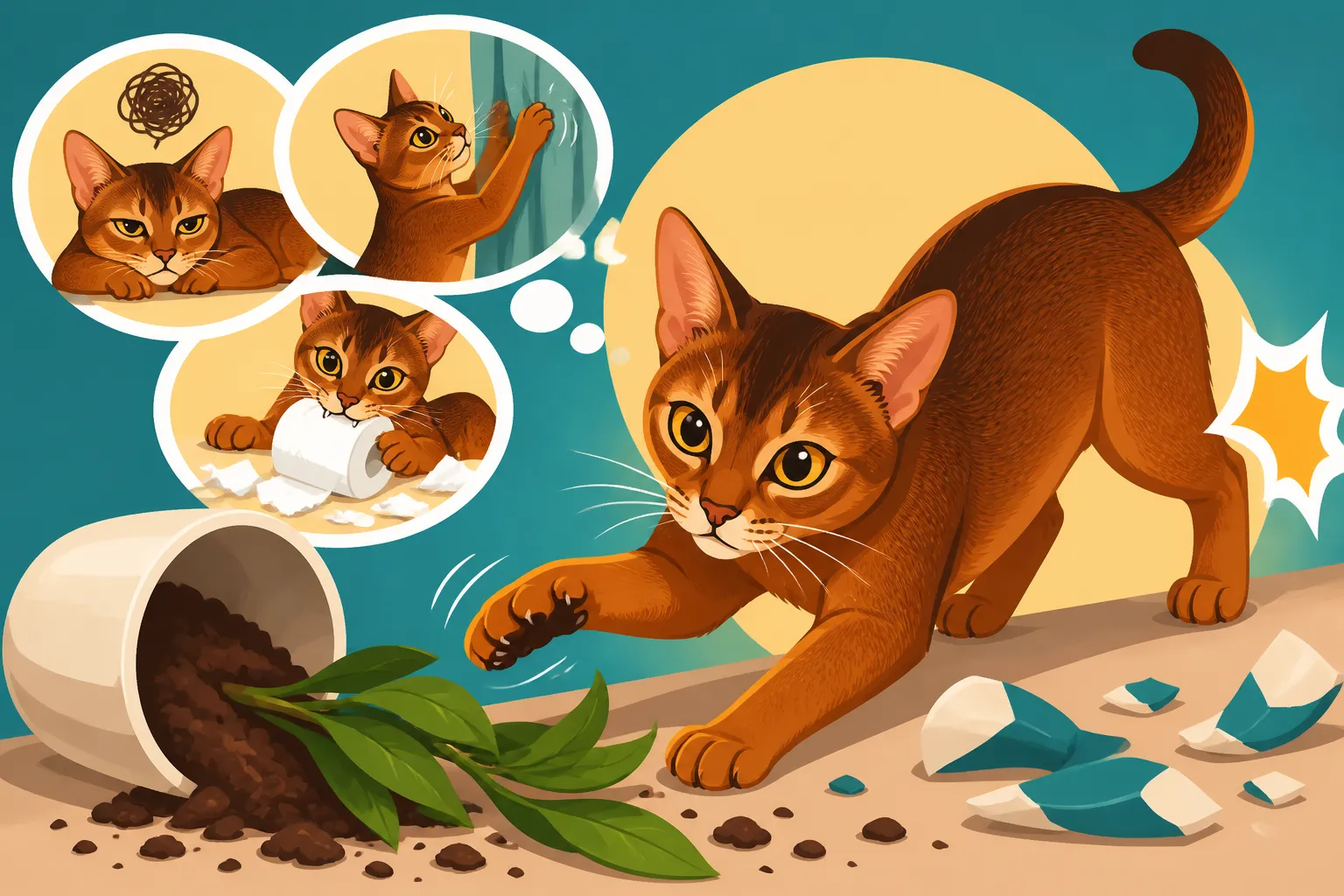
What an Abyssinian Does When It Is Bored
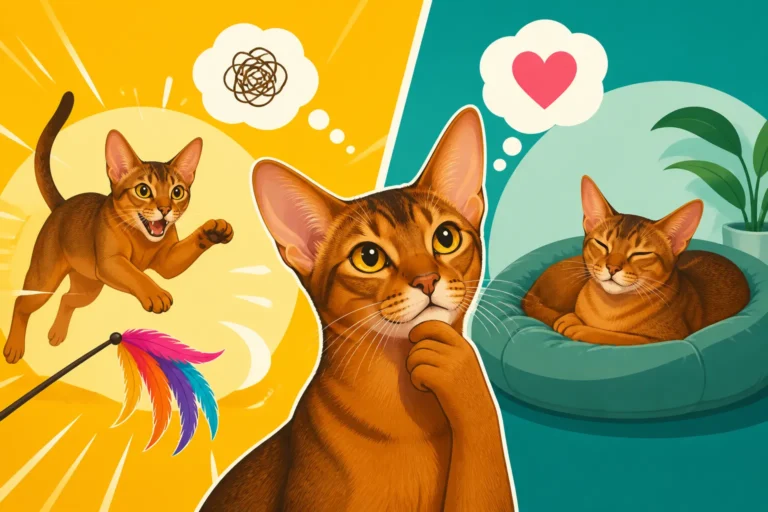
We’ve all come home to a scene that screams "I was bored!"—a roll of toilet paper shredded across the hallway, a cabinet door ajar with paw prints on the counter, or that ominous quiet that makes the hairs on your neck stand up. For an Abyssinian cat, boredom isn't just a minor inconvenience; it's a call to action, and that action usually involves finding their own entertainment, which often isn't aligned with your home's pristine condition. This guide is here to help you decipher what your Abyssinian is really trying to tell you when they act out and, more importantly, how to channel their boundless energy and sharp minds into positive, enriching behaviors that benefit everyone.
The Hallmarks of Abyssinian Boredom
Abyssinians are incredibly intelligent, active, and curious creatures. They thrive on interaction, exploration, and mental challenges. When these needs aren't met, their innate drive to do something doesn't simply vanish; it redirects into behaviors that can be frustrating for their human companions. Recognizing the signs of boredom is the first step in addressing it, and it's often far more nuanced than just a simple meow.
Destructive Chewing and Scratching
One of the most immediate and impactful ways a bored Abyssinian expresses their discontent is through destructive behaviors. This isn't out of malice, but rather a desperate attempt to engage their senses and expend pent-up energy. You might find tooth marks on furniture legs, picture frames, or even your favorite books. This oral fixation can stem from a lack of appropriate chew toys or simply the urge to do something with their mouth when their mind isn't otherwise occupied.
Similarly, scratching isn't just about sharpening claws for an Abyssinian; it's a vital form of marking territory, stretching muscles, and relieving stress. A bored Abyssinian, deprived of engaging activities or adequate scratching surfaces, might turn to your sofa, curtains, or prized antique chair. They're not doing it to spite you; they're fulfilling a deep-seated instinct in the only way they know how, especially if they feel their environment isn't offering stimulating alternatives. Providing a variety of appropriate scratching posts – tall, sturdy, and covered in different materials – is crucial. Remember, the goal is not to stop scratching, but to redirect it.
Excessive Vocalization and Attention Seeking
If you share your home with an Abyssinian, you already know they can be quite vocal when they want something. But when boredom sets in, this vocalization can escalate into a constant, demanding chorus. They might follow you from room to room, chirping incessantly, letting out plaintive meows, or even resorting to a full-blown caterwaul if they feel ignored. This isn't just a casual request for attention; it's an urgent plea for engagement.
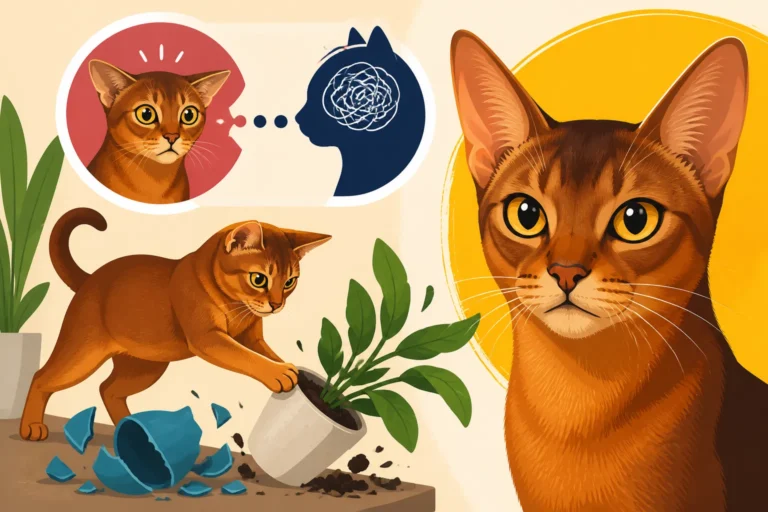
Beyond the noise, a bored Abyssinian might become an expert at attention-seeking antics. This could manifest as swatting at your pen while you're working, walking across your keyboard during a video call, or even deliberately knocking items off shelves to elicit a reaction. They've learned that negative attention is still attention, and if they're desperate enough, they'll take what they can get. It's a clear signal that their intelligent minds are under-stimulated and they're looking to you to provide that much-needed interaction.
Obsessive Grooming or Lethargy
While destructive behaviors and incessant demands are obvious red flags, sometimes boredom manifests in more subtle, and even worrying, ways. An Abyssinian that overgrooms, pulling out fur or creating bald patches, might be channeling their anxiety and under-stimulation into a self-soothing behavior. This isn't just a cosmetic issue; excessive grooming can lead to skin irritation, infections, and even hairballs. It's a silent cry for help, indicating a lack of appropriate outlets for their energy and mental faculties.
On the other end of the spectrum, some Abyssinians might withdraw and become unusually lethargic when chronically bored. This is particularly concerning because Abyssinians are naturally The Abyssinian Is the Busiest Cat in the House and typically full of boundless energy. If your normally zippy companion is spending more time sleeping, less time playing, or seems generally uninterested in their surroundings, it's a strong indicator that their environment isn't stimulating enough. It’s vital to rule out any medical issues with your vet, but if health checks come back clear, boredom and depression are strong contenders for this change in behavior.
Why Abyssinians Get Bored So Easily
Understanding what a bored Abyssinian does is one thing, but knowing why they get bored so easily is key to long-term solutions. It's not just about their energy; it's about their entire psychological makeup. These are not your average couch potato cats.
The Intelligence Factor
Abyssinians are renowned for their sharp minds. They are problem-solvers, curious explorers, and highly observant. This intelligence means they quickly master puzzles, learn routines, and figure out how doors and cabinets operate. Once they've "solved" their environment, so to speak, they need new challenges. Without consistent mental stimulation, their bright minds turn inward or, more commonly, outward in mischievous ways.
Think of it like a highly intelligent human being trapped in a room with nothing to read, no one to talk to, and no tasks to complete. They'd quickly become restless, perhaps devising elaborate schemes to escape or simply rearranging the furniture out of sheer mental necessity. An Abyssinian operates on a similar principle. Their minds crave engagement, and if you're not providing it, they'll create it for themselves, often in ways you didn't anticipate (and certainly won't appreciate!).
Their Need for Constant Activity
Beyond their intelligence, Abyssinians possess an incredible amount of physical energy. They are natural athletes, climbers, and jumpers. Unlike some more sedate breeds, they are not content to simply nap in a sunbeam for hours on end. They need multiple bursts of intense activity throughout the day to truly feel satisfied. This isn't just a cute quirk; it's a fundamental part of their well-being.
Ignoring this need for constant activity is like trying to keep a Border Collie happy with a five-minute walk once a day. It simply won't work. If an Abyssinian isn't given appropriate outlets for running, jumping, chasing, and pouncing, that coiled-up energy has to go somewhere. It often manifests as frantic dashes through the house, scaling curtains, or relentlessly pestering other pets or family members for a game. Providing regular, engaging play sessions is critical for their physical and mental health. How Much Play an Abyssinian Needs Each Day is likely far more than you think.
Lack of Engaging Environment
Many cat owners inadvertently create environments that are perfect for a low-energy cat but completely inadequate for an Abyssinian. Flat, horizontal spaces with a few ground-level toys simply don't cut it. Abyssinians crave vertical territory, varied textures, and opportunities for exploration and "hunting." A house that lacks these elements is, to an Abyssinian, profoundly boring.
Consider their wild instincts: they are hunters, climbers, and observers. In a home without tall cat trees, wall shelves, or window perches, they are denied the chance to survey their "territory" from a high vantage point, which is crucial for their sense of security and mental stimulation. Similarly, if their toys are always the same, or if their food is simply presented in a bowl without any mental challenge, they quickly become disinterested. A truly engaging environment stimulates all their senses and provides a dynamic landscape for their daily adventures. An Abyssinian Needs Height More Than It Needs Floor, and then some.
When Boredom Turns to Mischief: Common Scenarios
Let's get real about what happens when an Abyssinian is bored. It's often not cute or amusing; it's genuine mischief that can be disruptive and, at times, even destructive. These are not isolated incidents but predictable outcomes of under-stimulation.
Countertop Raids and Cabinet Break-ins
Oh, the joys of an Abyssinian in the kitchen! If your Abyssinian is regularly found scaling cabinets, pushing open cupboard doors, or systematically investigating every item on your kitchen counter, it’s a strong indicator of boredom. For them, it’s a grand adventure, a puzzle to solve, and a treasure hunt all rolled into one. They are using their intelligence and agility to explore forbidden territories, and the thrill of discovery is its own reward.
You might come home to find a bag of bread ripped open, a box of cereal strewn across the floor, or even the remnants of a package of pasta scattered like confetti. They're not necessarily trying to eat these things (though some will definitely try!); they're exploring textures, sounds, and the sheer joy of causing a controlled (or uncontrolled) chaos. Childproof latches might seem overkill for a cat, but many an Abyssinian owner has resorted to them to protect their pantry and sanity. Why an Abyssinian Opens Doors and Cabinets isn't a mystery; it's a consequence of their intelligent minds seeking engagement.
The Great Toilet Paper Unspooling
This classic cat caper is practically synonymous with boredom, and Abyssinians, with their love for activity and soft textures, excel at it. A full roll of toilet paper represents an irresistible challenge: a long, flowing ribbon that unfurls with satisfying speed and sound. It's an impromptu game of "hunt and destroy," and it requires minimal effort on their part to achieve maximum fun.
You might walk into the bathroom to find a blizzard of white paper, extending from the holder to under the vanity, and perhaps even into the hallway. The look on their face, if you catch them in the act, is rarely one of remorse. Instead, it's often a triumphant gleam, as if to say, "Look what I accomplished!" It’s a primal urge to shred and manipulate, and if there isn't a more appropriate outlet for this instinct, your bathroom supplies become the unfortunate casualty.
Attacking Feet and Other Innocent Bylookers
Few things are as startling as a sudden ambush on your unsuspecting ankles as you walk past. While some cats play-attack, a bored Abyssinian's attacks can be more frequent, intense, and less playful, often accompanied by sharper claws or teeth. This behavior stems from a lack of appropriate predatory outlets. They have all this hunting energy, but nothing to hunt. Your moving feet, the dog's wagging tail, or even a dangling tassel on a curtain become irresistible targets.
This isn't aggression in the true sense, but rather misdirected play and hunting instinct. They're practicing their pouncing, stalking, and "kill" bites on whatever moves. If they don't have enough interactive play with their human (using wand toys, not hands!) or stimulating solo toys, they'll create their own "prey" out of anything available. It's a frustrating situation for owners, but it's a clear signal that the Abyssinian needs more appropriate outlets for their innate predatory drives.
Enriching Their World: Physical and Mental Stimulation
The good news is that Abyssinian boredom is entirely preventable and treatable! It just requires a thoughtful approach to their environment and daily routine.
The Power of Vertical Space
Because Abyssinians are such incredible climbers and love to observe their world from above, maximizing vertical space in your home is non-negotiable. This means investing in tall, sturdy cat trees that reach close to the ceiling. Look for trees with multiple levels, platforms, and scratching surfaces. Place them near windows so your Abyssinian can survey the outdoor world – the ultimate "cat TV."
Beyond traditional cat trees, consider installing wall-mounted shelves or cat perches. These create an elevated highway system around your rooms, allowing your Abyssinian to explore, patrol, and relax at various heights. Think about it: a cat sees your house as a 3D environment, not just a flat floor plan. Providing these vertical dimensions taps into their natural instincts, gives them exercise, and significantly expands their perceived territory, keeping their minds and bodies engaged. How Many Vertical Levels an Abyssinian Needs is often more than you might imagine.
Interactive Toys and Puzzle Feeders
A static toy collection will quickly bore an Abyssinian. They need novelty and interaction. Laser pointers are great for getting them moving, but always end with a tangible toy they can "catch" to prevent frustration. Wand toys, especially those with feathers or crinkly attachments, are fantastic for engaging their hunting instincts, allowing you to mimic prey movements and encourage pouncing and chasing. Remember, you're the interactive element here; you make the toy come alive.
Puzzle feeders are another absolute game-changer for intelligent cats like Abyssinians. Instead of simply eating kibble from a bowl, they have to work for it, stimulating their minds and slowing down their eating. There's a huge variety available on platforms like Amazon, from simple balls that dispense kibble when rolled to more complex mazes and sliding-door puzzles. Start with easier ones and gradually introduce more challenging designs. This transforms mealtime from a quick gulp into a rewarding mental exercise. Which Puzzle Feeders Hold an Abyssinian's Attention are often the ones that require varied movements or multiple steps.
Training and Leash Walking
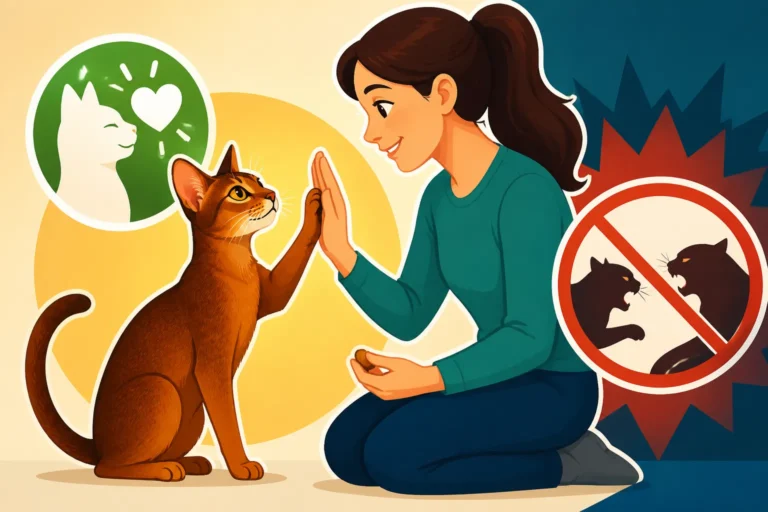
Yes, you can train a cat, especially an Abyssinian! Their intelligence and desire for interaction make them surprisingly receptive to positive reinforcement training. Clicker training works wonders, allowing you to teach them tricks like "sit," "stay," "fetch," and even navigate obstacle courses. This mental engagement builds their confidence, strengthens your bond, and provides a fantastic outlet for their problem-solving abilities. Which Tricks an Abyssinian Learns Fastest will often surprise you.
For the more adventurous Abyssinian, leash training can open up a whole new world of stimulation. While not every cat takes to it, many Abyssinians enjoy supervised outdoor excursions in a secure harness. It exposes them to new sights, sounds, and smells, which can be incredibly enriching. Start slowly, getting them comfortable with the harness indoors, then progress to short trips in a quiet, safe outdoor space. This isn't about letting them roam free, but about expanding their safe territory and providing novel experiences.
The Role of Companionship in Preventing Boredom
While you are your Abyssinian's primary source of interaction, even the most dedicated owner can't be available 24/7. This is where appropriate companionship can play a crucial role in staving off boredom.
Why a Second Cat Can Be a Game Changer
For an Abyssinian, who loves to play and interact, a compatible feline companion can be an absolute godsend. Another cat, especially one with a similar energy level or a breed that enjoys interactive play, can provide constant entertainment, wrestling partners, and chase buddies when you're busy or away. They can burn off energy together, groom each other, and simply enjoy having another creature to share their adventures with.
However, choosing the right companion is key. Two Abyssinians often work wonderfully, creating a whirlwind of energy and play. If you're considering a different breed, look for one that can match their pace, or at least tolerate it. Introducing a second cat should be a slow, patient process, ensuring a smooth transition and positive association between the two. While it's not a guarantee against all boredom, a compatible companion significantly reduces the burden on you to be the sole source of entertainment. Why a Second Cat Suits an Abyssinian is often due to their intense need for interaction.
Abyssinian Dynamics with Dogs and Other Pets
It's not just other cats that can provide companionship. Many Abyssinians get along famously with dogs, especially if introduced properly and if the dog has a calm, playful temperament. A cat-friendly dog can be a great playmate, engaging in supervised games of chase or gentle wrestling. Their different species-specific play styles can often complement each other, offering varied stimulation.
However, caution is always advised with smaller pets like hamsters, birds, or fish. Abyssinians are natural hunters with strong prey drives. It's generally not safe or fair to keep them in the same household without extremely secure enclosures for the smaller animals, and even then, the stress on the prey animal can be immense. While companionship is important, safety and natural instincts must always come first. Understanding How an Abyssinian Behaves With Children and Dogs can help you determine the best fit for your household.
Establishing a Routine to Keep Them Engaged
Cats thrive on routine, and Abyssinians are no exception. A predictable schedule that incorporates dedicated play, feeding, and enrichment times can significantly reduce boredom and related problem behaviors.
Scheduled Playtimes Are Non-Negotiable
For an Abyssinian, spontaneous play isn't enough. They need dedicated, energetic play sessions, ideally two or three times a day, for at least 15-20 minutes each. These sessions should be intense, mimicking the hunt: stalking, chasing, pouncing, and a final "kill." Wand toys are perfect for this, allowing you to control the "prey" and ensure they get a satisfying workout.
Scheduling these playtimes helps your Abyssinian anticipate when they'll get their energy out, making them less likely to invent their own disruptive games at other times. For example, a vigorous play session right before you leave for work, and another when you get home, can make a huge difference. A final, calming play session before bed can help tire them out for a peaceful night's sleep, preventing those infamous "zoomies" at 3 AM. How to Split an Abyssinian's Play Into Sessions is an art form.
The Art of Toy Rotation
Even the best toys lose their appeal if they're always available. Abyssinians, with their clever minds, quickly become bored with familiar objects. This is where toy rotation comes in. Divide your Abyssinian's toys into several groups and only make one group available at a time. Rotate them every few days or once a week.
When a "new" toy appears, it recaptures their interest and excitement, making it feel fresh and stimulating. This strategy keeps their environment novel and prevents them from becoming desensitized to their playthings. You don't need to buy endless new toys; just manage the ones you have strategically. You can hide some away in a drawer or box, only to reintroduce them later to renewed enthusiasm.
Enriching Meal Times
Feeding your Abyssinian shouldn't just be about putting a bowl of food down. This is a prime opportunity for mental enrichment! As mentioned before, puzzle feeders are excellent. You can also hide portions of their kibble around the house in various locations – on cat trees, tucked into puzzle toys, or even just behind a piece of furniture. This encourages their natural foraging instincts, turning mealtime into a stimulating hunt.
Breaking up their daily food allowance into smaller, more frequent meals can also help. Instead of two large meals, try three or four smaller ones, each presented in an engaging way. This consistent stimulation, spread throughout the day, keeps their minds engaged and can help prevent boredom from creeping in between those dedicated play sessions. Why Foraging Suits an Abyssinian's Mind is because it taps into their innate intelligence and hunting drives.
| Boredom Behavior | Potential Cause | Effective Solution |
|---|---|---|
| Destructive Chewing/Scratching | Lack of appropriate outlets; pent-up energy | Provide varied scratching posts, durable chew toys. |
| Excessive Vocalization | Seeking attention; mental under-stimulation | Increase interactive play; consistent attention on your terms. |
| Countertop/Cabinet Raids | Curiosity; problem-solving drive; lack of challenge | Install childproof latches; create engaging vertical space; puzzle feeders. |
| Toilet Paper Shredding | Need to shred/manipulate; lack of engaging toys | Provide appropriate shreddable toys; structured play; secure paper rolls. |
| Attacking Feet/Ankles | Misdirected play/hunting instinct | Use wand toys for interactive play; avoid using hands as toys. |
| Obsessive Grooming | Anxiety; lack of mental stimulation | Increase playtime and enrichment; vet check to rule out medical issues. |
| Lethargy/Withdrawal | Chronic under-stimulation; depression | Rule out medical issues; introduce novelty, structured play, and companionship. |
Addressing Underlying Issues and When to Seek Help
While most boredom behaviors can be resolved with environmental enrichment and a consistent routine, it's always important to consider the bigger picture and know when to reach out for professional help.
Ruling Out Medical Causes
Before attributing every concerning behavior to boredom, it's crucial to consult your veterinarian. Changes in appetite, energy levels, grooming habits, or an increase in destructive behaviors can sometimes be symptoms of an underlying medical condition. Pain, dental issues (which are common in Abyssinians), allergies, or even early signs of kidney disease can all manifest as behavioral changes.
For instance, an Abyssinian overgrooming might have skin allergies, or one becoming lethargic could be dealing with a metabolic issue. A thorough check-up, including bloodwork if recommended, can rule out these possibilities. Once medical causes are eliminated, you can confidently focus on behavioral and environmental solutions, knowing your Abyssinian is physically healthy. Why a Lethargic Abyssinian Needs Blood Work Fast isn't just a recommendation; it's a necessary step.
Consulting a Feline Behaviorist
If, despite your best efforts at enrichment and routine, your Abyssinian's boredom-driven behaviors persist or escalate, it might be time to bring in a professional. A certified feline behaviorist can offer tailored advice and strategies for your specific situation. They can observe your cat in their home environment, identify subtle triggers, and help you develop a comprehensive plan that addresses their unique needs.
Sometimes, the issue isn't just simple boredom but may involve deeper behavioral anxieties or frustrations that require a more nuanced approach. A behaviorist can help you understand the root cause of the problem and guide you through implementing effective, positive solutions that will lead to a happier, better-adjusted Abyssinian and a more harmonious home for everyone.
Disclaimer
This article is for general informational purposes only and does not constitute professional advice. Laws, prices and regulations vary by location and change over time. Consult a qualified professional for guidance on your specific situation.