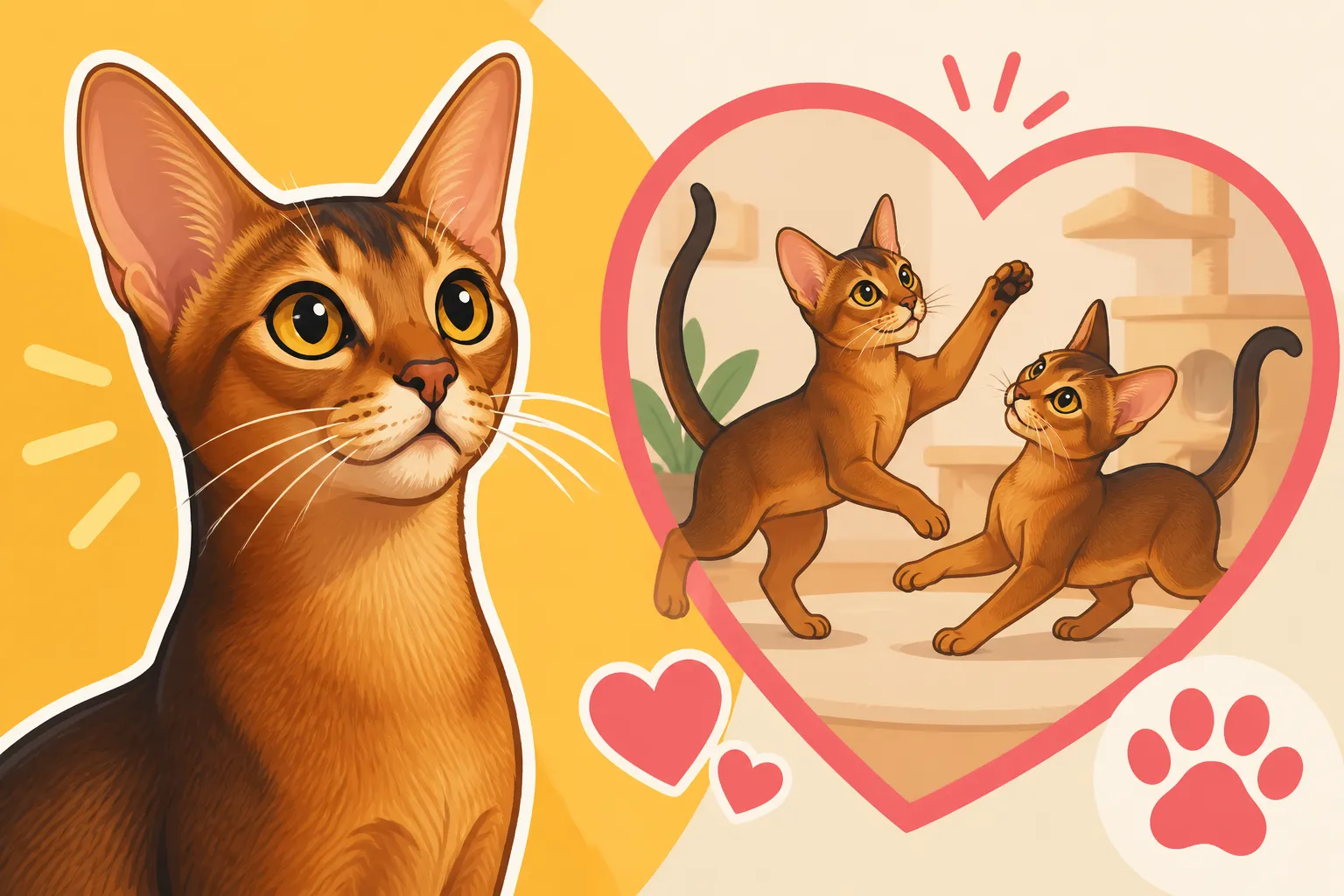
Why a Second Cat Suits an Abyssinian
If you're an Abyssinian owner, you've probably experienced that unique blend of boundless energy, playful curiosity, and insistent demand for your attention. They're incredible cats, but let's be honest, trying to keep up with their endless need for interaction can feel like a full-time job. Many Abyssinian parents find themselves wondering if they can truly provide enough stimulation for their constantly moving, thinking, and strategizing feline companion. The truth is, for most Abyssinians, a second cat isn't just a nice idea; it's often the missing piece to their puzzle, providing the companionship and mental sparring they crave, even when you're busy. This guide dives deep into why bringing another cat into your home can transform your Abyssinian's life, and yours, for the better.
Understanding the Abyssinian's Innate Social Needs
Abyssinians aren't your typical aloof, solitary cats. They possess a unique social drive that sets them apart, often making them feel more like miniature, high-energy dogs in their devotion and need for interaction. This isn't just about wanting human cuddles – though they certainly appreciate those on their own terms – it's about a deeper, instinctual requirement for dynamic companionship.
The Abyssinian's Pack Mentality
Unlike some breeds that are perfectly content to observe the world from a quiet perch, Abyssinians thrive on being an active part of their "pride," even if that pride consists solely of you. They're often described as having a "pack mentality" because they genuinely want to be involved in whatever you're doing, whether it's watching you cook, working on your computer, or just moving from room to room. This isn't just curiosity; it's a deep-seated desire for connection and participation. When they follow you from one end of the house to the other, chirping their observations, they're not just seeking attention; they're engaging with their social group. Without another feline presence to bounce off, this intense social need falls entirely on your shoulders. You might find your Abyssinian constantly underfoot, demanding play, or seemingly "helping" with tasks, not out of naughtiness but because they're trying to fill a social void. A second cat provides a constant, understandable companion that speaks their language, sharing the day's events in a way no human can truly replicate. This can dramatically reduce the pressure on you to be their sole entertainer and confidante, allowing for a more balanced dynamic in your household.
This inherent gregariousness means that while they love their humans, there are certain feline interactions that only another cat can provide. They can groom each other, engage in intricate chase games, or simply curl up for a nap, offering a level of physical and social intimacy that strengthens their sense of security and belonging. This isn't to say your bond with your Abyssinian will diminish; quite the opposite. When their fundamental social needs are met by a peer, they often become more relaxed and able to enjoy their human interactions even more, less driven by a desperate need for entertainment and more by genuine affection. Think of it as having a best friend who just gets you, without having to explain everything. That's what a second cat can be for an Abyssinian.
Mimicking Hunting Behavior with a Playmate
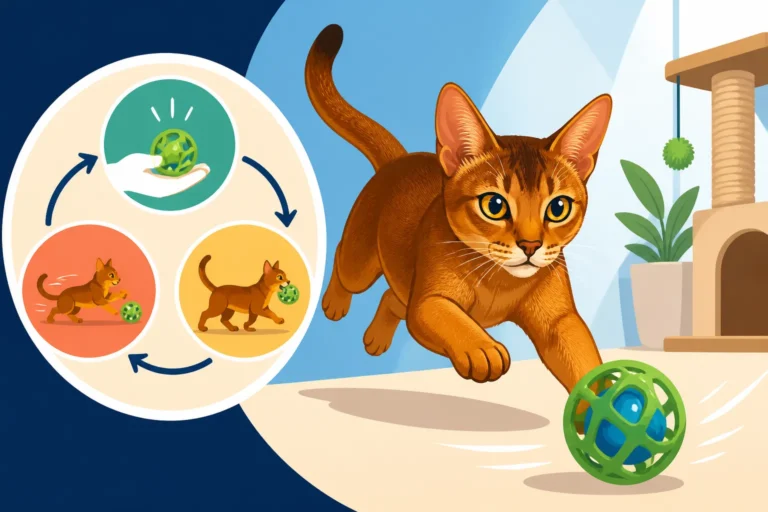
Abyssinians are athletes in sleek coats, renowned for their incredible energy, agility, and powerful hunting instincts. They are perpetually "on," scanning their environment, ready to pounce, stalk, and chase. While we humans can provide fantastic play sessions with wand toys and laser pointers, we simply cannot replicate the dynamic, unpredictable, and relentless nature of feline-on-feline play. A second cat acts as a perpetual, willing playmate, engaging in mock hunts that fulfill their deep-seated predatory drives in a safe and stimulating way. Imagine two Abyssinians racing through the house, leaping onto cat trees, wrestling, and batting at each other – this isn't just cute; it's essential for their physical and mental well-being.
These elaborate chase games and wrestling matches allow them to hone their natural skills, burn off excess energy, and satisfy the urge to hunt without needing to bring down real prey. When an Abyssinian brings you a toy, often it's not just to play, but to initiate a mock-hunt that you can participate in. But if they have a feline companion, sometimes you'll notice them dropping that toy right in front of their cat friend, silently inviting them to join the "hunt." This demonstrates how powerful the instinct for peer-to-peer play can be. Without another cat, all of that intense energy and instinct can sometimes be directed at you, your feet, or even your household objects, leading to frustration for both of you. A playmate allows them to express these hardwired behaviors in the most natural and fulfilling way possible, leading to a much more content and well-adjusted Abyssinian. How Many Hours a Day an Abyssinian Stays Active provides more context on their incredible energy levels.
Alleviating Boredom and Destructive Behavior
An Abyssinian that is under-stimulated and bored is not a happy Abyssinian, and unfortunately, their discontent often manifests in ways that can be challenging for their human companions. Their intelligence and high energy, when not properly channeled, can lead to a cycle of mischief and destruction that leaves owners feeling exasperated.
The Cycle of Boredom and Mischief
Picture this: you head out for a long day, leaving your bright, inquisitive Abyssinian alone in the house. For a few hours, they might entertain themselves with toys, a window perch, or a nap. But as the hours stretch on, and their innate need for mental and physical stimulation goes unmet, boredom sets in. For an Abyssinian, boredom isn't a passive state; it's an active search for engagement, and if appropriate outlets aren't available, they will create their own. This is where the mischief begins. They might start systematically investigating every cupboard, drawer, and shelf, not just out of curiosity, but to see what they can do. Opening cabinet doors, pulling things off counters, or even attempting to disassemble small appliances can become their self-appointed "job."
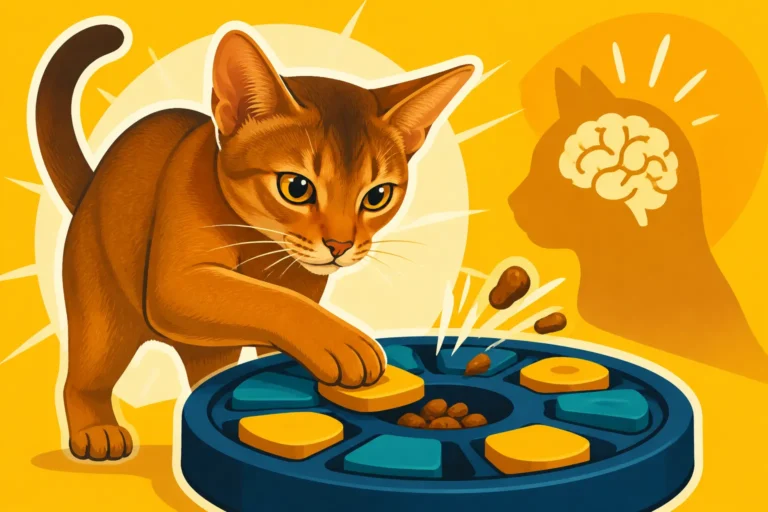
This isn't about being "bad"; it's a direct symptom of their unmet needs. They're using their sharp minds and agile bodies to interact with their environment in the most engaging way they can find. Unfortunately, this often leads to destroyed household items, knocked-over plants, or even dangerous situations if they get into cleaning supplies or medications. What an Abyssinian Does When It Is Bored delves further into the specifics of this behavior. A second cat provides an immediate, constant, and infinitely more interesting source of engagement. Instead of prying open your pantry, two Abyssinians might be found wrestling on their cat tree or chasing each other through a tunnel, channeling that immense energy and intelligence into harmless, fulfilling interaction. This drastically reduces the likelihood of them resorting to destructive behaviors out of sheer desperation for something to do.
Consistent Engagement When You're Not Around
One of the biggest challenges for Abyssinian owners is the guilt that comes with leaving such a social and active cat alone for extended periods. Even if you've provided a stimulating environment with plenty of toys and climbing structures, there's a limit to how much a single cat can entertain itself. They miss the dynamic presence of another living being. This is precisely where a second cat becomes invaluable. When you're at work, running errands, or simply sleeping, your Abyssinian isn't truly alone. They have a companion to interact with, a buddy for naps, and a partner in crime for exploring.
This consistent peer engagement is far more enriching than any static toy or puzzle feeder. They can engage in mutual grooming, a deeply social and bonding activity that reinforces their connection. They can chase each other up the tall scratching post you got from Amazon, or have a quiet snooze curled up together in a sunny spot. This continuous interaction means less time spent feeling isolated or anxious, leading to a calmer, more secure cat. Many owners who install pet cameras to check on their Abyssinians while they're out are often surprised and relieved to see their two cats actively playing or lounging together, rather than one cat pacing or staring forlornly out the window. It truly offers peace of mind, knowing your beloved Aby has a constant friend, ensuring they're always stimulated, loved, and never truly alone. Whether a Camera Helps an Abyssinian Owner can offer more insights into monitoring your pets.
The Benefits of a Shared Routine and Territory
Bringing a second cat into your home, especially one that matches your Abyssinian's energetic personality, can profoundly influence the structure and rhythm of your household. It's not just about doubling the fun; it's about creating a more stable, enriched environment where shared routines and territory become a source of comfort and stimulation.
Establishing a Stable Environment
Cats, including the adventurous Abyssinian, thrive on routine and predictability. While they may seem chaotic in their play, having a sense of what to expect helps them feel secure. When you introduce a second cat, particularly one with a similar drive, they often fall into a shared rhythm that can actually make managing your household easier. For instance, instead of one Abyssinian constantly bugging you for food or play, two cats might learn to coordinate their schedules. They'll wake up together, engage in their morning play sessions, then head to their feeding stations in tandem. This shared anticipation and experience can create a much smoother flow to the day. They learn from each other, reinforce positive behaviors, and essentially become each other's primary timekeepers.
This shared routine extends beyond feeding. Playtimes often become a joint activity, where they motivate each other to engage. If one cat is hesitant about a new toy or activity, the other might demonstrate its appeal, encouraging participation. This mutual influence can lead to a more balanced and harmonious household, as they navigate their daily lives as a cohesive unit. Even seemingly simple acts, like both cats waiting by the door when you return home, or settling down for a nap in adjacent sunbeams, contribute to a feeling of shared experience that enhances their overall well-being. This collective rhythm can minimize stress and bring a sense of order to what might otherwise be a high-energy, demanding dynamic with a single Abyssinian.
Expanding and Sharing Vertical Space
Abyssinians are natural climbers. Their powerful hind legs and lithe bodies are built for scaling heights, and they absolutely adore being up high, surveying their domain. An Abyssinian Needs Height More Than It Needs Floor isn't just a catchy phrase; it's a fundamental truth about their behavioral needs. When you have two Abyssinians, this innate love for elevation becomes a fantastic opportunity for dynamic interaction and territorial enrichment. Instead of one cat monopolizing the highest perch, two cats will turn your vertical space into a bustling highway and playground. They'll chase each other up and down multi-level cat trees, leap from wall-mounted shelves, and engage in mock battles from different vantage points.
This shared use of vertical territory actually makes your existing cat furniture much more valuable and stimulating. What might have been a solitary lookout spot for one cat becomes a strategic point for an ambush or a shared napping platform for two. You might find yourself investing in even taller, more elaborate cat trees or a complex system of wall shelves – which you can easily find on Amazon – not just for one, but for a pair of acrobatic Abyssinians. This isn't just about providing more places to climb; it's about creating a dynamic landscape where they can interact, play, and coexist without constantly being on the same ground level. This multi-dimensional environment reduces potential territorial squabbles and gives each cat the opportunity to claim "their" spot, even if it's only for an hour. It transforms your home into an exciting adventure park, perfectly suited for two active and agile Abyssinians.
Choosing the Right Companion for Your Abyssinian
Bringing a second cat into your Abyssinian's life is a wonderful decision, but it's not one to be made lightly. The success of this new dynamic largely hinges on selecting the right companion. It’s crucial to consider not just their looks, but their personality, energy levels, and age to ensure a harmonious match.
Matching Energy Levels and Play Styles
The single most important factor when choosing a companion for an Abyssinian is matching their incredible energy levels. An Abyssinian needs a playmate who can keep up, sprint, wrestle, and chase for extended periods. Pairing a high-energy Abyssinian with a very mellow, sedentary cat is a recipe for frustration for both animals. The Aby will constantly pester the other cat, who will likely become annoyed, stressed, or even aggressive in self-defense. This mismatch can lead to an unhappy household and may require you to rehome one of the cats, which is something no one wants.
Ideal companions are often another Abyssinian, a Somali (which is essentially a long-haired Abyssinian), or another active, playful breed known for its intelligence and zest for life, such as an Ocicat, Bengal, or even a highly energetic domestic shorthair. Look for a cat that actively seeks play, enjoys chasing toys, and shows a confident, curious demeanor. Observing the potential companion in their current environment can give you valuable clues about their play style. Do they initiate play? Are they easily exhausted, or do they have sustained bursts of energy? A good match means both cats can enjoy vigorous play together, burning off energy and fulfilling their predatory instincts in a mutually satisfying way. This harmonious play dynamic is the cornerstone of a successful multi-cat household with an Abyssinian. For more ideas on compatible breeds, check out Which Breeds Live Well With an Abyssinian.
Age and Temperament Considerations
While energy levels are paramount, age and temperament also play significant roles in a successful introduction. A young kitten, generally between 12-16 weeks old, is often a fantastic choice, even if your current Abyssinian is an adult. Kittens are typically adaptable and less threatening to an older cat, and their boundless energy tends to grow as your Aby's might be starting to mellow slightly. The adult Abyssinian can also act as a mentor, teaching the kitten appropriate play and house rules. However, be prepared for a period where the kitten's relentless energy might initially overwhelm the older cat.
If your Abyssinian is still quite young and full of beans, introducing another young adult (perhaps 1-3 years old) with a similar energy profile can create an instant play bond. The key here is temperament. You want a cat that is confident and playful but not overly dominant or aggressive. A cat that is too timid or easily stressed will likely be overwhelmed by an Abyssinian's boisterous nature. Likewise, a cat that is overly territorial or prone to aggression could lead to ongoing conflict. Spend time with the potential companion if possible, observing their interactions with other cats or people. A rescue organization or an experienced breeder can often provide invaluable insights into a cat's personality, helping you find a temperament that complements, rather than clashes with, your Abyssinian's vibrant spirit. How to Introduce a Second Cat to an Abyssinian provides more guidance on the introduction process itself.
Gradual Introductions for Success
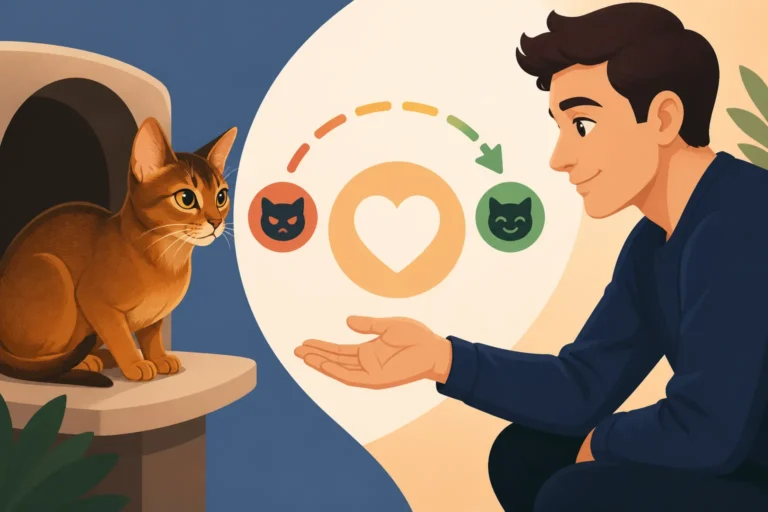
Even with the perfect match in terms of energy and temperament, a slow and patient introduction is absolutely crucial for long-term success. Rushing the process can create fear, resentment, and even aggression that can be difficult to undo. Think of it as a carefully choreographed dance, not a sudden free-for-all. The goal is to allow the cats to acclimate to each other's scents and sounds before they ever meet face-to-face. Start by confining the new cat to a separate room with all their essentials: food, water, litter box, and a comfortable bed. This "safe room" allows them to decompress and get used to their new surroundings without the stress of an immediate confrontation.
The next step involves scent swapping. Use separate cloths to rub on each cat's cheeks and bodies, then place the scented cloths in the other cat's area. This helps them associate the new scent with positive things and understand that a new cat is in the house. After a few days, you can try feeding them on opposite sides of a closed door, gradually moving the food bowls closer as they become more comfortable. Short, supervised visual introductions, often through a baby gate or a partially opened door, can follow, keeping them positive and ending them before any tension arises. Never force interaction. Always provide plenty of resources (multiple litter boxes, food bowls, water dishes, and resting spots) to minimize competition. Patience is your best friend here. It can take weeks, or even months, for cats to fully accept each other, but the reward of a harmonious multi-cat household is well worth the effort. Consider investing in a sturdy pet gate from Amazon to help manage these initial stages effectively.
Potential Challenges and How to Overcome Them
While bringing a second cat into an Abyssinian household can be incredibly rewarding, it’s not without its potential hurdles. Understanding these challenges upfront and having strategies to address them can make all the difference in achieving a peaceful and happy home.
Initial Resistance and Resource Guarding
Even with the best intentions and careful introductions, it's not uncommon for there to be some initial resistance or friction. Your resident Abyssinian, who has likely been the undisputed "king" or "queen" of the castle, might not immediately welcome a newcomer. This can manifest as hissing, growling, swatting, or even avoidance. One of the most common issues that arises, especially in the early stages, is resource guarding. This is when one cat tries to prevent the other from accessing essential resources like food, water, litter boxes, favorite sleeping spots, or even your attention. You might see one cat standing guard over the food bowl, chasing the other away from the water fountain, or even blocking access to the litter box.
To combat resource guarding, the golden rule is "more is more." You need to provide an abundance of resources, ensuring there are more items than cats, and crucially, placing them in multiple, separate locations. For instance, have at least one litter box per cat, plus one extra, scattered throughout the house. Provide multiple food and water stations. Make sure there are several high perches, beds, and scratching posts available. This decentralization of resources minimizes the need for competition and allows each cat to feel secure in their access to necessities. If one cat is particularly possessive over your attention, make sure to dedicate separate, one-on-one play and petting sessions with each cat individually. This reinforces that there's enough love to go around and reduces the feeling of having to compete for your affection. With patience and thoughtful resource management, most cats will learn to share their space.
Ensuring Enough Individual Attention
One common concern when adding a second cat is whether your original Abyssinian will feel neglected or that your bond with them will diminish. It's a valid worry, especially given how intensely social and connected Abyssinians are with their humans. The truth is, while a second cat provides crucial feline companionship, it doesn't eliminate your Abyssinian's need for your unique attention and interaction. It simply shifts the nature of that interaction. Instead of being their sole entertainer, you become another cherished member of their social group.
To prevent any feelings of neglect, it's important to consciously carve out dedicated one-on-one time with each cat every single day. This doesn't necessarily mean hours; even 10-15 minutes of focused play, grooming, or quiet cuddle time can make a huge difference. For your Abyssinian, this might involve their favorite wand toy game, a session of fetch, or simply sitting quietly with them while they purr on your lap or shoulder. During these times, try to minimize distractions from the other cat. This ensures that both cats feel individually loved, valued, and connected to you. You'll likely find that with their peer-to-peer social needs met, your Abyssinian is actually more relaxed and able to truly enjoy their individual time with you, making the bond even stronger and more meaningful. It's about quality over quantity, making each interaction count.
The Long-Term Rewards of a Multi-Cat Household
Investing the time and effort into introducing a second cat to your Abyssinian can feel like a big undertaking, but the long-term benefits for both your feline companions and your own peace of mind are immeasurable. It truly transforms the dynamics of your home for the better.
A Happier, Healthier Abyssinian
Ultimately, the most significant reward of a multi-cat household, especially with an Abyssinian, is witnessing your original cat thrive. A well-matched companion provides constant mental stimulation, physical exercise, and social interaction that no human can consistently deliver. This leads to a significantly happier and often healthier Abyssinian. You'll likely notice a reduction in any boredom-induced destructive behaviors, as their energy is now channeled into appropriate play with their friend. They'll also experience less stress and anxiety stemming from loneliness, which can have positive impacts on their overall physical health, including their immune system and digestive regularity.
A contented Abyssinian often sleeps better, eats more consistently (without the urgent "feed me now or I'll starve" drama), and generally exhibits a more balanced temperament. They'll be less demanding of your constant attention, not because they love you less, but because their fundamental social needs are being met by their feline companion. You might even observe them grooming each other, a strong sign of bonding and affection, leading to cleaner coats and reduced stress-related overgrooming in some cases. When your Abyssinian is quieter than usual, it can sometimes be a red flag for illness or distress. However, with a companion, a quiet moment might simply mean they are peacefully napping together, rather than a sign of something being wrong. What a Quiet Abyssinian Is Telling You can provide more detail on recognizing changes in behavior. Witnessing two Abyssinians playing, chasing, and cuddling together is a pure joy that truly enriches your home.
Enriching Your Own Life
Beyond the obvious benefits for your Abyssinian, having a multi-cat household brings a unique joy and richness to your own life. There's something incredibly heartwarming and endlessly entertaining about watching two spirited cats interact. Their intricate play, their synchronized naps, their subtle communications – it all adds a layer of vibrant life and personality to your home. You'll find yourself smiling more often, amused by their antics, and filled with a sense of peace knowing your beloved Aby is never truly alone. The guilt that often accompanies leaving a single Abyssinian by themselves for a workday largely dissipates when you know they have a playmate to share the hours with.
Moreover, while a second cat does involve more initial cost and commitment, many owners report that two Abyssinians are often easier in the long run than one. This isn't just anecdotal; the reduction in destructive behavior, the lower demands on your personal energy for entertainment, and the overall increase in harmony can make day-to-day life less stressful. It's a unique bond you've helped foster, and the love and companionship they share inevitably spill over, creating a more joyful and lively atmosphere for everyone. You might find yourself becoming a passionate advocate for multi-cat households, realizing the profound benefits of doubling the feline love in your home. Whether Two Abyssinians Are Easier Than One offers further perspectives on this delightful dynamic.
Here's a quick overview of what to consider when finding a playmate:
| Factor | Ideal Companion Traits for an Abyssinian | Less Ideal Traits |
|---|---|---|
| Energy Level | High, playful, enjoys sustained chase and wrestling. Can match an Abyssinian's intensity. | Very low energy, prefers lounging, easily overwhelmed by rough play. |
| Temperament | Confident, curious, resilient, not easily stressed, good-natured, not overly dominant or timid. | Shy, fearful, prone to aggression, highly territorial, or overly submissive. |
| Age (Relative) | Kitten (12-16 weeks) for an adult Aby; young adult (1-3 years) for a young Aby. | Very elderly/sedentary cat, or a very young kitten for a highly dominant adult Aby. |
| Play Style | Engages in mock hunting, pouncing, chasing, wrestling, and enjoys interactive toys. | Prefers solitary play, easily bored, or only enjoys gentle interaction. |
| Breed | Another Abyssinian, Somali, Ocicat, Bengal, or an active domestic shorthair. | Breeds known for extreme calm or aloofness, or those that might struggle with rough play. |
| Social Needs | Enjoys companionship, seeks out interaction with other cats or humans. | Highly independent, prefers solitude, avoids other cats. |
Disclaimer
This article is for general informational purposes only and does not constitute professional advice. Laws, prices and regulations vary by location and change over time. Consult a qualified professional for guidance on your specific situation.