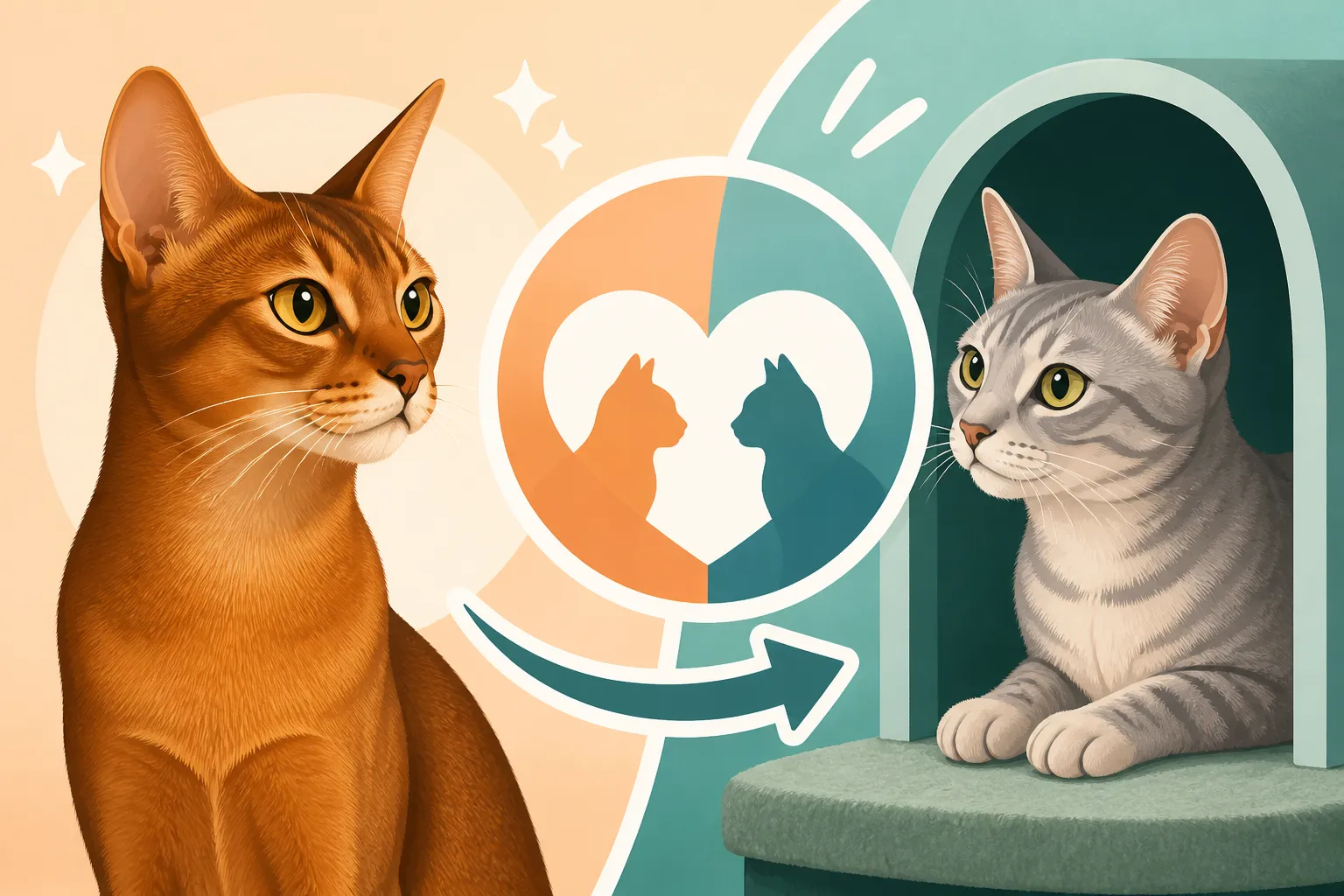
How to Introduce a Second Cat to an Abyssinian
Bringing a new cat into your home, especially when you already have an energetic and opinionated Abyssinian, can feel like you’re walking a tightrope. You want everyone to get along, but the reality is often hissing, chasing, and a lot of stress for both you and your feline family members. This comprehensive guide will walk you through a gentle, structured approach to introducing a second cat to your Abyssinian, aiming for peaceful coexistence and hopefully, even friendship.
Understanding Your Abyssinian's Personality in Introductions
Abyssinians are a fascinating breed, full of life, curiosity, and a distinct sense of self. While many of them thrive with a companion, their unique traits mean that introductions need to be handled with patience and understanding.
Why Abyssinians Can Be Tricky with Newcomers
Your Abyssinian isn't just a cat; they're a whirlwind of activity, a shadow that follows you from room to room, and often, the undisputed monarch of your household. This high-energy, highly social nature can actually be a double-edged sword when it comes to new additions. On one hand, they crave interaction, but on the other, they are incredibly territorial and possessive of their human's attention. They’re used to being the center of your universe, and a newcomer can feel like a direct threat to their status and resources.
Their intense play style, which involves a lot of chasing, pouncing, and sometimes vocalizing, can also be misinterpreted by a more docile or shy new cat. What your Abyssinian sees as an invitation to a vigorous game of tag, another cat might perceive as an aggressive assault. This misunderstanding can quickly lead to fear or defensiveness from the new cat, making the integration process much harder. It's truly frustrating when your beloved Abyssinian, who you know is a sweetheart, suddenly acts like a tyrant because their routine has been disturbed.
Assessing Your Current Abyssinian's Social Cues
Before you even bring another cat home, take some time to observe your Abyssinian's reactions to other cats, even those they only see from a distance. Do they stand at the window, tail twitching, making chattering noises at the stray cat passing by? Or do they flatten their ears, hiss, and try to chase the perceived intruder away from their territory? These subtle cues can give you valuable insight into their baseline comfort level with other felines.
Also, pay attention to their usual stress signals. An Abyssinian experiencing anxiety might start overgrooming, particularly on their belly or inner thighs, to the point of creating bald patches. They might begin to hide more often, seek excessive reassurance, or even start spraying urine outside the litter box – a clear sign that they feel their territory is under threat. If you notice any of these behaviors simply from seeing a neighborhood cat, you know you'll need an especially slow and gentle approach for a new housemate. Understanding What Changes an Abyssinian's Behavior Overnight can help you recognize early signs of distress during the introduction process.
Preparing Your Home for a New Feline Friend
A successful introduction hinges largely on careful preparation, creating a safe and controlled environment where both cats can gradually adjust to each other's presence.
The Importance of a Sanctuary Room
The absolute first step, and one you cannot skip, is setting up a dedicated "sanctuary room" for your new cat. This isn't just a temporary holding area; it's a safe haven where the new arrival can decompress, feel secure, and begin to explore their new surroundings without the immediate threat of encountering your Abyssinian. This room should be completely separate, ideally with a solid door that closes securely.
Inside this room, the new cat needs everything they require for comfort and survival: a litter box, food and water bowls, a comfortable bed or two, scratching posts, and plenty of hiding spots. Think under a chair, inside a carrier, or even a cardboard box. Cats thrive on feeling secure, and having places to retreat is paramount. Consider adding a Feliway diffuser in this room, and perhaps in the main living areas as well, as these can release calming pheromones that help reduce stress for both cats. For more tips on setting up a confined space, you might find How to Set Up a Room for an Abyssinian Home Alone helpful, as the principles for creating a safe environment are similar.
Essential Supplies for the New Cat's Arrival
Beyond the basics for the sanctuary room, having duplicate sets of essential items is crucial for long-term harmony. Each cat needs their own set of food and water bowls, preferably in different locations, to prevent any competition or resource guarding. Abyssinians are active, so ensuring they both have access to fresh water is especially important, and many enjoy drinking from a fountain.
You'll also need multiple litter boxes – the general rule of thumb is one per cat, plus one extra, scattered throughout the house. This helps prevent territorial issues around bathroom habits. Don't forget scratching posts and cat trees. Abyssinians are known for their love of climbing, so ensuring there's enough vertical space for both cats, with multiple perching options, can go a long way in preventing squabbles over prime real estate. Amazon offers a wide selection of durable scratching posts and multi-level cat trees that can accommodate your Abyssinian's adventurous spirit and provide space for a newcomer.
The Step-by-Step Introduction Process
This process is about gradual exposure and positive association. There are no shortcuts, and rushing things will almost certainly lead to setbacks.
Scent Swapping: The First, Gentle Introduction
Before the cats ever lay eyes on each other, they need to get used to each other's scent. This is a subtle yet incredibly powerful form of introduction. Start by taking a small blanket or towel that has the scent of your new cat (perhaps from their carrier or bedding) and place it in a common area where your Abyssinian hangs out, or even on their favorite sleeping spot. Observe your Abyssinian's reaction. Do they sniff it curiously, bat at it, or hiss and avoid it? Do the same in reverse, placing a blanket with your Abyssinian's scent in the new cat's sanctuary room.
Once they seem relatively calm with each other's scents, you can escalate to swapping rooms. While your Abyssinian is busy playing in one part of the house, let the new cat explore the main living areas for a short period, then put them back in their sanctuary room. Then, allow your Abyssinian to explore the sanctuary room. This allows them to investigate the other cat's territory, picking up on all the scent markers, without any direct confrontation. Always supervise these swaps and watch for signs of extreme stress or aggression. The goal is mild curiosity, not fear or anger. This gradual familiarization with scents lays the groundwork for actual meetings.
Controlled Visual Contact: The Baby Gate Method
When both cats seem relaxed with scent swapping and show no aggression when exploring each other's vacated spaces, it's time for the first visual introduction. This is best achieved using a baby gate or a screen door that allows them to see and smell each other without physical contact. Install it securely in the doorway of the sanctuary room.
For the initial visual meetings, keep them short and positive. The best way to do this is often during meal times. Place each cat's food bowl on opposite sides of the baby gate, far enough apart that they can eat comfortably without feeling threatened by the other's presence. Gradually, over several days, you can move the bowls closer to the gate as long as they continue to eat calmly. This associates the sight and smell of the other cat with a positive experience – food! Throughout this stage, offer praise and treats to both cats for calm behavior. If either cat becomes agitated, hisses, or refuses to eat, increase the distance between the bowls or shorten the session. Amazon offers sturdy baby gates that can be easily installed and removed, providing a safe barrier during these crucial early stages. Remember, your Abyssinian is social, and seeing another cat nearby during a positive experience can slowly shift their perception.
Supervised Short Meetings
Once your cats are consistently calm and curious (or at least indifferent) during their baby-gate meal times and other visual interactions, you can try short, supervised physical meetings. Choose a time when both cats are relaxed. Open the gate, but stay present and ready to intervene if necessary. Keep the first few sessions very brief, perhaps just 5-10 minutes. The goal is to end on a positive note, before any tension can build.
Encourage positive interaction with toys or treats. If your Abyssinian is known for their vigorous play, try using a wand toy to engage them, ensuring the new cat has ample space to observe or retreat if they feel overwhelmed. Avoid forcing interaction. If there's a little hissing, that's often normal and a cat's way of saying "back off a bit." However, if you see signs of escalating aggression – flattened ears, snarling, prolonged staring, or an imminent fight – calmly separate them and return the new cat to their sanctuary room. Do not punish either cat; simply reset and try again later, or go back a step in the introduction process. Consistency and patience are key.
Long-Term Integration and Troubleshooting
Even after successful introductions, maintaining harmony requires ongoing effort, especially with the unique needs of an Abyssinian.
Maintaining Harmony with Multiple Cats
The key to a peaceful multi-cat household, particularly with an Abyssinian, is providing an abundance of resources and opportunities for both activity and retreat. Abyssinians have a strong vertical drive; they love to climb and perch on the highest points in the room. This means ample vertical space is not a luxury but a necessity. Invest in tall cat trees, wall-mounted shelves, and clear pathways to high surfaces. This allows both cats to navigate their territory without constantly crossing paths on the floor, reducing potential conflicts over prime spots. An Abyssinian Needs Height More Than It Needs Floor highlights just how important this is for their well-being.
Beyond vertical space, consistent playtime is vital. Your Abyssinian's high energy levels need an outlet, and if they're bored, they might decide to "play" with your new cat in ways that aren't appreciated. Schedule dedicated play sessions for your Abyssinian every day, using wand toys and puzzle feeders to keep their minds and bodies engaged. How Much Play an Abyssinian Needs Each Day offers great insights into their activity requirements. Amazon is a fantastic resource for robust cat trees, wall shelves, and interactive toys that can withstand an Abyssinian's enthusiasm and provide enrichment for both cats. Remember, a tired Abyssinian is a happy Abyssinian, and a happy Abyssinian is much more likely to be a tolerant housemate.
When to Seek Professional Help
Despite your best efforts, sometimes introductions simply don't go as smoothly as planned. If you're encountering persistent aggression, such as constant fighting, stalking, or one cat continually bullying the other, it's a sign that you might need external help. Other red flags include one cat becoming withdrawn, hiding constantly, refusing to eat, or exhibiting inappropriate urination or defecation that wasn't present before the new cat arrived. These behaviors indicate significant stress and can lead to serious health issues if not addressed.
In these situations, consulting a certified veterinary behaviorist or a professional cat behavior consultant is highly recommended. These experts can assess the specific dynamics in your home, identify triggers for conflict, and develop a tailored plan to help your cats coexist peacefully. They might suggest additional strategies, pheromone therapies, or even temporary medication in severe cases to reduce anxiety. It's important to understand that while friendship is a lovely outcome, the primary goal is peaceful coexistence where both cats feel safe and secure in their home. The question of Whether an Abyssinian Can Be an Only Cat is important to consider beforehand, but a professional can help you navigate if a second cat isn't working out.
| Introduction Stage | Goal | Positive Signs | Red Flags & Action Needed |
|---|---|---|---|
| Sanctuary Room Setup | New cat feels safe, Abyssinian knows presence | New cat exploring room; Abyssinian curious at door | New cat hiding constantly; Abyssinian hissing at door |
| Scent Swapping | Familiarize with each other's scent | Calm sniffing, rubbing on swapped items | Hissing, growling, avoiding scent items -> Continue longer |
| Room Swapping | Explore other's territory, no direct contact | Mild curiosity, calm exploration of new space | Spraying, excessive vocalization, fear -> Go back to scent swapping |
| Visual Contact (Gate) | See each other, positive association | Eating calmly near gate, light curiosity, no tension | Hissing, growling, refusing to eat near gate -> Increase distance, shorten sessions |
| Short Supervised Meets | Brief, positive physical interaction | Calm interaction, mutual sniffing, gentle play, no tension | Flattened ears, snarling, fighting -> Separate immediately, go back to gate stage |
| Long-Term Integration | Peaceful coexistence, shared space | Sharing resources, relaxed body language, occasional play | Persistent aggression, bullying, resource guarding -> Consult behaviorist |
Disclaimer
This article is for general informational purposes only and does not constitute professional advice. Laws, prices and regulations vary by location and change over time. Consult a qualified professional for guidance on your specific situation.