What Destructive Behavior in an Abyssinian Really Means
It's incredibly frustrating, isn't it? You come home to find your beautiful Abyssinian has, once again, "redecorated" your living room by pushing everything off the shelves, or perhaps they've managed to pry open another cupboard door, scattering its contents. These aren't just naughty cat antics; often, what we perceive as "destructive behavior" in an Abyssinian is actually a clear signal that something in their world isn't quite right or that their innate needs aren't being fully met. This guide will delve into the whys behind these behaviors and, more importantly, how to understand and redirect your clever, active Abyssinian.
Understanding the Abyssinian's Innate Nature
Before we label an Abyssinian's actions as "destructive," it's crucial to understand the breed itself. Abyssinians are not your typical lounging lap cats. They are intelligent, curious, and brimming with energy, often described as the "Clowns of the Cat World" or the "Ferrari of Cats." This vibrant personality, while endearing, also comes with specific needs that, if ignored, can manifest as behaviors we might find disruptive.
The Abyssinian's High Energy Demands
One of the most defining characteristics of an Abyssinian is their boundless energy. They are perpetually in motion, exploring, climbing, and investigating. Unlike some more sedate breeds that are content with a few play sessions a day, an Abyssinian requires significant physical and mental stimulation throughout their waking hours. If this energy isn't channeled appropriately, it has to go somewhere, and often, that "somewhere" is your home furnishings or belongings. Imagine a highly intelligent toddler who never naps – that's often the energy level we're talking about with an Aby! They don't just "play"; they hunt, they explore, they solve. This means short bursts of play aren't enough; they need sustained engagement. How Many Hours a Day an Abyssinian Stays Active might surprise you and offers insight into their need for constant motion.
Innate Curiosity and Intelligence
Abyssinians are incredibly smart. They learn quickly, observe keenly, and possess a problem-solving ability that can be both impressive and, let's be honest, a little terrifying for a homeowner. They watch you open doors, cabinets, and drawers, and then they deduce how to do it themselves. It's not malice; it's pure, unadulterated curiosity and a drive to understand their environment. This intelligence means they require mental challenges just as much as physical ones. A bored Abyssinian is a creative Abyssinian, and their creativity often involves exploring places you'd rather they didn't, or manipulating objects in ways that end up "broken."
A Need for Vertical Space and Exploration
Their lean, muscular bodies are built for agility and climbing. In the wild, cats seek high vantage points for safety and to survey their territory. Abyssinians retain this strong instinct, and if your home doesn't offer adequate vertical territories, they will create their own, often using your bookshelves, curtain rods, or even the top of your refrigerator. They see a flat surface as a challenge, not a boundary. Providing a rich, multi-level environment isn't a luxury for an Abyssinian; it's a fundamental necessity for their well-being. An Abyssinian Needs Height More Than It Needs Floor truly highlights this crucial aspect of their care.
Common "Destructive" Behaviors and Their Roots
Now let's talk about those specific behaviors that make us pull our hair out and what they genuinely signify from your Abyssinian's perspective. It's rarely about being "naughty" for the sake of it.
Counter Surfing and Cabinet Raids
Oh, the joy of finding your Abyssinian on the kitchen counter, perhaps batting at the fruit bowl or, worse, having successfully opened a cabinet and dragged out a bag of pasta. Why an Abyssinian Opens Doors and Cabinets isn't because they're trying to defy you; it's often a blend of their insatiable curiosity and their hunting instincts. They smell interesting things, they see you interacting with these elevated surfaces, and their intelligent minds deduce that there might be something exciting up there. For an Abyssinian, a closed cabinet door isn't a deterrent; it's a puzzle waiting to be solved, and they are excellent puzzle solvers. If they're bored, the thrill of "breaking in" to a forbidden zone is its own reward, even if they don't eat what's inside.
Chewing on Cords and Valuables
Chewing can be a particularly dangerous "destructive" behavior, especially when it comes to electrical cords. Abyssinians are oral cats; they like to explore the world with their mouths, much like a puppy. If they're teething as kittens, chewing provides relief. As adults, it can be a sign of boredom, anxiety, or even a nutritional deficiency. Sometimes, it's just pure fascination with the texture or movement of a dangling cord. They don't understand the danger of electricity, only that the cord is interesting to mouth. Valuable items left within reach might also become chew toys if they offer an interesting texture or simply aren't as fun as a proper toy.
Scratching Furniture Beyond Normal Limits
Every cat scratches, and it's a natural, healthy behavior for maintaining claw health, stretching, and marking territory. However, if your Abyssinian is shredding your sofa rather than using the multiple scratching posts you've provided, it's a sign. It could be that the scratching posts aren't meeting their needs (too short, unstable, wrong material). Abyssinians prefer tall, sturdy posts they can really lean into, often made of sisal or corrugated cardboard. They also need scratching surfaces in prominent areas where they feel the need to mark. Excessive or inappropriate scratching can also be a stress response, a way to release pent-up energy, or a cry for more engaging play.
Knocking Things Off Surfaces
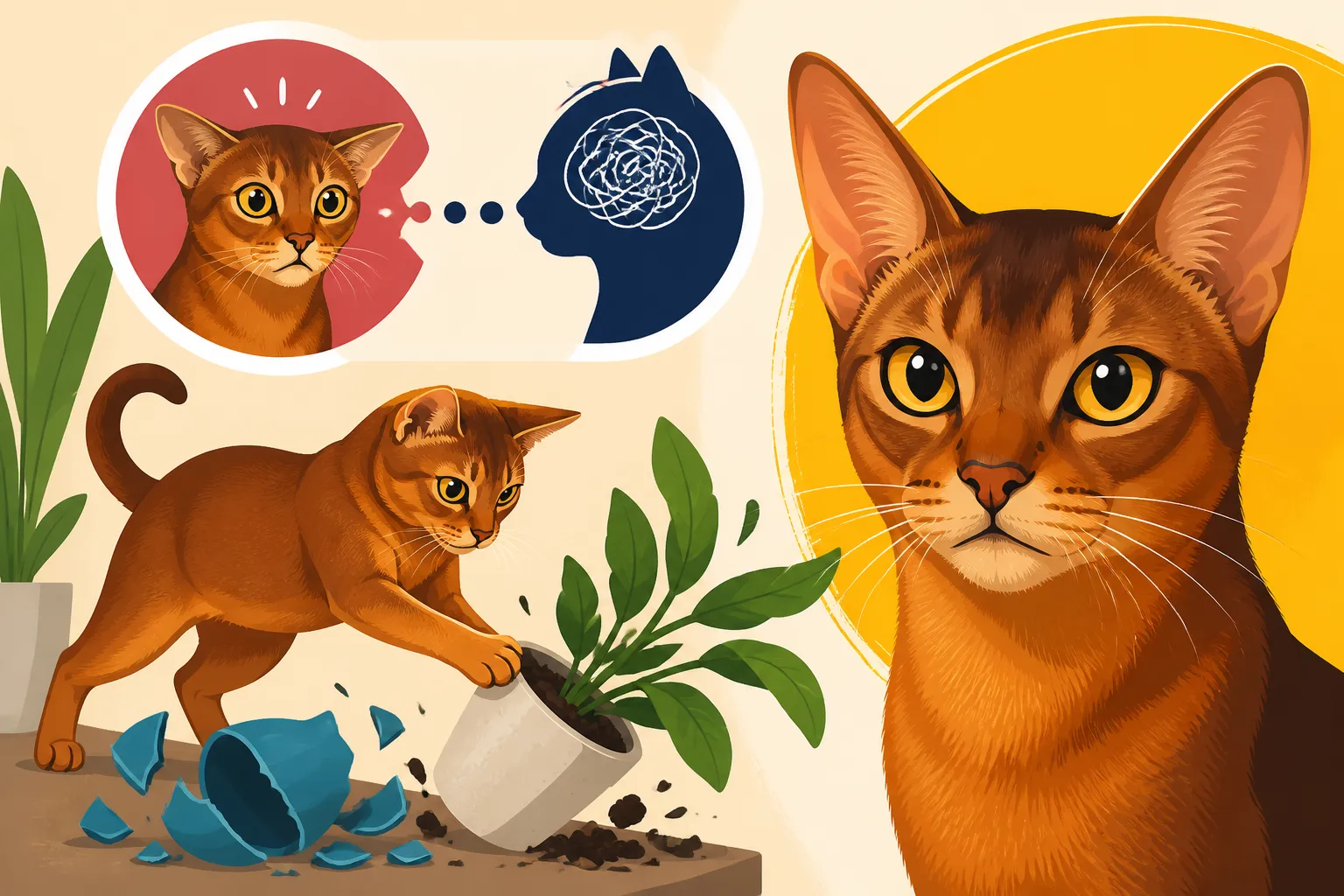
This is classic Abyssinian mischief, isn't it? You walk into a room and find your prized vase on the floor, perfectly intact but undeniably pushed over, or perhaps your nightstand is now barren. Abyssinians do this for attention, for play, and out of sheer exploratory delight. They are testing the boundaries of gravity and cause and effect. "If I push this, what happens? Oh, it moves! Can I make it fall?" This is pure scientific inquiry for them. If they learn that knocking something over gets your immediate attention, even if it's a scolding, they've achieved their goal. They wanted engagement, and they got it. A high-energy cat like an Abyssinian thrives on interaction, and negative attention is still attention.
Decoding the Message: What Your Abyssinian is Trying to Tell You
When your Abyssinian is engaging in behaviors you deem "destructive," they are almost always trying to communicate a need or feeling. Think of them as tiny, furry scientists conducting experiments on their environment, or demanding actors who need more stage time.
Boredom and Lack of Mental Stimulation
This is probably the number one culprit behind most "destructive" behaviors in Abyssinians. A breed as intelligent and active as the Aby simply cannot be left to its own devices with minimal stimulation. If they don't have enough engaging toys, interactive play sessions, puzzle feeders, or opportunities to explore, they will create their own entertainment. And their entertainment often involves things you'd rather they didn't touch. An Abyssinian that's bored might chew on cords, systematically empty cabinets, or chase phantom prey through the house at 3 AM. What an Abyssinian Does When It Is Bored isn't just a list of misdeeds; it's a symptom list.
Anxiety, Stress, or Loneliness
While they are highly independent, Abyssinians form strong bonds with their human companions and can experience anxiety or loneliness if left alone for extended periods without adequate enrichment or company. Changes in routine, a new pet, moving to a new home, or even just a lack of quality interaction can lead to stress. Chewing, overgrooming, or unusual elimination habits can be stress responses. If your Abyssinian is typically well-behaved and suddenly starts acting out, consider if there's been an underlying change in their environment or routine that might be causing them distress. Why an Abyssinian Should Not Be Left Alone All Day emphasizes their social needs.
Unmet Environmental Needs
As mentioned, Abyssinians have specific environmental requirements. This includes sufficient vertical space, appropriate scratching surfaces, and outlets for their natural hunting instincts. If they don't have tall cat trees, wall-mounted shelves, or a safe outdoor enclosure (like a catio), they'll make do with what's available, which usually means your furniture and counters. A lack of stimulating toys that mimic prey, or inconsistent play sessions, can also lead to frustration and redirect their energy into unwanted actions. Think of it: would you rather they shred a cheap cardboard scratcher you got from Amazon, or your new upholstered chair?
Underlying Health Issues
While less common for truly "destructive" behaviors, sometimes a sudden change in behavior can signal an underlying health issue. Dental pain, for example, might lead to increased chewing or a refusal to eat certain foods. Joint pain could make climbing difficult, leading to frustration and redirected energy. A general feeling of unwellness might make a cat anxious and prone to stress behaviors. If a behavior starts suddenly and intensely, especially if accompanied by other symptoms, a vet check-up is always a good first step to rule out medical causes. For instance, Why a Lethargic Abyssinian Needs Blood Work Fast highlights how even subtle changes can point to serious issues.
Proactive Prevention and Management Strategies
The good news is that understanding your Abyssinian's motivations opens the door to effective solutions. It's about proactive management and redirection, not punishment.
Enriching Their Environment with Verticality
This is non-negotiable for an Abyssinian. You need to think "up." Provide tall, sturdy cat trees that reach close to the ceiling, giving them multiple perching spots. Wall-mounted shelving systems are also excellent, allowing them to traverse rooms at height. Look for durable options on Amazon that can withstand an active Aby's leaps and bounds. The more opportunities they have to climb, observe, and survey their domain from above, the less inclined they'll be to use your bookshelf for a launchpad. Consider adding carpeted ramps or steps to assist an older Abyssinian who still loves height but might struggle with big jumps, as seen in How to Keep an Old Abyssinian Climbing Safely.
Engaging Play and Mental Challenges
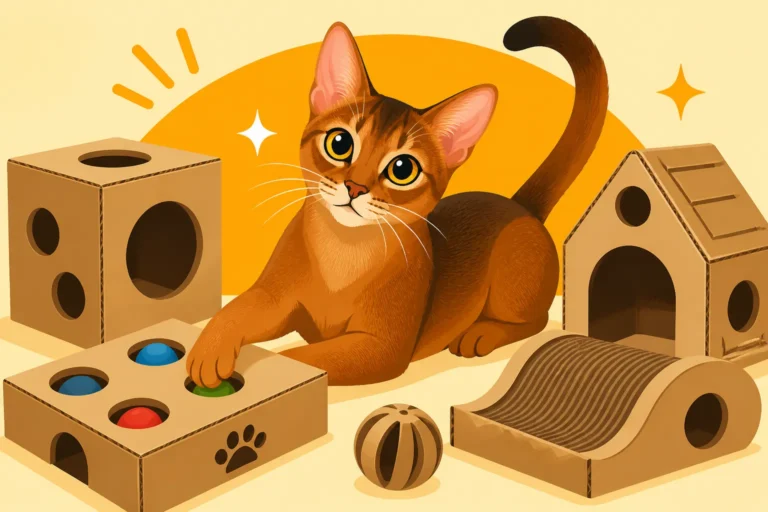
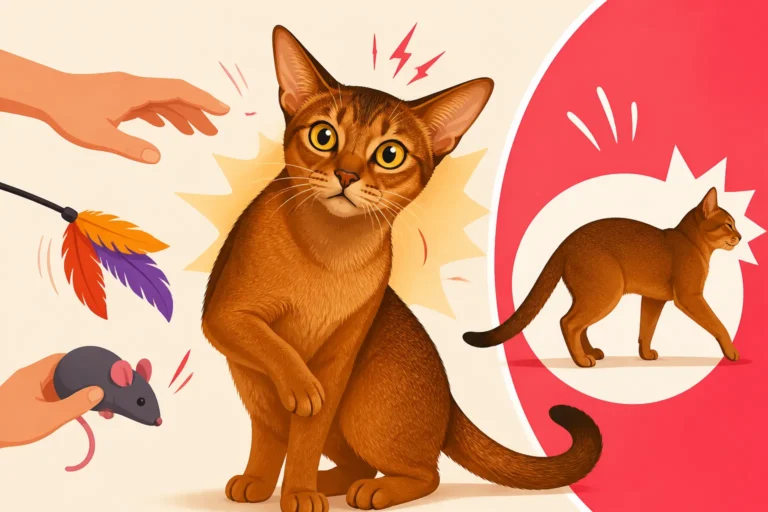
Your Abyssinian needs daily, dedicated playtime. We're not talking about casually dangling a string; we're talking about active, predatory play sessions that simulate hunting. Use wand toys with feathers or small plush animals to encourage stalking, chasing, pouncing, and "killing." Rotate toys regularly to keep things fresh. Puzzle feeders are also fantastic for mental stimulation, forcing them to "work" for their food or treats. There are many interactive puzzle toys available on Amazon that can keep their clever minds occupied for a good chunk of time. Remember, Why Ten Minutes of Play Is Not Enough for an Abyssinian is a crucial read for any Aby owner. Consider teaching them tricks, as Which Tricks an Abyssinian Learns Fastest can be a great way to bond and provide mental exercise.
Redirection and Positive Reinforcement
Instead of punishing your Abyssinian for "bad" behavior, redirect them to appropriate alternatives. If they start scratching the sofa, gently move them to a scratching post and reward them enthusiastically when they use it. If they're trying to chew a cord, offer a safe chew toy instead. Use high-value treats and praise to reinforce desired behaviors. Abyssinians respond very well to positive reinforcement and clicker training. They love to please and enjoy the challenge of learning new things. Consistency is key here; everyone in the household needs to be on the same page with redirection and rewards.
Safe-Proofing Your Home
Sometimes, prevention is the best medicine. Since Abyssinians are so curious and adept at getting into things, you'll need to think like a cat when you set up your home.
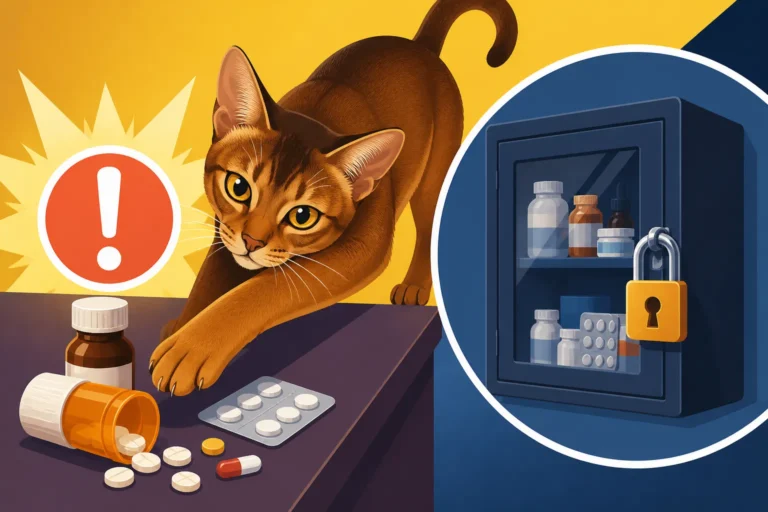
- Secure Cabinets: Use childproof latches on cabinets that contain anything dangerous or highly tempting. Why Childproof Latches End Up on an Abyssinian's Kitchen isn't just a funny anecdote; it's a reality for Aby owners.
- Cord Management: Protect electrical cords with chew-proof covers or run them through conduit. Unplug electronics when not in use.
- Remove Temptations: Don't leave valuables or tempting food items within reach on counters or shelves. If they can reach it, they will investigate it.
- Safe Plants: Ensure all your houseplants are non-toxic to cats, as Abyssinians love to chew on foliage.
- Litter Box Management: An Abyssinian will sometimes act out with inappropriate urination if their litter box isn't clean enough, big enough, or in a convenient location. Which Litter Box Suits a Long Bodied Abyssinian is vital for their comfort.
When to Seek Professional Help
While most "destructive" behaviors in Abyssinians can be managed with environmental enrichment and consistent training, there are times when you might need to call in the cavalry.
Persistent or Escalating Behaviors
If you've tried all the strategies above—increasing play, enriching their environment, redirecting, and positively reinforcing—and the destructive behavior persists or even escalates, it's time for professional input. This is especially true if the behavior is causing significant damage, putting your cat in danger (like constant cord chewing), or impacting your relationship with your pet. Sometimes, an outside perspective can identify factors you might have overlooked.
Sudden Changes in Demeanor
Any sudden, drastic change in your Abyssinian's behavior warrants immediate veterinary attention. This includes aggression, extreme lethargy, sudden changes in litter box habits, or a rapid onset of destructive behaviors that are out of character. As discussed earlier, health issues can manifest as behavioral problems, and it's essential to rule these out first. Why a Suddenly Still Abyssinian Needs a Vet applies here, as a change in activity level often precedes other symptoms.
Consulting a Feline Behaviorist or Vet
Your first call should always be to your veterinarian to rule out any underlying medical conditions. They can perform a thorough examination and recommend diagnostics if needed. If physical health is cleared, your vet might recommend a consultation with a certified feline behaviorist. These professionals specialize in understanding cat behavior and can help you develop a tailored plan to address your Abyssinian's specific challenges. They can often provide insights into subtle cues you might be missing and offer advanced strategies for managing complex behavioral issues. Sometimes, a combination of environmental changes and behavioral therapy is required to truly resolve the problem. They can also advise on Whether an Abyssinian Copes With a Nine Hour Day or if adding a companion cat, such as a second Abyssinian, might be beneficial for loneliness.
At the end of the day, an Abyssinian's "destructive" behavior is almost always a plea for something they need more of: more engagement, more mental challenge, more appropriate outlets for their instincts, or simply more attention. By understanding their unique breed traits and responding with patience, consistency, and a thoughtfully enriched environment, you can transform these frustrating behaviors into opportunities for deeper bonding and a happier, healthier life for your spirited companion.
Disclaimer
This article is for general informational purposes only and does not constitute professional advice. Laws, prices and regulations vary by location and change over time. Consult a qualified professional for guidance on your specific situation.