How an Abyssinian Shows It Is Overstimulated
It’s a common frustration for Abyssinian owners: you’re having a wonderful play session, your energetic Aby is chasing the wand toy with gusto, and then, seemingly out of nowhere, they turn on you. A nip, a swat, a sudden freeze and glare – what just happened? This guide will help you decipher those subtle, and sometimes not-so-subtle, cues that your Abyssinian is becoming overstimulated, so you can prevent those less-than-pleasant interactions and foster a more harmonious bond.
Understanding the Abyssinian's High-Octane Nature
Abyssinians are famously high-energy, intelligent, and incredibly active cats. They live to play, explore, and be involved in everything you do. This wonderful vivacity is part of their charm, but it also means they have a lower threshold for sensory overload compared to some of their more laid-back feline cousins. Their keen senses and intense focus can quickly turn a fun activity into an overwhelming experience if not managed carefully. Think of it like a toddler who gets wound up at a birthday party – eventually, all that excitement boils over.
The Fine Line Between Enthusiastic Play and Overwhelm
For an Abyssinian, play is not just a pastime; it's a vital outlet for their hunting instincts and boundless energy. They stalk, pounce, climb, and race with incredible intensity. This is fantastic, and we want to encourage it! However, because they commit so fully to play, it can be difficult for them to self-regulate. They might push past their comfort zone, especially with a beloved wand toy or a game of chase, until their internal "off" switch gets jammed. That's when enthusiasm can tip into overstimulation. You might be thinking your Aby is still having a blast, but internally, they're starting to feel overwhelmed by the sheer intensity of the interaction or the environment.
Why Subtle Cues Are Often Missed
Abyssinians are also incredibly stoic animals. They were bred to be alert and survive, and showing weakness isn't typically in their nature. This means their initial signs of discomfort or impending overstimulation can be incredibly subtle, often missed by even the most attentive owner. They aren't always going to yowl or hiss immediately. Instead, it might be a slight twitch of the tail, a momentary freeze in their play, or a hardening of their gaze. In a breed known for its constant motion and expressive personality, these fleeting moments can be easy to dismiss as just part of their quirky behavior. It takes a keen eye and a deep understanding of your specific Abyssinian's baseline to catch these early warnings. Ignoring them often leads to a more overt, and less pleasant, display of their discomfort.
Key Signs an Abyssinian is Overstimulated
Recognizing the signs of overstimulation in an Abyssinian is a crucial part of responsible ownership. These signals can manifest in several ways, from changes in their body language to shifts in their vocalizations. Learning to read these quickly will help you intervene before things escalate.
Behavioral Shifts
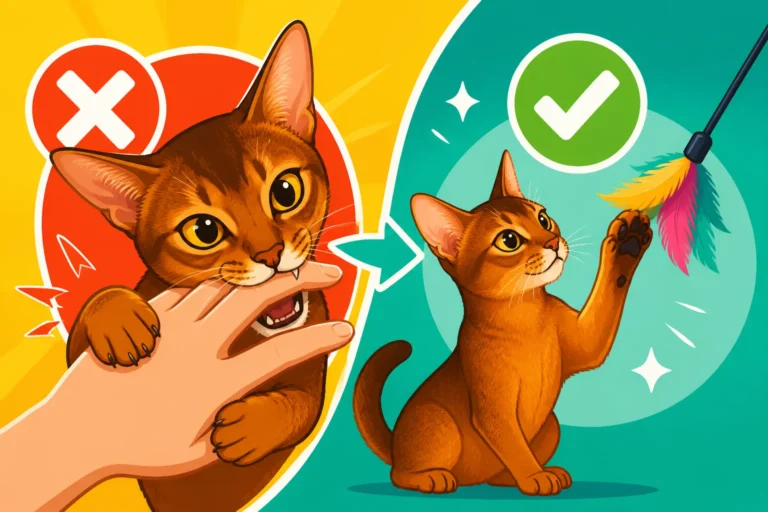
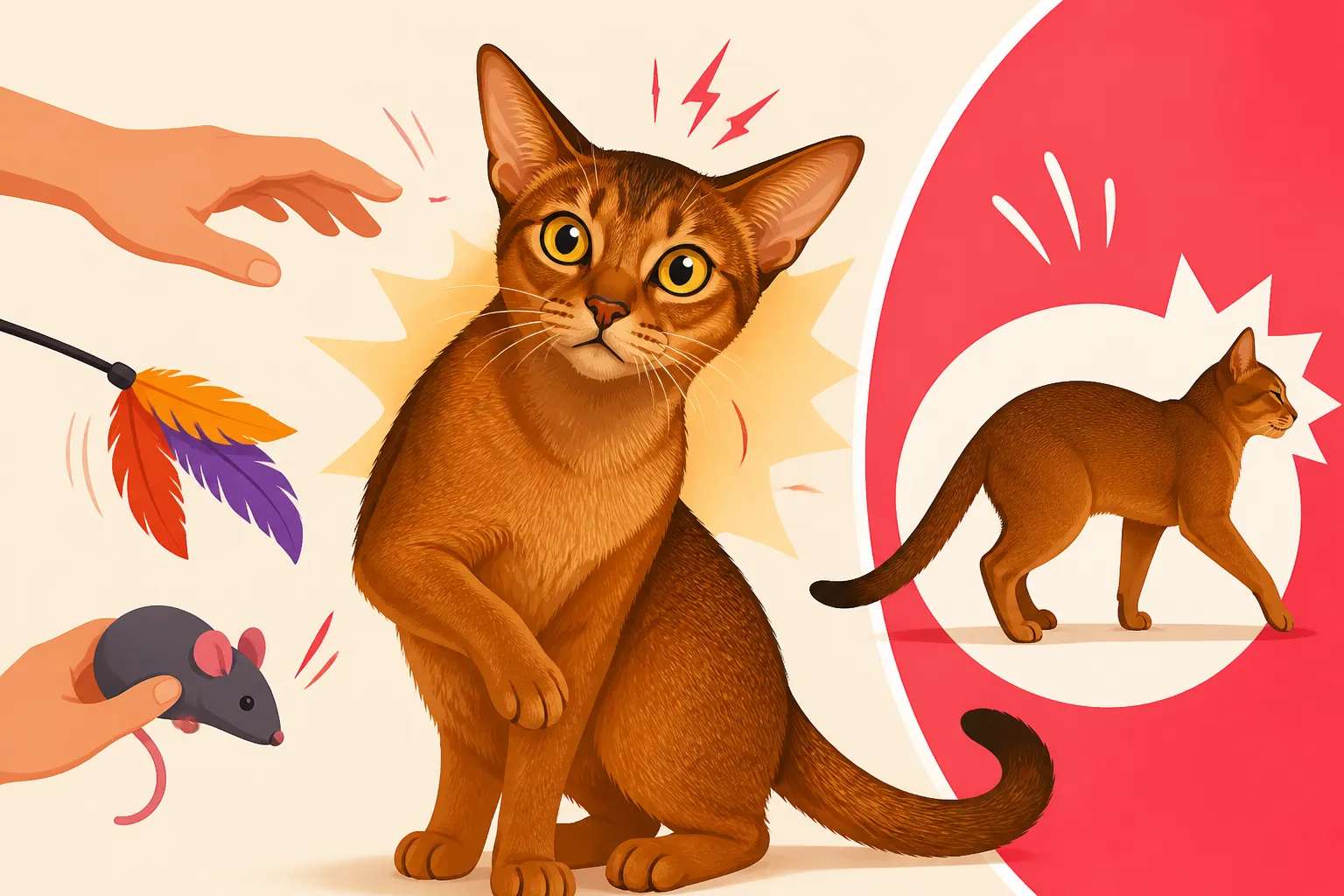
One of the most telling indicators is a change in their typical playful behavior. If your Aby is usually a graceful hunter, but suddenly becomes clumsy or starts missing targets, it might be a sign. They might switch from focused play to erratic, unfocused activity, darting around without a clear purpose. Another common behavioral shift is a sudden increase in aggression towards the toy, or even towards your hand if you're using a wand toy. They might start grabbing and biting more intensely than usual, or even turn their attention to nipping at your clothes or skin. It's not malice; it's a frustrated reaction to being over the edge.
You might notice them suddenly stop playing altogether and retreat, or conversely, become more frantic and desperate to continue the interaction but in a less coordinated way. Sometimes, an overstimulated Aby will start to fixate on something else entirely, like a wall or a piece of furniture, and begin to groom themselves with exaggerated intensity or even chew on something inappropriately. These are displacement behaviors, their way of trying to cope with the internal frenzy. Keep an eye out for repetitive behaviors, like excessive tail flicking or pacing in a small area, which can indicate mounting stress. If your Aby usually loves interactive play, but suddenly seems to ignore your attempts to engage them or actively avoids eye contact, they might be signaling they've had enough. You'll find that How Much Play an Abyssinian Needs Each Day will give you a good benchmark for their normal activity levels.
Physical Tells and Body Language
An Abyssinian's body language is a rich source of information, and overstimulation often brings distinct physical tells. Watch their ears: instead of being alert and forward-facing, they might flatten slightly, rotate sideways, or even pin back against their head. Their pupils might dilate widely, making their eyes look darker and more intense, even in a well-lit room. This is often accompanied by a hard stare, or conversely, rapidly darting eyes that can't seem to settle.
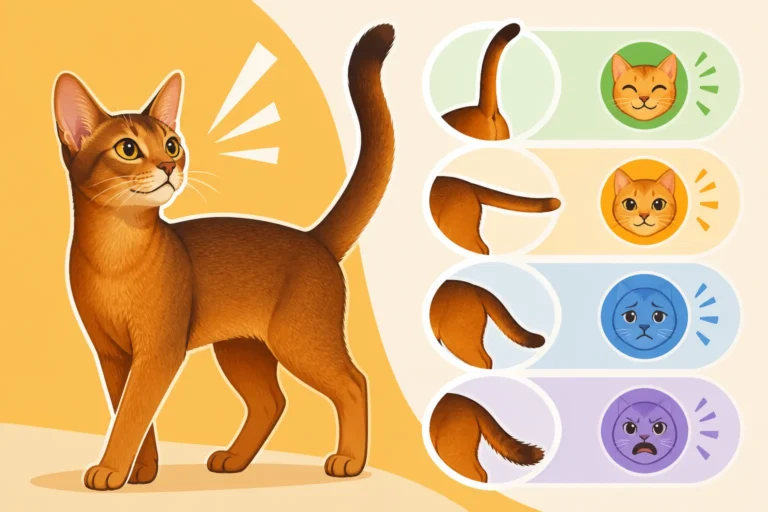
Their tail is another huge indicator. While a playful Abyssinian might have a high, slightly swishing tail, an overstimulated one might start to twitch the tip rapidly, thump it against the ground, or even tuck it tightly between their legs. Their fur might also betray them; watch for piloerection, where the fur along their spine or tail stands up slightly, making them look a little larger or fluffier than usual. This is an involuntary stress response. You might also notice their muscles tensing up, making them look rigid or hunched, rather than their usual fluid grace. A particularly tell-tale sign is a sudden freeze, where they stop dead in their tracks, almost like they’re trying to reboot their system. This is often followed by a lunge or a retreat, depending on their personality and the situation.
Vocalizations and Sound
Abyssinians are generally quite vocal cats, known for their chirps and trills, but the nature of their sounds changes when they're overstimulated. Instead of their usual melodic chatter, you might hear a low growl, a guttural rumble, or even a short, sharp hiss directed at the source of their agitation – whether it's a toy, another pet, or even your hand. Some Abyssinians will emit a sudden, distressed yowl or a series of rapid, high-pitched meows that sound more like frantic alerts than friendly greetings.
It’s less about the volume and more about the tone and context. A happy Aby might chirp to get your attention, but an overstimulated one's chirps might sound more urgent and agitated, lacking the relaxed quality you're used to. They might also go completely silent, which, for such a communicative breed, can be a stark indicator of distress. They might be trying to "shut down" mentally, or they could be focusing all their energy on figuring out an escape or defense mechanism. Learning What an Abyssinian's Chirp Means can help you differentiate between happy and stressed vocalizations.
Here's a quick comparison of active engagement versus overstimulation:
| Behavior Aspect | Playful Engagement | Overstimulation |
|---|---|---|
| Eyes | Alert, focused, pupils normal or slightly dilated | Wide, fixed stare, rapidly darting, dilated pupils |
| Ears | Forward, attentive, twitching | Flattened, sideways, pinned back |
| Tail | High, gentle swish, tip sometimes twitching | Low, tucked, rapid whipping, thumping |
| Body Posture | Loose, fluid, balanced, confident | Tense, rigid, hunched, low to ground, sudden freezing |
| Play Style | Focused, coordinated pounces, gentle bites on toy | Erratic, clumsy, frantic, hard bites, swatting |
| Vocalizations | Chirps, trills, soft meows | Growls, hisses, sharp yelps, agitated meows, silence |
| Interaction | Engaged, returns for more, initiates play | Avoids, retreats, lashes out, grooms excessively |
Common Scenarios Leading to Overstimulation
Understanding why your Abyssinian might become overstimulated is just as important as recognizing the signs. Several common situations can push an Aby past their comfort zone, often because their owners, with the best intentions, simply don't realize the intensity their cat experiences.
Excessive Play or Training
This is probably the most frequent culprit. Abyssinian owners, understandably, love to engage with their intelligent and active cats. But a play session that goes on for too long, or is too intense, can quickly lead to overstimulation. Imagine an unbroken 20-minute session with a laser pointer or a feather wand that never lets them "catch" the prey. This can build immense frustration and hyper-arousal. Even clicker training, while great for mental enrichment, can be overdone. If you're running too many repetitions or demanding too much focus without adequate breaks, your Aby can become mentally exhausted and agitated. Remember, even fun things can become too much. It's often better to have several shorter play sessions throughout the day, perhaps 5-10 minutes each, than one marathon session. How to Split an Abyssinian's Play Into Sessions offers great advice on this. Don't forget to periodically rotate your toys; even the best wand toy from Amazon can become boring or overstimulating if it's the only thing they play with for too long.
Environmental Overload
Abyssinians are incredibly aware of their surroundings. A busy household with constant noise, new people coming and going, or too many unpredictable changes can be a source of stress that leads to overstimulation. Think about renovations, a house party, or even just having the television on too loud with a lot of frantic action. Their keen hearing and sight mean they absorb far more sensory input than we often realize. A home that feels chaotic or unpredictable can leave them feeling constantly on edge, making them more susceptible to tipping over into an overstimulated state during even mild interactions. Providing quiet, safe spaces and a consistent routine can help mitigate this. Having a comfortable window perch allows them to observe the outside world without being directly in the fray, which can reduce their overall stress. Why an Abyssinian Needs a Window Perch explains the benefits well.
Too Much Handling or Affection
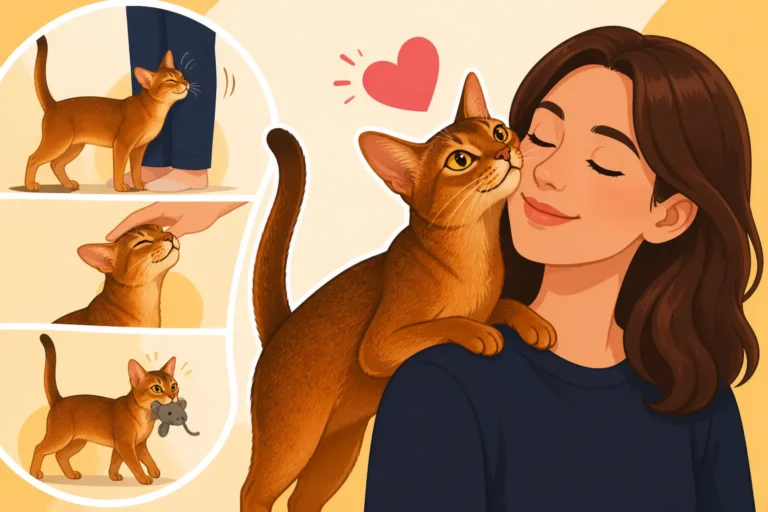
While Abyssinians are affectionate in their own unique way, they are often not "lap cats" in the traditional sense. They prefer to be near you, to perch on your shoulder, or to follow you from room to room, but prolonged restraint, excessive petting, or being held when they don't want to be can quickly overwhelm them. Their skin can be quite sensitive, and repetitive stroking in the same spot, especially along their back or belly, can build up static electricity and nervous energy, turning a pleasant interaction into an irritating one. This is why Why an Abyssinian Will Not Sit on Your Lap is a common observation among owners. They show affection through presence and interaction rather than prolonged cuddling. Always pay attention to their body language during petting: if their tail starts twitching rapidly, their ears flatten, or they tense up, it's time to stop and let them dictate the terms of affection. Never force physical affection on an Abyssinian; it erodes trust and can lead to defensive reactions.
How to Respond When Your Abyssinian is Overstimulated
Okay, you've noticed the signs – your Aby is getting revved up and looking agitated. What do you do? The key is to de-escalate the situation gently and provide them with an opportunity to calm down, without adding to their stress.
De-escalation Techniques
The first and most important step is to stop the interaction immediately. If you're playing with a wand toy, slowly lower it to the ground and then completely remove it from sight. Don't yank it away suddenly, as that can intensify their frustration. If you've been petting them, simply withdraw your hand slowly and quietly. Avoid making sudden movements, loud noises, or directly staring at them, as these can be perceived as threatening. Speak in a calm, low voice if you speak at all, or just remain silent. Your goal is to become as uninteresting and non-threatening as possible.
Sometimes, simply walking away and allowing them space is the best approach. Don't try to "fix" it by offering more toys or treats right then and there. They need to self-regulate. If they are fixated on a person or another pet, gently guide them away or create a barrier to give them distance. Think of it as hitting the reset button on their overactive nervous system. Products like Feliway diffusers can sometimes help create a calmer environment in the long run, and you can easily find them on Amazon.
Creating a Calm-Down Zone
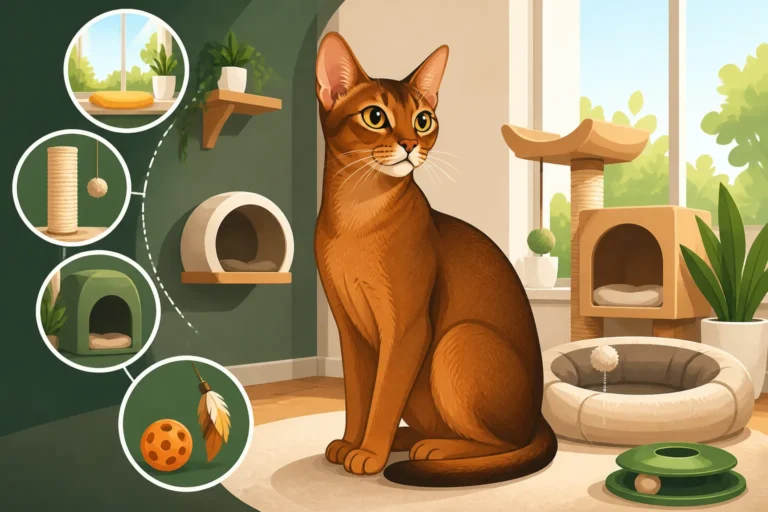
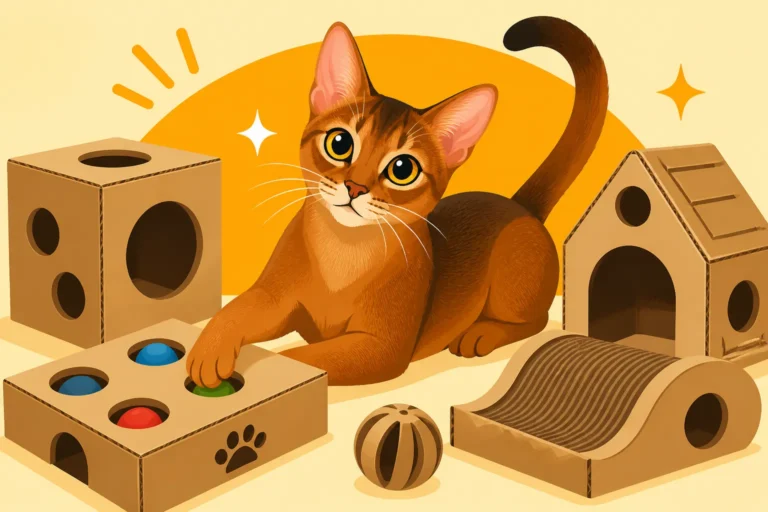
Every Abyssinian needs a designated safe space where they can retreat and feel secure. This isn't a punishment; it's a sanctuary. This "calm-down zone" should be a quiet, undisturbed area where they have access to their bed, water, and perhaps a favorite blanket or a [puzzle feeder] they can work on independently. This could be a cat tree in a less-trafficked corner of a room, a cozy cubby, or even a specific shelf high up where they can observe without being disturbed. An Abyssinian Needs Height More Than It Needs Floor, after all!
When you notice your Aby becoming overstimulated, gently encourage them to go to their calm-down zone. You might do this by leading them with a treat or simply opening the path for them and letting them make their own choice. Once they are there, leave them alone. Do not follow them, try to pet them, or continue to engage. Give them at least 15-30 minutes, or longer if needed, to truly decompress. This teaches them that they have control over their environment and that retreating is a valid and respected choice when they feel overwhelmed.
Preventing Future Episodes
Prevention is always better than reaction. Understanding your Abyssinian's individual tolerance levels is key. Some Abyssinians can handle longer play sessions, while others might need more frequent breaks. Pay close attention to those subtle early warning signs, and end interactions before they reach the point of no return. Regular, structured play sessions that mimic hunting (stalk, pounce, catch, eat) can be very effective in satisfying their instincts without overstimulating them. Always let them "catch" the toy at the end of a session, and allow them to "kill" it with some vigorous bites and kicks. This helps complete their prey drive cycle.
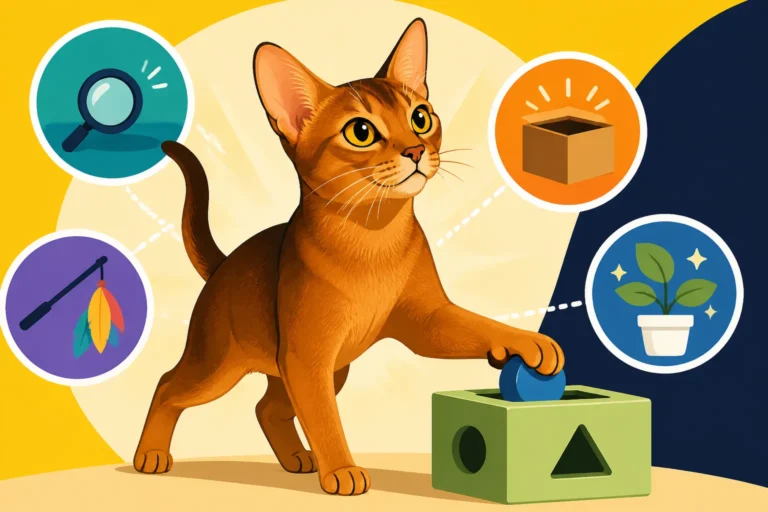
Consider incorporating more independent enrichment to break up intense interactive play. Foraging toys, window perches, and carefully chosen cat trees or wall shelves from Amazon can provide mental stimulation without direct human interaction. Having another compatible cat can also be incredibly helpful; Why a Second Cat Suits an Abyssinian is a real game-changer for many owners, as they can burn off energy together and regulate each other's play. Finally, a consistent daily routine provides predictability and reduces anxiety, making your Abyssinian feel more secure and less prone to agitation. Ensure their feeding times, play times, and quiet times are relatively consistent.
Learning to read your Abyssinian's cues and responding appropriately will strengthen your bond and ensure a happier, more balanced life for your incredibly special feline companion.
Disclaimer
This article is for general informational purposes only and does not constitute professional advice. Laws, prices and regulations vary by location and change over time. Consult a qualified professional for guidance on your specific situation.