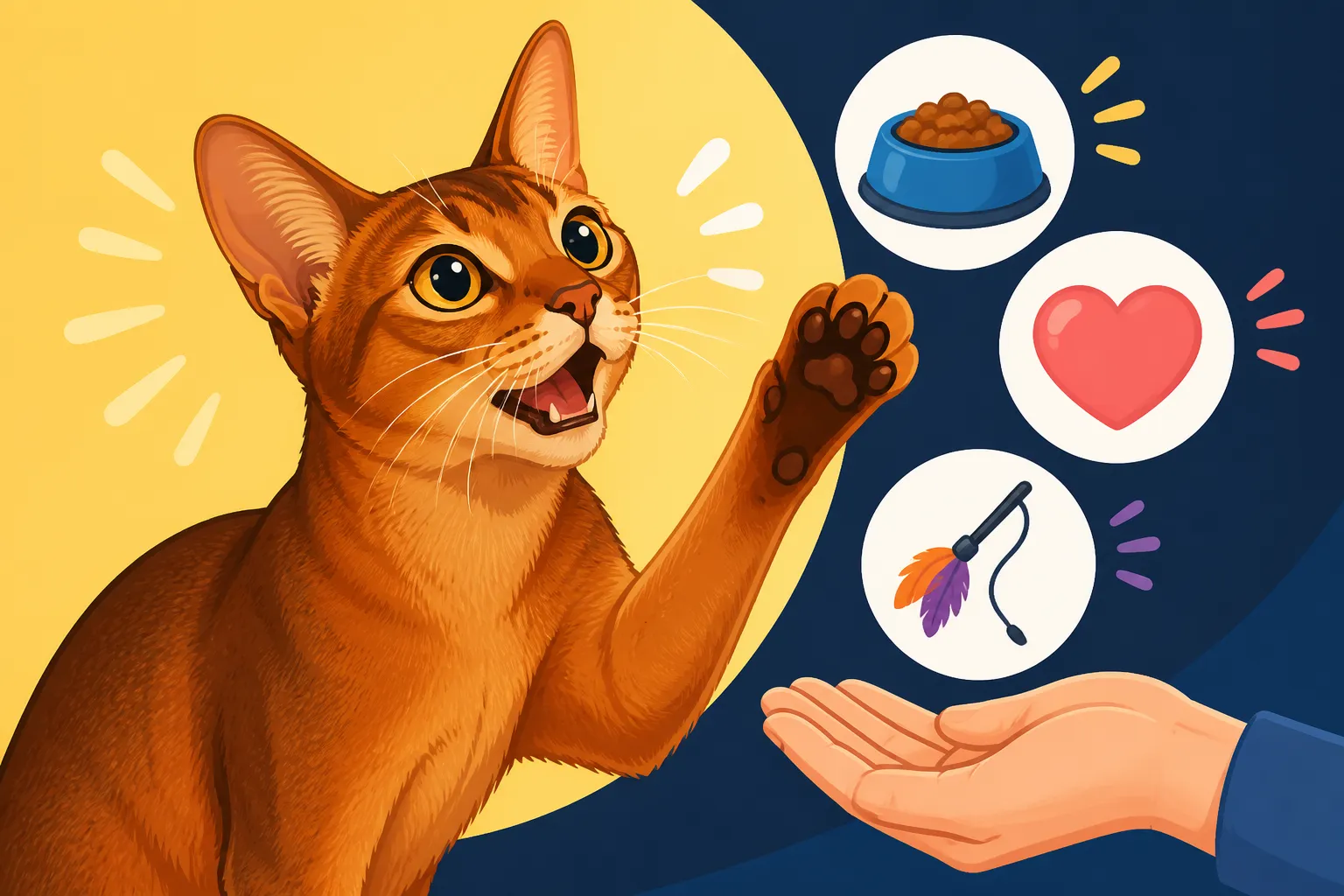
How an Abyssinian Signals It Wants Something
Living with an Abyssinian cat is a whirlwind of activity, intelligence, and a constant guessing game when it comes to deciphering their wants. Unlike some more laid-back feline friends who might just stare intently, Abyssinians are masters of communication, employing a wide array of gestures, sounds, and even environmental manipulation to get their message across. If you've ever felt like your Abyssinian is trying to tell you something but you just can't quite grasp it, this comprehensive guide is here to help you become a fluent speaker of "Aby-nese," understanding their unique ways of signaling their needs and desires.
Decoding Abyssinian Body Language: The Silent Conversations
Abyssinians are incredibly expressive creatures, and much of their communication happens without a single sound. Their bodies are constantly in motion, reflecting their inner world. Learning to read these subtle (and sometimes not-so-subtle) cues is fundamental to understanding what your Aby is trying to convey, whether it’s a plea for playtime or a gentle request for a snuggle.
The Expressive Tail and Ears
An Abyssinian's tail is practically a mood ring, constantly wagging, swishing, or held aloft to express a range of emotions. A tail held high, like a question mark, often signifies happiness, confidence, and a general readiness for interaction. If that high tail has a slight twitch at the very tip, it's usually a sign of keen interest or excitement, perhaps they've spotted a bird outside or heard the rustle of their favorite wand toy. Conversely, a tail tucked low or even between their legs indicates fear, submission, or discomfort – a clear signal that something is amiss. A tail that's lashing quickly from side to side, especially if accompanied by flattened ears, is a warning sign. This isn't happy tail wagging; it often means irritation, overstimulation, or a precursor to a playful (or not-so-playful) swat. You might see this if you've been petting them for too long in one spot, and they're politely (or not-so-politely) asking you to stop. Understanding What an Abyssinian's Tail Says can really help you navigate their moods.
Their large, inquisitive ears are another fantastic barometer. Ears pricked forward and swiveling like radar dishes mean they are engaged and curious, soaking in every sound in their environment. Flattened ears, pressed back against their head, are a definite warning sign of fear, aggression, or intense displeasure. This often goes hand-in-hand with wide eyes and a crouched posture. Half-swiveled ears might suggest they're listening to something that has caught their attention from a distance, or they're mildly annoyed. It's a spectrum, and observing the context is key. For example, if they're playing intensely and their ears are slightly flattened, it might just be focus. But if you approach them while they're sleeping and their ears flatten, they're likely feeling startled or defensive.
Eye Contact and Posture Pointers
An Abyssinian's eyes are just as communicative as the rest of them. Wide, dilated pupils can signify excitement, fear, or a readiness to pounce during play. When their pupils are mere slits, it's often a sign of aggression or intense focus, especially during hunting or when they feel threatened. A slow blink, however, is the ultimate sign of trust and affection. If your Abyssinian gives you a slow blink, it's like a feline kiss, communicating that they feel safe and secure in your presence. You can return this gesture to build an even stronger bond.
Their posture tells a story all its own. An Abyssinian standing tall and confident, perhaps with a slight arch to their back, means they're feeling assertive and ready for action. If they approach you with a low crouch and their body tense, they might be preparing to stalk a toy or, in a less positive context, feeling anxious and trying to make themselves seem smaller. A cat stretched out on their back, exposing their belly, is showing extreme vulnerability and trust. This is a huge compliment, but beware – it's not always an invitation for a belly rub! For many Abyssinians, it's a display of comfort, not necessarily a request for tactile interaction, and a sudden rub might result in a quick nip or a rabbit kick. Knowing How an Abyssinian Shows It Is Overstimulated can prevent these misunderstandings.
The Abyssinian's Vocal Repertoire: Their Language School
Abyssinians are known for being quite vocal, though often less vociferous than, say, a Siamese. Their voices are typically soft, melodious, and filled with a range of chirps, trills, and soft meows. Each sound, combined with body language, paints a vivid picture of what they want.
Chirps, Trills, and Meows of Desire
The famous Abyssinian chirp is a sound of pure excitement and invitation. It's that little bird-like sound they make when they spot something fascinating, like a fly buzzing near the window or when you walk into the room with their favorite toy. It's an invitation to engage, to play, or to investigate. Many Abyssinians will chirp at you when they want you to follow them, whether to the food bowl, a forgotten toy, or to the bathroom faucet for a drink. A trill is similar, often a soft, rolling R sound that communicates contentment, a greeting, or a gentle request. They might trill at you when you pick them up or when they rub against your legs. Understanding What an Abyssinian's Chirp Means helps foster better communication.
Meows, while common to all cats, vary in intensity and meaning with an Abyssinian. A soft, questioning meow might be them asking "Where are you?" or "What are you doing?" A more persistent, slightly louder meow often signals a more urgent need: "I'm hungry!" or "Play with me now!" If the meow becomes a demanding yowl, it might indicate pain, distress, or extreme frustration, especially if they've been left alone for a long time. They're not usually shy about letting you know when they need attention. If you're working at your desk and you hear a series of escalating meows, chances are they're telling you it's time for a break – their break, which involves you.
"Talking" and Conversational Sounds
Beyond standard meows, Abyssinians often have a unique conversational quality to their vocalizations. They might hold a sustained "mrrrowwww" as if elaborating on a point, or emit a rapid-fire series of chirps and trills that sounds like they're telling you a long, complicated story. These "talking" sounds are often reserved for their favorite people and are a sign of deep connection and comfort. They expect a response, too! You might find yourself having full conversations with your Abyssinian, where you respond to their chirps with your own voice, and they respond back. This isn't just cute; it reinforces their belief that you understand and are responsive to their communication.
A low growl or hiss is, of course, a clear sign of displeasure or fear, indicating that they feel threatened or are guarding something. This isn't a common sound from a happy, well-socialized Abyssinian, so if you hear it, take it seriously and give them space. It's their way of setting a very firm boundary.
Action-Oriented Signals: When They Take Matters Into Their Own Paws
Because Abyssinians are so intelligent and active, they don't always wait for you to decode their subtle hints. Sometimes, they take direct action to make their desires unequivocally clear. These are often the most amusing – and sometimes frustrating – ways they signal what they want.
Leading, Pawing, and Nudging
One of the most common ways an Abyssinian signals a want is by leading you. If they want food, they might chirp at you from across the room, then trot purposefully towards the kitchen, looking back to ensure you're following. If you hesitate, they'll likely return, chirp again, and repeat the process, sometimes even lightly batting at your leg. They might lead you to their favorite scratching post when they want a good stretch and attention, or to a specific cabinet where treats are kept. This behavior is a clear instruction: "Come with me; I have something important to show you!"
Pawing and nudging are more direct requests. A gentle paw on your arm or leg while you're sitting might mean "Pay attention to me!" If they then look towards a toy or the door, they're specifying their request. A more insistent pawing, perhaps on your face while you're trying to sleep, often means "Wake up! It's play time/food time!" or "I need something right now." They might also head-butt or rub against you vigorously, especially if they want petting or simply to mark you with their scent, declaring you theirs. This is their way of soliciting interaction and reminding you of their presence.
Retrieving and Pestering
Abyssinians are famously known for their ability to play fetch, and they often use this skill to communicate. If your Aby brings you a toy and drops it at your feet, then stares intently at you, they're not just being generous – they want to play! This is a crystal-clear signal for a game of fetch. Some Abyssinians will even insist on playing, continuing to bring the toy back until you engage with them. It’s part of How Much Play an Abyssinian Needs Each Day. You can find many robust fetch toys on Amazon that can stand up to their vigorous play sessions.
Pestering can take many forms. This might involve jumping onto your lap (briefly, as they are not typically lap cats), walking across your keyboard while you're typing, or even pushing items off your desk one by one until they get your attention. They are persistent and will escalate their actions until their message is received. If they're repeatedly pawing at a specific cupboard, it's a pretty strong hint they know there's something delicious inside. This is where you realize just how intelligent they are – they've learned which actions get the desired result.
Environmental Manipulation: Making Their Desires Known Through Their Surroundings
Abyssinians are incredibly smart and resourceful. If direct communication or physical nudges don't work, they're not above altering their environment to get your attention or achieve their goals. This often involves a bit of mischief, but it's all part of their ingenious way of signaling.
Opening Cabinets and Stealing Items
It's a common lament among Abyssinian owners: "They open everything!" If your Aby keeps trying to pry open a specific cabinet, especially one where food or treats are stored, they're not just being nosy; they're sending a direct message about their hunger or desire for that particular item. They might also learn to open doors when they want access to a room you've closed off, demonstrating their desire to be part of every activity. This is why many Aby owners find themselves installing childproof latches on cabinets – not for children, but for their incredibly clever cats. This ties into Why an Abyssinian Opens Doors and Cabinets.
Another classic Abyssinian tactic is "stealing" small, shiny, or interesting objects and moving them to a prominent location or dropping them at your feet. This could be anything from a hair tie to a pen to a piece of jewelry. This is usually a bid for attention or an invitation to play. "Look what I have! Now you have to interact with me to get it back!" It's a clever way to initiate a game or simply to remind you that they are present and require engagement. You might find a whole collection of your missing items in their favorite hiding spot, a treasure trove of communication.
Sitting on Strategic Objects and Vocalizing From Specific Spots
Sometimes, an Abyssinian will simply position themselves on an object they associate with a particular outcome. If they want to go outside (on a leash, of course!), they might sit squarely on their harness, staring at you. If they want attention, they might sit on your phone, laptop, or book, effectively blocking your access to whatever currently occupies your focus. It's a clear, if inconvenient, way of saying, "My needs are more important than that screen!"
Vocalizing from a specific spot also holds meaning. An Aby meowing from the empty food bowl is obviously asking for food. One chirping from the top of the cat tree might be inviting you to a game of "chase me up here!" or simply enjoying their elevated kingdom and wanting you to acknowledge it. If they are making noise from near the water fountain, they might be telling you it's running low or needs a cleaning. These are intelligent creatures who use every tool at their disposal to communicate, and their environment is one of their biggest assets. You can often find great interactive water fountains on Amazon that will encourage them to drink more.
To help you remember some of the key signals, here's a quick table:
| Signal Type | Specific Behavior | Common Interpretation | Your Best Response |
|---|---|---|---|
| Body Language | Tail high, twitching tip | Happy, excited, interested | Engage, play, investigate with them |
| Ears flattened, pupils dilated | Fearful, aggressive, overstimulated | Give space, de-escalate, remove source of stress | |
| Slow blink | Trust, affection, comfort | Return slow blink, speak softly, gentle petting | |
| Exposed belly (not always for rubs!) | Feeling safe, relaxed, trusting | Acknowledge, speak softly, avoid sudden touching | |
| Vocalizations | Chirp/Trill | Greeting, invitation to play/follow, curiosity | Follow them, engage with a toy, talk back |
| Persistent Meow (mid-tone) | Hunger, attention-seeking, "play with me!" | Check food, offer play, acknowledge their presence | |
| Demanding Yowl (loud, sustained) | Distress, pain, extreme frustration | Investigate cause, comfort, vet check if concerned | |
| Action-Oriented | Leading to a location | "Follow me, I want something here" | Follow and investigate what they're showing you |
| Pawing/Nudging | "Pay attention to me!", requesting interaction | Pet, play, verbally acknowledge | |
| Bringing a toy | "Let's play fetch!" | Engage in a game of fetch | |
| Environmental | Opening cabinets/doors | Access desired item (food, toy, room) | Secure items, ensure needs are met, redirect |
| Stealing small objects | Attention-seeking, "play with me!" | Engage in play, retrieve object gently | |
| Sitting on laptop/phone | "You need to pay attention to me now" | Acknowledge, offer alternative entertainment or affection |
By paying close attention to these signals, both subtle and overt, you'll deepen your understanding of your Abyssinian and strengthen the incredible bond you share. They're not just pets; they're active, intelligent companions who crave communication and interaction. The more you listen, the more they'll talk.
Disclaimer
This article is for general informational purposes only and does not constitute professional advice. Laws, prices and regulations vary by location and change over time. Consult a qualified professional for guidance on your specific situation.