Why an Abyssinian Guards Its Feeding Time
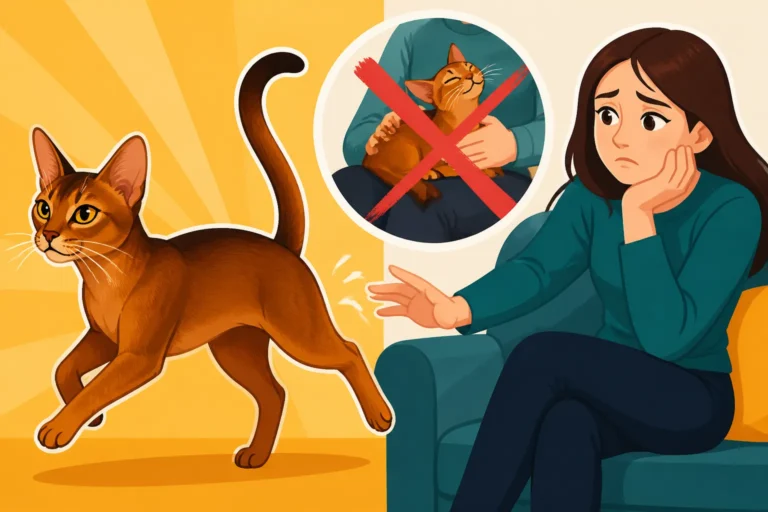
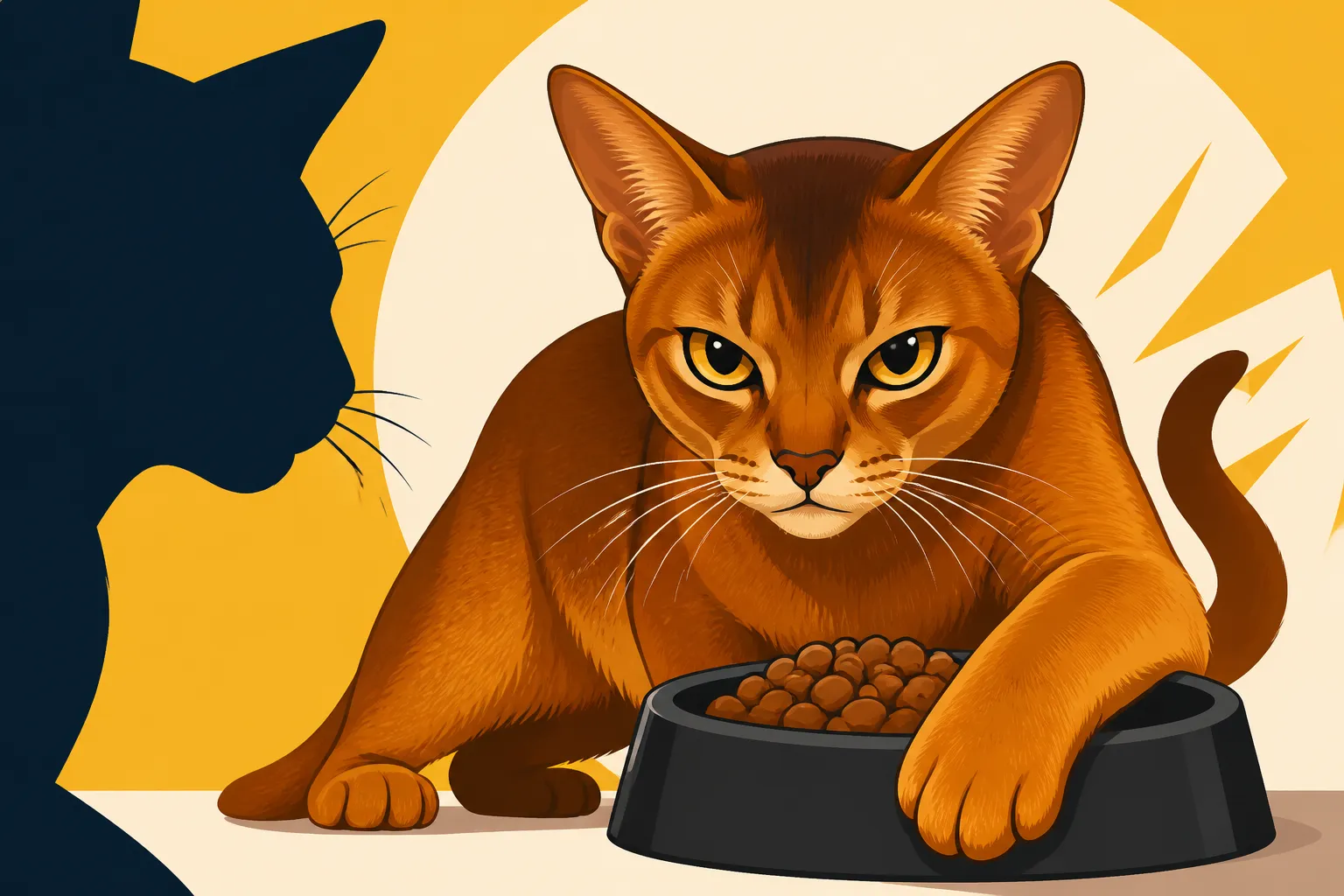
It can be quite startling when your typically affectionate and playful Abyssinian suddenly transforms into a growling, hissing guardian over their food bowl. You might wonder if you've done something wrong or if this behavior is normal for such an active, engaging breed. This guide is here to shed light on why your Abyssinian guards its feeding time, exploring the underlying instincts and offering practical, empathetic solutions to help bring peace back to meal times.
The Deep Roots of Feline Food Guarding
When you see your Abyssinian acting possessive over their dinner, it's easy to assume they're being greedy or naughty. But truly, this behavior is often rooted in instincts that stretch back thousands of years to their wild ancestors. Imagine a time when food was scarce, and every meal was a fight for survival. A cat that didn't protect its catch wouldn't last long.
Survival Instincts and Resource Scarcity
Even though our domestic cats live lives of luxury with regular meals, those ancient survival mechanisms are still hardwired into their brains. For many cats, food is a high-value resource, and the instinct to protect it runs deep. It's not about being malicious; it's about an ingrained need to ensure their survival. This is why even a cat that just ate might still eye another cat's bowl with suspicion or growl if you get too close. They're not rationally thinking, "I'm full"; they're instinctively responding to a perceived threat to a vital resource.
The Role of Early Experiences
A cat's early life experiences can profoundly influence how they approach food. Kittens who had to compete fiercely with littermates for milk or solid food might grow up with a stronger sense of food insecurity. If they were part of a large litter, or if food wasn't consistently available, they might develop a habit of "inhaling" their meals and guarding their bowl. Even a cat that was a stray or in a shelter environment where food was unpredictable might carry that anxiety into a loving home. While our Abyssinians generally come from well-managed breeding programs, some individuals might still exhibit these behaviors due to a particular kittenhood dynamic or just a stronger inherent drive.
Why Your Abyssinian Might Be Particularly Prone to Guarding
Abyssinians, with their boundless energy and intense personalities, often exhibit certain traits that can amplify this instinctual food guarding. They're not just any cat; they're incredibly intelligent, driven, and acutely aware of their surroundings.
High Metabolism and Intense Food Drive
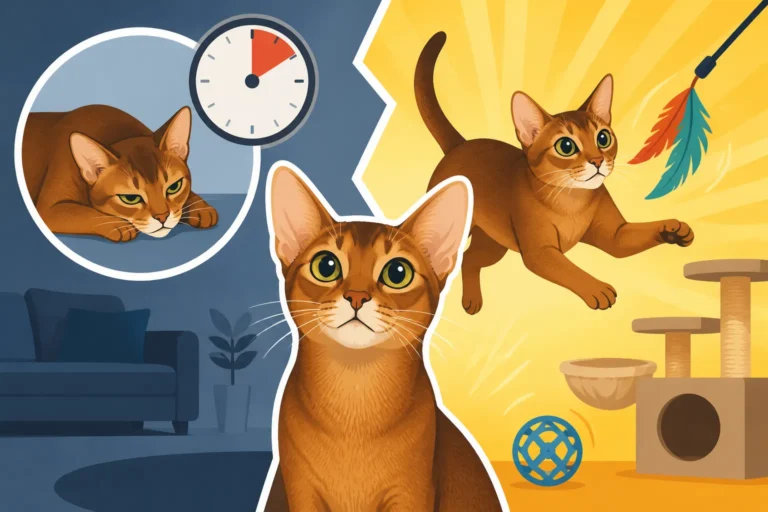
One of the defining characteristics of an Abyssinian is their incredible energy level. These cats are always on the go, exploring, climbing, and playing. This high activity level translates directly into a high metabolism, meaning they burn through calories faster than many other breeds. Consequently, food is incredibly important to them. They genuinely need a good amount of high-quality protein and fat to fuel their antics. Because food is so central to their energetic existence, their drive to secure it can be more pronounced. It's not just a meal; it's the fuel for their next adventure. You might notice your Abyssinian emptying their bowl almost immediately, which further highlights this intensity. For more on their eating habits, check out Why an Abyssinian Empties a Bowl Immediately and How Many Calories an Adult Abyssinian Burns.
Intelligence and Environmental Awareness
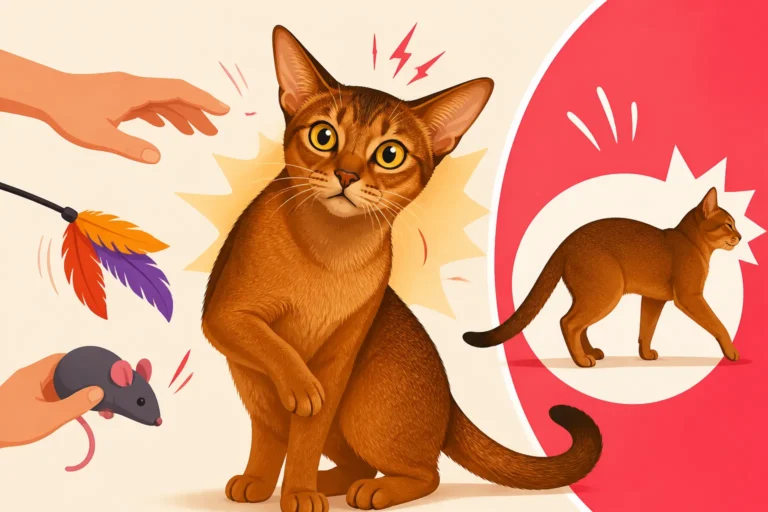
Abyssinians are famously intelligent and observant. They're quick to pick up on routines, changes in their environment, and even your intentions. This keen awareness can sometimes translate into them being highly sensitive to perceived threats during meal times. If another pet walks by, or if you accidentally jostle their bowl, they might interpret it as an encroachment. Their smarts mean they're also excellent at training you! If growling or swatting gets you to back off, they'll quickly learn that this behavior is effective. They're not being mean; they're just being smart about protecting what's theirs.
Resource Guarding Beyond the Bowl
While we're focusing on food, it's worth noting that an Abyssinian's protective instincts can sometimes extend to other high-value resources. This could include a favorite sleeping spot, a prized toy, or even attention from a specific person. If you observe your Abyssinian guarding items other than food, it suggests a broader tendency toward resource guarding, which can be managed with similar strategies. Understanding this broader context can help you approach the issue more holistically.
Practical Strategies to Manage Abyssinian Food Guarding
The good news is that food guarding, while instinctual, can often be managed and even reduced with consistent, patient intervention. The goal isn't to punish your Abyssinian for their instincts, but to help them feel secure and understand that their food supply is safe.
Establishing Predictable Feeding Routines
Cats thrive on routine, and Abyssinians are no exception. Consistent meal times can significantly reduce anxiety around food scarcity. Instead of leaving a full bowl down all day, which can turn your Abyssinian into a grazer who guards their food even when not actively eating, try scheduled meals. This allows you to control the environment during feeding. For insights into their grazing habits, read Why a Full Bowl Turns an Abyssinian Into a Grazer.
When you feed at consistent times, your Abyssinian learns that food will appear predictably. This reduces the panic response that can lead to guarding. Consider feeding them two to three times a day, offering appropriate portions. If you have multiple cats, make sure they are fed at the same time. This prevents one cat from finishing quickly and then trying to intimidate another for their leftovers. How to Portion an Abyssinian Across Three Sittings provides more details on meal frequency.
Creating Safe, Separate Feeding Spaces
If you have multiple pets, or even if your Abyssinian is guarding against family members, creating a dedicated, safe feeding space is paramount. This might involve:
- Separate Rooms: Feed each cat in a different room with the door closed. This completely removes the competition and allows each cat to eat in peace.
- Vertical Space: Abyssinians love to climb. Consider feeding one cat on a tall cat tree or a high shelf, while another eats on the floor. This leverages their natural desire for height and can make them feel more secure.
- Physical Barriers: Even a baby gate can create a psychological barrier that helps define a feeding zone for a single cat, signaling to other pets (and people) to keep their distance.
By minimizing perceived threats during mealtime, you reduce the need for your Abyssinian to guard its food.
Incorporating Puzzle Feeders and Enrichment
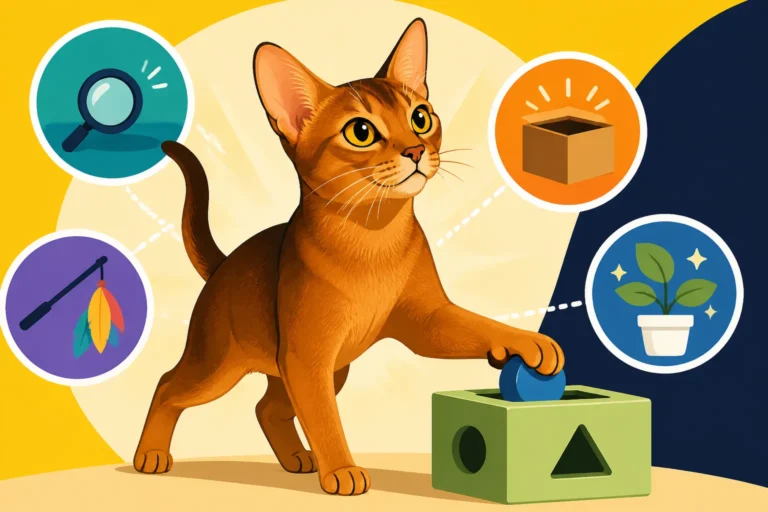
Puzzle feeders are fantastic tools for Abyssinians because they tap into their intelligence and high energy levels. Instead of simply placing food in a bowl, a puzzle feeder requires your cat to "work" for their meal. This can have several benefits:
- Slows Eating: It prevents fast eaters from finishing too quickly and then looking to guard or steal another cat's food.
- Mental Stimulation: It provides enrichment, satisfying their natural hunting instincts and reducing boredom-induced stress that might contribute to guarding behavior.
- Reduces "Value": When food isn't just "given" but "earned," its perceived value might shift slightly, reducing intense guarding.
You can find a wide variety of excellent puzzle feeders on platforms like Amazon, from simple treat balls to more complex labyrinth designs. Experiment to see which ones your Abyssinian enjoys most. Some great options are discussed in Which Puzzle Feeders Hold an Abyssinian's Attention. You could also try hiding small portions of food around the house to encourage foraging behavior, making mealtime an adventure rather than a high-stakes event. How to Hide Food Around the House for an Abyssinian offers more ideas.
Here's a quick comparison of feeding methods and their potential impact on food guarding:
| Feeding Method | Description | Pros for Abyssinian | Cons for Abyssinian | Impact on Food Guarding |
|---|---|---|---|---|
| Free Feeding | Food always available in a bowl. | Convenient for owner; cat eats when hungry. | Can lead to overeating; lack of structure. | Often exacerbates guarding; constant resource to defend. |
| Scheduled Meals | Food offered at specific times, then removed. | Establishes routine; portion control; cat feels secure. | Requires owner presence; initial adjustment period. | Reduces guarding by creating predictability; less perceived scarcity. |
| Separate Feeding Areas | Each cat eats in its own defined space. | Eliminates direct competition; reduces stress. | Requires multiple feeding stations/rooms. | Highly effective in preventing inter-cat food guarding. |
| Puzzle Feeders | Cat must solve a puzzle to get food. | Mental stimulation; slows eating; satisfies hunting drive. | Can be messy; some cats give up easily. | Decreases perceived value of "easy" food; adds enrichment, reducing anxiety. |
Desensitization and Positive Reinforcement
If your Abyssinian guards against you, you can work on desensitizing them to your presence during meal times. The key is to approach slowly and offer something positive, rather than taking something away.
- Start from a Distance: When your Abyssinian is eating, sit or stand a few feet away, well outside their comfort zone for guarding. Don't make eye contact initially.
- Gradual Approach: Over several days or weeks, slowly decrease your distance. If your Abyssinian shows any signs of tension (flattened ears, stiff body, growling), you've moved too close, too fast. Retreat and try again from a slightly further distance next time.
- Offer a High-Value Treat: Once you can sit comfortably near them while they eat without guarding, start dropping a small, high-value treat (like a tiny piece of cooked chicken or a favorite crunchy treat) near their bowl, but not in it, while they're eating. The idea is for them to associate your presence with more good things, not a threat.
- Gentle Touch: Eventually, you might be able to gently place your hand near the bowl, and then eventually, briefly touch the bowl, always followed by a treat. The goal is for them to see your approach as a positive addition, not a challenge.
This process requires immense patience and should never involve punishment, as that will only increase their anxiety and guarding behavior.
When Food Guarding Becomes a Bigger Problem
While some level of food guarding might be a minor inconvenience, it can escalate into a more serious behavioral issue that impacts the well-being of your Abyssinian and other household members. Knowing when to seek professional help is crucial.
Aggression Towards Humans or Other Pets
If your Abyssinian's food guarding progresses beyond a low growl or a quick swat and turns into full-blown aggression – such as hissing, biting, or serious attacks on other pets or even people – it's time to take it very seriously. This level of aggression can lead to injuries and creates a stressful, unsafe environment for everyone. It indicates a significant underlying anxiety or behavioral issue that needs expert intervention. If you have multiple cats and one is consistently bullying the others at meal times, disrupting their ability to eat, this also signals a problem. More on how Abyssinians interact with other cats can be found in How to Introduce a Second Cat to an Abyssinian.
Underlying Health Concerns
Sometimes, a sudden onset or escalation of food guarding can be a symptom of an underlying medical condition. A cat that is in pain, feels unwell, or is experiencing increased hunger due to a metabolic disorder might become more possessive of its food. For example, conditions that affect nutrient absorption or cause chronic pain could lead a cat to guard its food more fiercely. Abyssinians, being so active, can often mask illness well, so a behavioral change like this should always prompt a veterinary check-up. They are experts at hiding symptoms, as noted in Why a Lean Abyssinian Hides Illness Longer Than a Heavy Cat. A thorough examination, including blood work, can rule out medical causes for the change in behavior.
The Importance of Professional Guidance
If you've tried the above strategies and your Abyssinian's food guarding persists or worsens, don't hesitate to consult with a professional. This could be your veterinarian first, to rule out any health issues, and then potentially a certified feline behaviorist or a veterinary behaviorist. These experts can assess your specific household dynamics, your cat's history, and individual personality to develop a tailored behavior modification plan. They can help you identify triggers you might be missing and guide you through advanced training techniques. Remember, addressing these issues early can prevent them from becoming entrenched and can significantly improve your Abyssinian's quality of life and your relationship with them.
Disclaimer
This article is for general informational purposes only and does not constitute professional advice. Laws, prices and regulations vary by location and change over time. Consult a qualified professional for guidance on your specific situation.