Why Deterrent Sprays Fail on an Abyssinian
It’s a common scenario for many Abyssinian owners: you’ve got this incredibly clever, energetic cat, and you’re trying to keep them off the kitchen counters or out of the delicate houseplants, so you reach for a deterrent spray. You spray diligently, perhaps even liberally, only to find your mischievous Aby back on the forbidden surface minutes later, looking utterly unbothered, perhaps even more determined. It’s frustrating, disheartening, and often leaves you wondering if your Abyssinian is simply immune to all forms of deterrence. This guide will delve into the core reasons why these popular deterrent sprays often fall flat with an Abyssinian and, more importantly, what successful, positive strategies you can employ instead.
The Abyssinian Mindset: Why They Defy Simple Deterrents
Abyssinians aren't just cats; they're high-octane, intelligent, and incredibly curious beings. Their inherent nature often makes them resistant to the quick-fix solutions that might work for a more placid feline. Understanding this fundamental difference is key to knowing why deterrent sprays often don't stand a chance.
Their Innate Curiosity and Intelligence
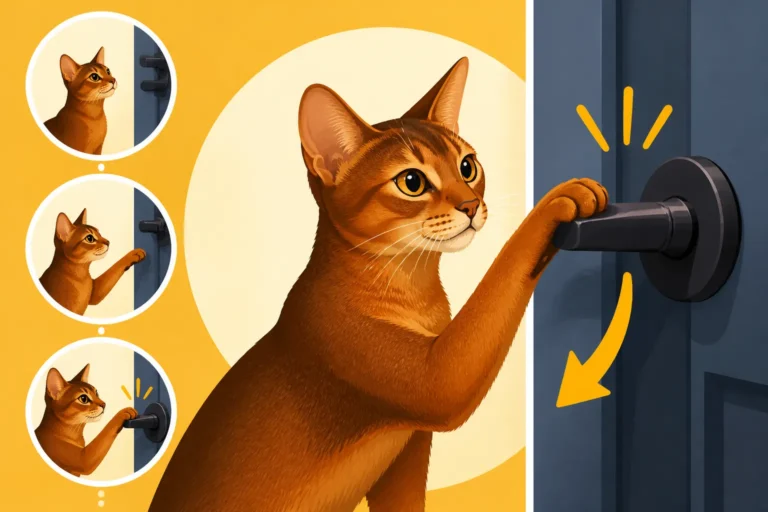
If you live with an Abyssinian, you know they're practically professors of problem-solving. They don't just do things; they investigate things. A closed cabinet isn't a barrier; it's a puzzle waiting to be solved. A high shelf isn't out of reach; it's a new vantage point to be conquered. Their minds are constantly whirring, analyzing, and seeking out new experiences.
When faced with a deterrent spray, an Abyssinian's first instinct isn't usually fear or submission. Instead, it's often more like, "What was that? Why did it happen? How can I get around it?" They might be momentarily startled or annoyed by a bitter taste or a sudden hiss, but that innate curiosity kicks in almost immediately. They'll test the boundaries, sniff around the edges, and try different approaches until they either overcome the deterrent or figure out its limitations. This isn't defiance; it's pure, unadulterated Abyssinian intelligence at play. They are, after all, famously known as The Abyssinian Is the Busiest Cat in the House, a testament to their active minds and bodies.
High Energy and Drive for Activity
Abyssinians are not content to lounge on a sunny windowsill all day (though they certainly enjoy a good sunbath). They are athletes, climbers, and explorers. Their genetic makeup practically demands constant activity and mental engagement. This means they have an intrinsic need to climb, jump, and survey their territory from high places. If there's a countertop, a bookshelf, or the top of the refrigerator, your Abyssinian views it as prime real estate, not a forbidden zone.
A deterrent spray might make a specific spot temporarily unpleasant, but it doesn't diminish their fundamental need to climb and explore. It simply pushes them to find another, often equally inappropriate, outlet for that energy. If the kitchen counter is sprayed, they might move to the dining room table, then the top of the cabinets, then the curtain rods. They're just seeking to fulfill an instinct. You might notice that An Abyssinian Needs Height More Than It Needs Floor, which speaks volumes about their aerial ambitions. Without appropriate, permitted vertical spaces, they will inevitably create their own, spray or no spray.
Lack of Negative Association
For any deterrent to be effective long-term, the cat needs to consistently associate the unpleasant consequence directly with the undesired behavior itself, and ideally, not with you. This is where sprays typically fail with smart, sensitive Abyssinians.
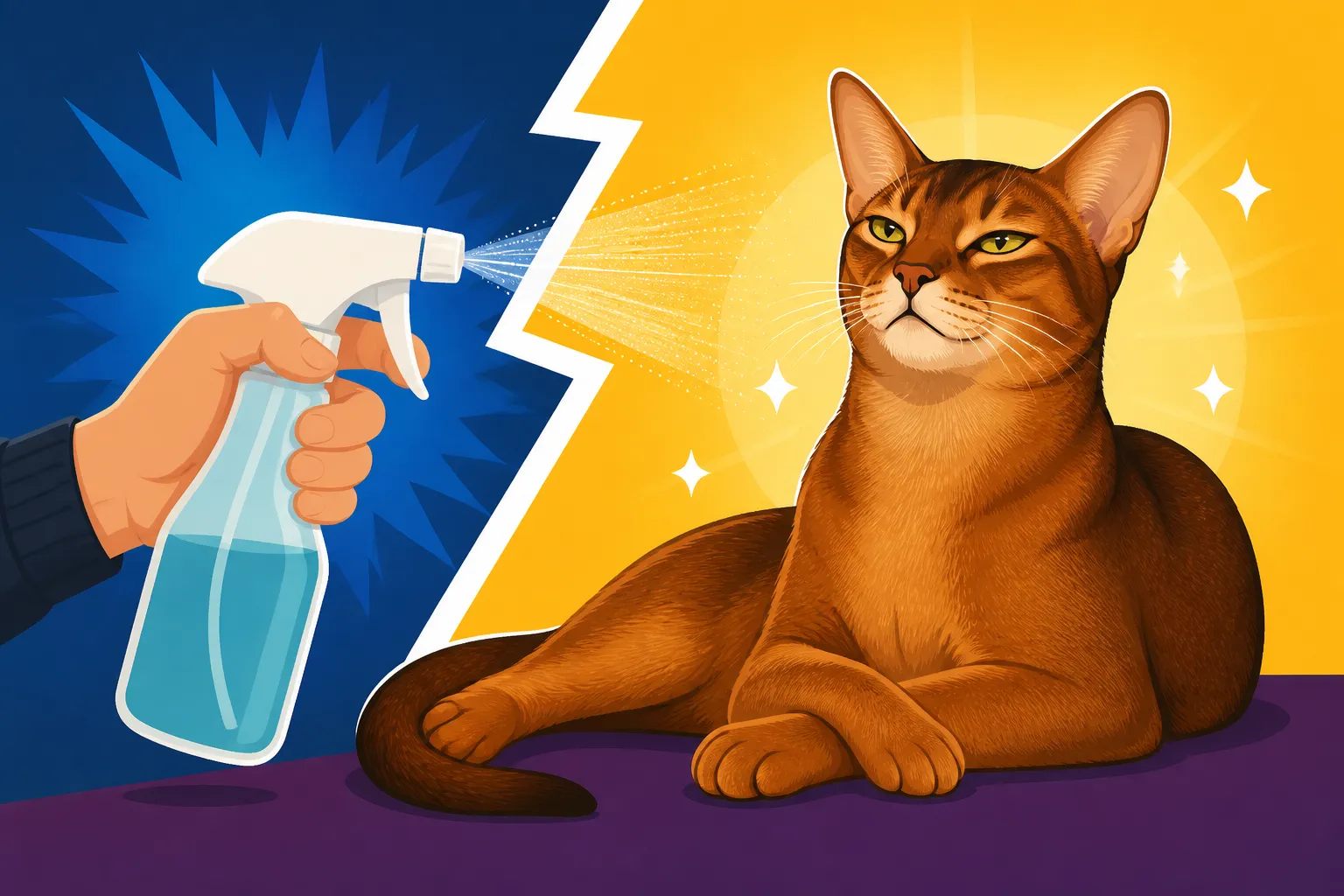
Often, if you’re the one applying the spray, or if they see you near the area when the spray goes off (especially with motion-activated ones), your Abyssinian will quickly associate the negative experience with your presence or your actions, rather than with the act of jumping on the counter. This can lead to a breakdown in trust, making your cat wary of you, or simply causing them to engage in the undesired behavior when you're not around. They learn to avoid the spray, not the surface. They’ll wait until the coast is clear, or until you leave the room, before resuming their counter-surfing adventures. This inconsistency means the spray never truly teaches them why the behavior is undesirable, only when they might get caught.
Breaking Down Deterrent Sprays: Why They Fall Short
Deterrent sprays come in various forms, each with its own set of promises and, unfortunately, often, its own set of limitations when it comes to the highly driven Abyssinian. Let's look at why these popular methods don't often hit the mark.
The Limitations of Scent-Based Repellents
Many deterrent sprays rely on strong, unpleasant scents to keep cats away. Common ingredients include citrus oils (lemon, orange), bitter apple, or even specific pheromones meant to signal "danger" or "no-go." The idea is simple: cats dislike these smells, so they'll avoid the sprayed area.
However, Abyssinians are often less bothered by these scents than anticipated. While some individual cats might have a strong aversion, many Abyssinians, with their bold personalities and high motivation, either tolerate the smell, become desensitized to it over time, or simply find the reward of being on the forbidden surface outweighs the mild olfactory annoyance. A determined Abyssinian eyeing a prime perch will often push through a citrus scent with little hesitation. You can find a huge variety of these products on Amazon, with appealing claims, but their real-world effectiveness with an Aby often proves disappointing. Furthermore, these sprays require constant reapplication to remain effective, which becomes a tiresome and often futile chore for the owner. It's a short-term, superficial fix that doesn't address the underlying instinct.
Noise-Activated and Motion-Activated Sprays
These more sophisticated deterrents aim to create an immediate, startling, and negative association without direct human intervention. Think of motion-activated devices that emit a sudden hiss of compressed air when a cat crosses an invisible beam. The initial surprise factor can be quite effective.
For an Abyssinian, these can work for a brief period. The sudden noise or puff of air is certainly startling. But here's the catch: Abyssinians are incredibly clever. They are quick learners and astute observers. They might learn the exact range of the motion sensor, finding a path around it, or they might simply habituate to the noise. What was once a startling surprise can become just another part of the environment, or even a challenge to overcome. Some Abyssinians, being the playful clowns they are, might even start seeing it as a game to trigger the device! While products like these are readily available on Amazon and promise automated solutions, they often underestimate the sheer ingenuity of an Abyssinian. The core issue remains: they might stop the immediate action, but they don't fulfill the cat's underlying needs or redirect their behavior constructively.
The Inconsistency Problem
One of the biggest reasons deterrents ultimately fail is the inherent inconsistency of their application. For any training or behavior modification to stick, it needs to be consistent, immediate, and predictable from the cat's perspective.
Think about it: can you spray every single forbidden surface, every single time your Abyssinian might approach it? Probably not. You'll miss spots, forget to reapply, or simply not be present when your cat decides to explore. Abyssinians are masters of observation. They quickly learn the patterns. They'll know when the spray isn't there, or when the motion sensor is turned off, or when you're not in the room. This intermittent reinforcement actually strengthens the undesired behavior, because sometimes they get away with it, making it even more rewarding when they do. A cat learns best when the consequences are 100% predictable. Sprays rarely offer that level of consistent consequence, and your clever Abyssinian will exploit those gaps every single time. This is why addressing What an Abyssinian Does When It Is Bored with consistent enrichment is so much more effective.
Building a Better Strategy: Positive Reinforcement and Environmental Management
Instead of trying to suppress your Abyssinian's natural instincts with deterrents, a far more effective and humane approach is to understand those instincts and channel them into acceptable outlets. This involves positive reinforcement and thoughtful management of their environment.
Redirecting Energy with Appropriate Outlets
Your Abyssinian is a vertical explorer and an energetic powerhouse. The solution isn't to prevent them from climbing; it's to provide them with approved places to climb. Think tall cat trees, wall-mounted shelves, and cat "superhighways" that allow them to survey their domain from above. This directly addresses their need for height and activity in a positive way.
Invest in sturdy, tall cat trees that reach the ceiling, or even better, install shelves that they can safely navigate. These can be simple floating shelves or more elaborate catification systems that you can find a wide variety of on Amazon. This gives them a "job" – climbing and exploring their designated spaces – which is far more fulfilling than simply being told "no." Providing these alternatives means they are less likely to seek out forbidden zones. Remember, How to Give an Abyssinian a Job often involves letting them climb and play in ways that satisfy their innate drive. If you're wondering whether to get one Aby or two, consider that Why a Single Abyssinian Costs More in Damage often stems from boredom and lack of adequate outlets.
Engaging Their Minds with Interactive Play
An under-stimulated Abyssinian is a destructive Abyssinian. Their sharp minds and high energy levels require significant daily engagement. This isn't just about physical play; it's about mental stimulation too.
Dedicated, interactive play sessions with wand toys are crucial. Aim for several short, intense sessions throughout the day, mimicking the hunt. Puzzle feeders that dispense treats or kibble when solved can also keep their brains busy. These activities tap into their natural predatory instincts and intelligence, leaving them less inclined to create their own "entertainment" by exploring prohibited areas. For example, How Much Play an Abyssinian Needs Each Day is often more than owners initially realize, and providing it can dramatically reduce unwanted behaviors. Teaching them tricks using clicker training is another excellent way to mentally stimulate them.
Understanding and Securing Your Home
Instead of relying on sprays to keep your Abyssinian away from tempting spots, make those spots inherently less tempting or completely inaccessible. This is proactive environmental management.
If your Abyssinian is constantly opening cabinets, install childproof latches. If they're fascinated by a particular countertop, clear it of all tempting items – no food, no shiny objects, nothing to swat at. Think like an Abyssinian: what makes this forbidden place so appealing? Then, remove that appeal. How to Secure a Cupboard Against an Abyssinian details specific strategies for this common Aby trait. If they jump on the kitchen bench, the best approach is often How to Redirect an Abyssinian Off the Kitchen Bench by providing a more exciting, legal alternative nearby and consistently moving them from the forbidden area without scolding. This creates a safe and secure environment for your cat and your belongings, reducing the need for conflict.
The Long-Term Relationship: Trust Over Fear
Ultimately, building a positive relationship with your Abyssinian relies on trust, understanding, and consistent positive reinforcement, not fear or punishment. Deterrent sprays, by their very nature, often undermine this bond.
Avoiding Damage to the Human-Animal Bond
Imagine living in a home where you're constantly being sprayed or startled whenever you go near certain areas. How would that make you feel about the person who lives with you? For an Abyssinian, deterrent sprays can create anxiety, stress, and a lack of trust. They might become wary of you, or start associating you with unpleasant experiences. This can manifest as hiding, being less affectionate, or even developing behavioral issues stemming from stress.
Your Abyssinian thrives on interaction and connection. Fostering a relationship based on mutual respect and positive experiences is far more rewarding for both of you than one built on fear and avoidance. We want our cats to feel secure and loved in their homes, not constantly on edge.
Consistency in Positive Training
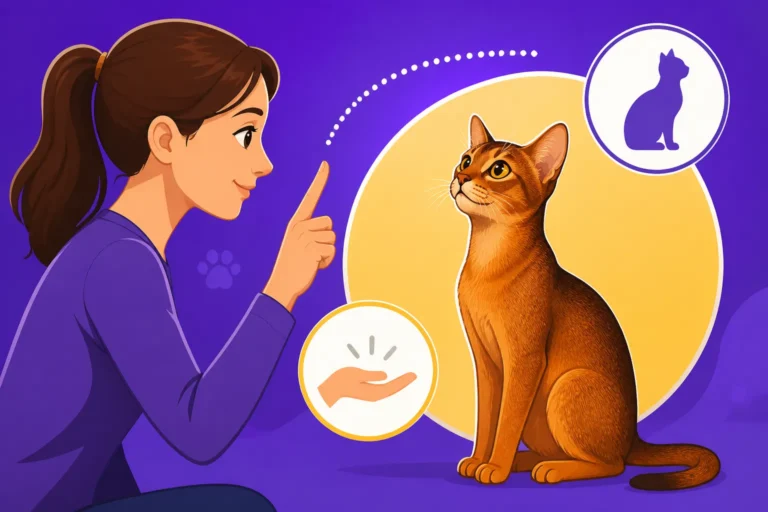
Cats are incredibly trainable, especially intelligent breeds like the Abyssinian. The key is to teach them what you want them to do, rather than just punishing what you don't want them to do. Positive reinforcement methods, such as clicker training, are highly effective.
With clicker training, you mark and reward desired behaviors. For example, if you want your Abyssinian to stay off the counter, reward them lavishly when all four paws are on the floor near the counter, or when they use their cat tree instead. This tells them, "Yes! That's what I want!" Abyssinians respond exceptionally well to this kind of clear, positive communication. Why Clicker Training Works on an Abyssinian is because it leverages their intelligence and desire for interaction without resorting to fear. Over time, they learn that engaging in desired behaviors brings rewards and positive attention.
Patience and Persistence
There’s no magic wand (or magic spray) that will instantly change an Abyssinian’s natural behaviors. These are intelligent, driven animals with strong instincts. Behavior modification takes time, consistency, and a deep understanding of what motivates your cat.
It requires patience to continuously redirect, reinforce positive choices, and adjust their environment as needed. You might have setbacks, but by staying consistent with positive training, providing ample enrichment, and managing their environment effectively, you will build a stronger bond and a happier, more well-behaved Abyssinian in the long run. Forget the quick-fix sprays; embrace the journey of understanding and nurturing your amazing Abyssinian.
| Deterrent Type | Primary Mechanism | Typical Abyssinian Response | Long-Term Effectiveness for Abyssinians |
|---|---|---|---|
| Scent-based sprays (citrus, bitter) | Unpleasant odor/taste | Momentary avoidance, desensitization, or disregard | Low to negligible |
| Noise/Motion-activated sprays | Startle effect, sudden hiss | Initial surprise, quick habituation, or finding workarounds | Low to moderate (short-lived) |
| Aluminum foil/Sticky tape | Unpleasant texture | Initial avoidance, may chew/remove, or find other routes | Low |
| Water spray bottle | Physical discomfort | Avoidance of handler, not object; bond damage | Negative |
Disclaimer
This article is for general informational purposes only and does not constitute professional advice. Laws, prices and regulations vary by location and change over time. Consult a qualified professional for guidance on your specific situation.