Why a Single Abyssinian Costs More in Damage
It’s a common misconception that getting just one cat will inherently be “less work” or “less expensive” than bringing home a pair. While on the surface that might seem logical, for a breed as intensely intelligent and energetic as the Abyssinian, a single cat can actually lead to more household chaos and, ultimately, more financial damage. This guide will explore exactly why a solo Abyssinian often creates more costly problems than a duo, and what you can do to mitigate these unique challenges.
The Unique Energy and Intelligence of a Solitary Abyssinian
Let's be frank: an Abyssinian is not your typical couch potato cat. They are bundles of lean muscle, boundless energy, and razor-sharp minds. When you bring an Abyssinian into your home, you're not just getting a pet; you're adopting a tiny, curious, and incredibly active co-conspirator. The problem with having just one, especially if you lead a busy life, is that all that incredible drive has nowhere to go. They are hardwired to explore, to hunt, to climb, and to interact.
Why One Abyssinian Gets Bored Faster
A single Abyssinian, left to their own devices for long stretches, quickly becomes a bored Abyssinian. And a bored Abyssinian is a destructive Abyssinian. Unlike some breeds that might quietly nap their day away, an Aby thrives on interaction and mental challenges. If those challenges aren't provided by you or a feline companion, they will invent their own. This isn't out of malice, but pure instinct. They simply need to do something. Think of it like a highly intelligent toddler who hasn't been given enough toys or attention; they'll find something to occupy themselves with, and it's usually something you really don't want them getting into. This can manifest as anything from unrolling every toilet paper roll in the house to attempting to scale your curtains. What an Abyssinian Does When It Is Bored is often quite inventive, and quite destructive.
Their high prey drive also means they're constantly looking for something to stalk, chase, and "kill." Without appropriate outlets, that "prey" can easily become your expensive electronics, delicate décor, or even your houseplants. It's not enough to just have a few toys lying around; they need dynamic, engaging play sessions that simulate hunting, multiple times a day. If these needs are unmet, their pent-up energy will find an outlet, often at your furniture's expense.
The Problem of Human-Only Interaction
While Abyssinians adore their human families, relying solely on human interaction for their extensive needs can be exhausting for owners. Most of us work, have errands, or simply need downtime. A single Abyssinian, without another cat to wrestle with, chase, or groom, will demand all of that energy from you. This can lead to them becoming overly attached and developing separation anxiety, which further exacerbates destructive behaviors when you leave. They see you as their sole source of entertainment and stimulation, and when you're gone, they can act out in ways that show their distress and boredom.
Consider a scenario where you've been at work all day. You come home, tired, and just want to relax. Your Abyssinian, however, has been "saving up" all their energy and attention demands for your return. They'll greet you with frantic chirps and zoomies, then relentlessly bring you toys, demanding play. If you're not up to it, they might decide to "play" with the fringe on your rug or the books on your lowest shelf. It's a difficult cycle to break, and it’s why many experienced Aby owners suggest that Why an Abyssinian Should Not Be Left Alone All Day often means providing a companion.
Common Forms of Abyssinian-Induced Damage and Their Costs
The types of damage a single Abyssinian can inflict are varied and often stem directly from their breed-specific traits: curiosity, athleticism, and a distinct lack of respect for personal property if it stands in the way of a good time. These aren't just minor annoyances; they can add up to significant repair or replacement costs over time.
Climbing and Scrambling Mishaps
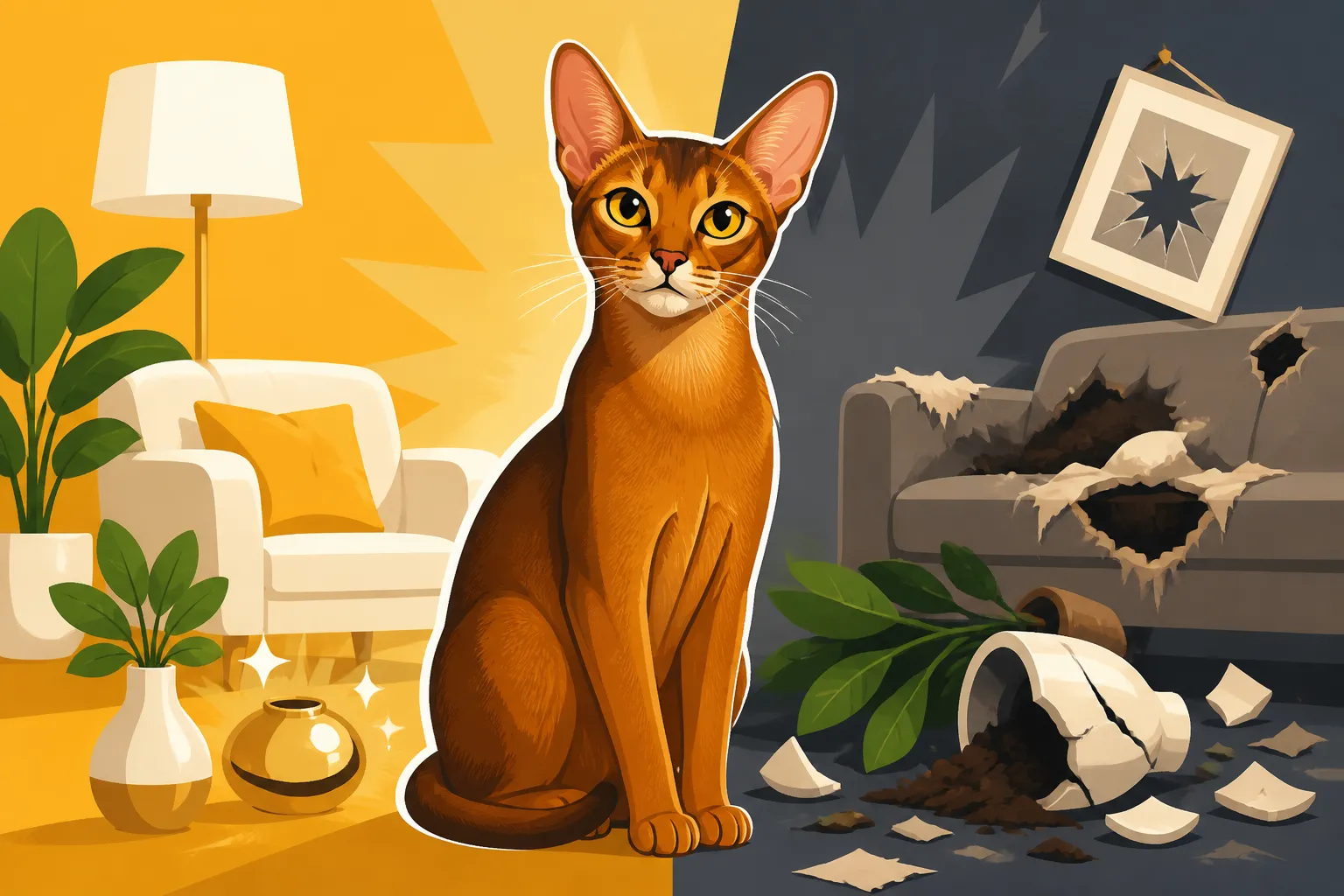
Abyssinians are natural climbers. They feel most secure and stimulated when they have access to vertical spaces. If you don't provide adequate Why an Abyssinian Needs More Vertical Furniture Than Most Cats, they will make their own. This often means scaling curtains, scrambling up bookshelves, or leaping onto delicate display cabinets. I've heard countless stories of Aby owners coming home to find a knocked-over vase, a broken photo frame, or even an entire shelf cleared of its contents as the cat attempted a daring parkour move. The higher they climb, the more dangerous (and costly) the potential fall.
A heavy cat tree from a brand like Chewy can be a good start, but Abyssinians often want more. They want entire vertical routes, wall-mounted shelves, and access to the highest points in a room. Without these dedicated spaces, your existing furniture becomes their personal jungle gym. Imagine your beloved Abyssinian attempting to leap from the top of your bookshelf to the top of your curtain rod, misjudging the distance, and taking down a lamp and a stack of framed pictures on the way down. Not only is this a mess, but replacing custom lampshades or re-framing cherished memories can hit your wallet hard.
Chewing, Scratching, and "Redecorating"
Another costly behavior is chewing and scratching. While most cats scratch, Abyssinians, when bored or anxious, can take it to another level. They might fixate on furniture corners, carpet, or even the wooden legs of dining chairs. And chewing? Oh, the chewing! Electrical cords are a particular favorite for some Abyssinians, which is not only expensive to replace but incredibly dangerous for the cat. Why an Abyssinian Chews Cables is often linked to boredom or a need for mental stimulation, turning mundane objects into tempting toys.
I once knew an owner whose Aby, left alone for an afternoon, managed to chew through the power cord of their brand new smart TV. The TV itself was fine, thankfully, but replacing a specialized cable was a headache, and the incident highlighted how quickly an unsupervised Abyssinian can turn an ordinary room into a hazard zone. Beyond that, imagine the cost of repairing upholstery, replacing torn drapes, or buffing out deep scratches from wooden surfaces. These aren't usually things covered by standard home insurance, and the cumulative cost can easily outweigh what you might have spent on an extra cat tree or more interactive toys. Why an Abyssinian Destroys Cheap Furniture Faster is also a real phenomenon – they seem to know which items are less sturdy and therefore more "fun" to dismantle.
Opening Doors and Cabinets
Abyssinians are notoriously clever with their paws. Many learn to open doors, cupboards, and even drawers. This intelligence, while endearing, can also lead to significant trouble. If they manage to get into pantries, they can shred food bags, strew contents everywhere, and even ingest things that are toxic. Medicine cabinets, cleaning supplies, and even heavy items can become accessible to a curious Aby. Why an Abyssinian Opens Doors and Cabinets isn't just a quirky habit; it's a potential safety and cost nightmare.
Think about the scenario where your Aby figures out how to open the kitchen cabinet where you keep your expensive dry pasta or flour. You come home to a white dusting over your kitchen floor, every bag ripped open, and a very pleased cat. Beyond the mess, you're out the cost of the ruined groceries. Worse, if they get into something truly harmful, like cleaning solutions or medications, you're looking at an emergency vet bill, which can be astronomical. The expense of child-proofing latches for every cabinet and drawer, combined with potentially replacing ruined items, quickly adds up.
The Hidden Costs: Vet Bills and Stress
Beyond the tangible damage to your home, the "cost" of a single Abyssinian's unchecked energy and potential anxiety can manifest in unexpected and emotionally taxing ways. The financial burden can escalate quickly, especially if preventative measures aren't taken.
Emergency Vet Care from Ingested Items
One of the most terrifying and costly outcomes of a bored or anxious Abyssinian is when they ingest something they shouldn't. This can be anything from string, rubber bands, plastic bits from toys, or even pieces of fabric. Their powerful prey drive combined with their playful nature makes them prone to chewing and swallowing things that can cause internal blockages or poisoning.
A friend's Abyssinian, restless during a long day, decided to "hunt" and ingest part of a decorative tassle from a throw pillow. The result was an emergency vet visit, X-rays, and ultimately, an invasive surgery to remove the foreign body. The bill was eye-watering, easily running into the thousands. This is where pet insurance, like a plan from Healthy Paws, truly proves its worth, because emergency surgeries are a reality for curious cats. These aren't isolated incidents; they are direct consequences of an Abyssinian's nature when their needs for mental and physical stimulation are not adequately met. What an Abyssinian's Annual Checkup Costs is one thing, but emergency surgery is another entirely.
Stress-Related Behaviors and Their Impact
A perpetually bored or anxious Abyssinian can also develop stress-related behaviors that, while not directly "damaging" to property, can lead to chronic health issues and require costly behavioral interventions. This might include excessive grooming leading to bald patches, inappropriate urination outside the litter box, or even aggression. Addressing these issues often means consulting with a feline behaviorist, trying various calming supplements, or even prescription medications, all of which come with their own expenses.
Imagine the stress of finding your Abyssinian has urinated on your favorite rug for the third time this week, despite a pristine litter box. This isn't just a cleaning cost; it's a signal of underlying distress. A visit to the vet to rule out medical causes, followed by a behavioral consultation, can be a long and expensive road. The emotional toll on the owner, feeling helpless and frustrated, is also a significant "cost" that's often overlooked.
Investing in Prevention: The Long-Term Savings
It might seem counterintuitive to suggest getting two Abyssinians to save money, but hear me out. A pair of Abyssinians can entertain each other, channeling their immense energy into chasing, wrestling, and playing. This significantly reduces the likelihood of them turning that energy onto your home. However, even with two, or with a single Aby you're committed to, proactive prevention is key.
Enrichment is Not a Luxury, It's a Necessity
Think of enrichment as an essential investment rather than an optional expense. This means providing plenty of high-quality, rotating toys, puzzle feeders, and ample vertical space. Interactive toys from stores like Chewy can help keep their minds engaged. Foraging for healthy treats scattered around the house can simulate hunting and keep them busy for extended periods. How to Set Up a Room for an Abyssinian Home Alone should be a masterclass in engaging a cat's natural instincts.
Consider the cost of replacing a ruined sofa versus the cost of a few good quality cat trees, wall shelves, and a subscription to a toy box. The latter is almost always cheaper in the long run. When you provide appropriate outlets for their climbing and scratching instincts, they are far less likely to damage your furniture.
Creating a Secure and Stimulating Environment
Securing your home against an Abyssinian's curiosity is also crucial. This means child-proofing cabinets, ensuring electrical cords are covered and inaccessible (see How to Cable Manage a Room for an Abyssinian), and putting away valuable or dangerous items. It's about designing an environment where your Aby can explore and play safely without causing damage.
| Damage Type | Common Cause (Single Aby) | Potential Financial Impact | Prevention/Mitigation Strategy |
|---|---|---|---|
| Torn Curtains/Upholstery | Lack of vertical climbing space, boredom | $100 – $1000+ (repair/replacement) | High cat trees, wall shelves, scratch posts, regular playtime |
| Chewed Cables/Electronics | Boredom, curiosity, lack of appropriate chew toys | $50 – $500+ (replacement, vet bills) | Cable protectors, bitter sprays, puzzle feeders, interactive toys |
| Broken Decor/Knocked Items | Excessive climbing, zoomies | $50 – $1000+ (replacement) | Secure heavy items, provide dedicated climbing routes, clear surfaces |
| Ruined Food/Household Items | Opening cabinets, drawers, pantries | $20 – $200+ (replacement, clean up) | Child-proof latches, secure storage containers |
| Ingested Foreign Objects | Curiosity, anxiety, boredom | $500 – $5000+ (emergency vet surgery) | Keep small items out of reach, interactive toys, pet insurance |
| Stress-Related Vet Bills | Chronic anxiety, lack of companionship | $100 – $1000+ (behaviorist, meds, vet) | Consistent routine, mental enrichment, consider a second cat/companion |
Ultimately, while the initial purchase price of an Abyssinian might seem like the main cost, it's the ongoing maintenance of their intense needs that dictates the true financial and emotional investment. A single Abyssinian, left to their own devices, can quickly turn your home into their personal playground and demolition site, proving that sometimes, two can be cheaper than one in the long run.
Disclaimer
This article is for general informational purposes only and does not constitute professional advice. Laws, prices and regulations vary by location and change over time. Consult a qualified professional for guidance on your specific situation.