How a Breeder Tells an Abyssinian From a Somali at Birth
It's a common misconception that all Abyssinian kittens in a litter will look exactly alike, especially when it comes to distinguishing them from their potential long-haired cousins, the Somalis. For many new breeders or those simply curious, the idea of telling a fluffy Somali from a sleek Abyssinian at birth can seem impossible, leading to a lot of head-scratching and anticipation. This guide will walk you through the practical realities of identifying these distinct coat types in a newborn litter, revealing the challenges and the definitive methods breeders use.
The Early Days: Why Newborns Are a Challenge to Distinguish
When a litter of Abyssinian kittens first arrives, they are, for the most part, a tiny, wriggling blur of soft fluff. You’d think distinguishing between a future short-haired Abyssinian and a long-haired Somali would be immediately apparent, given how different their adult coats are, but the truth is far more subtle and often frustratingly unclear. At birth, all kittens have a very fine, soft coat, and the gene for long hair (which creates the Somali breed) is recessive. This means a kitten with one copy of the long-hair gene (a carrier) or two copies (an affected Somali) might not show obvious long hair right away, especially not in the distinct way an adult Somali's coat flows.
Imagine looking at a basket of these tiny, precious newborns. They all possess that delicate, wispy "baby fur." There's no dramatic difference in length or texture that screams "This one is a Somali!" versus "This one is an Abyssinian!" Their ears are still folded, their eyes are closed, and their bodies are compact. Even experienced breeders will tell you that relying solely on a visual inspection at this stage is a fool's errand. It’s like trying to predict a child's adult height from their newborn length – you can make an educated guess, but it’s far from a certainty. This initial ambiguity is one of the reasons why the two breeds are so intrinsically linked, and why the long hair gene was in Abyssinians all along.
The genetic basis for the Somali is fascinating because it truly is just an Abyssinian with a longer coat. If you breed two Abyssinian cats who both carry the recessive longhair gene, you can expect a mixed litter – some short-haired Abyssinians, some long-haired Somalis, and some short-haired Abyssinians who are carriers themselves. Without a visual identifier at birth, breeders must either wait or utilize modern science, which can be a relief for those who value clear planning.
Whisker Wonders and Fuzzy Feelings: Subtle Early Clues
While a definitive visual distinction is rare at birth, some very experienced breeders might claim to see incredibly subtle differences, though these are often more anecdotal than scientific. These "clues" are usually so faint that they're practically imperceptible to the untrained eye and can even vary within a litter. For example, some might suggest that Somali kittens might have slightly longer or bushier whiskers, or that the fur around their ears feels infinitesimally softer or marginally longer to the touch. It's a "gut feeling" more than a concrete observation.
One potential, but still highly unreliable, indicator often cited is the presence of slight "ear tufts" or slightly more fluff between the toes. Again, this is not a hard-and-fast rule, and the differences are often so minimal that they can be attributed to individual variation rather than a clear genetic marker. A young Abyssinian kitten's coat can look quite blotchy at first, which might also contribute to the confusion. These minor perceived differences highlight the challenge; you're essentially looking for a needle in a haystack where all the hay looks remarkably similar. It often takes a breeder years of experience, seeing countless litters, to even think they can spot these minute variations, and even then, they'll usually admit they aren't 100% certain until the kittens grow a bit more.
It’s crucial to remember that these "subtle clues" are not reliable enough for a breeder to confidently identify a Somali at birth. They are more like whispers of potential, rather than clear statements. This is why a breeder who claims to know for sure at day one is likely either mistaken or using other methods of identification, which we'll discuss next. For owners getting a kitten from a reputable breeder, knowing that your Abyssinian has been tested for the long-hair gene is far more important than any early visual guess.
The Unmistakable Tell: When the Coat Length Becomes Obvious
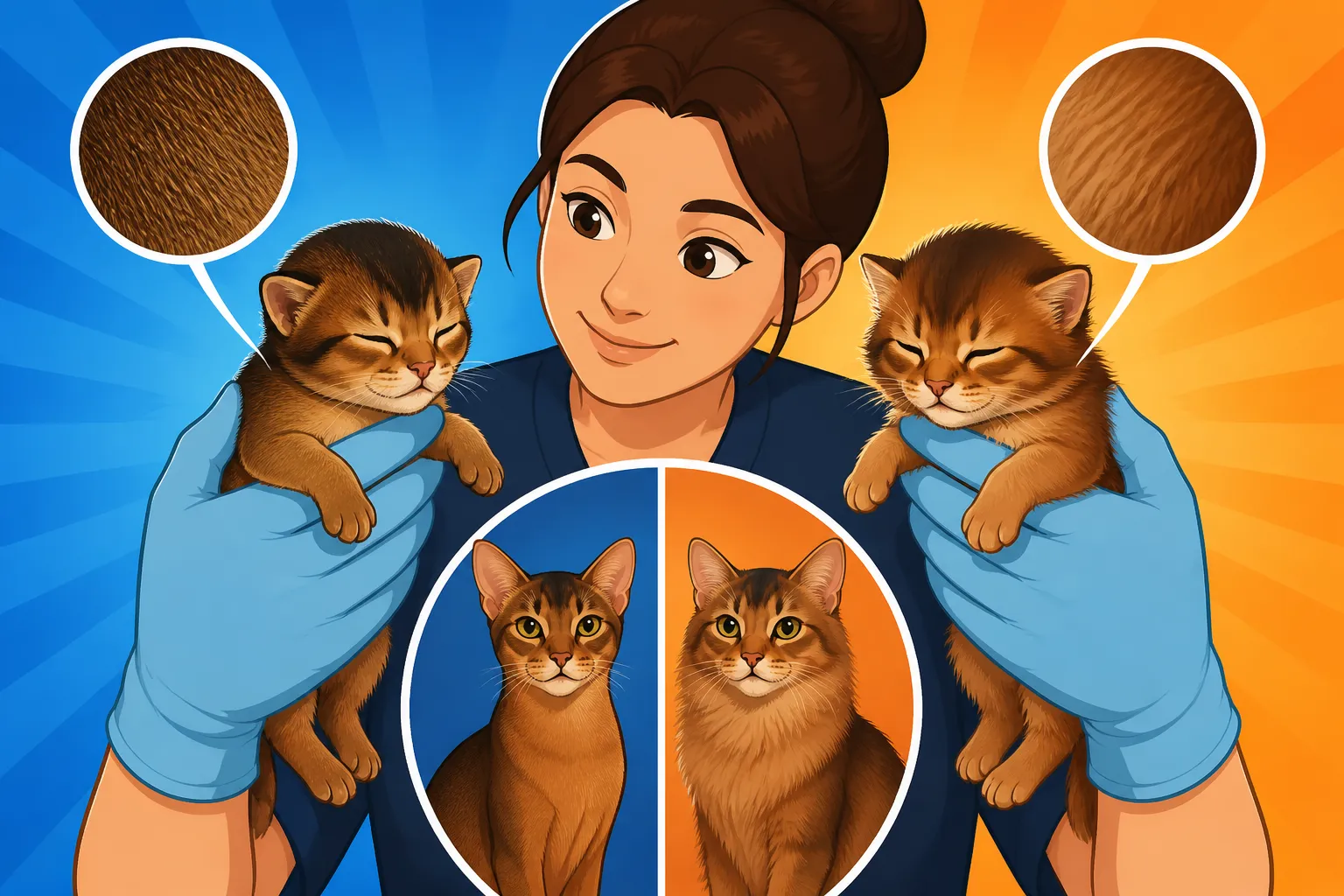
The real moment of truth for distinguishing an Abyssinian from a Somali isn't at birth, but typically begins to reveal itself around four to six weeks of age, becoming truly unmistakable by about eight to twelve weeks. This is when the hair length starts to differentiate more clearly. Somali kittens, born with that initial fine down, will gradually develop a noticeably longer, softer, and thicker coat, particularly around their ruff, britches (the fur on their hind legs), and tail. Their tails will often appear much bushier and plume-like compared to their Abyssinian littermates.
By the time the kittens are ready to leave their mother, usually around twelve to fourteen weeks, the difference in coat length is typically quite apparent. The Abyssinian kittens will have that signature short, sleek, ticked coat, lying close to their bodies, while the Somalis will boast their luxurious, medium-long fur with a distinct ruff and full tail. This developmental timeline is critical for breeders, as it allows them to properly identify and price Why a Longhair Abyssinian Kitten Is Priced Apart each kitten in the litter. Before this point, any definitive declarations are purely guesswork.
Here's a quick comparison of coat development:
| Age of Kitten (Approx.) | Abyssinian Appearance | Somali Appearance | Certainty of Identification |
|---|---|---|---|
| Birth – 3 Weeks | Fine, soft, delicate baby fur. | Fine, soft, delicate baby fur; indistinguishable. | Very Low |
| 4 – 6 Weeks | Coat remains short, beginning to show ticking. | Slight hint of longer, softer fur, especially on tail. | Low to Moderate |
| 7 – 10 Weeks | Clearly short, sleek, and beginning to lie flat. | Noticeably longer, softer fur; emerging ruff/britches. | Moderate to High |
| 11 – 14 Weeks | Definitive short, ticked coat; close-lying. | Distinct medium-long coat, full plume tail, ruff. | Very High |
It's a process, not an instant revelation. The patience required during these early weeks is a hallmark of responsible breeding. This waiting period also allows breeders to assess other critical aspects of the kitten's health and socialization before it goes to its new home. Many responsible breeders even use this time to conduct the necessary health checks and ensure kittens are well-adjusted. The more patient approach often leads to better outcomes for both the kittens and their future families.
The Unbeatable Accuracy of DNA Testing
While visual cues eventually emerge, the most reliable and accurate way a breeder tells an Abyssinian from a Somali at birth – or at any age, really – is through genetic DNA testing. The long hair gene is a known recessive trait, and a simple cheek swab from even a newborn kitten can provide definitive answers. This is a game-changer for breeders who want to know precisely which kittens carry the gene, which are genetically short-haired, and which are genetically long-haired, without waiting weeks for their coats to develop.
The process is straightforward: a small sample, typically collected by gently swabbing the inside of the kitten's cheek, is sent to a specialized feline genetics laboratory. These labs can identify the specific mutation responsible for long hair. The results will indicate whether a kitten is:
- N/N (Non-carrier): Genetically short-haired, does not carry the long-hair gene, and will be an Abyssinian.
- N/L (Carrier): Genetically short-haired, but carries one copy of the long-hair gene. Will be an Abyssinian but can pass the gene to offspring.
- L/L (Affected): Genetically long-haired, possesses two copies of the long-hair gene, and will develop a Somali coat.
This information is invaluable for breeders, especially for those who breed Abyssinians but want to ensure their lines are clear of the long-hair gene if they are specifically aiming for short-haired offspring. It also helps those who embrace the occasional Somali in an Abyssinian litter to properly identify and market them. Knowing whether a Why an Abyssinian Marked as a Carrier Is Still Fine is crucial for future breeding decisions and transparency with potential buyers.
Many reputable breeders conduct these DNA tests on all their breeding cats to ensure they understand their genetic makeup and to prevent unexpected long-haired kittens if that's not their goal, or to predict them if it is. This is part of the comprehensive health screening, alongside tests like What a PK Deficiency Test Costs for an Abyssinian and What a Retinal Atrophy Test Costs for an Abyssinian. You can usually find information about which labs run the Abyssinian genetic panel on breed club websites.
For kitten buyers, asking a breeder for the DNA test results of the parents, and ideally the kitten itself if it's born from carrier parents, is a sign of a responsible breeder. This transparency gives you confidence in what you're getting and confirms the kitten's genetic status regarding coat length. It removes all the guesswork and provides a definitive answer long before any visible fluff might appear. For anyone considering buying an Abyssinian, understanding that genetic testing is the gold standard here is vital, especially when you are making a significant financial and emotional investment. It helps ensure that your future companion is exactly what you expect and has been responsibly bred. While it might sound technical, companies like Chewy offer resources for understanding pet genetics, and many breeders utilize these advanced tools to provide the best possible care and transparency.
Living With the Outcome: Abyssinian or Somali?
Whether you end up with an Abyssinian or a Somali from a litter where both parents carried the longhair gene, you're bringing home a cat with the same wonderful, vivacious personality. The core temperament – playful, curious, intelligent, and highly social – is inherent to both breeds. The only significant difference is that stunning coat.
If you bring home a Somali, be prepared for a bit more grooming than an Abyssinian, though they are still relatively low-maintenance compared to some other long-haired breeds. A weekly brush will keep their flowing fur looking its best and prevent mats. For the Abyssinian, their short, ticked coat is incredibly easy to care for, needing only minimal grooming. The Ticked Coat Is the Whole Abyssinian Grooming Job explores this in detail.
Both breeds thrive on interaction and enrichment. They are not content to simply lounge on the sofa all day; they demand engagement, playtime, and vertical spaces to climb. Whether short or long-haired, these cats benefit from puzzle feeders, interactive toys, and owners who are willing to participate in their energetic antics. High-quality food is also important to fuel such active breeds, ensuring their coats, whether long or short, remain healthy and vibrant.
Ultimately, the early uncertainty of distinguishing between Abyssinian and Somali kittens highlights the fascinating genetics of these breeds. While visual cues eventually make themselves known, genetic testing remains the most reliable method for breeders to know exactly what they have in their hands from day one. This knowledge allows for responsible breeding practices and ensures that new owners can confidently welcome their beautiful, energetic companions, whether short-haired or long-haired, into their homes. And let's be honest, regardless of coat length, a happy, healthy cat is what truly matters, and pet insurance options like Healthy Paws can help ensure their well-being throughout their lives.
Disclaimer
This article is for general informational purposes only and does not constitute professional advice. Laws, prices and regulations vary by location and change over time. Consult a qualified professional for guidance on your specific situation.