When an Abyssinian Litter’s Coat Length Becomes Obvious
Bringing home an Abyssinian kitten is an exciting time, but if you're eagerly waiting to see if your little one will develop that sleek, short Abyssinian coat or the longer, flowing locks of a Somali, the wait can feel incredibly long. It's a common concern for new owners, especially since both can appear in the same litter! This guide is here to walk you through the subtle and not-so-subtle changes in a kitten's coat, helping you understand exactly when an Abyssinian litter's coat length becomes obvious, from birth all the way to adulthood.
The First Glimpse: Abyssinian Kittens at Birth
When Abyssinian kittens first arrive, they are tiny bundles of fluff, and honestly, trying to determine their adult coat length at this stage is like trying to predict the weather a year in advance – nearly impossible! All kittens, regardless of their eventual coat type, start with a soft, downy baby coat. They're often born with their eyes closed, still deaf, and completely reliant on their mother.
The Initial Fluff and Baby Fuzz
At birth, Abyssinian kittens, whether genetically destined to be short-haired Abyssinians or long-haired Somalis, possess a very fine, soft, and uniformly fluffy coat. There's no distinct difference in length that you can easily spot. Their coloring, too, might be muted and not yet fully developed. You'll see hints of the rich ticking that Abyssinians are famous for, but it's often covered by a layer of baby fuzz that makes everything look a bit indistinct. Think of it like a blurred photograph; you know the subject is there, but the details are yet to come into sharp focus. Breeders rely more on knowing the parents' genetics for long-hair than on what the kittens actually look like in the first few days.
Why Early Identification is Challenging
The main reason it's so tricky to tell coat length early on is that the genes responsible for long hair need time to express themselves fully. The short-hair gene is dominant, meaning if a kitten inherits even one copy, it will typically have a short coat. However, the long-hair gene is recessive, and for a kitten to have long hair, it needs to inherit two copies – one from each parent. Even if a kitten has these two recessive genes, the physical manifestation, the phenotype, doesn't just pop up overnight. It's a gradual process of hair growth and development. This is why How a Breeder Tells an Abyssinian From a Somali at Birth is usually more about pedigree knowledge and genetic testing than a visual inspection of a newborn. It's truly a waiting game.
The Emergence of Distinct Coat Lengths: Weeks 3-8
As the kittens grow, usually around the three to four-week mark, you might start to notice the very first subtle differences in coat length. This is where the keen eye of an experienced breeder often comes into play, as these distinctions can still be incredibly faint to the untrained observer.
Subtle Indicators at Three to Four Weeks
Around three to four weeks old, kittens are becoming more active, their eyes are open, and they're exploring their tiny world. If you look very closely, especially at the ears and tail, you might start to see a slight difference. Kittens destined to be Somalis might have a bit more fluff around their ears, and their tail fur might appear marginally longer or bushier than their Abyssinian littermates. It's not a dramatic change, mind you. We're talking about fractions of an inch, but it's the first whisper of what's to come. Their overall body fur is still very short, but the texture might also feel a tiny bit silkier or softer on the future Somalis. It's at this point that breeders might start making mental notes, but no definitive declarations are usually made just yet.
Clearer Differences by Eight Weeks
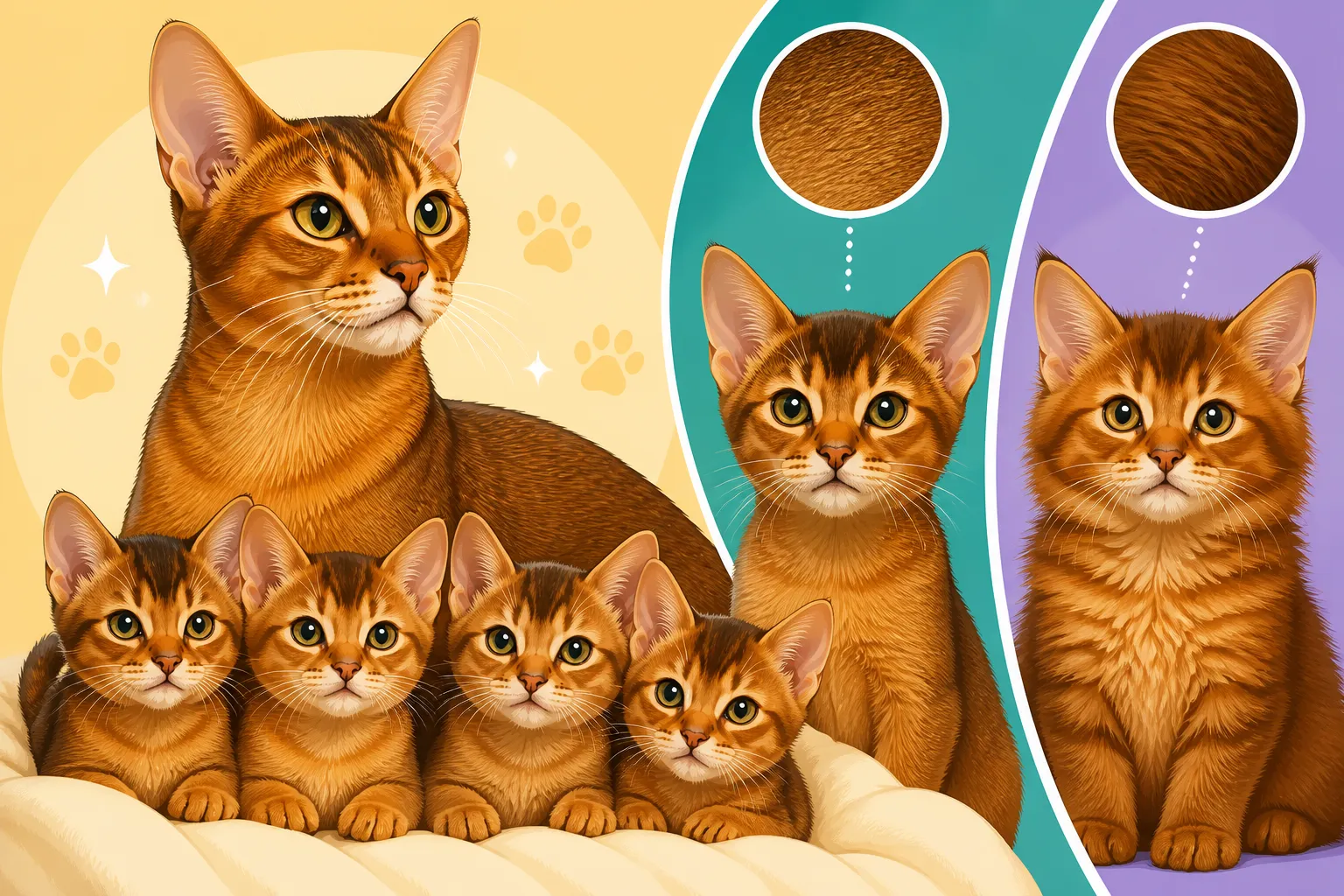
By the time an Abyssinian kitten reaches eight weeks, the differences in coat length become much more apparent. This is often when a kitten is officially evaluated for its coat type. What an Abyssinian Kitten Looks Like at Eight Weeks is a good benchmark, and if a kitten has the long-hair gene, it will certainly be showing by now.
Here's what you might observe:
- Abyssinian Kittens: Their coat will remain short, lying close to the body. While still soft, it will feel dense and resilient. The ticking pattern, with those characteristic bands of color on each hair shaft, will start to become more defined, giving them that wild, agouti look. You won't see any "furnishings" – no ear tufts, no bushy tail.
- Somali Kittens: These little ones will begin to display noticeable feathering on their ears, a distinct "ruff" around their neck, and a much fuller, brush-like tail. Their overall body fur will also have more loft and a softer, flowing appearance compared to their short-haired siblings. The coat will still be developing, but the length will be undeniably different. It's like comparing a sleek sports car to a plush, luxury sedan – both beautiful, but distinctly different in their finish. This is often when the breeder can confidently tell you How a Breeder Tells an Abyssinian From a Somali at Birth, or rather, at eight weeks.
Coat Development Continues: Beyond Eight Weeks to Adulthood
While eight weeks often provides a clear enough distinction for breeders, the full beauty and length of a Somali's coat, or the ultimate sleekness of an Abyssinian's, doesn't really mature until much later. This ongoing development is fascinating to watch.
The Teenager Phase: Four to Six Months
Between four and six months, your kitten is in its awkward teenage phase. For Abyssinian kittens, their ticking will continue to refine, and the coat will gain its adult luster. For Somalis, this is where the real fun begins. Their "furnishings" – the ear tufts, leg britches, and full tail – will grow significantly. They’ll look like mini-foxes with their glorious tails waving behind them. The body coat will also lengthen and soften further. You might find yourself brushing them more often, and you'll definitely start appreciating the quality products from places like Chewy that offer a range of grooming tools perfect for both short and longer coats. It's also around this age that other features like their eye color will usually settle, a topic covered in When an Abyssinian Kitten's Eye Color Settles.
Full Maturity: One to Two Years
An Abyssinian's coat typically reaches its full adult glory by about one year of age, becoming sleek, fine, and lying close to the body, showcasing its incredible agouti banding as detailed in How an Abyssinian's Agouti Banding Works. For a Somali, however, their coat continues to develop and fill out until they are closer to two years old. That luxuriant, semi-longhaired look, the dense ruff, and the magnificent bushy tail can take quite a while to truly finish.
It's a testament to the breed's genetics that these two distinct coat types can emerge from the same genetic pool. Remember that the long-hair gene was present in Abyssinians all along, a fascinating bit of history touched upon in Why the Long Hair Gene Was in Abyssinians All Along.
Here's a quick overview of what to expect:
| Age of Kitten | Abyssinian Coat Characteristics | Somali Coat Characteristics |
|---|---|---|
| Birth – 2 Weeks | Fine, soft, uniform baby fluff. | Fine, soft, uniform baby fluff. No discernible difference. |
| 3 – 4 Weeks | Still short and soft. Ticking hints. | May show very slight extra fluff around ears or tail base. |
| 8 Weeks | Clearly short, close-lying, ticking becoming defined. | Noticeably longer, especially on ears and tail, early ruff evident. |
| 4 – 6 Months | Sleek, adult ticking developing, coat lies flat. | Significant ear tufts, bushy tail, "britches," and ruff growth. |
| 1 – 2 Years | Fully developed, short, fine, shimmery ticked coat. | Fully mature, semi-long, flowing, plumed tail, full furnishings. |
Why Abyssinian Breeders Test for Long Hair
Because the long-hair gene is recessive and can be carried silently by Abyssinians without showing any outward signs, responsible breeders will often test their breeding cats to know their genetic status. This helps them make informed breeding decisions and avoid accidental litters of Somalis, or at least be prepared for them. Why Abyssinian Breeders Test for Long Hair is a critical practice for maintaining breed standards and managing expectations. Knowing if a parent is a carrier is key, especially if you're hoping for a litter exclusively of short-haired Abyssinians. It also informs potential pricing differences, as Why a Longhair Abyssinian Kitten Is Priced Apart is a common consideration for breeders and buyers alike.
Caring for Developing Coats
Regardless of whether your kitten will be a sleek Abyssinian or a fluffy Somali, proper care during their development is crucial for a healthy, beautiful coat. This isn't just about aesthetics; a healthy coat is often a good indicator of overall well-being.
Nutrition for Optimal Coat Health
Good nutrition is the cornerstone of a healthy coat. Growing kittens need a diet rich in high-quality protein and essential fatty acids to support rapid growth and coat development. Look for kitten foods that list real meat as the first ingredient. Fresh food with human-grade ingredients or high-quality kibble can make a huge difference. Ensure their diet provides adequate vitamins and minerals. A dull, sparse coat can sometimes be one of the first indicators of nutritional deficiencies. Just like with humans, what you put into their bodies directly impacts their outward appearance and overall vitality.
Grooming Practices as They Grow
Even though Abyssinians are known for their minimal grooming needs, a weekly brush can help remove loose hair and distribute natural oils, enhancing the coat's shine. For developing Somalis, regular brushing becomes even more important to prevent mats and tangles as their longer fur comes in. Start gentle brushing early, even with soft kitten brushes, to get them accustomed to the process. This makes future grooming sessions much easier for both of you. It's a bonding experience, too! Make it positive with treats and praise, and they'll look forward to it.
Monitoring Health and Potential Issues
Observing your kitten's coat development also ties into their general health. A sudden change in coat texture, excessive shedding, or dullness can sometimes signal underlying health issues. While a healthy Abyssinian is a vigorous, energetic creature, keeping an eye on these subtle cues is important. If you ever have concerns about your kitten's health, or notice anything unusual with their coat, a vet visit is always a good idea. Comprehensive pet insurance plans, like those offered by Healthy Paws, can be incredibly reassuring when facing unexpected vet bills, allowing you to focus on your cat's health without financial stress. They offer peace of mind from the moment your kitten enters your home and begins its journey through all its developmental stages.
It's truly a delight to watch these energetic little furballs grow and mature, revealing their full beauty, whether short-haired or long-haired. The wait to see their true coat length is just one small part of the joy of raising an Abyssinian.
Disclaimer
This article is for general informational purposes only and does not constitute professional advice. Laws, prices and regulations vary by location and change over time. Consult a qualified professional for guidance on your specific situation.