What an Abyssinian Kitten Looks Like at Eight Weeks
An eight-week-old Abyssinian kitten can look less like the sleek, shimmering adult in breed photos and more like a fluffy, slightly uneven little cat with oversized ears and a busy expression. That gap can make new owners wonder whether the kitten is developing normally. Here’s what to expect at this age, what may change, and which clues deserve a closer look.
The typical look of an Abyssinian kitten at eight weeks
A small body with striking ears and an alert face
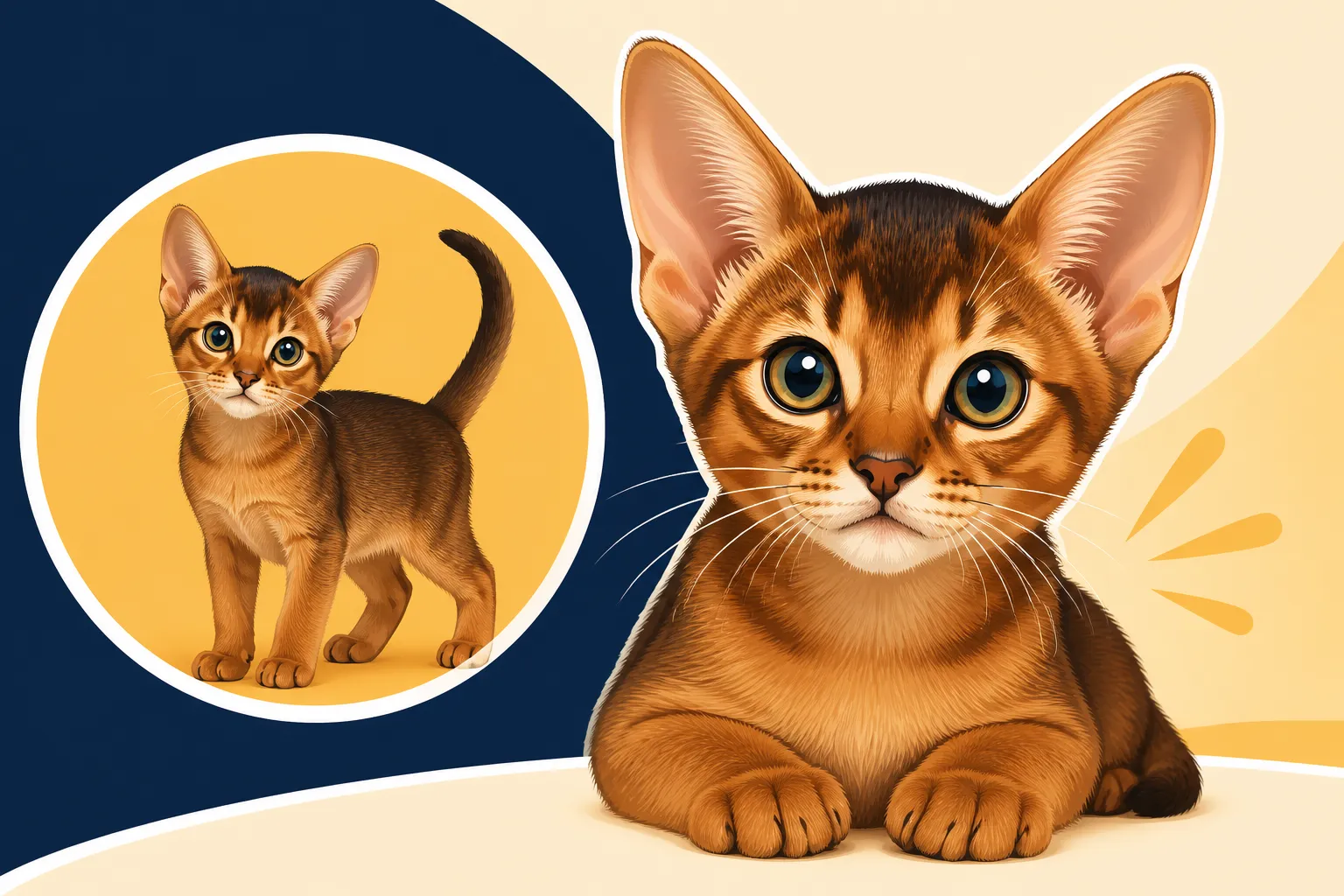
At eight weeks, an Abyssinian kitten is still growing into its proportions. The body is small and lightly built, while the ears may appear conspicuously large and the legs long for its size. This can give a kitten a slightly lanky, wide-eyed look rather than the balanced, athletic outline people associate with an adult Abyssinian.
The head is still developing, too. You may see a softly rounded wedge shape, a small muzzle, and a curious expression, but kitten features are not a reliable way to judge how closely an adult cat will match the show standard. Adult proportions take time to emerge. For a closer look at the finished ideal, see What an Abyssinian's Ideal Head Shape Is.
An eight-week-old kitten should look like a lively young cat, not a miniature adult. It may move with quick bursts of energy, pause to investigate a sound, then return to play as if nothing happened. Those everyday behaviors can make the ears and eyes seem even more prominent because the kitten is constantly turning, watching, and exploring.
A soft coat that may look uneven or blurry
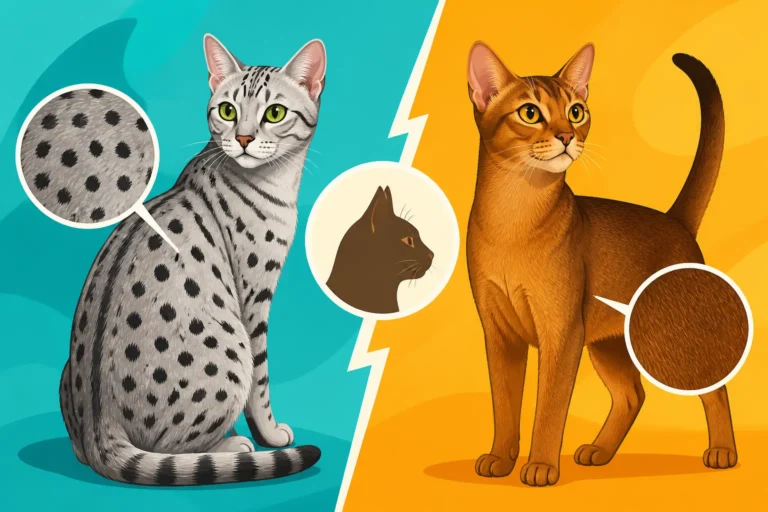
The Abyssinian’s signature coat is ticked: individual hairs carry bands of color rather than forming the familiar stripes of a tabby. At eight weeks, however, the coat may not yet show crisp, even ticking. It can look soft, fuzzy, lightly shaded, or blotchy, particularly along the back and sides.
Some kittens have faint markings or uneven patches that become less noticeable as their coat develops. That doesn’t automatically mean the kitten is the wrong color or breed. Young coats can be visually confusing, and lighting makes a difference: a kitten may look warmer or darker in bright sunlight than it does indoors. Why an Abyssinian Kitten Looks Blotchy at First explores why early coat appearance can be misleading.
A kitten’s coat at this age is one clue, not a complete verdict. If you’re choosing a kitten and something about its appearance worries you, ask the breeder how the parents and older kittens developed. Clear photos of relatives at different ages can help you understand what changes are typical in that particular line.
How the coat and color develop
Ticking becomes clearer with age
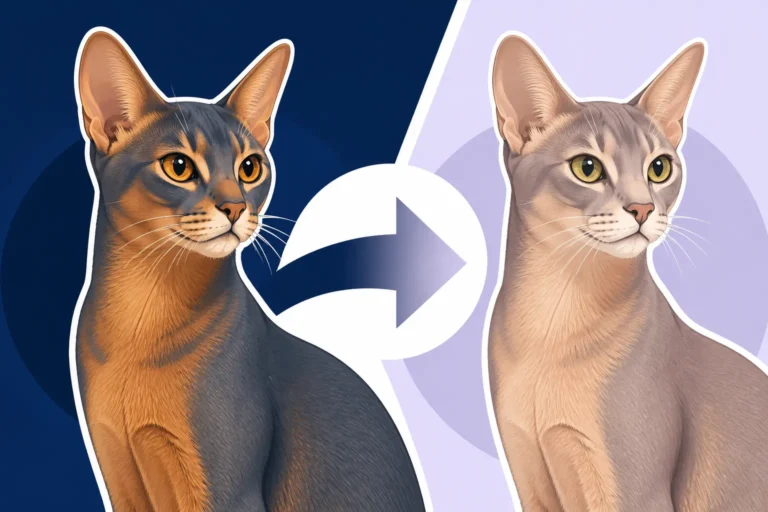
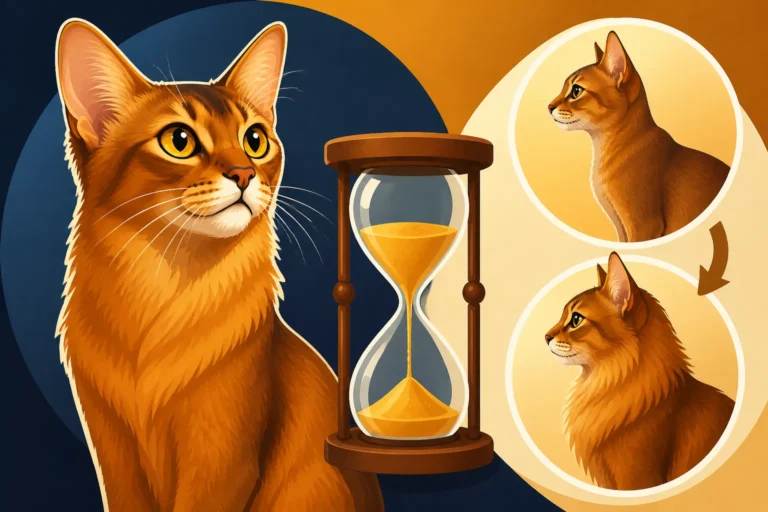
An eight-week-old Abyssinian may show the beginnings of the adult coat pattern, but the hairs and overall color can still look soft-edged. As the kitten matures, the contrast between the bands on each hair generally becomes easier to see. That gradual shift is why an adult Abyssinian’s coat can look more luminous and defined than a kitten’s.
| Feature | What you may see at eight weeks | What may become clearer later |
|---|---|---|
| Coat pattern | Soft shading, uneven patches, or faint markings | More visible ticking across the body |
| Color | A warm or cool tone that may seem inconsistent | A more settled overall color |
| Fur texture | Fluffy or kitten-soft appearance | A closer, sleeker adult coat |
| Face and ears | Large-looking ears and rounded kitten features | More balanced adult proportions |
| Eyes | A color that may still be changing | A more settled adult eye color |
The ticked effect comes from bands of pigment on individual hairs, not from stripes painted across the coat. When you look closely, especially in good natural light, you may begin to notice subtle banding even if the overall pattern is not yet polished. How an Abyssinian's Agouti Banding Works explains the coat pattern in more detail.
The timing varies. Some kittens show a more recognizable coat early, while others take longer for the color and ticking to look even. A difference in development does not, by itself, prove a health or breeding problem. If the kitten’s coat is accompanied by bald patches, inflamed skin, scabs, or persistent itching, that is different from ordinary kitten fuzz and is worth discussing with a veterinarian.
Adult color is not always obvious yet
A kitten’s color can be difficult to identify with confidence from a quick glance. Abyssinians are commonly associated with ruddy, sorrel, blue, and fawn, but young coats may not display the mature shade evenly. A color that looks quite pale in one room may seem deeper under different lighting.
The breeder should be able to tell you the kitten’s registered color and explain the parents’ colors. If the kitten’s appearance seems different from what you expected, ask for clarification rather than relying on a single photograph. When an Abyssinian Kitten's Adult Color Settles offers more context on how color can change as the cat grows.
Color names can also vary between registries. If you are comparing descriptions online, make sure the terminology refers to the same registry system. Which Abyssinian Colors CFA Recognizes is a useful next read if you’re trying to understand how one registry labels the breed’s colors.
What appearance can and cannot tell you
Use several clues, not one photo
A single photo can distort a kitten’s apparent color, body shape, and coat texture. A camera flash may flatten the ticking, while warm indoor bulbs can make a coat appear more reddish. A kitten crouched in a small bed may look rounder than it does while standing. Ask to see clear, recent images from more than one angle, ideally including the kitten standing naturally.
Look at the kitten’s overall condition as well as its coloring. A bright, curious kitten with clean eyes and nose, a clean coat, and comfortable movement is different from one that seems persistently unwell. No picture can confirm health, temperament, pedigree, or genetic status, though. Those questions call for records and a conversation with the breeder, and health concerns should be assessed by a veterinarian.
An Abyssinian-like appearance alone does not prove that a kitten is pedigreed. If breed identity matters to you, ask about registration and pedigree documentation, and check that the information matches the kitten and its parents. The coat may become more distinctive with age, but waiting for it to “look more Abyssinian” is not a substitute for documentation.
Appearance is not a reason to rush a handover
Eight weeks is an age when a kitten may look independent and energetic, but it is not necessarily ready to leave its mother and littermates. Responsible breeders commonly keep kittens longer so they can continue to develop social skills and receive appropriate care. Ask the breeder when the kitten will be ready to go home and what care, veterinary checks, and records will accompany it.
A breeder should welcome sensible questions. You can ask how the kitten is eating, whether it has been checked by a veterinarian, what food it currently eats, and how its coat color is expected to develop. You may also find Why an Abyssinian Breeder Who Interviews You Is a Good Sign helpful when evaluating the conversation as a whole.
When preparing for a kitten’s eventual arrival, keep the transition simple. Ask for the food the kitten is already eating and avoid changing it abruptly. If you need to arrange supplies, retailers such as Chewy may be one place to look for kitten food or basic equipment, but confirm the appropriate food and feeding plan with the breeder or veterinarian rather than choosing by packaging alone.
A practical checklist for evaluating an eight-week-old kitten
Questions to ask the breeder
If you’re meeting a kitten in person, try to look beyond the first impression. The coat may be fuzzy, the color may be hard to read, and the kitten may spend half the visit trying to climb your sleeve. That is all compatible with a young cat still developing. Ask questions that help you understand what you are seeing and how the kitten has been cared for.
Consider asking:
- What color is the kitten registered as, and which registry uses that name?
- Can I see recent photos of the kitten in natural light?
- How did the parents’ coats and colors develop as they matured?
- Has the kitten had a veterinary examination, and can I review its records?
- What food is the kitten eating now, and how should I handle a future food change?
- At what age will the kitten be ready to leave, and what will come home with it?
A breeder may not be able to predict the exact adult appearance of every kitten. That is reasonable. What matters is that they explain what they know, show appropriate records, and avoid promising a precise final coat or show outcome based only on how a kitten looks at eight weeks.
Signs that call for a closer conversation
A soft, uneven kitten coat is not automatically cause for alarm. But if you notice discharge from the eyes or nose, persistent sneezing, visible skin irritation, or a kitten that seems unusually weak or reluctant to move, ask the breeder what is happening and whether a veterinarian has examined it. If the kitten is already in your care, contact your veterinarian for advice rather than trying to diagnose the problem from appearance alone.
Also pay attention to whether the kitten’s body and behavior seem generally consistent with its age. Individual kittens vary, but a breeder should be able to discuss normal feeding, play, and growth for that kitten. Keep a record of what you observe and ask for practical guidance. If you’re sourcing food or everyday supplies, Chewy can be one retail option, while your veterinarian remains the right person to guide health decisions.
The most useful expectation is that an eight-week-old Abyssinian is a work in progress. The ears may look huge, the coat may be fluffy, and the adult color may still be uncertain. Focus on the kitten’s care, records, and overall condition, and treat appearance as something that will continue to develop. When you’re comparing the kitten with adult breed photographs, remember that those polished coats and proportions take time—and good documentation matters more than a perfect-looking snapshot.
Disclaimer
This article is for general informational purposes only and does not constitute professional advice. Laws, prices and regulations vary by location and change over time. Consult a qualified professional for guidance on your specific situation.