Why an Abyssinian Kitten Looks Blotchy at First
It's completely normal to feel a little pang of worry, or at least a moment of head-scratching, when you first bring home an Abyssinian kitten and notice their coat isn't quite the shimmering, evenly ticked wonder you expected. Many new Abyssinian owners wonder why their adorable little furball looks a bit "blotchy" or even "muddy" compared to the sleek adult Abyssinians they've admired. This guide is here to reassure you that this appearance is a perfectly normal, temporary phase in your kitten's development, explaining the fascinating science behind it and what to expect as they grow into their stunning adult coat.
The Unique Ticked Coat of an Abyssinian
The Abyssinian is renowned for its stunning, short, close-lying coat, a feature that really sets the breed apart. But what makes it so special, and why does it contribute to that initial "blotchy" look in kittens? It all comes down to the unique structure of each individual hair shaft.
Understanding the Abyssinian's Agouti Banding
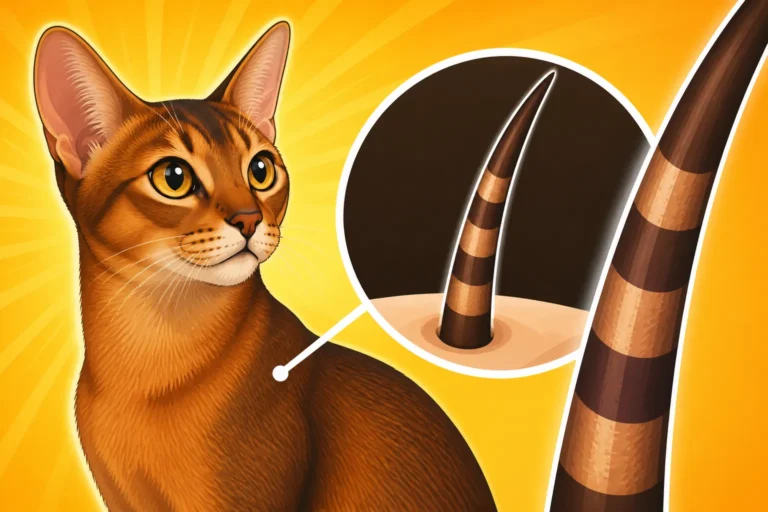
Unlike many other cat breeds that display solid colors or distinct tabby stripes, the Abyssinian boasts a ticked, or agouti, coat. This means that each individual hair shaft has multiple bands of color alternating between a darker hue and a lighter hue, with the tip always being the darkest. Imagine a tiny rainbow along each strand, but in shades of ruddy, sorrel, blue, or fawn. This intricate banding creates a shimmery, iridescent effect as your cat moves, giving the illusion of a solid color with depth, rather than a pattern. How an Abyssinian's Agouti Banding Works delves deeper into this genetic marvel.
The magic of the ticking is that there are no distinct stripes, spots, or blotches on the body, though sometimes a faint "M" tabby mark might be seen on the forehead in some lines, or "necklace" markings on the chest. The goal in the adult cat is a clear, even ticking across the entire body. The absence of a strong tabby pattern is a key characteristic, and it's this very specific genetic trait that initially causes that baby coat to look less refined than its adult counterpart.
The Lack of Undercoat and Its Impact
Another crucial aspect of the Abyssinian's coat is its minimal undercoat. Most cats have a dense, soft layer of undercoat beneath their coarser guard hairs, which provides insulation. Abyssinians, however, have a very fine, single coat that lies close to their body, with little to no noticeable undercoat. This contributes to their sleek appearance and explains Why an Abyssinian's Single Ticked Coat Barely Sheds compared to other breeds.
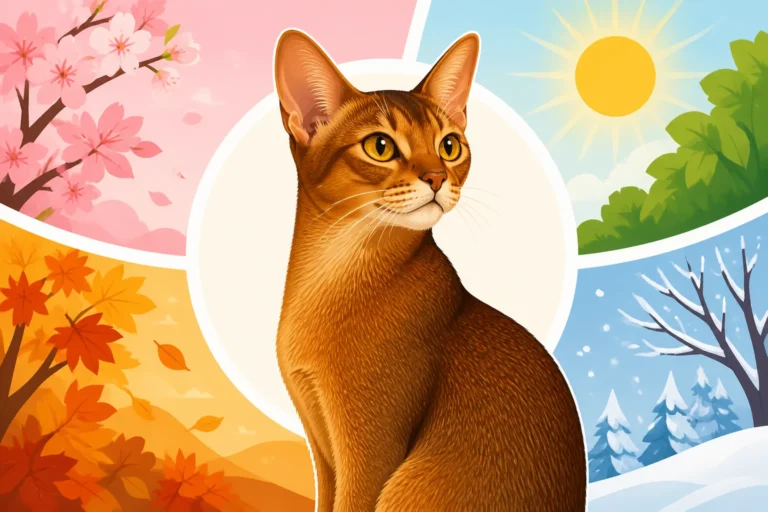
This lack of a heavy undercoat means that every single hair, with its unique ticking, is clearly visible. When the kitten coat is still developing, and those individual hairs haven't fully expressed their banding, there's nothing dense to hide any inconsistencies. This makes the "kitten fuzz" more noticeable and contributes to the perception of a blotchy or less uniform color. The fineness of the coat also means it can look different in every light, exaggerating areas that haven't quite "ticked up" yet. How an Abyssinian's Coat Looks Different in Every Light for a fuller explanation of this effect.
Why Abyssinian Kittens Look "Blotchy" or "Fuzzy"
It's easy to look at a vibrant, fully-ticked adult Abyssinian and then at a small kitten and wonder if they are even the same breed. The difference in coat appearance is a common source of confusion for new owners.
The "Kitten Fuzz" Stage
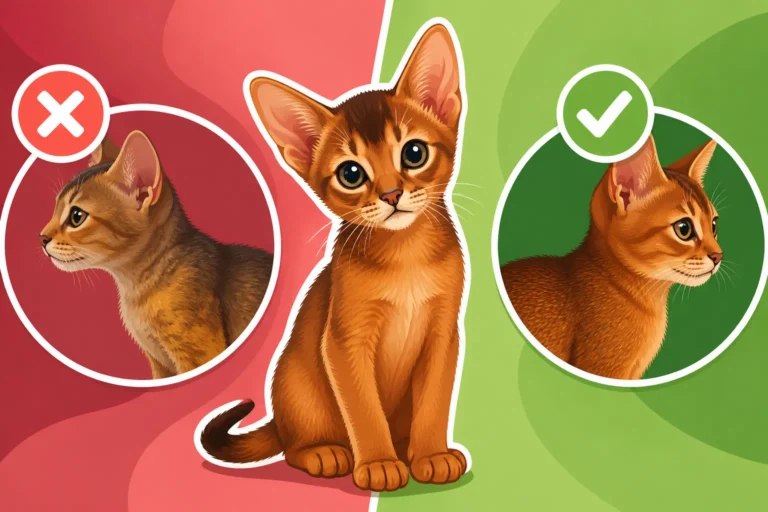
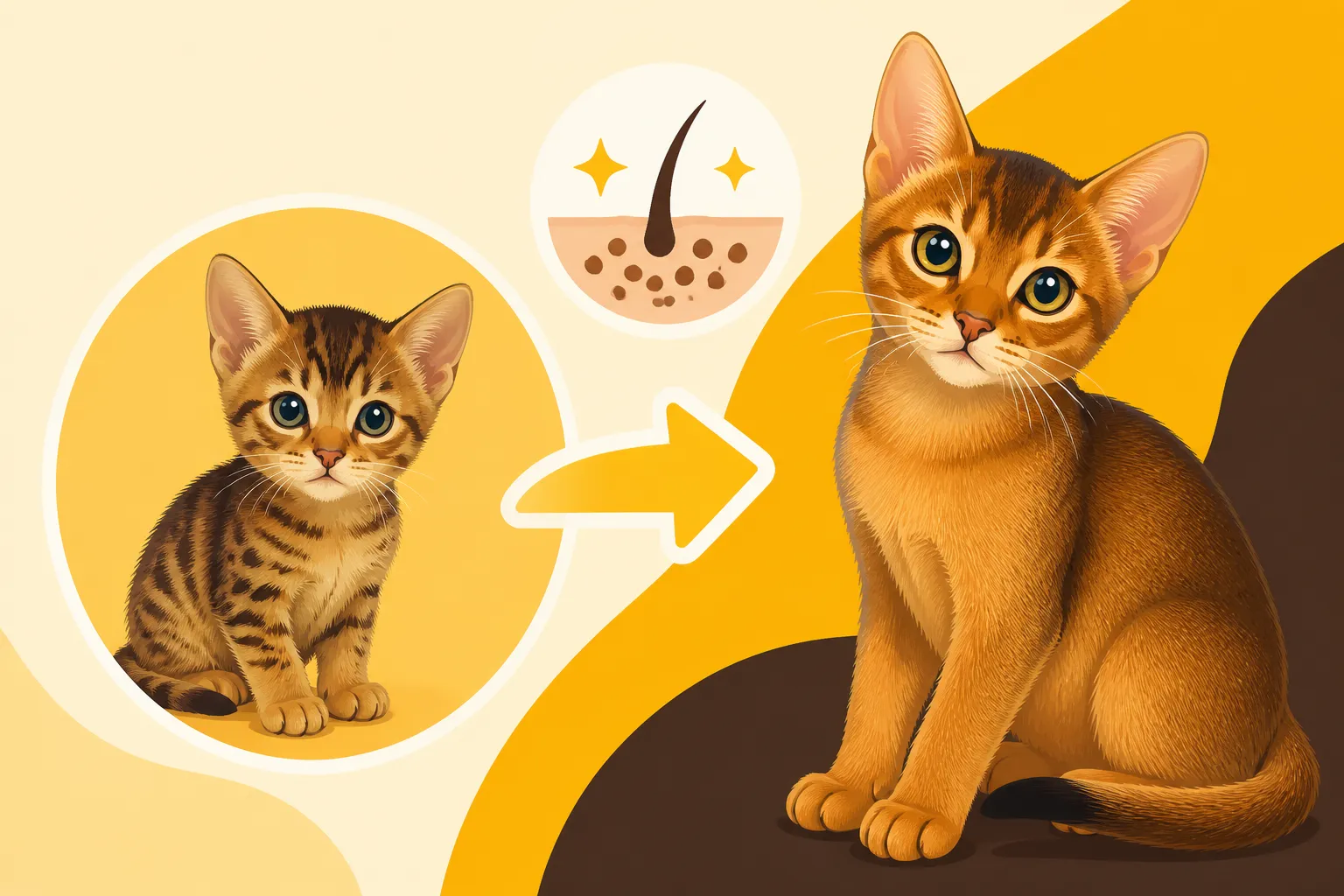
Just like human babies are born with soft, often fine hair that changes significantly as they grow, Abyssinian kittens go through a similar "kitten fuzz" stage. This fuzzy, less defined coat is perfectly normal and a sign of a healthy, developing youngster. Think of it as their baby blanket, soft and comfortable, but not yet tailored for the runway. The individual hair shafts in a young kitten are still maturing, and the bands of color that define the ticking aren't fully developed or as sharply contrasted as they will be later. This can make the coat appear less vibrant, almost muted or washed out in places, and can indeed give it a blotchy or uneven texture and color. It's a stage of growth, not a flaw in the kitten's breeding or health.
During this period, the kitten's fur might feel incredibly soft to the touch, often softer than the sleek, slightly coarser texture of an adult Abyssinian's coat. The colors, especially in lighter areas, might seem to blend more, creating that "muddy" or indistinct look. This is particularly noticeable on the body and flanks, where the ticking needs to be most consistent in an adult. As the kitten grows, those hairs will lengthen, strengthen, and the pigment will deepen, bringing out the distinct banding we associate with the breed.
The Gradual Revelation of Ticking
The transformation from a fuzzy kitten to a clearly ticked adult is a gradual, fascinating process. The ticking doesn't simply "appear" overnight; it slowly emerges as the kitten matures. From around 10-12 weeks, you'll start to notice subtle changes, particularly on their face and legs, where the ticking often becomes more defined first.
As the kitten grows, each hair follicle goes through its full cycle, and the new hairs that grow in will be increasingly more ticked. The bands of color become sharper, the contrast more pronounced, and the overall coat begins to shimmer rather than just look soft. The depth of color and clarity of ticking continues to develop well into their first year, and sometimes even into their second year, with the coat truly "finishing" and reaching its full potential. So, if your little Abyssinian still looks a bit uneven at six months, don't fret! They're still very much a work in progress, perfecting their glorious ticked coat. This gradual revelation is a key part of When an Abyssinian Kitten's Adult Ticking Arrives.
Factors Influencing Coat Development
While the "kitten fuzz" phase is universal for Abyssinians, the speed and ultimate clarity of their adult coat can be influenced by several factors. Understanding these can help you appreciate the journey your kitten's coat takes.
Genetics and Parental Influence
The genetic blueprint inherited from your kitten's parents plays the most significant role in the quality and eventual clarity of its ticking. A reputable breeder carefully selects breeding pairs to ensure desirable traits, including excellent coat quality and clear ticking. While all Abyssinian kittens go through a fuzzy stage, kittens from parents with exceptional, well-defined ticking are more likely to develop a superior coat themselves. It's why discerning breeders will show you photos of the parents, and often previous offspring, so you can see the adult coat quality that your kitten is expected to inherit.
This also ties into broader genetic health. Good genetics don't just affect coat appearance; they contribute to overall vitality. A breeder who focuses on strong genetic lines for coat quality is often also diligent about testing for inheritable diseases. For instance, understanding An Abyssinian's Grandparents Reveal About Its Kidneys can be as important as their coat history for long-term health. If you are ever in doubt about the health or genetic background, don't hesitate to ask your breeder about their practices and the lineage of your kitten.
Nutrition's Role in a Healthy Coat
While genetics lay the foundation, proper nutrition is absolutely vital for supporting healthy coat development. A kitten needs a diet rich in high-quality protein, essential fatty acids (like Omega-3 and Omega-6), vitamins, and minerals to grow strong bones, muscles, and a lustrous coat. A diet lacking in these crucial nutrients can result in a duller, less vibrant coat, or even slower coat maturation.
When choosing food, look for options specifically formulated for kittens or all life stages, with real meat as the first ingredient. Many brands offer excellent choices. For instance, you can find a wide variety of high-quality kitten foods on platforms like Chewy or Amazon, allowing you to compare ingredients and reviews. Some owners also explore fresh food options, which can provide highly digestible nutrients beneficial for coat health. Remember that feeding your kitten a consistent, balanced diet is paramount during their rapid growth phase. What an Abyssinian Kitten Should Eat in Its First Year provides more in-depth guidance on nutrition for young Abyssinians.
Environmental Factors
The environment your Abyssinian lives in can also have subtle effects on their coat over time, though these are usually less dramatic than genetics or nutrition. For example, prolonged exposure to direct sunlight can sometimes cause a cat's coat to lighten or "bleach" slightly, which might affect the depth of color in the ticking. This is more apparent in darker colors like ruddy or blue.
General health and stress levels also play a role. A healthy, happy cat with a robust immune system will naturally have a healthier, shinier coat. Conversely, a cat experiencing chronic stress or illness might develop a dull, rough, or less vibrant coat. While the initial "blotchiness" is developmental, maintaining a low-stress environment and ensuring regular veterinary check-ups will support your Abyssinian's overall well-being, which in turn reflects in their beautiful coat.
What to Expect and When the Coat Matures
The journey from a fuzzy Abyssinian kitten to a sleek, ticked adult is one of the most exciting transformations to witness. Knowing what to expect can ease any concerns and help you appreciate each stage.
Timeline for Coat Clarity
Generally, you'll start noticing significant changes in your Abyssinian kitten's coat around 3 to 6 months of age. The "kitten fuzz" begins to recede, and the individual hair shafts start to display their distinct bands of color more clearly. The ticking will become sharper, and the overall depth of color will increase. However, the coat isn't "finished" at this point. While some areas, particularly the face and legs, might appear quite refined by six months, the body coat continues to develop.
For a truly mature, fully "ticked up" coat, you should expect to wait anywhere from 12 to 18 months, and in some cases, even up to 2 years. At this point, the ticking should be even across the body, with no noticeable barring or blotches. This full maturation is a gradual process, so patience is key. Think of it as a masterpiece slowly being revealed, layer by layer.
Differences in Color Development
The rate and appearance of coat maturation can vary slightly depending on the Abyssinian's specific color.
For instance:
- Ruddy Abyssinians: Often, the ruddy (or 'usual' in some regions) is the most common color and its ticking can appear quite early. How a Ruddy Abyssinian's Coat Develops details this progression, usually showing rich black or dark brown ticking over an apricot or orange-brown base. The initial kitten fuzz might look a bit browner or grayer than the final vibrant ruddy.
- Sorrel Abyssinians: These have cinnamon or red ticking over an apricot base. Their kitten coat might appear lighter and less intensely red, gradually deepening into its warm, fiery hue.
- Blue Abyssinians: The blue Abyssinian features a slate blue or grey ticking over a lighter cream or beige base. How a Blue Abyssinian's Ticking Differs by often looking quite pale or even a bit indistinct in kittenhood, as the diluted blue pigment takes longer to fully express. The "fuzz" can appear quite light grey.
- Fawn Abyssinians: As the palest of the four recognized colors, fawn Abyssinians have a delicate warm cream ticking over an even lighter cream base. Their kitten coats might look almost off-white or very pale beige before the soft fawn tones fully emerge.
Regardless of the color, the underlying principle remains the same: the coat matures over time, becoming clearer and more defined as your Abyssinian grows into adulthood.
Dispelling Worries and What's Normal
It’s natural for new Abyssinian owners to have questions and concerns, especially when their kitten doesn’t look exactly like the show-stopping adults they’ve seen in pictures. Let's tackle some of those common worries head-on.
Common Concerns from New Owners
"Is my kitten poorly bred?" "Is something wrong with their coat quality?" These are very common thoughts that new Abyssinian owners have when confronted with a blotchy or fuzzy kitten. It's a valid concern, particularly given the investment in a pedigree cat. However, it's crucial to understand that this "kitten fuzz" is a perfectly normal stage in the development of the Abyssinian's unique ticked coat. It doesn't mean your kitten is poorly bred; it simply means they're growing up!
Many other breeds have clear patterns or solid colors from birth, so seeing an Abyssinian's coat evolve can be a surprise. Remember, the ticking is a complex genetic trait that takes time to fully express itself on each hair shaft. A reputable breeder will always explain this developmental phase to you, reassuring you that the adult coat will be stunning. The important thing is that the underlying health of the kitten is good, and that's something a diligent breeder focuses on from day one, often performing genetic tests for issues like PK deficiency and PRA-rdAc. How to Read an Abyssinian's Normal Test Result can help you understand the health documentation provided by your breeder.
When to Consult Your Breeder or Vet
While a certain degree of "blotchiness" or "fuzz" is completely normal, there are times when it’s wise to consult your breeder or veterinarian.
You should reach out to your breeder if:
- The coat seems unusually sparse or thin, rather than just soft and indistinct.
- You notice any actual bald patches or excessive shedding beyond what's expected for a cat with Why an Abyssinian's Shed Hair Is Hard to See.
- The kitten's skin appears irritated, red, or flaky beneath the fur.
- There's a complete lack of any ticking developing even after 6-8 months, which could indicate a misidentified breed, though this is rare with reputable breeders.
You should consult your veterinarian if:
- The coat is truly dull, greasy, or seems unhealthy, possibly accompanied by other signs of illness such as lethargy, poor appetite, or digestive issues.
- Your kitten is excessively scratching, licking, or biting their fur, which could indicate parasites, allergies, or skin infections.
- You notice significant hair loss, which can be a symptom of various underlying health problems.
Open communication with your breeder is always your first line of defense; they know their lines best and can offer valuable insights. However, for any health concerns, your veterinarian is the ultimate professional to assess your kitten's well-being and rule out any medical issues. Ensuring regular vet check-ups is part of the comprehensive care package for your active Abyssinian. The Ticked Coat Is the Whole Abyssinian Grooming Job also covers general coat care, but specific health issues always warrant professional attention.
Abyssinian Kitten Coat Development Stages
To give you a clearer picture, here's a general overview of how an Abyssinian kitten's coat typically progresses:
| Age Range | Appearance Description | Key Characteristics | What to Expect |
|---|---|---|---|
| Birth – 8 Weeks | Kitten Fuzz: Very soft, fine, often muted or indistinct coat. Colors might seem less vibrant, sometimes appearing grayish or slightly blotchy. Some faint tabby markings may be visible. | Softest texture, least defined ticking. Focus on overall health and growth. | Don't worry about coat perfection; it's just beginning. |
| 2 – 4 Months | Transitional Fuzz: The coat remains soft, but subtle hints of ticking might start to emerge, particularly on the face, head, and legs. Body still likely appears fuzzy or slightly mottled. | Beginning of clearer definition in certain areas. Colors might start to brighten slightly. | More definition will gradually appear. Ensure good nutrition to support growth. |
| 4 – 8 Months | Developing Ticking: Ticking becomes more apparent and defined across larger areas of the body. The "fuzz" starts to disappear, replaced by a sleeker, more shimmery texture. Overall color depth increases. | Ticking is clear but may not be perfectly even everywhere. Adult texture begins to form. | You'll see significant improvement. Continue regular grooming and health checks. |
| 8 – 18 Months | Maturing Coat: The coat continues to refine, with ticking becoming consistently clear and even across the entire body. The characteristic shimmer and depth of color fully develop. Any remaining faint tabby markings usually fade. | Near-complete adult coat. Full vibrancy and pattern clarity. | Your Abyssinian is almost at their prime coat. Enjoy the full beauty of their ticked fur! |
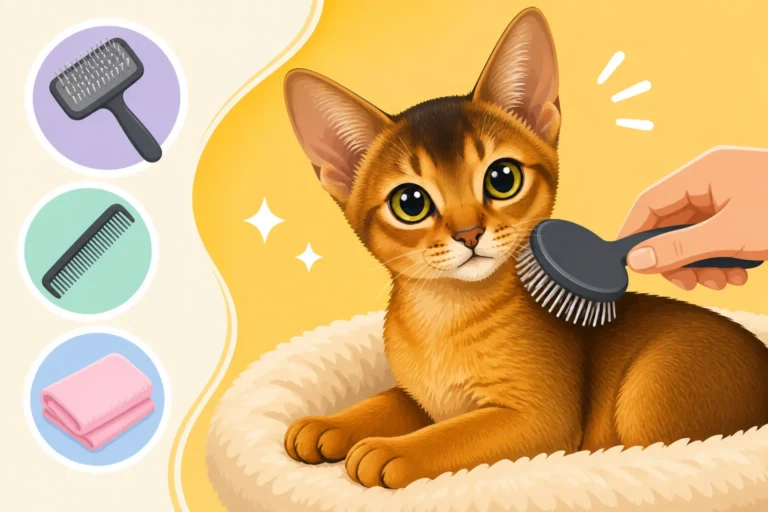
| 18 Months + | Fully Developed Adult Coat: The coat is now considered mature, displaying the breed's characteristic even, shimmering ticking, short length, and close-lying texture. It should match What an Abyssinian Looks Like Against the Show Standard for clarity and color. | Peak coat condition. Sleek, iridescent, and vibrant. | Maintain with regular, gentle grooming (a soft brush or mitt is usually enough for The Ticked Coat Is the Whole Abyssinian Grooming Job). |
This table provides a general guide, but every Abyssinian kitten is an individual, and their coat development timeline can vary slightly. Enjoy watching your little blotchy kitten transform into a magnificent, shimmering adult Abyssinian!
Disclaimer
This article is for general informational purposes only and does not constitute professional advice. Laws, prices and regulations vary by location and change over time. Consult a qualified professional for guidance on your specific situation.