Why an Abyssinian’s Shed Hair Is Hard to See
It’s a common experience for Abyssinian owners to look around their home, survey their furniture, and scratch their heads, wondering, "Where is all the shed hair?" You might even boast to friends that your Aby barely sheds, only to find yourself occasionally wondering if your eyes are playing tricks on you. The truth is, Abyssinians do shed—all cats do—but the unique characteristics of their coat make their shed hair incredibly difficult to see, creating the illusion of a virtually shed-free household. This guide will delve into the fascinating reasons behind this phenomenon and offer practical advice for managing the shedding you can't quite spot.
The Unique Structure of the Abyssinian Coat
The Abyssinian coat is truly a marvel of feline genetics, and it’s the primary reason why their shed hair seems to vanish into thin air. Unlike many other breeds with dense undercoats and coarse guard hairs, the Aby's coat is designed for subtlety and a smooth, sleek appearance.
Understanding the Ticked Pattern and Single Coat
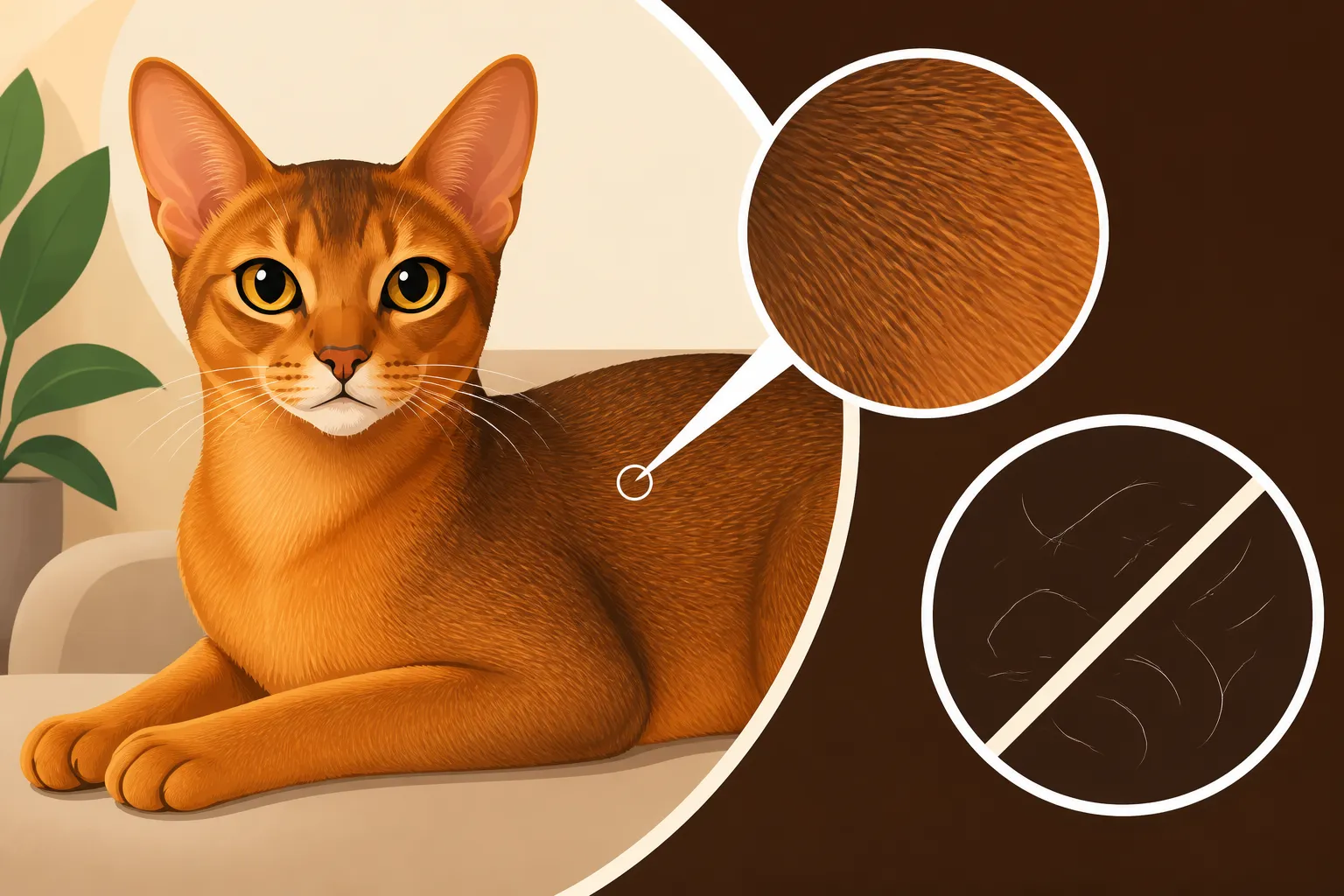
The hallmark of the Abyssinian is its stunning ticked, or agouti, coat. What does this mean in practical terms? It means that each individual hair on an Abyssinian is banded with two to three, or even four, different colors, with darker bands at the tip and lighter bands closer to the skin. This isn't a solid color or a stripe; it's a gradual change along each hair shaft, which gives the coat its incredible depth and shimmer as the cat moves. Why Each Abyssinian Hair Carries Three or Four Bands explores this in more detail.
Because each hair is banded, the light reflects off the coat in a way that minimizes the appearance of individual shed hairs. Imagine tiny camouflage experts. When a single hair detaches, its multiple color bands help it blend into almost any surface, especially if it's not a starkly contrasting color. A solid black hair on a light carpet screams for attention, but a multi-banded Abyssinian hair? It quietly merges into the background, making it incredibly elusive to the naked eye. This unique pattern is central to How an Abyssinian's Agouti Banding Works.
The Near Absence of an Undercoat
Perhaps the most significant factor contributing to the "invisible" shedding of an Abyssinian is their lack of a dense undercoat. Many popular breeds, like Persians or Maine Coons, have a thick, woolly undercoat that provides insulation but also sheds profusely in clumps and tumbleweeds of fur. You can feel the difference just by petting an Aby; their fur feels fine, soft, and lies close to the body. How Thin an Abyssinian's Undercoat Really Is delves into just how minimal it is.
This single-layer coat means that when an Abyssinian sheds, it's primarily individual strands of this finely textured hair, not vast quantities of fluffy undercoat. These hairs are much lighter and less voluminous, making them less likely to form visible mats or cling in obvious ways to clothing and furniture. So, while your Aby is still constantly renewing its coat, the type of hair it sheds is far less noticeable than that of a double-coated feline friend. This also means Why an Abyssinian's Single Ticked Coat Barely Sheds compared to other breeds.
Why Each Strand is Different
The ticking isn't just a visual trick; it's a genetic trait that affects the quality and texture of each hair. Abyssinian hairs are generally very fine and silky. They’re not coarse or stiff, which further contributes to their ability to blend in. When these fine, multi-banded hairs detach, they don't have the same "sticking power" as thicker, straighter hairs from other breeds. They tend to settle more discreetly, often sifting into carpet fibers or fabric weaves rather than sitting conspicuously on the surface.
This unique hair structure also influences how the coat handles dirt and dander. Because the hair is so fine and lacks a dense undercoat, it can sometimes feel warmer to the touch. This doesn't mean it's collecting more dander, but rather that the dander, when it does shed along with the hair, is equally as difficult to spot. It all contributes to the overall effect of an Abyssinian appearing to shed very little.
The Illusion of "Non-Shedding"
It's easy to fall into the trap of believing your Abyssinian is a non-shedding cat. The evidence, or lack thereof, seems to support it. However, every living creature with hair sheds, and your Abyssinian is no exception. It's more about how and where that shed hair manifests itself.
Less Visible Hair Doesn't Mean No Hair
The biggest misconception is equating "invisible" with "non-existent." Your Abyssinian is constantly shedding, just like any other cat. The difference is that those fine, multi-banded hairs are masters of disguise. You might find a few strands on your dark trousers if your Aby has been perched on your shoulder, but you won't typically see huge clumps or drifts of fur accumulating in corners like you might with a long-haired breed.
This can be both a blessing and a curse. A blessing because your home stays tidier with less visible cat hair. A curse because if you're an allergy sufferer, the dander and microscopic hair fragments are still present, even if you can't see them. For more on this topic, consider reading Whether an Abyssinian Sets Off Cat Allergies and Why an Abyssinian Is Not a Hypoallergenic Cat. The perception of cleanliness can sometimes lead to less vigilant grooming or cleaning habits, potentially exacerbating issues for sensitive individuals.
Where Abyssinian Hair Tends to End Up
While you might not see it on the surface of your couch, Abyssinian hair does go somewhere. It often works its way deep into fabrics, carpet piles, and bedding. Think about the lint trap in your dryer after washing your Aby’s favorite blanket, or the amount of fur you find when you finally pull out the vacuum cleaner. That’s where the "invisible" hair truly reveals itself. It’s also often found collecting in less-trafficked areas, forming dust bunnies that are a mix of household dust and fine cat hair.
You'll also notice it more in certain areas where your Aby spends a lot of time grooming themselves or rubbing against surfaces. Their favorite sleeping spots on a pillow or a specific chair might show a faint shimmer of shed hair if you catch it in the right light, but it's rarely a thick layer. Because the hair is so fine, it's also more prone to becoming airborne, circulating through your home’s ventilation system, or settling imperceptibly on surfaces.
Seasonal Changes and Shedding Perception
Even with their minimal undercoat, Abyssinians do experience seasonal changes in their shedding patterns. While it’s not as dramatic as a cat "blowing its coat" in the spring, you might notice a slight increase in shed hairs during warmer months. How Much More an Abyssinian Sheds in Spring is a helpful resource here. As the weather warms up, their bodies naturally adjust by shedding any slightly thicker winter growth to prepare for lighter summer coats.
This seasonal shift is still subtle for an Abyssinian, but if you're highly observant, you might catch a few more hairs on your clothes or see your grooming mitt pick up a bit more. However, even during these periods, the sheer volume of shed hair pales in comparison to many other cat breeds. The consistency of their coat, year-round, is one of their defining characteristics, making it easy to assume shedding is a non-issue.
Practical Strategies for Managing Abyssinian Hair
Even if you can't see most of it, managing your Abyssinian's shed hair is still an important part of their care routine, contributing to both their coat health and the cleanliness of your home. A little proactive effort goes a long way.
Gentle Grooming to Catch Loose Hairs
Regular, gentle grooming is key to capturing those elusive shed hairs before they become even more dispersed throughout your home. While an Abyssinian's coat doesn't demand the extensive daily brushing of a long-haired breed, a weekly session is beneficial. An Abyssinian Needs Brushing Once a Week and No More outlines this perfectly. You're not trying to remove mats or tangles, but rather to gently lift away any loose, dead hairs from the surface of their sleek coat.
A soft rubber grooming mitt or a fine-toothed comb works wonderfully. A mitt, like those found on Amazon or Chewy, is often preferred as it massages the skin while collecting loose hairs, and many Abyssinians enjoy the sensation. Avoid harsh slicker brushes or de-shedding tools, as these can actually damage their delicate single coat and disrupt the beautiful ticking pattern. Why the Wrong Brush Flattens an Abyssinian's Ticking explains why these tools are a no-go for an Aby. After grooming, a quick wipe down with a chamois cloth can also help polish the coat and pick up any remaining loose strands. Which Grooming Mitt Suits an Abyssinian provides more guidance on suitable tools.
Keeping Your Home Clean and Hair-Free
Because Abyssinian hair blends in so well, regular cleaning is your best defense against accumulation, even if you don't see a problem. Vacuuming frequently, especially upholstered furniture and carpets, is essential. Pay particular attention to your cat's favorite sleeping and lounging spots. For hard surfaces, a microfiber cloth or an electrostatic dust mop can pick up fine hairs without just pushing them around.
Consider using lint rollers on your clothes, especially after a cuddle session. While you might not see visible fur, a quick roll can often surprise you with the amount of fine hair it picks up. Washing bedding and cat blankets regularly is also important, as these are prime locations for shed hair to gather. Adding a splash of white vinegar to the rinse cycle can help loosen pet hair from fabrics in the washing machine.
Nutritional Support for Coat Health
A healthy coat sheds less, regardless of how visible the shed hair is. Ensuring your Abyssinian receives a high-quality diet rich in essential fatty acids (like Omega-3 and Omega-6) can promote skin health and a strong, supple coat. Look for cat foods that list real meat as the first ingredient and contain these beneficial oils.
Hydration also plays a crucial role. Cats are naturally inclined not to drink a lot of water, but good hydration keeps their skin moisturized and their hair follicles healthy. Offering multiple water bowls, a cat water fountain, or incorporating wet food into their diet can encourage better water intake. A well-hydrated cat with a healthy diet will naturally have a more resilient coat, minimizing excessive shedding of brittle hairs. What an Abyssinian Eats in a Month delves into dietary needs.
Comparing Abyssinian Shedding to Other Breeds
To truly appreciate the "invisible" shedding of an Abyssinian, it helps to put it into perspective against other cat breeds. Their unique coat characteristics place them in a league of their own when it comes to visible hair around the house.
How Their Shedding Differs from Double-Coated Cats
The most striking difference is, of course, with double-coated breeds. Think of a Siberian, a Norwegian Forest Cat, or even many domestic longhairs. These cats have a soft, dense undercoat for warmth and a longer, coarser outer coat that protects them. When they shed, especially seasonally, they "blow their coat," meaning large amounts of the undercoat come out in fluffy tufts and mats. This is highly visible and requires daily, intensive grooming to manage.
Abyssinians, with their single, finely ticked coat, experience none of this dramatic shedding. You won't find Abyssinian "tumbleweeds" rolling across your floor. Their shedding is a continuous, low-level process of individual hair replacement, making it far less impactful on visible home cleanliness. This minimal, discreet shedding is a huge draw for many owners who appreciate a relatively clean home without constant vacuuming.
The Impact on Allergy Sufferers
While the visible shedding is minimal, it's crucial to understand that "low shedding" does not equate to "hypoallergenic." Cat allergies are primarily caused by proteins found in a cat's saliva (Fel d 1), urine, and dander (dead skin flakes), not just the hair itself. When a cat grooms, these proteins get deposited onto their fur, and then the fur, along with dander, is shed into the environment.
Since Abyssinians still produce these allergens and shed microscopic skin flakes and fine hairs, they can absolutely trigger allergies in sensitive individuals. The fact that their hair is less visible might even create a false sense of security. It means the allergens are still present, just harder to spot. For those with allergies, frequent cleaning, air purifiers, and regular grooming (even if it's just a quick wipe down) are still essential, regardless of the apparent lack of hair.
The Abyssinian's coat is a marvel of adaptation, designed for warmth, flexibility, and a stunning aesthetic that belies its shedding reality. While their shed hair truly is hard to see, understanding why empowers you to keep both your Aby and your home in tip-top shape. You might not see it, but a little consistent care ensures your active, beautiful Abyssinian thrives.
Disclaimer
This article is for general informational purposes only and does not constitute professional advice. Laws, prices and regulations vary by location and change over time. Consult a qualified professional for guidance on your specific situation.