Why an Abyssinian’s Single Ticked Coat Barely Sheds
If you're new to the wonderful world of Abyssinians, one of the first things you might notice, or rather not notice, is cat hair everywhere. Many prospective owners worry about shedding, picturing their homes constantly covered in a fine layer of fur. But here's a secret: the Abyssinian, with its striking, short ticked coat, actually sheds remarkably little compared to many other breeds. This guide will dive deep into why this active, playful cat manages to keep its shedding so minimal, making life a little easier for you and a lot tidier for your home.
The Unique Structure of the Abyssinian's Ticked Coat
The Abyssinian's coat is truly a marvel, a genetic masterpiece that contributes directly to its reputation as a low-shedding cat. It's not just short; it's intricately designed.
Understanding the Agouti Gene and Ticking
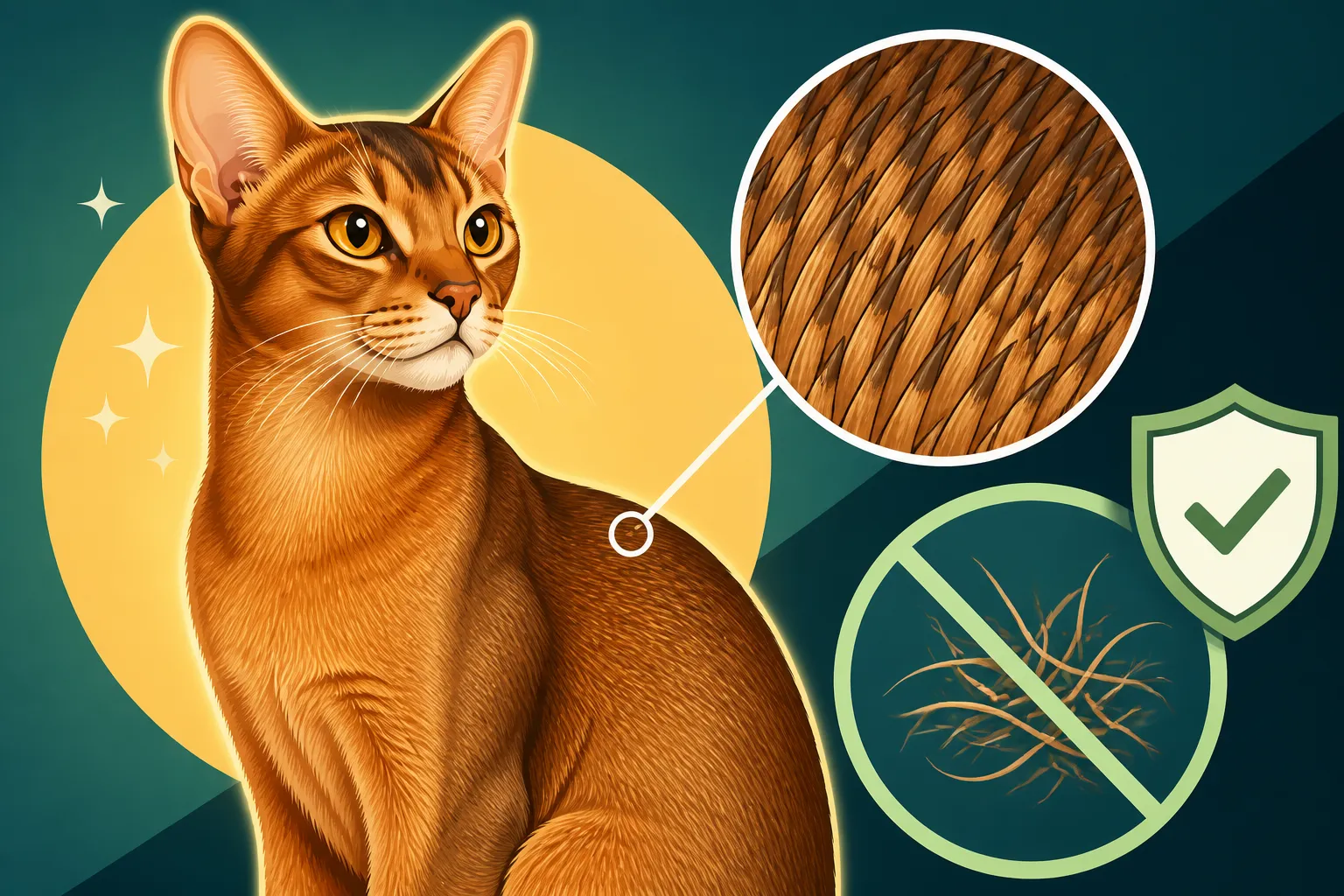
At the heart of the Abyssinian's minimal shedding is its unique ticked coat, a direct result of the agouti gene. Unlike tabby patterns that feature distinct stripes, spots, or swirls, an Abyssinian's coat is characterized by "ticking," meaning each individual hair shaft carries multiple bands of color. Imagine a single hair that starts light at the base, then darkens, then lightens again, and finishes dark at the tip. This banding creates a vibrant, shimmering effect as the cat moves, giving the illusion of depth without any overt patterns. It’s what gives the Abyssinian that wild, exotic look, reminiscent of its possible wild ancestors.
This intricate coloring is distinct from the solid colors seen in many other breeds, and certainly different from the defined stripes of a mackerel or classic tabby. It's truly something special, and it means that even within a single hair, you're seeing a spectrum of hues. You can learn more about this in Why Each Abyssinian Hair Carries Three or Four Bands and What Makes an Abyssinian's Coat Ticked Rather Than Striped.
The "Single Coat" Advantage
The ticked coat of the Abyssinian is often described as a "single coat," which is a huge part of why they shed so little. What this really means is that they lack the dense, fluffy undercoat that many other cat breeds possess. Think of breeds like Maine Coons or Persians, who have a thick, soft layer of insulating fur beneath their longer guard hairs. This undercoat is designed to keep them warm and is a major contributor to shedding, especially during seasonal changes when they "blow their coat" to prepare for warmer weather.
Abyssinians, on the other hand, have primarily guard hairs that lie close to the body, with very little to no soft, downy undercoat. This absence of a substantial undercoat drastically reduces the sheer volume of hair that needs to be shed. It's a key physiological difference that sets them apart and makes them much easier on the vacuum cleaner. Their fur lies sleek and smooth, almost like satin, and feels incredibly fine to the touch.
Why the Ticked Pattern Minimizes Visible Shedding
Beyond the reduced volume, the ticked pattern itself plays a clever trick on your eyes when it comes to shedding. Because each hair is banded with multiple colors, any individual hair that does fall out doesn't stand out as much against furniture or clothing as a solid-colored hair would. Imagine a black cat shedding a black hair on a white sofa – it's instantly noticeable. Now imagine an Abyssinian's hair, with its complex color bands, falling on a mixed-texture rug. The varying shades within that single hair help it blend in more effectively.
The visual effect of the ticking is also one of movement and shimmer, meaning that even if there are a few stray hairs, they tend to be less conspicuous. This subtle camouflage contributes to the perception that Abyssinians shed "barely at all." It's not just less hair, but the hair that is shed is often less jarring to the eye.
The Science Behind Minimal Shedding
It's not just about what you see; there's a biological basis for the Abyssinian's low-shedding tendencies. Understanding the mechanics of hair growth and external influences can further explain this desirable trait.
Hair Growth Cycles and the Abyssinian
Just like humans, a cat's hair grows in cycles, typically involving three main phases: anagen (the active growth phase), catagen (a transitional phase where growth stops), and telogen (the resting phase before the hair sheds). In many breeds, especially those with dense undercoats, these cycles can be synchronized, leading to periods of heavy shedding, often seasonally. Think of the tumbleweeds of fur that appear when winter gives way to spring.
For Abyssinians, it's believed that their hair growth cycles are less synchronized and perhaps feature a longer anagen (growth) phase for individual hairs. This means that hairs don't all reach the telogen (shedding) phase at the same time. Instead, hair turnover is a more gradual, continuous process, rather than a mass shedding event. This constant, subtle replacement of individual hairs results in a much lower daily output of fur, avoiding those overwhelming shedding seasons that many cat owners dread.
The Role of Skin Health and Nutrition
A healthy coat always starts from within, and this is especially true for an Abyssinian and its low-shedding status. A cat's skin and coat are direct indicators of its overall health. When an Abyssinian is well-nourished, its hair follicles are strong, producing resilient hair shafts that are less prone to breakage and premature shedding. Essential nutrients like high-quality protein, omega-3 and omega-6 fatty acids, and various vitamins and minerals are crucial. Protein forms the building blocks of hair, while fatty acids contribute to healthy skin and a shiny, supple coat.
If an Abyssinian's diet is lacking, you might notice its coat becoming dull, dry, or even coarse, and shedding could increase. Providing a premium diet tailored to an active cat's needs is paramount. Foods made with fresh, high-quality ingredients can be excellent choices to support optimal coat health. Always ensure your cat has access to plenty of fresh water, too, as hydration is key for skin and coat vitality. You can get an idea of what goes into feeding your energetic companion in What an Abyssinian Costs to Feed Each Month.
Environmental Factors and Shedding
The environment an Abyssinian lives in also plays a significant role in its shedding patterns. Most Abyssinians are indoor-only cats, living in homes with relatively stable temperatures and humidity levels year-round. This controlled environment minimizes the drastic seasonal changes that often trigger heavy shedding in outdoor cats, whose coats adapt to extreme cold or heat. Without the need to grow a thick winter coat or shed it rapidly for summer, their hair cycles remain more consistent.
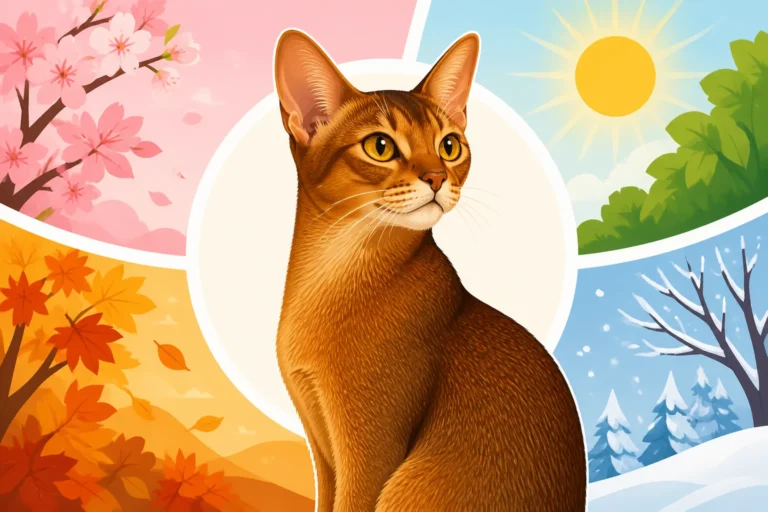
Additionally, factors like low indoor humidity can sometimes lead to drier skin and a more brittle coat, potentially increasing shedding slightly. Keeping your home at a comfortable humidity level can further support their skin and coat health. While an Abyssinian's genetics are the primary driver of its low shedding, a stable, healthy indoor environment certainly helps maintain that desirable trait. This consistency contributes to a more predictable and minimal shedding experience for owners. You might notice slight changes, though, as described in How an Abyssinian's Coat Changes With the Seasons.
Grooming and Maintenance for a Low-Shedding Coat
Even with their minimal shedding, a little routine grooming goes a long way in keeping your Abyssinian's coat pristine and managing any stray hairs. The key is gentle, consistent care that respects their unique coat structure.
Minimal Brushing, Maximum Benefit
The beauty of the Abyssinian's coat is that it requires very little fuss. You don't need intense, daily brushing sessions that feel like a chore. In fact, over-brushing an Abyssinian can actually do more harm than good. Their single coat lacks the protective underlayer, so aggressive brushing can strip away essential oils, irritate their delicate skin, or even pull out healthy guard hairs unnecessarily. The goal is to gently remove any loose hairs and distribute natural oils, not to de-shed.
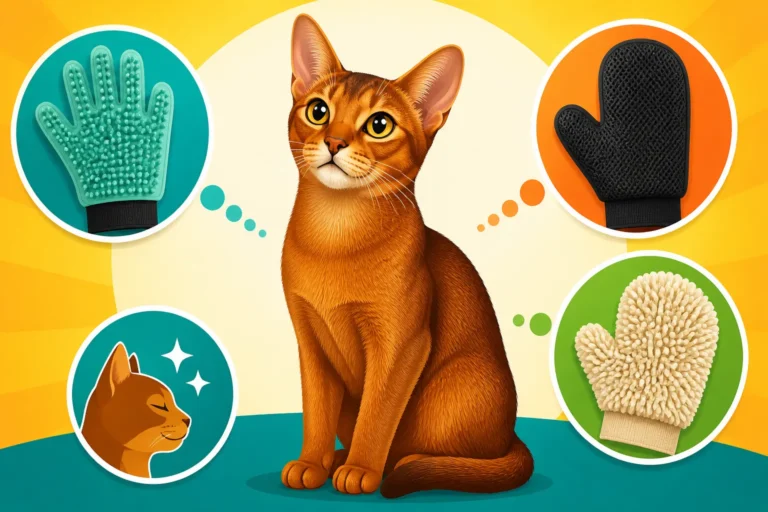
A light weekly grooming session is usually more than sufficient. A soft rubber grooming mitt, like those readily available on Chewy or Amazon, works wonders. Just a few passes over their sleek body helps to pick up any shed hairs and gives their coat a lovely sheen. Finishing with a chamois cloth can really make their ticking sparkle. This quick routine not only keeps their coat healthy but also serves as a bonding experience. An Abyssinian Needs Brushing Once a Week and No More outlines this perfectly.
Avoiding Tools That Damage the Ticking
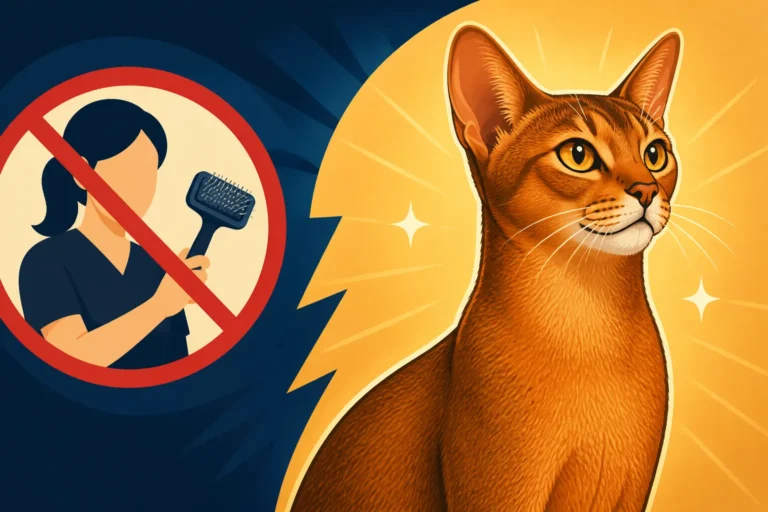
This is a critical point for Abyssinian owners: steer clear of harsh de-shedding tools! Devices like the Furminator, while effective for double-coated breeds with thick undercoats, are absolutely not suitable for an Abyssinian. These tools are designed with fine, rake-like teeth that penetrate the topcoat to grab and pull out the dense, dead undercoat. Applying such a tool to an Abyssinian's single, finely ticked coat will only damage it.
Using a de-shedding tool on an Abyssinian can strip out healthy guard hairs, thin their coat unnecessarily, and even disrupt the beautiful ticking pattern. It can lead to patchy areas, skin irritation, and a dull, coarse coat that completely undermines the natural elegance of the breed. Stick to soft brushes, rubber mitts, or even just a damp cloth. If you're unsure which grooming mitt suits your Abyssinian, you can consult Which Grooming Mitt Suits an Abyssinian. Remember, the goal isn't to remove a massive amount of fur, but to gently maintain what they have. Why the Wrong Brush Flattens an Abyssinian's Ticking further explains why certain tools are detrimental.
Bathing: Rarely Needed, Carefully Done
Good news for those who dread cat baths: Abyssinians are exceptionally clean cats and rarely require a full bath. Their short, sleek coat doesn't tend to collect dirt or debris like longer, fluffier coats do, and they are meticulous self-groomers. In most cases, a regular gentle wipe-down with a damp cloth is all that's needed to keep them looking fresh.
However, if your Abyssinian manages to get into something truly messy, a bath might become necessary. When this happens, choose a mild, cat-specific shampoo that is pH-balanced and ideally formulated for sensitive skin. Avoid human shampoos or harsh detergents, which can strip natural oils and dry out their skin. Bathe them in a warm, shallow basin, using gentle strokes, and rinse thoroughly to ensure no residue is left behind. Because they lack an undercoat, Abyssinians dry relatively quickly. Pat them gently with a towel and ensure they stay warm until completely dry. For more information on this, refer to Whether an Abyssinian Ever Needs a Bath.
Managing Expectations: "Barely Sheds" vs. "No Shedding"
While it's true that Abyssinians are minimal shedDers, it's important to set realistic expectations. "Barely sheds" isn't the same as "sheds not at all."
Understanding that All Cats Shed
Let's be clear: there's no such thing as a truly non-shedding cat. All living creatures with hair or fur will shed to some extent as part of their natural hair growth cycle. The Abyssinian's reputation for "barely shedding" stems from the amount of hair they shed and how noticeable that shedding is. You will still find Abyssinian hairs in your home, on your clothes, and on your furniture. It's just that the volume will be significantly less than what you'd experience with many other breeds, and the individual hairs, due to their ticking, might blend in more easily.
If you're expecting a completely hair-free existence, no cat can deliver that. However, if you're looking for a breed that won't leave you constantly battling fur bunnies and needing to lint-roll every outfit before leaving the house, the Abyssinian is an excellent choice. Their shedding is manageable, not overwhelming, which is a huge relief for many cat owners.
Abyssinian Coat Changes Over Time
An Abyssinian's coat, while consistently low-shedding, does go through natural developmental stages and can be influenced by internal and external factors. When an Abyssinian kitten is born, its coat might appear a bit darker or even slightly blotchy, and the full vibrancy and clarity of its ticking develop as it matures. The adult ticking truly arrives as they grow, usually by the time they are a few months old, and continues to refine well into their first year. When an Abyssinian Kitten's Adult Ticking Arrives covers this fascinating process.
Throughout their lives, you might notice subtle shifts. For example, some Abyssinians might shed a little more during seasonal transitions, even indoors, though it will still be a fraction of what a double-coated cat would produce. Hormonal changes, stress, or underlying health issues can also temporarily affect coat quality and shedding. A healthy, well-cared-for Abyssinian will maintain its beautiful, low-shedding coat for its entire life, but slight variations are normal.
Here's a quick comparison of an Abyssinian's coat versus a typical double-coated cat:
| Feature | Abyssinian Coat | Double-Coated Cat (e.g., Maine Coon, Persian) |
|---|---|---|
| Coat Layers | Single coat (primarily guard hairs) | Double coat (dense undercoat + guard hairs) |
| Hair Structure | Ticked; each hair has multiple color bands | Solid, striped, or spotted; uniform color per hair |
| Texture | Fine, silky, lies close to the body | Soft, dense, fluffy, voluminous |
| Shedding Volume | Very low; continuous, minimal hair turnover | Moderate to high; often seasonal "blowouts" |
| Visibility of Shed | Less noticeable due to ticking and low volume | Highly noticeable due to volume and solid color |
| Grooming Needs | Minimal; gentle brushing once a week | Regular, often daily, brushing to prevent mats |
| Undercoat | Absent or extremely sparse | Present, thick, and insulating |
The Allergy Myth: Dander, Not Just Hair
This is a common misconception that needs addressing: less shedding does not automatically mean "hypoallergenic." Cat allergies are primarily caused by proteins found in a cat's dander (dead skin flakes), saliva, and urine, not solely by the hair itself. When a cat grooms, it spreads these proteins onto its fur. Less shedding can mean less dander is distributed throughout the home, which might provide some relief for individuals with very mild allergies.
However, Abyssinians still produce dander and saliva, and therefore, they are not a truly hypoallergenic breed. If you or a family member has cat allergies, spending time with an Abyssinian before committing is crucial to see if their lower dander distribution is enough to prevent a reaction. Don't assume that because they barely shed, they won't trigger allergies. Whether an Abyssinian Sets Off Cat Allergies provides more detail on this important distinction.
Practical Tips for a Clean Home with an Abyssinian
Even with a low-shedding cat, a little proactive effort in your home cleaning routine can make a big difference in managing any stray hairs and keeping your living space fresh.
Regular Cleaning Routines
Since Abyssinians do shed a little, albeit minimally, incorporating simple, regular cleaning habits will help you stay on top of any stray hairs before they accumulate. A quick pass with a vacuum cleaner a few times a week, especially in their favorite nap spots or high-traffic areas, will pick up any loose fur. For hard surfaces, a microfiber cloth or a damp mop can easily gather hairs.
Don't forget those often-overlooked spots like under furniture or behind curtains where lighter hairs might drift and settle. Keeping a lint roller handy for clothes or quick touch-ups on upholstery is also a smart move. The beauty is that with an Abyssinian, these routines are more about maintenance than crisis management, making your cleaning efforts far less arduous than with a heavy shedder.
Choosing Pet-Friendly Furnishings
When you share your home with a cat, even a low-shedding Abyssinian, thinking about your furnishings can save you a lot of hassle. Certain fabrics attract and hold onto cat hair more than others. Velvets and some tightly woven chenilles, for example, can act like magnets for fur. On the other hand, materials like leather, pleather, or tightly woven microfibers tend to repel hair or make it much easier to wipe away.
Consider using washable throws or blankets on your Abyssinian's favorite perching spots, like the arm of a sofa or a chair. This way, any minimal shedding that occurs is contained to an easily removable and washable item. Darker fabrics might also highlight lighter Abyssinian hairs, while lighter fabrics could make darker hairs more visible. Choose colors and textures that blend well with your cat's coat to make any stray hairs less conspicuous, contributing to a cleaner appearance even if a few hairs are present.
Integrating Grooming into Daily Life
While we've established that Abyssinians don't need extensive grooming, incorporating very brief, positive grooming interactions into your daily routine can be incredibly beneficial. This isn't about deep de-shedding, but rather about a quick, affectionate touch that serves multiple purposes. A minute or two of gentle stroking with a rubber mitt or even just your bare hands can pick up loose hairs before they have a chance to settle elsewhere.
This consistent, light touch also helps to distribute natural skin oils, keeping their coat healthy and shiny. More importantly, it reinforces the bond between you and your Abyssinian, turning a practical task into a moment of connection. When grooming is a positive experience, your cat is more likely to relax and even enjoy the attention, making it easier for you to maintain their beautiful coat and a tidier home. The Ticked Coat Is the Whole Abyssinian Grooming Job truly encompasses the simplicity of their grooming needs.
Disclaimer
This article is for general informational purposes only and does not constitute professional advice. Laws, prices and regulations vary by location and change over time. Consult a qualified professional for guidance on your specific situation.