How a Blue Abyssinian’s Ticking Differs
One of the most common questions I get about Abyssinians, especially from new owners or those still deciding on a kitten, is about their coat colors. People see pictures online, and sometimes a "blue" Abyssinian looks almost grey, while others look more silver. It can be incredibly confusing trying to figure out if you're looking at the same color, or if there's some trick of the light involved. This guide will walk you through the fascinating intricacies of a blue Abyssinian's ticking, explaining what makes it distinct and why it can appear so varied.
Understanding the Abyssinian's Ticked Coat First
Before we dive specifically into blue, it's crucial to understand what "ticking" even means for an Abyssinian. Unlike most cats with stripes, spots, or solid colors, the Abyssinian's coat is defined by its unique agouti ticking. This means that each individual hair on the cat's body isn't one solid color; instead, it has bands of color, usually three or four, alternating between a darker shade and a lighter one, with a dark tip. It's like a tiny, intricate zebra pattern on every single strand of fur. This banding is what gives the Abyssinian its shimmering, iridescent quality when it moves, almost like liquid silk. How an Abyssinian's Agouti Banding Works
This agouti gene is dominant, which means that even if a cat carries a gene for stripes or spots, the ticking will typically override it. The magic of the Abyssinian coat lies in the absence of a distinct pattern on the body, though sometimes faint "ghost" tabby markings can appear on the legs or tail, especially in kittens, but these are generally considered undesirable in the show ring. The goal is an even distribution of ticking across the entire body, creating that signature wild cat look. The Ticked Coat Is the Whole Abyssinian Grooming Job
The lack of a dense undercoat is another hallmark of the Abyssinian breed. Their fur lies close to the body, contributing to their sleek, athletic appearance and making them relatively low-shedding cats compared to many other breeds. This fine, soft texture also makes the ticking more prominent, as there isn't a thick layer of solid-colored underfur to obscure the delicate banding. It’s a very practical coat too; it helps keep them comfortable in various temperatures because it's not overly dense.
Why Each Abyssinian Hair Has Bands of Color
The individual hairs of an Abyssinian are truly remarkable. Picture a single hair: it doesn't just sprout out one color. Instead, it transitions between dark and light several times before reaching its tip. Typically, you'll see a light base band closest to the skin, followed by a darker band, then another light band, and finally, a dark tip. This is the essence of the agouti gene at play. Why Each Abyssinian Hair Carries Three or Four Bands
This banding effect is what creates the illusion of depth and movement in their coat. When an Abyssinian walks or stretches, the light catches these different colored bands, making the fur seem to shimmer and change before your eyes. It’s never a flat, dull color. This intricate detail is why judging an Abyssinian's coat in a show ring involves careful examination of individual hairs, not just the overall color impression. It also explains why photos don't always do them justice; you really need to see an Aby in person to appreciate the full effect.
What Dilution Does to a Blue Abyssinian's Ticking
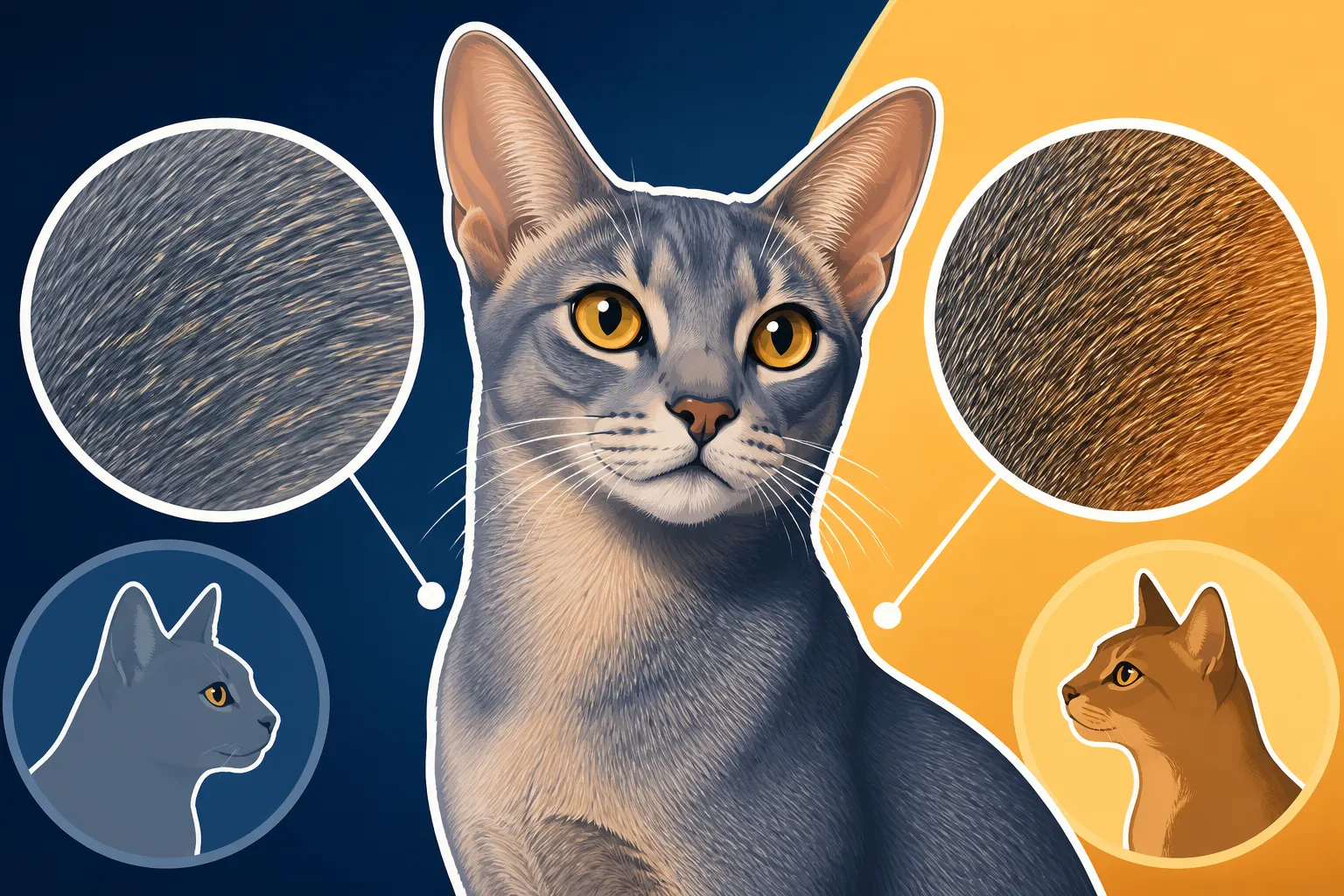
Now, let's talk about the blue Abyssinian specifically. The "blue" color in Abyssinians isn't a vibrant navy or sky blue, but rather a striking, dilute shade of grey with a warm undertone. It's a genetic marvel, really, caused by the dilute gene acting on the dense black pigment. Instead of black bands, you get shades of blue-grey, and instead of a rich ruddy (brown/red) undercoat, you'll see a softer, sandy or beige tone.
The dilute gene essentially "waters down" the intensity of the pigment. For a ruddy Abyssinian, where the dense pigment is black, the dilute gene turns that black into blue. Where a ruddy has rich orange or apricot banding, a blue Abyssinian will have a paler, sandy or fawn banding. It’s this contrast between the blue-grey bands and the lighter under-bands that creates the unique appearance. What Dilution Does to a Blue Abyssinian
This dilution affects every aspect of their coloring, from the darker bands on each hair to the color of their paw pads and nose leather, which will also be a blue-grey. Even their eye rims, which are usually outlined in a darker shade, will appear blue. It's a complete package, and it’s why a blue Abyssinian carries an undeniable elegance, almost like a living sculpture.
Comparing Blue Ticking to Other Abyssinian Colors
To truly appreciate the blue Abyssinian's ticking, it helps to compare it to the other recognized colors: ruddy, sorrel, and fawn.
| Abyssinian Color | Dark Bands on Hair | Light Bands on Hair | Overall Impression | Paw Pads & Nose Leather |
|---|---|---|---|---|
| Ruddy | Black | Rich Orange/Apricot | Warm, Golden Brown | Black or Dark Brown |
| Sorrel | Cinnamon/Red-Brown | Apricot/Red-Orange | Bright, Coppery Red | Pink |
| Blue | Blue-Grey | Sandy/Fawn Beige | Soft Grey with Warm Tones | Blue-Grey |
| Fawn | Pinkish Mushroom | Cream/Pale Beige | Very Pale, Dusty Rose | Pink with Blue Overlay |
As you can see from the table, the blue color is essentially the dilute version of ruddy. Where ruddy boasts bold black ticking and vibrant orange, blue offers a softer, more muted palette of blue-grey and fawn. This difference is not just about the dominant color, but how the underlying pigments are expressed at a cellular level, creating that exquisite individual hair banding. What a Blue Abyssinian Looks Like
The interplay between the dark and light bands is less stark in the blue than in the ruddy, giving it a more blended appearance. A sorrel, being a dilute form of chocolate, has a distinct coppery-red tone, while a fawn, the dilute of sorrel, is the palest of all, almost a dusty rose color. Each color has its own charm, but the blue holds a special place for its sophisticated, ethereal quality. The subtle beauty of a blue Abyssinian's coat is something that once you see it, you never forget it. How a Ruddy Abyssinian's Coat Develops
The Visual Impact of a Blue Abyssinian's Coat in Different Light
One of the most captivating aspects of an Abyssinian's ticked coat, regardless of color, is how it transforms under different lighting conditions. This is especially true for the blue variety, whose subtle shades can appear dramatically different depending on whether your cat is basking in natural sunlight, lounging under warm indoor lamps, or even just moving through a shadowed room. Why an Abyssinian's Coat Looks Different in Every Light
In bright, natural sunlight, a blue Abyssinian's coat can truly shimmer, revealing the intricate fawn or sandy undertones that might be less obvious indoors. The blue-grey bands catch the light, creating a dynamic interplay of shadows and highlights that emphasize the depth of their ticking. You might notice subtle hints of silver or even a purplish cast in certain angles, which is a testament to the complexity of their pigment distribution. This is often where people see the "silver" quality that can be confusing; it's the reflection and refraction of light on those carefully banded hairs.
Under warmer indoor lighting, like incandescent lamps, the fawn undertones in a blue Abyssinian's coat often become more pronounced, giving the cat an overall softer, almost sepia-toned appearance. The blue-grey might recede slightly, allowing the warmer bands to come forward. Conversely, under cooler LED or fluorescent lights, the true blue-grey tones will likely be emphasized, making the coat appear crisper and more steely. This variability is why trying to judge a blue Abyssinian's exact shade from a single photograph can be misleading, as camera settings and ambient light play a huge role.
How a Blue Abyssinian Kitten's Ticking Develops
Just like human babies, Abyssinian kittens don't arrive with their full adult coloring right away. When a blue Abyssinian kitten is born, its coat might appear somewhat muted or even slightly blotchy. The ticking, that beautiful banding we cherish, isn't fully developed yet. It's a process, a journey of color that unfolds over several months.
Typically, blue Abyssinian kittens will have a softer, less defined ticking in their early weeks. You might see more of the lighter fawn or beige undercoat, and the darker blue-grey bands will be less distinct. It’s not uncommon for them to have faint tabby barring on their legs or even a "necklace" marking around their neck, which usually fades as they mature. Breeders often refer to this as the "kitten uglies" phase, though personally, I find all kittens adorable!
As the blue Abyssinian kitten grows, usually between 4 to 6 months of age, the ticking begins to set in more firmly. The individual hair bands become sharper, and the contrast between the blue-grey and fawn tones intensifies. Their overall coat color will deepen and clarify, revealing the full glory of their blue dilution. By the time they are around one year old, their adult coat should be fully developed, showcasing that magnificent, shimmering blue ticking. It’s a wonderful transformation to witness, watching them shed their baby fur and embrace their mature beauty.
Caring for a Blue Abyssinian's Coat
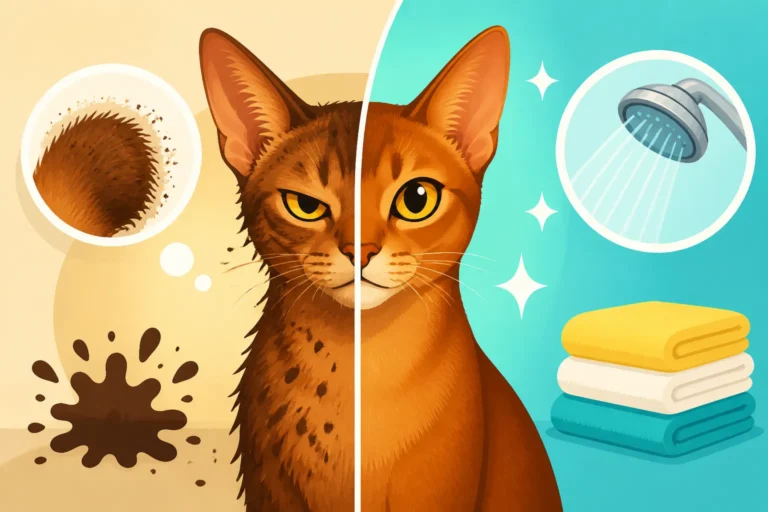
While a blue Abyssinian's coat is stunning, it doesn't demand excessive grooming, which is a relief for busy owners! Their single, short, fine coat means they don't have the dense undercoat that often requires daily dematting in other breeds. However, basic regular care will help keep their ticking vibrant and their coat healthy, reflecting light beautifully.
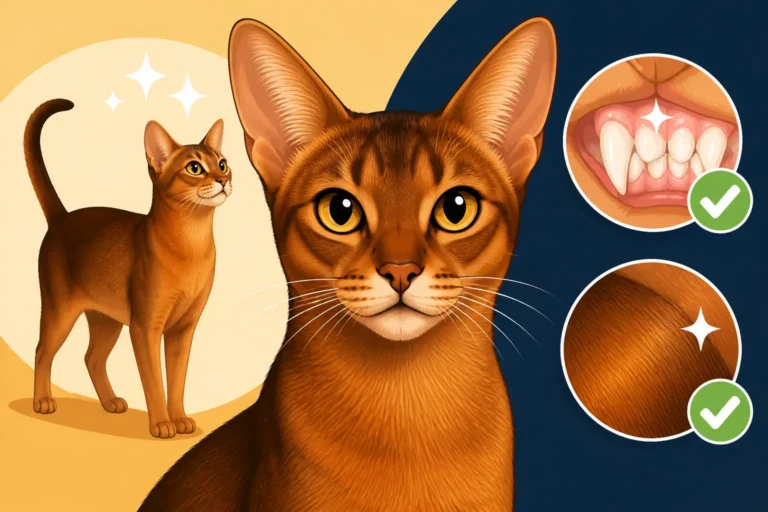
A weekly brush with a soft rubber grooming mitt or a fine-toothed comb is usually sufficient. This helps remove loose hairs, distribute natural oils, and gently stimulate the skin, promoting a healthy, shiny coat. For that extra sheen, some owners like to finish with a chamois cloth, which buffs the coat and really brings out the luster and highlights those unique ticked patterns. Just remember, avoid harsh de-shedding tools like slicker brushes or furminators, as these can actually damage the delicate ticking and pull out too much of their sparse undercoat, leaving the coat looking ragged. A gentle approach is always best for an Abyssinian. An Abyssinian Needs Brushing Once a Week and No More
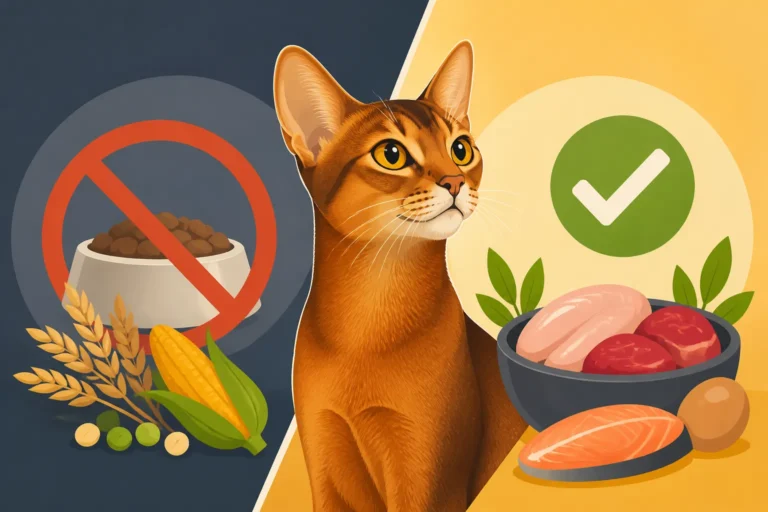
Nutrition also plays a significant role in coat health. A high-quality diet rich in protein and essential fatty acids will support a vibrant, healthy coat. You can find a wide variety of suitable cat food and grooming tools on platforms like Chewy or Amazon, making it easy to stock up on everything your blue Abyssinian needs to look its best. Remember to always consult your vet about the best dietary choices for your individual cat.
Protecting Your Blue Abyssinian's Color and Coat Health
Beyond routine brushing and good nutrition, there are a few other considerations to keep your blue Abyssinian's coat looking its best. Exposure to strong, direct sunlight over prolonged periods can sometimes cause the darker bands of an Abyssinian's coat to lighten or "rust," losing some of their intensity. While a little sun is great for any cat, excessive sunbathing might subtly alter the beautiful blue-grey tones over time. Why Sun Fades an Abyssinian's Coat
Ensuring your Abyssinian has access to fresh water at all times is also paramount for overall health, including skin and coat condition. Dehydration can lead to dull, dry fur, which won't show off that spectacular ticking. Many Abyssinians enjoy drinking from pet fountains, which can encourage them to drink more. Consider placing water bowls in multiple locations around the house, perhaps even away from their food, to make hydration more appealing.
Finally, regular veterinary check-ups are key. Underlying health issues can manifest in a dull or unhealthy coat. Your vet can advise on any specific supplements or dietary adjustments if they notice any changes in your cat's skin or fur quality. By providing a balanced diet, regular grooming, and attention to environmental factors, you'll ensure your blue Abyssinian's coat remains a stunning example of the breed's unique beauty for years to come.
Disclaimer
This article is for general informational purposes only and does not constitute professional advice. Laws, prices and regulations vary by location and change over time. Consult a qualified professional for guidance on your specific situation.