What an Abyssinian’s Ideal Head Shape Is
An Abyssinian’s head should look softly wedge-shaped, not sharply triangular or round like a Persian’s. That balance can be hard to judge in a kitten, in a photo, or when a cat is moving. This guide explains the breed’s ideal head shape, the features that create it, and how to tell natural variation from a meaningful departure from the standard.
The overall shape of an Abyssinian head
A modified wedge, not a narrow triangle
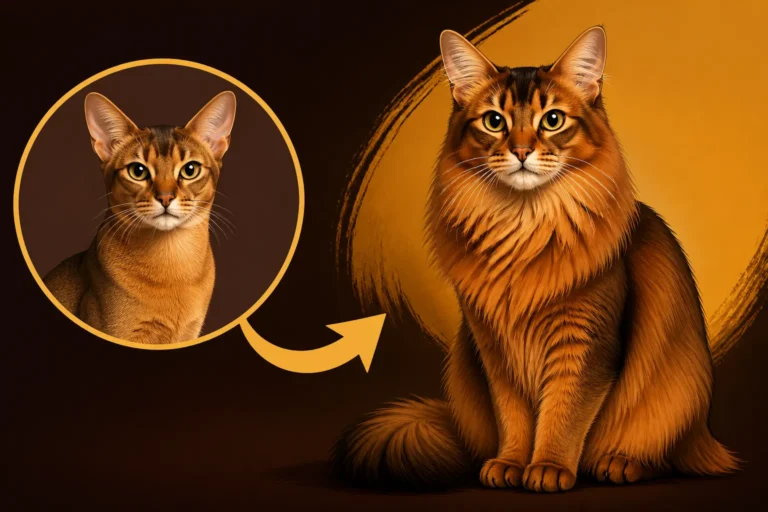
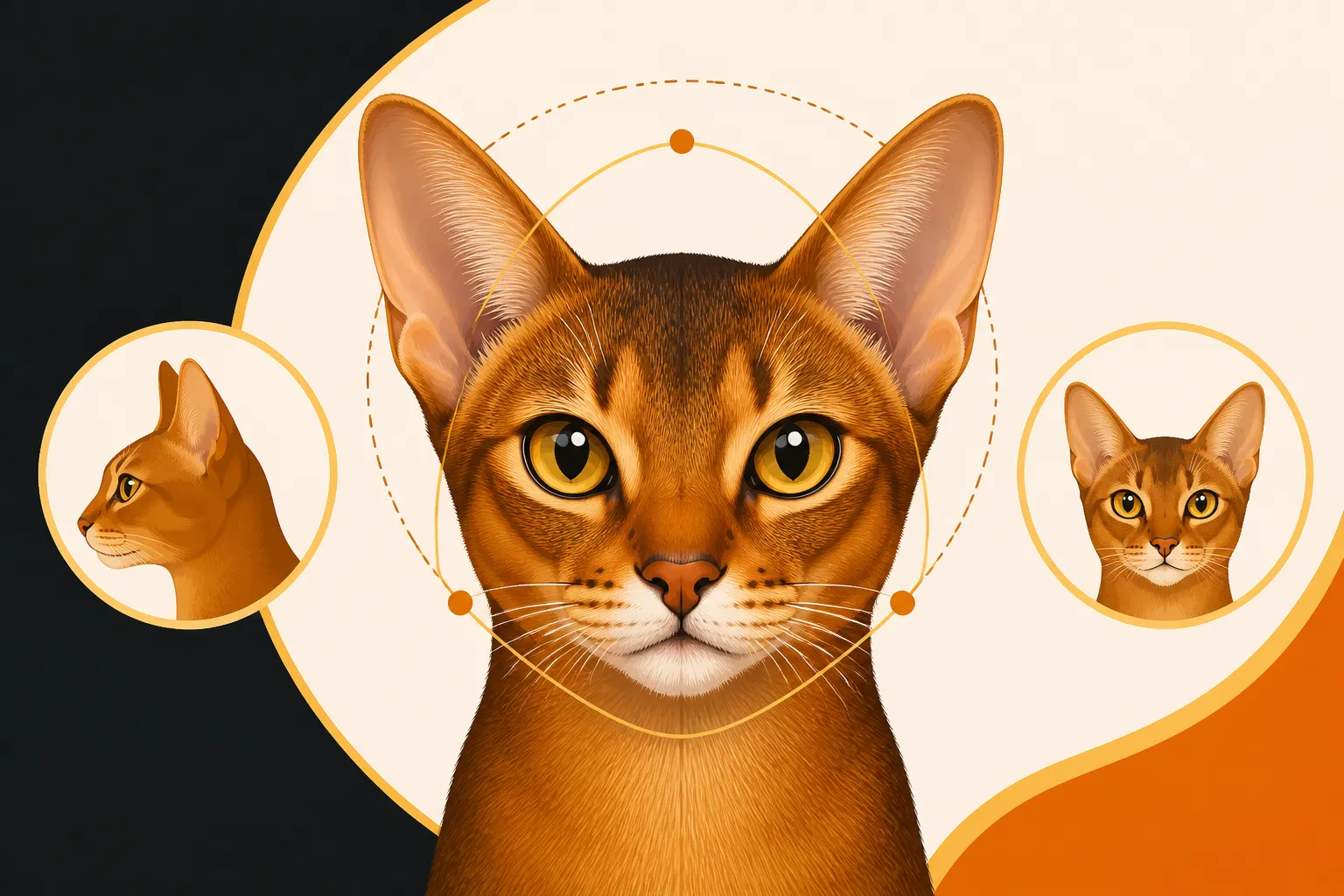
The Abyssinian head is often described as a modified wedge. Picture a shape that is broader across the brow and cheek area, then gently tapers toward the muzzle, with smooth transitions rather than hard corners. “Modified” matters: the head should not look like a long, narrow triangle, and it should not become round or broad in the way you might expect in a different breed.
When people first see an Abyssinian, they may focus on the large ears, alert expression, or distinctive ticked coat. Those features can make the head seem more angular than it is. Look at the outline from the front and allow for the ears to sit outside it. The underlying skull should have gentle contours, with a muzzle that fits naturally into the wedge rather than appearing pinched or abruptly narrow.
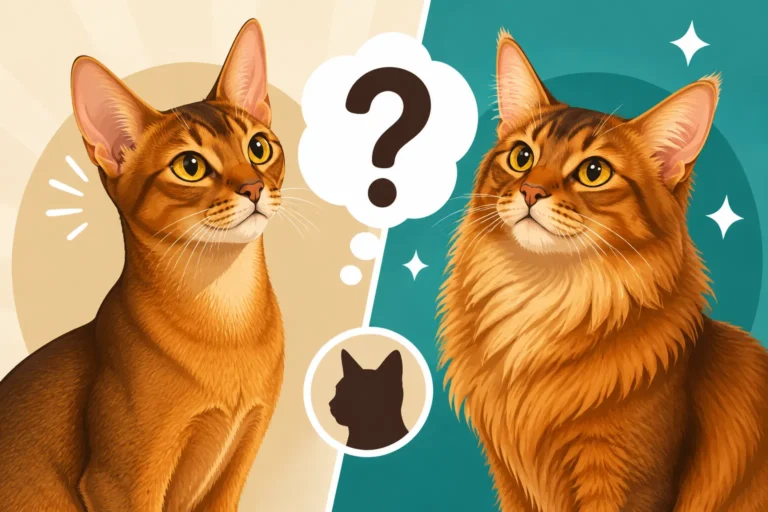
The ideal is about proportion as much as shape. A head that is technically tapered but looks too fine for the cat’s body may seem unbalanced. So might a broad, rounded head on a cat with the Abyssinian’s lean, elegant build. Breed type is the whole picture: head, ears, eyes, muzzle, and body should appear to belong together.
This is also why a single snapshot can be misleading. An Abyssinian looking down, turning toward a sound, or pressing its ears back may appear to have a very different profile. For context on the breed’s overall appearance, see What an Abyssinian Looks Like Against the Show Standard.
Smooth contours create the characteristic expression
A good Abyssinian head does not rely on one dramatic feature. Its recognizable expression comes from several modest features working together: a gently rounded brow, softly formed cheeks, a balanced muzzle, and ears that continue the alert, open look without overpowering the skull.
In profile, the outline should flow rather than break into sharp angles. The forehead and nose bridge should not appear as a perfectly straight, flat line, nor should the face look excessively concave or pushed in. The precise wording and emphasis can differ among registry standards, so a cat may be assessed slightly differently depending on the show organization. The common theme is a natural, harmonious profile rather than an extreme one.
A useful way to picture the standard is to compare the head with a drawing made from flowing lines. If the brow, cheek, and muzzle seem like separate blocks, the overall impression may be too abrupt. If the face narrows sharply from the forehead all the way to the nose, it may look too pointed. The preferred effect is a refined wedge softened by rounded contours.
Head shape also changes how the cat’s expression reads. An Abyssinian with the expected balance can look alert and curious without appearing severe. That distinctive expression is part of the appeal, but it should not be confused with an exaggerated facial structure. More detail on the breed’s proportions appears in What an Abyssinian's Body Type Is Called.
How the main facial features fit together
The muzzle, chin, and profile
The muzzle should be visible and proportionate, not so short that the face looks flat and not so long or narrow that it disrupts the wedge. From the front, the lower face should blend into the cheeks. From the side, the muzzle and chin should contribute to a balanced profile without looking weak, over-prominent, or sharply cut off.
The chin is important because it supports the shape of the lower face. A receding or very small-looking chin can make the muzzle seem more pointed than it is. An overly heavy lower jaw can make the head appear blunt or broad. A judge evaluating an Abyssinian considers how these parts relate to the rest of the face, rather than assessing the chin in isolation.
It helps to compare the cat from more than one angle. A side view can show the profile, while a straightforward view reveals whether the muzzle narrows evenly and whether the face retains a gentle wedge. In everyday life, try not to overinterpret a phone photo taken close to the cat’s face: a wide-angle camera can distort proportions, making the muzzle look larger or the forehead look smaller.
A kitten’s facial proportions are still developing, so a young cat may not yet show the adult balance clearly. The ears can look disproportionately large, and the muzzle may seem finer than it will later. For a broader look at development, see What an Abyssinian Kitten Looks Like at Eight Weeks and When an Abyssinian Reaches Full Size.
Ears and eyes frame the head
Abyssinian ears are notably large and set wide apart, which can make them seem like the defining feature of the head. They should frame the face and contribute to an alert expression, but they should not make the skull itself look excessively narrow. When looking at the head shape, mentally discount the outer edges of the ears and focus on the brow, cheeks, and muzzle beneath them.
The eyes also influence the apparent shape. They are expressive and set into the face in a way that gives the cat an open, attentive look. Their placement can make the brow seem broader or the muzzle seem more tapered, depending on the angle and lighting. Avoid judging head type from eye size alone; the standard is concerned with the face as a whole.
Abyssinian eyes are often described as almond-shaped, but the visible shape changes when the cat is relaxed, excited, or looking upward. The dark outline around the eyes can also make them stand out. That striking feature can draw attention away from the relationship between the eyes and the rest of the skull, so step back and assess the overall silhouette.
| Feature | What to look for | What can distort the impression |
|---|---|---|
| Overall outline | A softly tapered, modified wedge | A very close photo or a turned head |
| Brow and cheeks | Smooth, gentle contours | Shadows or an alert, tense expression |
| Muzzle and chin | Balanced with the upper face | A kitten’s still-developing proportions |
| Ears | Large and wide-set, framing the face | Ears held sideways or flattened |
| Eyes | An open, expressive placement | Squinting, bright light, or camera angle |
For more on how these features are considered together, see How an Abyssinian's Head and Ears Are Judged and Why an Abyssinian's Eyes Are Rimmed in Dark.
Common head-shape misunderstandings
Why “wedge-shaped” does not mean sharply pointed
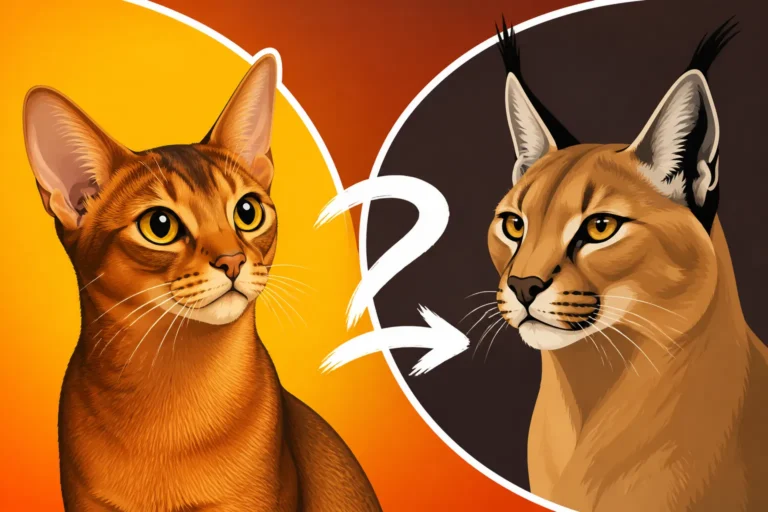
The word “wedge” can lead people to imagine a narrow, pointed face. That is not the best mental picture for an Abyssinian. The breed’s head is refined, but its lines should remain smooth. A very sharp taper from forehead to nose can look too extreme, especially if the cheeks and muzzle seem pinched.
At the opposite extreme, a round or broad face may lose the characteristic outline. But ordinary variation exists, and not every pet Abyssinian will match a show ideal in every detail. Cats are living animals, not illustrations; expression, age, sex, individual development, and viewing angle all affect how their features appear.
It is also easy to confuse coat color and lighting with skull shape. The Abyssinian’s ticked coat creates shifting color across the face, and a dark line or shadow can make the cheeks seem more angular. The coat’s banding is a separate characteristic from the bone structure. If you are trying to understand the coat rather than the head, What Makes an Abyssinian's Coat Ticked Rather Than Striped explains the difference.
How age, posture, and photographs change the look
A kitten can have oversized-looking ears and a small muzzle, while an adult’s proportions often appear more settled. Even among adults, head shape can look different depending on posture. A cat looking straight at you may show a broad brow; a cat turning away may seem narrow and long-faced. Neither view by itself tells you what the skull looks like at rest.
Photographs add another layer of confusion. A close-up taken from below can enlarge the muzzle, while a high camera angle can make the forehead look broader. Strong side lighting creates shadows beneath the cheekbones and along the nose, producing angles that are not as noticeable in person. If you are assessing a particular cat, use several clear views taken from a comfortable distance rather than relying on one dramatic portrait.
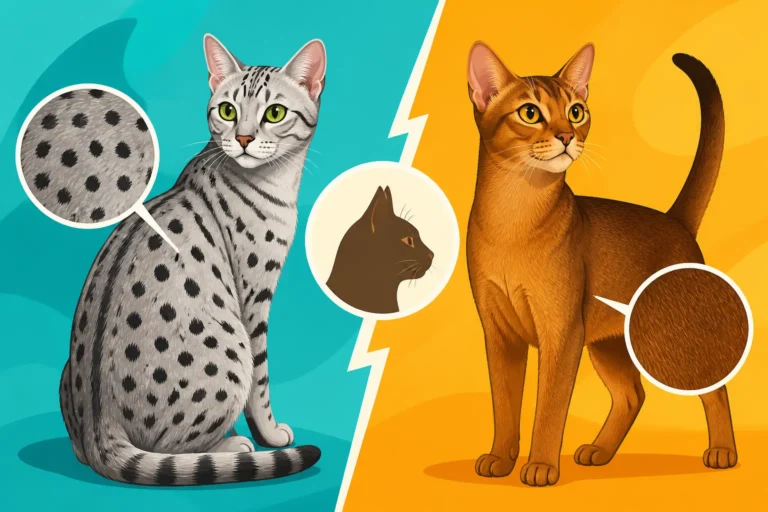
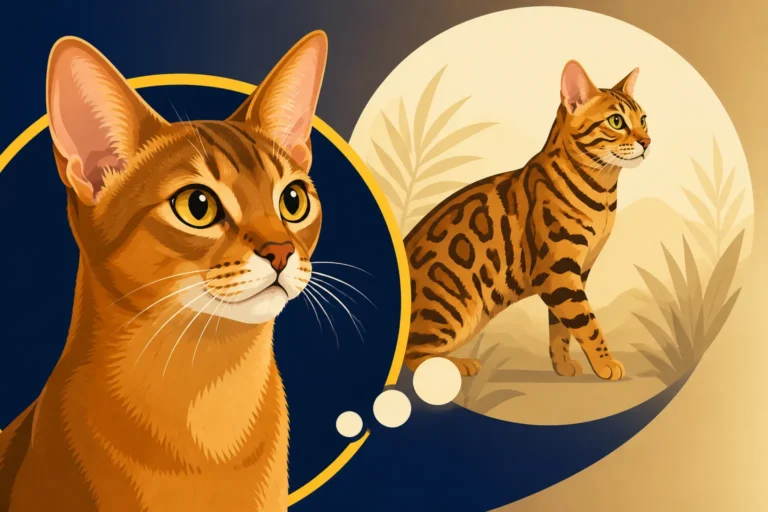
A relaxed cat is easier to assess than one with flattened ears, narrowed eyes, or tense facial muscles. Give the cat time to settle, and observe it facing forward and in profile. If the question is about breed identification, remember that head shape alone cannot confirm pedigree. The coat, body, color, history, and documented ancestry all matter; How to Tell an Abyssinian From a Singapura offers another example of why a single visual trait is not enough to identify a breed.
Assessing an Abyssinian head fairly
A practical way to look at the shape
If you are comparing a cat’s head with the breed ideal, begin with the big picture. Stand or sit far enough away to see the face in proportion to the neck and body. Ask whether the head reads as a gentle wedge, whether the brow and cheeks flow smoothly, and whether the muzzle fits the rest of the face. Avoid starting with tiny details before you have considered the overall balance.
Next, look at the cat from the front and from the side. From the front, notice the taper from brow toward muzzle and whether the face seems pinched or overly round. From the side, look for a smooth profile and a chin that supports the lower face. Then take the ears and eyes into account as framing features, rather than letting either one dominate your judgment.
Finally, allow for age and individual variation. A kitten’s features may change as it matures, and a pet cat does not need to meet every show preference to be a healthy, beloved Abyssinian. If you are choosing a kitten and want to understand breed type, ask the breeder how they assess the parents’ structure and what registry standard they follow. The breed’s head shape is one part of a larger picture, alongside health, temperament, and responsible breeding practices. What an Abyssinian Breeder Should Have Tested Before You Buy covers a separate but equally important part of that decision.
When appearance should not replace a health check
A head that looks different from the ideal is not, by itself, evidence of illness. Breed standards describe appearance; they are not diagnostic tools. But if facial appearance changes suddenly, or if the cat develops swelling, asymmetry, discharge, difficulty eating, or signs of pain, contact a veterinarian rather than trying to interpret the change as a breed trait.
Changes in chewing, dropping food, or avoiding hard food also deserve attention. These signs may involve dental or oral discomfort, not head shape. Abyssinians can have dental concerns that are easy to miss when a cat remains active and otherwise seems well. See Why an Abyssinian's Gums Should Be Checked Monthly for practical context on monitoring the mouth.
The most useful distinction is between stable variation and a new change. A naturally narrow muzzle that has always looked that way is different from sudden swelling on one side of the face. In the same way, a kitten’s ears looking large for its head is ordinary development, while persistent trouble eating is not something to explain away as “just the breed.”
Ultimately, an Abyssinian’s ideal head is recognizable through balance: a gently modified wedge, softly rounded contours, a proportionate muzzle and chin, and ears and eyes that frame an alert expression. You do not need to measure angles or scrutinize every photograph. Look at the whole cat, account for age and posture, and ask a knowledgeable breeder or veterinarian when the question is about more than appearance.
Disclaimer
This article is for general informational purposes only and does not constitute professional advice. Laws, prices and regulations vary by location and change over time. Consult a qualified professional for guidance on your specific situation.