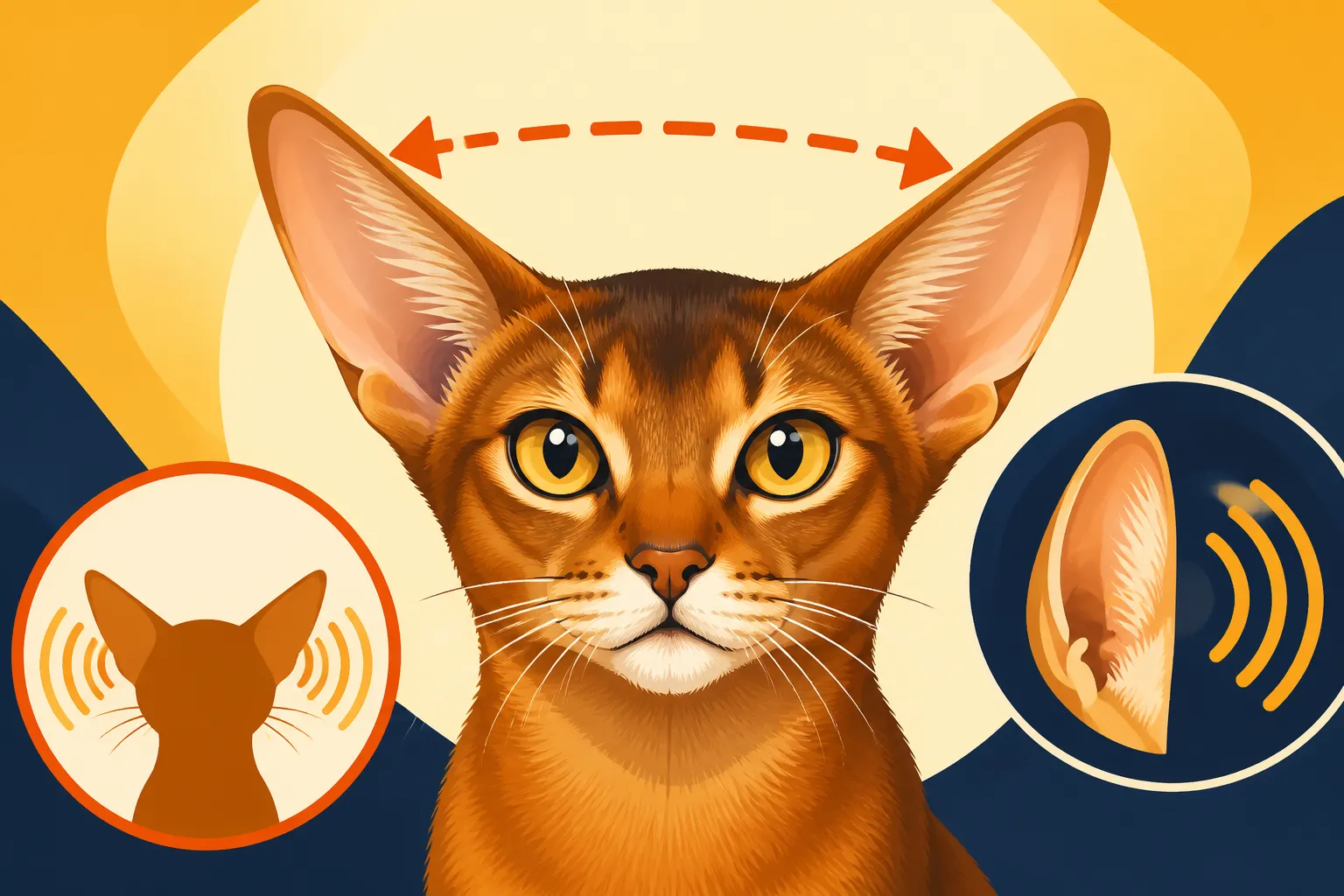
Why an Abyssinian’s Ears Are Set So Wide
An Abyssinian’s broad, alert ears are one of the first things people notice, but their placement can make the breed’s face look very different from a round-headed cat’s. If you’re wondering whether wide-set ears are normal, what they contribute to the Abyssinian’s expression, or how to care for them, this guide explains the breed feature and what to watch for.
Why an Abyssinian’s ears look so wide-set
Ear placement is part of the breed’s overall shape
An Abyssinian’s ears are set noticeably apart on the head, with a broad base and a slight forward tilt that helps create the breed’s attentive, ready-for-action expression. They’re not meant to sit close together like small triangles on a compact, rounded face. Instead, they balance the breed’s wedge-shaped head and give the impression that the cat is alert to everything happening around it.
The effect depends on the whole head, not just the ears. A long, graceful face, large eyes, and ears that appear wide apart work together to produce the familiar Abyssinian look. If you focus on one feature in isolation, it’s easy to mistake normal variation for a fault. Looking at the full profile and proportions is more helpful than asking whether the ears simply look “big.”
Those proportions are part of the breed’s appearance in show standards. The details can vary somewhat between registries, but the desired look is generally an alert, balanced head with prominent ears. For a closer look at the broader requirements, see What an Abyssinian Show Standard Asks For and What an Abyssinian's Ideal Head Shape Is.
Wide placement does not mean unusually good hearing
The ears’ size and position can make an Abyssinian look especially tuned in to its surroundings. You may see the cat swivel one ear toward a sound while keeping its eyes fixed on a toy, or prick both ears forward when you open a cupboard. That expressive movement is part of the breed’s lively appearance, but it doesn’t mean that wide-set ears give Abyssinians a special hearing ability compared with other cats.
Cats use their ears to gather and direct sound, and the visible outer ear helps shape that process. But ear placement alone is not a reliable way to judge hearing. A cat that doesn’t respond to a sound may be distracted, asleep, unsure, or simply uninterested. If your Abyssinian repeatedly fails to react to familiar noises, mention it to a veterinarian rather than assuming the ear shape explains it.
The ears also communicate attention and mood. Ears angled forward often accompany curiosity, while ears turned sideways or flattened may signal unease or irritation. Read them alongside the cat’s posture, tail, and behavior. A single ear position is only one clue, not a complete translation of what your cat is feeling.
How ear placement fits the Abyssinian head
The ears help create an alert, open expression
The Abyssinian’s ears are large in relation to its head, broad at the base, and set wide enough to emphasize the open shape of the face. Their position frames the head rather than crowding it. This is why an Abyssinian can look watchful even when it is sitting quietly: the ears make the face seem ready to respond.
The breed’s eyes contribute to the same impression. Their shape and dark outlining stand out against the face, while the ears draw the eye upward and outward. Together, these features create a distinctive expression that can look almost wild to someone unfamiliar with the breed. You can compare the ears with the other facial features in How an Abyssinian's Head and Ears Are Judged and Why an Abyssinian's Eye Rim Is Outlined.
There’s still room for individual variation. One Abyssinian may have ears that seem particularly tall, while another’s may look broader or more rounded at the tips. Coat color, head size, facial angle, and even the way the cat holds its ears can change your impression. A photograph taken when the ears are turned slightly outward may make them look set wider than they do when the cat is facing you directly.
Proportion matters more than a single measurement
There isn’t one simple measurement that tells you whether an Abyssinian’s ears are “wide enough.” Breed type is judged through the relationship between the ears, head, eyes, and overall build. A cat with a larger head may have ears that look less prominent than those of a smaller, finer-boned cat, even if both have balanced proportions.
The same is true as a kitten grows. Young Abyssinians can look a little oversized in the ears, especially during growth spurts when the rest of the body seems to be catching up. Their appearance changes as the head and body mature, so a kitten’s proportions shouldn’t be treated as a final verdict on how it will look as an adult. For context on the breed’s overall frame, see How Big an Adult Abyssinian Gets.
| Feature | What you may notice | What it usually means |
|---|---|---|
| Wide spacing | Ears appear apart on the head | A characteristic part of the Abyssinian’s alert look |
| Broad base | Ears widen where they meet the head | A common feature of the breed’s ear shape |
| Forward angle | Ear openings point somewhat toward the front | Often gives the face a watchful expression |
| Frequent swiveling | Ears turn toward nearby sounds | Normal ear movement, not proof of unusually sharp hearing |
| Sudden change in position | One or both ears stay flattened or held oddly | Could reflect discomfort, stress, or a health issue if persistent |
When comparing cats, avoid judging ear placement from a single snapshot. A front-facing view, a side profile, and the cat’s relaxed posture can all tell you something different. If you’re evaluating a kitten from a breeder, ask how the parents look and whether you can see them in person or in clear, unedited photographs. The goal is to understand the cat’s overall type, not to search for an exact ear-to-head ratio.
Caring for an Abyssinian’s large ears
Check the ears regularly without overcleaning
Prominent ears can make it easier to notice visible dirt, wax, redness, or a scratch. A quick look during a weekly grooming routine is usually enough for a healthy cat. Check the outer ear and the part you can see without pulling or probing. The skin should not look inflamed, and there should not be a strong odor or a persistent buildup of dark debris.
Abyssinians are active cats, so it can help to make checks brief and predictable. When your cat is calm, gently lift an ear flap, take a look, and offer a small reward. If your cat wriggles away, don’t turn the check into a wrestling match. Try again another time. Keeping the routine relaxed makes it easier to notice changes without making your cat wary of being handled.
Don’t put cotton swabs, fingers, or other objects down the ear canal. Avoid routine cleaning just because the ears look large. Overcleaning or using a product that isn’t appropriate for cats can irritate the delicate skin. If a veterinarian recommends an ear cleaner, follow the instructions they provide. Some owners may shop for pet-care supplies through Chewy, but the product should still be chosen for your cat’s specific needs rather than because it is marketed as a universal cleaner. For a step-by-step care routine, see Why an Abyssinian's Ears Need Checking Weekly and How to Clean an Abyssinian's Large Ears.
Know when an ear problem needs a veterinarian
Occasional ear movement or a little visible wax does not automatically mean something is wrong. Persistent scratching, repeated head shaking, tenderness, redness, swelling, a strong smell, or discharge are different. Those signs can have several causes, including irritation, infection, parasites, or injury, and they can look similar at home. A vet can examine the ear and recommend the right treatment.
Pay attention to changes in behavior as well as what you can see. A cat that suddenly resists having its head touched, keeps one ear lowered, or seems unusually unsettled may be uncomfortable. Don’t try to clean away a problem before an appointment if the ear looks painful or inflamed; handling it could worsen irritation, and cleaning may make it harder for a veterinarian to assess what’s going on.
If you’re ordering basic grooming supplies through Chewy or another retailer, keep the distinction clear: cotton pads for wiping the outer ear are not a substitute for an ear examination, and a general-purpose cleaner may not be suitable for every cat. Ask your veterinarian what, if anything, to use. For concerns involving the eyes as well as the ears, When an Abyssinian's Eye Discharge Means Something offers another useful guide to noticing changes around the face.
How to understand your Abyssinian’s individual ears
Compare your cat with the whole breed, not a single photo
Abyssinians share recognizable traits, but they aren’t identical copies of one another. Some have especially tall ears; others have a broader head that makes the ears seem less dramatic. The angle of the photograph, a turned head, and even alertness can change how wide-set the ears appear. A relaxed cat may hold them outward, while a curious cat often points them forward.
If your interest is simply understanding your pet, there’s no need to keep measuring the distance between the ears. Notice whether the ears look balanced with the head, move normally, and remain comfortable when handled gently. If you’re choosing a kitten, ask the breeder about the parents’ appearance and health, but remember that young cats change as they mature.
Eye color and coat color can also affect how you read the face. A dark eye outline may make the eyes look more prominent, while a particular coat shade can make the ears’ shape stand out more or less. To explore other features that shape an Abyssinian’s expression, see Which Eye Colors an Abyssinian Can Have.
Keep care practical and consistent
A simple routine works better than frequent, fussy cleaning. Once a week, include a quick ear check alongside brushing, looking at the eyes, and checking the claws. If your cat’s ears are clean and comfortable, there may be nothing to do beyond looking. If you notice a new symptom, write down when it began and whether it affects one ear or both; that information can help your veterinarian.
Make handling familiar in small steps. Start with a brief touch near the cheek, then reward your cat. Later, lift the ear flap for a moment and let it go. An energetic Abyssinian may not appreciate being held still for a long inspection, so patience matters more than getting the job done quickly. If your cat becomes distressed, pause and try again when it is relaxed.
When you do need supplies, check that items are intended for cats and follow the guidance on their labels. Chewy may be one place to find routine pet-care products, but it isn’t a substitute for veterinary advice if an ear looks sore or has discharge. The most useful care habit is not buying a cabinet full of cleaners; it’s noticing what’s normal for your cat and acting when that changes.
Disclaimer
This article is for general informational purposes only and does not constitute professional advice. Laws, prices and regulations vary by location and change over time. Consult a qualified professional for guidance on your specific situation.