How Big an Adult Abyssinian Gets
It’s easy to look at an Abyssinian cat, with their sleek, athletic build and boundless energy, and wonder just how big they truly get. Many prospective owners worry they might be too large or too small for their living situation, or perhaps their current cat, only to find that the Abyssinian often defies expectations in its size and presence. This comprehensive guide will walk you through what to expect regarding an adult Abyssinian's size, dispelling common myths and giving you a clear picture of their magnificent, lean physique.
Understanding the Abyssinian's Build: Lean, Elegant, and Surprisingly Compact
The Abyssinian is a breed renowned for its striking appearance and vibrant personality, but when it comes to size, they often trick the eye. They aren't massive cats like some of the larger breeds, nor are they as diminutive as some of the more toy-like breeds. Instead, they occupy a wonderful middle ground, but their unique proportions and activity levels make them seem larger than the scale might suggest.
The 'Medium-Sized' Misconception
When someone says "medium-sized cat," you might picture a domestic shorthair, perhaps a little chunky, or a more robust breed. The Abyssinian, however, redefines what "medium" means. They are incredibly agile, lithe, and well-muscled, without an ounce of spare padding, which can sometimes make them appear almost delicate. But don't let that fool you; they are robust and strong, capable of incredible feats of climbing and acrobatics. Their lean physique means they carry their weight differently than many other cats, distributing it evenly over a long, muscular frame. It’s not uncommon for someone to comment on how small an Abyssinian feels when picked up, despite seeing a cat that commands a room with its presence. They simply don't have the bulk that many other breeds carry, preferring instead a more athletic form.
Why Their Frame Matters More Than Pure Weight
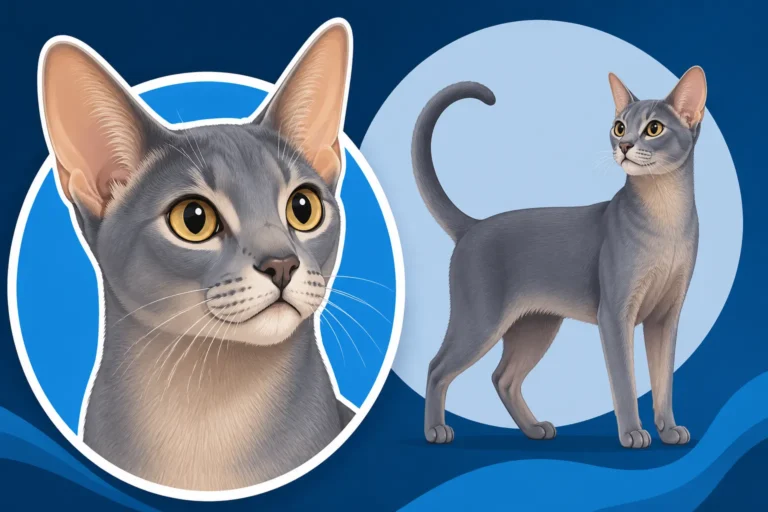
For an Abyssinian, it's less about the number on the scale and more about the overall frame and conditioning. They have a long, slender body with equally long, slender legs that give them an elegant, almost deer-like appearance. Their muscular build is designed for speed, jumping, and climbing, not for mass. A healthy Abyssinian will feel firm and well-conditioned, with visible muscle tone beneath their short, ticked coat. You should be able to feel their ribs easily without them protruding, and they should have a distinct waist. This focus on frame over sheer weight is critical for their health and agility. Breeders and vets often talk about "body condition score" rather than just weight for this very reason, as it's a far more accurate indicator of an Abyssinian's well-being. A cat that looks thin by another breed's standards might actually be in perfect condition for an Abyssinian. How to Read an Abyssinian's Body Condition Through That Coat delves into this in more detail.
The Optical Illusion of the Ticked Coat
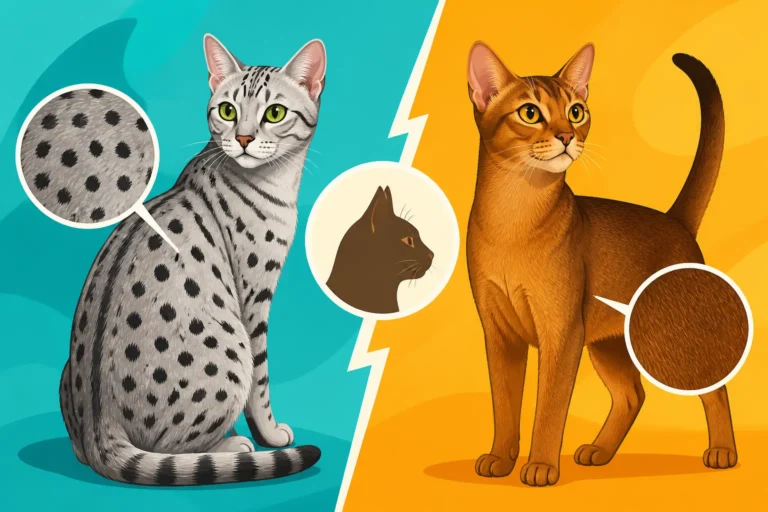
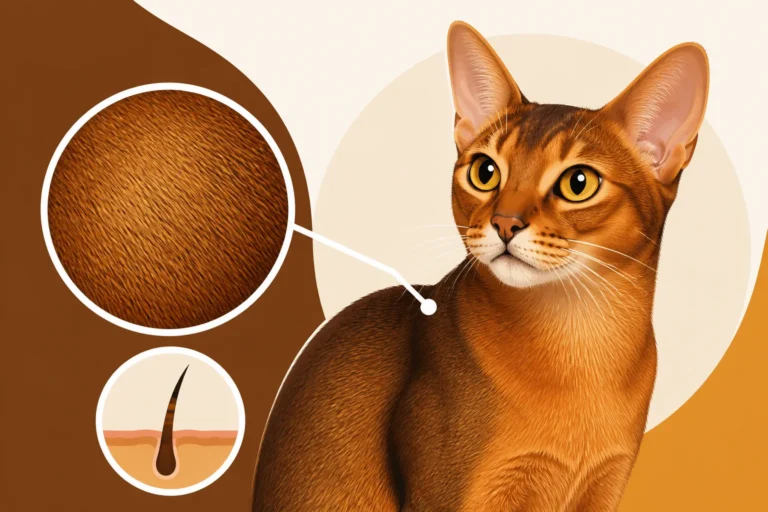
Their unique ticked coat also plays a fascinating role in how we perceive their size. The agouti banding on each hair shaft creates a shimmering, almost iridescent effect that makes their coat seem to shift and move with them. This lack of distinct stripes or patterns, combined with minimal undercoat, makes their body lines appear incredibly smooth and elongated. This, in turn, can create an optical illusion, making them seem longer and leaner than a cat with a denser, patterned coat of the same actual dimensions. It's a clever trick of nature that enhances their wild, graceful aesthetic. When they stretch out on a sunny patch of floor, their length is truly apparent, a testament to their athletic and elegant build, often surprising those who are used to more compact feline forms.
Typical Weight and Length for Adult Abyssinians
When we talk about the size of an Abyssinian, it’s important to understand the general ranges rather than fixed numbers, as there's always a bit of individual variation. However, there are some pretty reliable benchmarks that can help you envision just how much Abyssinian you'll be bringing into your home. They are built for movement and grace, and their dimensions reflect that.
Average Weight Ranges for Males and Females
Generally speaking, male Abyssinians tend to be a little larger and heavier than females, though the difference isn't as dramatic as in some other breeds.
- Adult Male Abyssinians: Typically weigh between 7 to 10 pounds (approximately 3.2 to 4.5 kg). Some larger, well-muscled males might tip the scales slightly above 10 pounds, but it's rare for a healthy Abyssinian to be significantly heavier without being overweight.
- Adult Female Abyssinians: Usually fall within the 6 to 8-pound (approximately 2.7 to 3.6 kg) range. They maintain that same lean, athletic build, just on a slightly daintier scale.
It's crucial to remember that these are healthy weight ranges for a lean, active Abyssinian. If your Abyssinian falls outside these ranges, it doesn't automatically mean there's a problem, especially if they maintain a good body condition. However, sudden or significant weight changes should always prompt a discussion with your vet. Why an Abyssinian's Weight Loss Is Never Minor explores the importance of monitoring their lean physique. Maintaining an ideal weight is paramount for Abyssinians to ensure they can continue their acrobatic antics well into their senior years without putting undue strain on their joints.
From Nose to Tail: Measuring Their Overall Length
While weight gives us one dimension, their length truly showcases their elegant build. An adult Abyssinian can measure anywhere from 12 to 16 inches (about 30 to 40 cm) from the tip of their nose to the base of their tail. Their tails are relatively long and tapering, adding another 10 to 12 inches (25 to 30 cm) to their overall presence. This means a fully stretched-out Abyssinian can easily span two to three feet, a significant length for a cat of their relatively modest weight.
Picture your Abyssinian leaping onto a tall cat tree or stretching out on the back of your sofa – that length contributes to their impressive reach and their ability to navigate vertical spaces with such ease. It's this combination of length and lean muscle that allows them to jump incredibly high and far, making them feel like a much larger presence in your home than their actual body mass might suggest. This long body is perfectly adapted for their active and inquisitive lifestyle, allowing them to explore every nook and cranny.
When an Abyssinian Reaches Its Full Adult Size
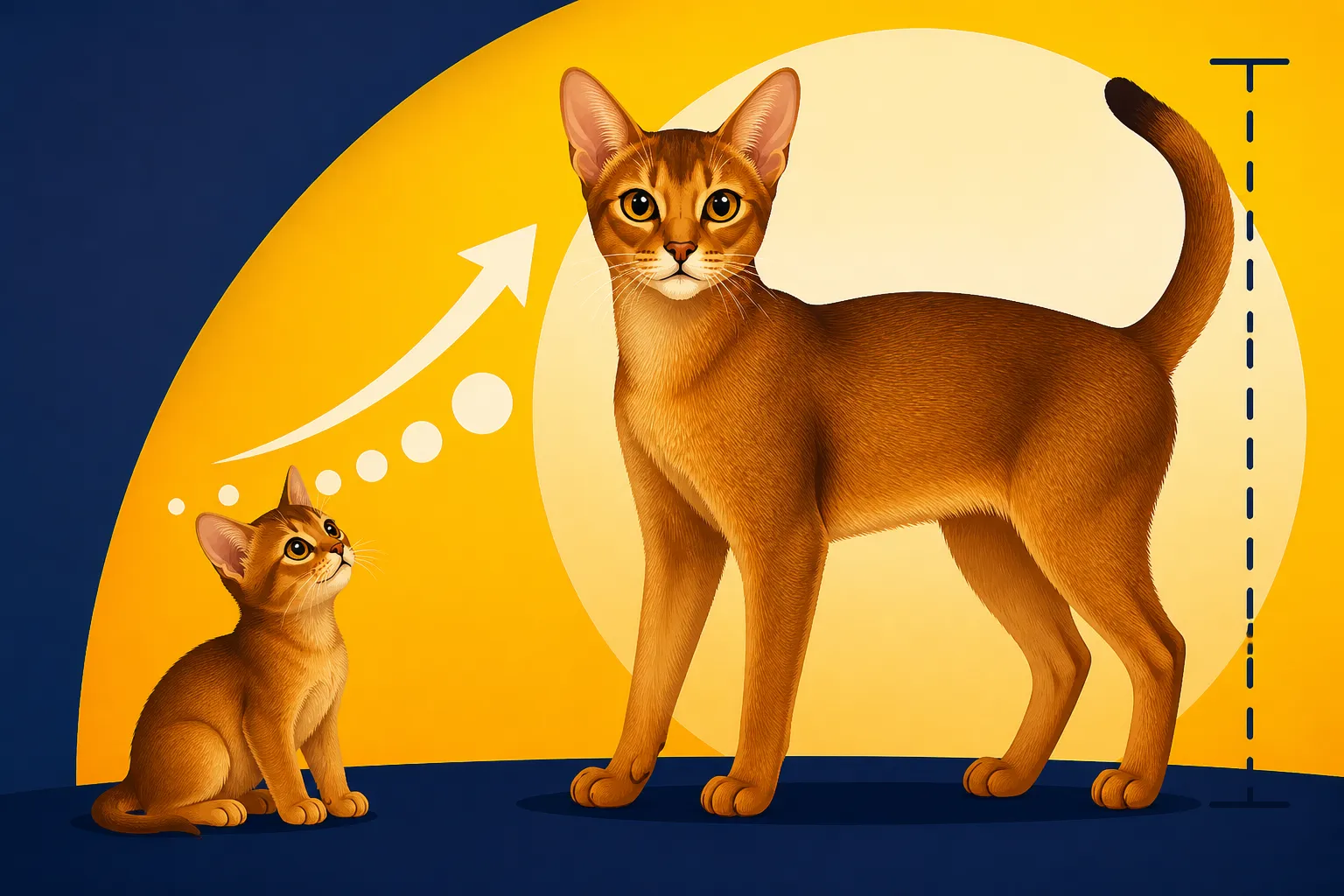
Abyssinian kittens are bundles of energy, and they grow quite rapidly in their first year. Most Abyssinians will reach their full height and length by around 12 to 18 months of age. However, like many breeds, their muscular development and "filling out" can continue up to two years old. During this period, you might notice them gaining a bit more muscle definition and refining their adult physique.
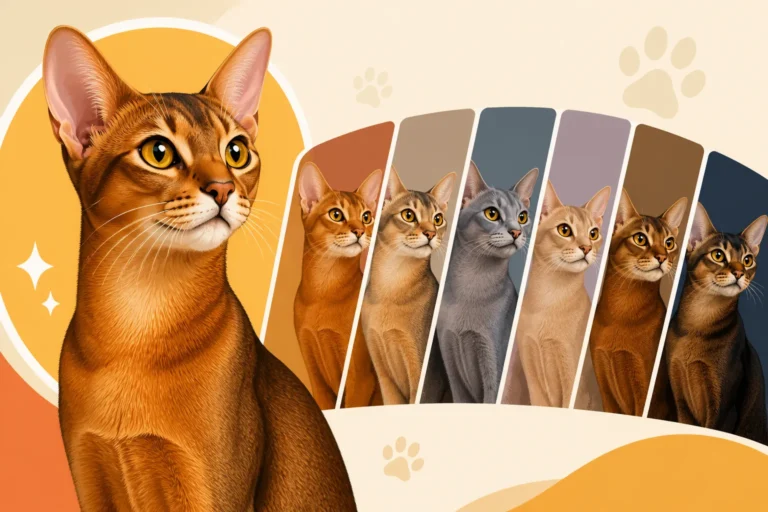
It's common for their coat color to continue developing during this time as well, with their ticking becoming more pronounced. When an Abyssinian's Adult Color Settles explains more about this fascinating process. Don't be surprised if your Abyssinian still seems to have growth spurts or periods where they look a bit gangly; it's all part of their journey to becoming the magnificent, agile adults we know and love. Consistent, high-quality nutrition during these formative years is vital to support their bone, muscle, and organ development.
Here's a quick overview of typical Abyssinian dimensions:
| Characteristic | Male Abyssinian (Approximate) | Female Abyssinian (Approximate) |
|---|---|---|
| Weight | 7-10 lbs (3.2-4.5 kg) | 6-8 lbs (2.7-3.6 kg) |
| Body Length (nose to tail base) | 12-16 inches (30-40 cm) | 12-15 inches (30-38 cm) |
| Tail Length | 10-12 inches (25-30 cm) | 10-12 inches (25-30 cm) |
| Full Maturity | 18-24 months | 12-18 months |
Factors Influencing an Abyssinian's Size
While we have average ranges, it's important to remember that not all Abyssinians will fit neatly into these boxes. Several factors can play a significant role in determining an individual Abyssinian's ultimate size and build. Understanding these can help you better appreciate your cat's unique characteristics and ensure they are thriving.
Genetics and Lineage: The Unseen Blueprint
Just like in people, genetics are a huge determinant of a cat's final size. The size of an Abyssinian's parents and grandparents will often give you a good indication of what to expect for your kitten. If both parents are on the smaller side of the average, chances are their offspring will also be petite. Conversely, if you see larger, more robust (but still lean!) cats in their lineage, your kitten might grow to be on the bigger end of the spectrum.
A reputable breeder will be able to share information about the size and build of their breeding cats, and even show you pictures or allow you to meet the parents. This isn't just about predicting size; it's also about understanding the overall health and conformation of the line. Some lines might naturally produce slightly stockier builds, while others are known for their extremely slender, elegant forms. It's all part of the wonderful genetic tapestry of the breed.
Nutrition and Exercise: Fueling Their Active Lifestyle
Even with the perfect genetic blueprint, proper nutrition and ample exercise are absolutely critical for an Abyssinian to reach its full, healthy potential. Abyssinians are incredibly high-energy cats, and they burn a lot of calories. Feeding a high-quality, protein-rich diet is essential for supporting their muscle development and maintaining their lean physique. Cheap, filler-laden foods simply won't provide the necessary nutrients for their active metabolism.
Think about it: they are constantly running, jumping, climbing, and exploring. That requires significant energy input. If an Abyssinian is underfed or fed a poor-quality diet, their growth can be stunted, and their overall health can suffer. Similarly, a lack of opportunities for exercise can lead to them becoming overweight, which is very detrimental for such an agile breed. While rare, an overweight Abyssinian is a serious concern for their health, impacting their joints and internal organs. Products available from retailers like Chewy often provide excellent options for high-protein, nutritionally balanced cat foods designed for active breeds. How Many Calories an Adult Abyssinian Burns gives you a deeper insight into their dietary needs.
Spaying and Neutering: Impact on Growth and Metabolism
The timing of spaying or neutering can also subtly influence an Abyssinian's growth and metabolism. Cats spayed or neutered early, before reaching full sexual maturity, might grow slightly taller or longer than their intact counterparts. This is because the removal of sex hormones can delay the closing of growth plates in their bones. However, this difference is usually quite minor and often unnoticeable to the casual observer.
What is more significant is the impact on their metabolism. Spaying or neutering can sometimes lead to a slight decrease in metabolic rate, making it easier for cats to gain weight if their caloric intake isn't adjusted. While Abyssinians are naturally lean and active, it's still important to monitor their food intake and maintain their exercise routine after their surgery. Your vet can provide specific guidance on adjusting their diet to prevent unwanted weight gain, ensuring they maintain their athletic build throughout their life.
Comparing Abyssinians to Other Breeds
Understanding an Abyssinian's size in isolation is one thing, but comparing them to other breeds really highlights their unique physical characteristics. They truly stand out as a breed that embodies grace, agility, and a compact yet powerful form.
How Abyssinian Size Stacks Up Against Larger Breeds
If you're used to breeds like the Maine Coon, Norwegian Forest Cat, or Ragdoll, an Abyssinian will feel noticeably smaller and much lighter. These larger breeds can easily weigh upwards of 15-20 pounds, with some males reaching even more, and possess a far more substantial bone structure and often a much denser coat. The Abyssinian, by contrast, is sleek and fine-boned, built for bursts of speed and vertical leaps rather than raw power.
Imagine a graceful gazelle next to a powerful bear; that's roughly the difference in build philosophy between an Abyssinian and, say, a Maine Coon. While both are beautiful and impressive in their own right, they are designed for very different purposes. The Abyssinian's smaller size means they can squeeze into tight spaces, perch on narrow shelves, and move with an almost ethereal lightness. If you're looking for a cat that won't overwhelm your furniture or your lap with sheer mass, the Abyssinian is a fantastic choice, offering a compact package of explosive energy. How Abyssinian Lifespan Compares to a Bengal's also touches upon similar distinctions in build and energy.
Contrasting with Smaller, More Delicate Breeds
On the other end of the spectrum, when compared to truly small or delicate breeds like the Singapura or the Cornish Rex, Abyssinians often appear more substantial. While a Singapura might weigh as little as 4 pounds, and a Cornish Rex is known for its slender, almost fragile appearance, the Abyssinian possesses a robust athleticism that belies its medium size. They have good muscle tone, broad chests, and sturdy legs, making them feel solid and powerful when you pick them up.
They aren't fragile or dainty; they are simply refined. Their short, close-lying coat means there's nothing to hide any delicate features, and what you see is a well-built, capable athlete. So, while they might not be giant cats, they certainly aren't in the category of "lap kittens" in terms of their physical presence. They have a purposeful build that speaks to their energetic and adventurous spirit, always ready for the next climb or game of chase.
The Abyssinian's Unique Athletic Proportion
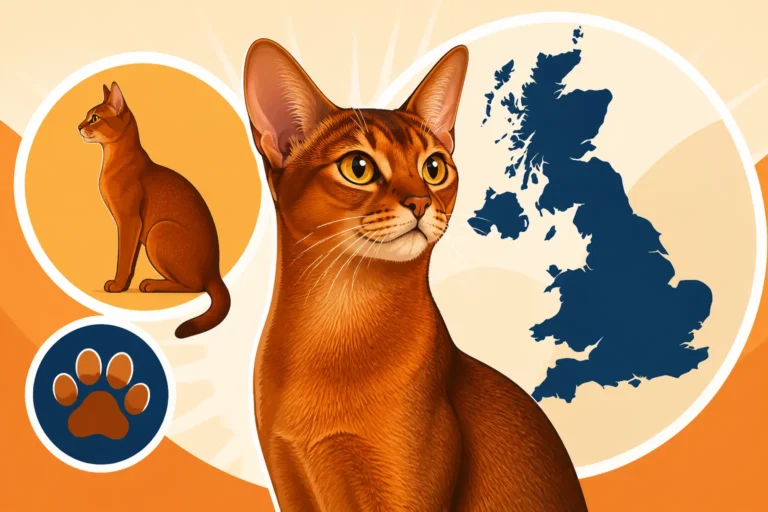
What truly sets the Abyssinian apart in terms of size is its unique athletic proportion. They have a lean, muscular body, long legs, and a long, tapering tail, all culminating in a graceful, almost wild appearance. Their large, expressive ears and almond-shaped eyes contribute to this look, giving them an alert, intelligent expression. They are often described as having a "foreign" body type, distinct from the more cobby or semi-cobby builds of many domestic cats.
This body type isn't just for show; it's functional. Their long legs provide leverage for powerful jumps, and their lean musculature allows for incredible agility and quick changes in direction. This is why you'll often find them perched on the highest shelves or darting through your home like a furry blur. Their compact size makes them perfectly suited for indoor living, as long as they have plenty of vertical space to explore. An Abyssinian Needs Height More Than It Needs Floor further emphasizes their need for climbing opportunities. Their proportions allow them to utilize their environment to its fullest, making every vertical surface a potential playground.
Why Tracking Your Abyssinian's Size and Weight Is Crucial
It might seem like a small thing, keeping an eye on your cat's weight, but for an Abyssinian, it's absolutely vital. Their naturally lean build means that even small changes can signal big problems. Being proactive about monitoring their size and weight can literally be a lifesaver, helping you catch potential health issues early on.
Early Detection of Health Concerns
Because Abyssinians are so naturally slender and active, any significant deviation from their ideal weight range can be an early indicator of underlying health issues. A sudden drop in weight, even a pound or two, can be a red flag for conditions like hyperthyroidism, dental disease, kidney problems (which they can be prone to, unfortunately), or other systemic illnesses. Conversely, unexplained weight gain, while less common in Abyssinians, could point to metabolic disorders or an unsuitable diet.
Their playful nature often masks discomfort, making weight and appetite changes even more crucial metrics to observe. They are notoriously good at hiding pain, so relying on these objective measures is important. Keeping a consistent record of your Abyssinian's weight, perhaps during their annual vet check-ups or even monthly at home, creates a baseline that makes it easier to spot subtle changes. Early detection means earlier intervention, which can significantly improve outcomes for many feline health conditions. Why a Lean Abyssinian Hides Illness Longer Than a Heavy Cat further explains their stoic nature.
Maintaining Optimal Body Condition
More important than a specific number on the scale is maintaining an optimal body condition score. For an Abyssinian, this means they should be lean and muscular, with visible waist definition when viewed from above, and their ribs should be easily palpable without heavy fat coverage. Their abdomen should tuck up nicely when viewed from the side, not sag. This optimal condition ensures their joints aren't overburdened, their cardiovascular system is healthy, and their agility remains uncompromised.
Regularly assessing your Abyssinian's body condition by sight and touch should be part of your routine care, alongside feeding high-quality food, perhaps found at pet retailers like Chewy, and engaging in plenty of active play. An Abyssinian that is too heavy will struggle with their natural climbing and jumping behaviors, potentially leading to joint problems or a decrease in their characteristic vivacity. On the other hand, an Abyssinian that is too thin might not be getting adequate nutrition or could be struggling with an illness.
The Importance of Regular Vet Check-ups
There's truly no substitute for regular veterinary check-ups when it comes to monitoring your Abyssinian's size and overall health. Your vet can accurately weigh your cat, assess their body condition score, and detect any subtle changes that you might miss at home. They can also provide guidance on appropriate diet adjustments, exercise routines, and discuss any concerns you might have about your cat's growth or weight.
These annual visits are also an opportunity for preventative care, including vaccinations and dental checks. Given that Abyssinians are prone to certain dental issues, keeping their oral health in check is crucial, and dental problems can sometimes lead to weight loss due to discomfort eating. Why Abyssinian Dental Work Is the Biggest Line in the Budget highlights the importance of this aspect of their care. Your vet is your best partner in ensuring your Abyssinian lives a long, healthy, and active life at their ideal size.
Disclaimer
This article is for general informational purposes only and does not constitute professional advice. Laws, prices and regulations vary by location and change over time. Consult a qualified professional for guidance on your specific situation.