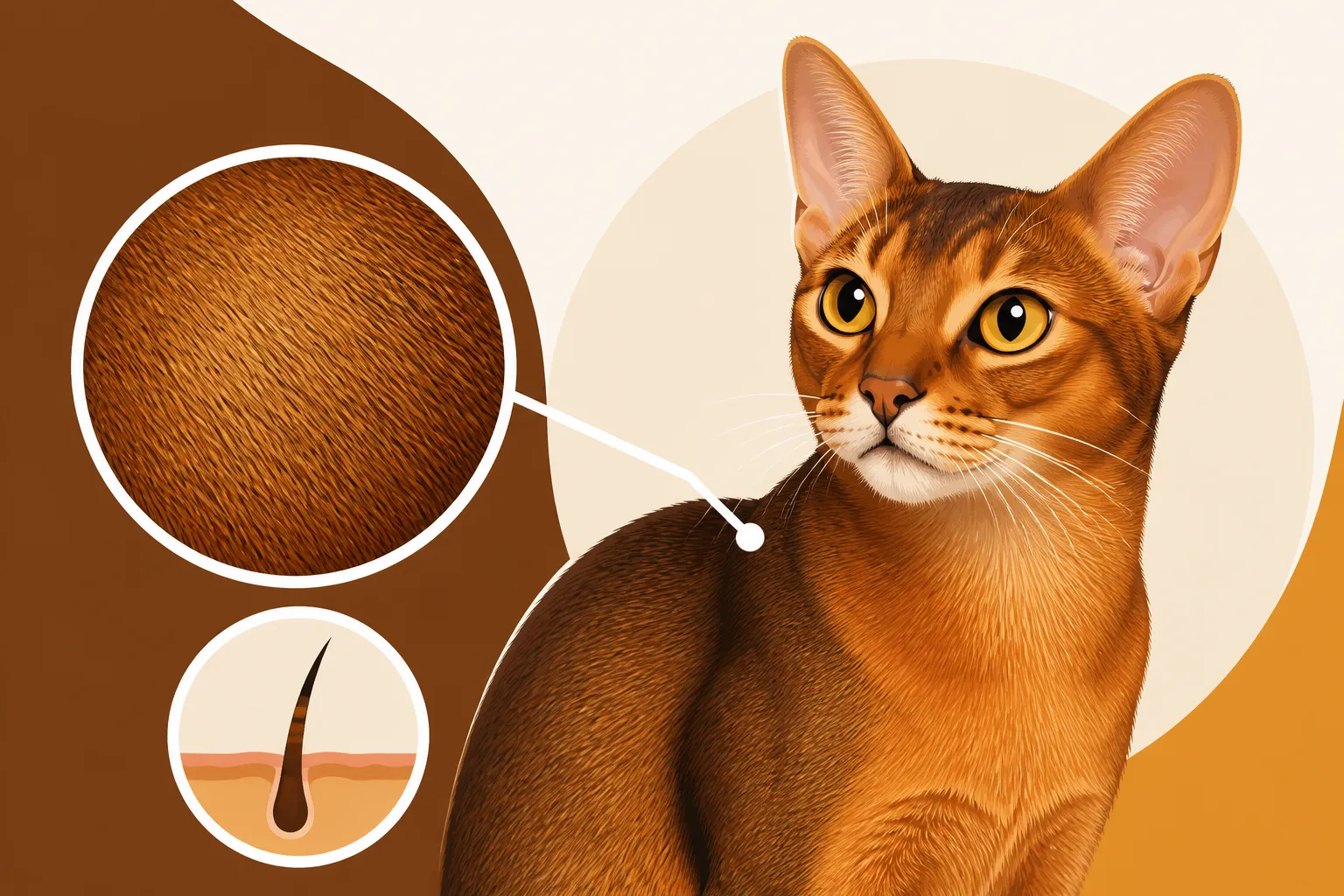
What Sorrel Means on an Abyssinian
A sorrel Abyssinian can look coppery, cinnamon-red, or almost golden depending on the light, which makes the color easy to confuse with ruddy or ginger. This guide explains what “sorrel” means, how its coat differs from other Abyssinian colors, what to expect from a kitten’s changing shade, and how to check a color description without relying on one photograph.
What sorrel means in the Abyssinian breed
The short definition
Sorrel is a recognized Abyssinian coat color with a warm, reddish-cinnamon appearance. Each hair has bands of color, a pattern called ticking, so the coat does not look like one flat shade. Depending on the cat and the lighting, the overall effect may read as copper, cinnamon, or soft red.
The word describes a particular coat color in the breed, not simply any reddish cat. An Abyssinian’s ticking gives the fur its distinctive depth, while the skin and paw-pad colors can offer additional clues. A sorrel Abyssinian commonly has pink-toned nose leather and paw pads, though a single feature should not be used to identify the color on its own.
The name can be confusing because color terminology is not always consistent across registries and countries. Some systems use “red” where others use “sorrel,” while “red” in everyday cat descriptions can also mean an orange or ginger coat. For more on this naming difference, see Why Sorrel Is Called Red in Some Registries.
How ticking shapes the color
An Abyssinian’s coat is not usually a solid red from root to tip. Individual hairs have alternating lighter and darker bands, with the darkest color often more noticeable toward the tip. When many ticked hairs sit together, their bands create the shimmering, lively look that is characteristic of the breed.
On a sorrel cat, warm reddish or cinnamon tones combine with darker ticking. The cat may look brighter along the sides and back, with deeper shading on the tail tip and other areas. The exact impression varies: one sorrel may appear distinctly red, while another looks more like warm copper or cinnamon.
This is why a close-up photograph of one patch of fur can be misleading. A single hair, a shadow, or the angle of the light may make the coat seem darker or lighter than it looks in person. To understand how the banding produces that effect, see How an Abyssinian's Agouti Banding Works.
| Feature | Sorrel Abyssinian | Ruddy Abyssinian |
|---|---|---|
| Overall impression | Warm cinnamon, copper, or red | Rich brown, reddish-brown, or dark golden |
| Ticking | Darker cinnamon-brown tones | Darker black or brown tones |
| Common source of confusion | Called “red” in some naming systems | Often called “usual” in Britain |
| Best way to assess | Look at the whole coat in natural light | Look at the whole coat in natural light |
These are general visual descriptions, not a substitute for a registry’s color rules or a knowledgeable breeder’s assessment. For a closer look at the comparison, see What Ruddy Means on an Abyssinian.
Sorrel compared with ruddy and ginger
Sorrel and ruddy are different Abyssinian colors
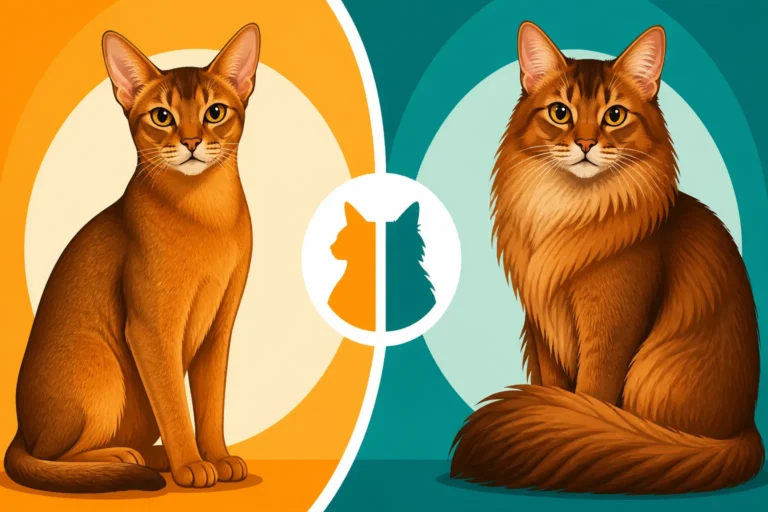
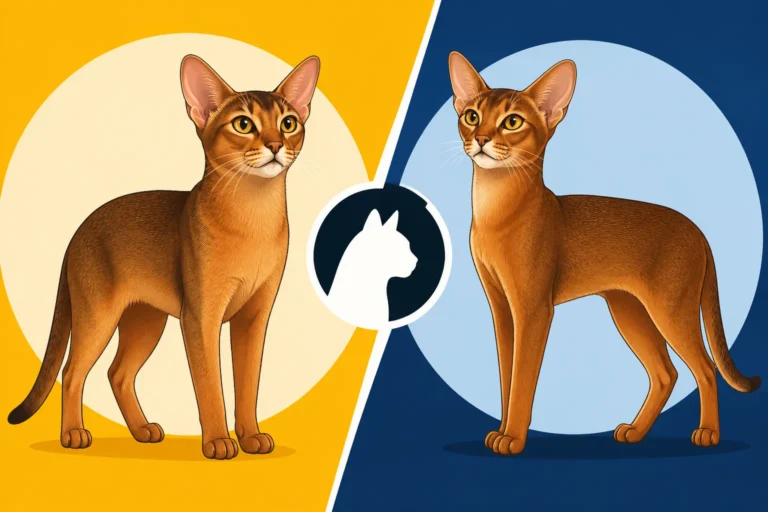
Sorrel and ruddy can both show warm, reddish tones, especially in photographs. The difference is in the overall color impression and the darker bands in the coat. Sorrel generally reads as cinnamon or copper, while ruddy tends to have a deeper, browner appearance with darker ticking.
It helps to compare the cats in similar lighting. A sorrel photographed in warm afternoon sun may look more orange, while a ruddy photographed in shade may lose some of its richness. If you are comparing two kittens, look at more than the brightest area on the back: check the sides, tail, face, and the overall contrast between the lighter and darker bands.
Color labels also vary by region. “Ruddy” is often called “usual” in Britain, while sorrel may be called red in some systems. That does not mean the cats are interchangeable; it means a color name should be interpreted in the context of the registry and the breed standard being used. Which Abyssinian Colors CFA Recognizes is useful if you are trying to understand color names within a particular registration system.
Sorrel is not simply the same as a ginger cat
People often use “ginger” as a casual description for any orange or red-looking cat. Sorrel, however, is a breed-specific color label for a ticked Abyssinian coat. A ginger domestic shorthair may have a very different coat pattern, and the word “red” in a general listing may not tell you whether the cat is sorrel, another recognized color, or simply reddish-looking.
That distinction matters when reading breeder descriptions or comparing photos. Ask which color name appears on the cat’s registration or pedigree, and which registry’s terminology is being used. If the seller uses several labels for the same kitten—such as “sorrel,” “red,” and “cinnamon”—ask them to explain which term is formal and which is descriptive.
A photo alone cannot confirm a registered color. Lighting, camera settings, and editing can shift warm shades noticeably. Request images taken in natural light and, if possible, compare them with pictures of the kitten’s parents. The coat’s overall ticking and tone are more useful than a close-up or a heavily filtered image.
How sorrel develops in kittens
Why a young kitten may not look like an adult
A sorrel Abyssinian kitten’s coat can look less even or less richly defined than the adult coat. Young kittens may have softer contrast, muted ticking, or temporary-looking patches that make it difficult for a new owner to recognize the eventual shade. That can be frustrating when you are trying to match a kitten’s appearance to a color description.
As the kitten matures, its coat develops more definition. The timing and degree of change vary from cat to cat, so an early photograph should not be treated as a perfect preview of the adult color. A breeder familiar with the parents and their lines can often give a more useful explanation of what the kitten is likely to look like as the coat develops.
If a kitten appears blotchy or uneven, that does not automatically mean it is the wrong color or that something is wrong with its coat. Young coat development is one reason to ask for the kitten’s registered color and the breeder’s description rather than trying to make a confident identification from one snapshot. See Why an Abyssinian Kitten Looks Blotchy at First and When an Abyssinian's Adult Color Settles for more on those changes.
Why photos can make sorrel look different
Light changes the way warm coat colors appear. Direct sunlight can make a sorrel cat look brighter and more coppery, while indoor shade may make the same coat seem deeper or browner. Warm indoor bulbs can add an orange cast; cool daylight may make the coat look less red.
Camera exposure and processing add another layer of uncertainty. A phone may brighten pale areas or deepen shadows automatically, and filters can alter the balance between red, brown, and gold. If you are comparing a breeder’s pictures with a written description, look for several unfiltered images taken under different conditions rather than relying on a single carefully staged photo.
This variation is normal and does not mean the cat’s coat is changing color from day to day. The underlying coat pattern remains the same; what changes is how your eye reads its bands and warmth. Why an Abyssinian's Coat Looks Different in Every Light explores why the same coat can seem to shift so much from one setting to another.
Confirming a sorrel coat and caring for it
What to ask a breeder or registry
If you are choosing a kitten, ask the breeder to state the color used for registration and identify the registry whose terminology they follow. You can also ask how they distinguish sorrel from ruddy in their own lines, and whether they have photographs of the kitten’s parents as adults. Straightforward answers are more helpful than a promise that the kitten will match a particular online photo exactly.
A pedigree or registration record can clarify the formal label, but it may not explain what the color looks like in everyday terms. If a breeder calls a kitten “red,” ask whether that is a registry term, a regional synonym for sorrel, or simply a visual description. The wording matters because “red” can be used differently in different contexts.
If you need to understand how the official label is recorded, see How an Abyssinian's Coat Color Is Registered. A breeder should be able to explain the wording clearly and help you understand what documentation the kitten will come with. A careful explanation is especially useful when a listing uses more than one color name.
Grooming does not need to be color-specific
Sorrel Abyssinians do not need a special grooming routine just because of their coat color. Their short, close-lying coat usually benefits from gentle, regular grooming rather than aggressive brushing. A soft rubber grooming mitt can help collect loose hair without roughing up the ticking; retailers such as Chewy are one place owners may look for basic cat-care tools.
Avoid assuming that a coat product can make a sorrel cat more coppery or change its registered color. Shampoo, supplements, and grooming tools do not turn one Abyssinian color into another. If you are considering a shampoo, choose one made for cats and follow veterinary guidance when there is a skin concern. Chewy may carry general cat grooming supplies, but check that any product is appropriate for your cat rather than choosing it for a color-enhancing promise.
The same practical approach applies to diet. A balanced diet supports general health and coat condition, but it does not change the genetic color pattern. If you buy food through a retailer such as Chewy, compare the product’s suitability for your cat’s age and health needs and ask your veterinarian about dietary concerns. A dull or suddenly altered coat is not a color problem to solve with a grooming product; it may be worth discussing with a vet, especially if the change comes with itching, hair loss, or other symptoms.
Disclaimer
This article is for general informational purposes only and does not constitute professional advice. Laws, prices and regulations vary by location and change over time. Consult a qualified professional for guidance on your specific situation.