Whether the Abyssinian Was Built From British Tabbies
Many new Abyssinian owners, and even some seasoned enthusiasts, get confused when they dig into the breed's storied past. One of the most persistent and intriguing questions revolves around whether this captivating breed was simply "built" from common British domestic tabbies, selectively bred for their unique ticking. This guide will clarify the historical theories, delve into what modern genetic science tells us, and explain why this particular misconception about the Abyssinian's origins has lingered for so long.
The Persistent Myth of the British Tabby Ancestry
This section will delve into how and why the idea of Abyssinians being developed from local British tabbies gained traction in the early days of the breed. It’s a compelling narrative, offering a homegrown origin for a cat that truly stands out, but one that largely unravels under the scrutiny of modern science.
Early Observations and the 'Ticked' Phenomenon
In the early days of cat fancy, when breeds were first being formalized and recognized, much of the understanding was based on observable traits. The unique ticked coat pattern of the Abyssinian was, and still is, a marvel to behold. Unlike the clear stripes or blotches seen on many tabby cats, the Abyssinian's coat appears to shimmer, with each individual hair carrying multiple bands of color. This creates a remarkably wild, almost iridescent look that captured the imagination of early fanciers. However, it's important to remember that ticking isn't entirely exclusive to Abyssinians; certain domestic tabbies can also display some degree of ticking, particularly on their undersides, legs, or facial markings, albeit usually less refined and without the full, dense agouti banding across the entire body that defines the Abyssinian.
Breeders and cat enthusiasts of the Victorian era, individuals like the notable cat judge and writer Harrison Weir, operated with a much more rudimentary understanding of genetics than we possess today. They observed superficial similarities between the emerging Abyssinian type and some of the more exotic-looking domestic shorthairs prevalent in Britain. It wasn't a huge conceptual leap for some to theorize that the breed could have been selectively developed from these local cats that exhibited a ticked trait, with the characteristics gradually intensified and refined over many generations. What Harrison Weir Wrote About the Abyssinian played a significant role in shaping public perception and early breed standards. His writings sometimes reflected the prevailing belief that such unique and beautiful cats could arise through careful selection within existing, local feline populations. This early perspective, based on visual assessment rather than genetic proof, laid the groundwork for the British tabby theory to take root and spread.
The Illusion of Simple Selective Breeding
The concept that a distinctive breed could simply be "built" from existing local stock through diligent selective breeding was quite common in the nascent days of organized cat breeding. If a breeder happened upon a domestic cat that displayed a few desirable traits, their natural inclination would be to attempt to breed it with other cats exhibiting similar characteristics. The hope was always to intensify those features over time, eventually leading to a consistent and recognizable breed type. For the Abyssinian, with its instantly recognizable ticked coat, the idea was that if one continuously bred cats showing any hint of ticking, one could, through sheer persistence, eventually achieve the full, perfected Abyssinian look. This seemed like a perfectly logical conclusion for the time, especially when considering the visible spectrum of coat pattern variations even within typical domestic shorthair populations.
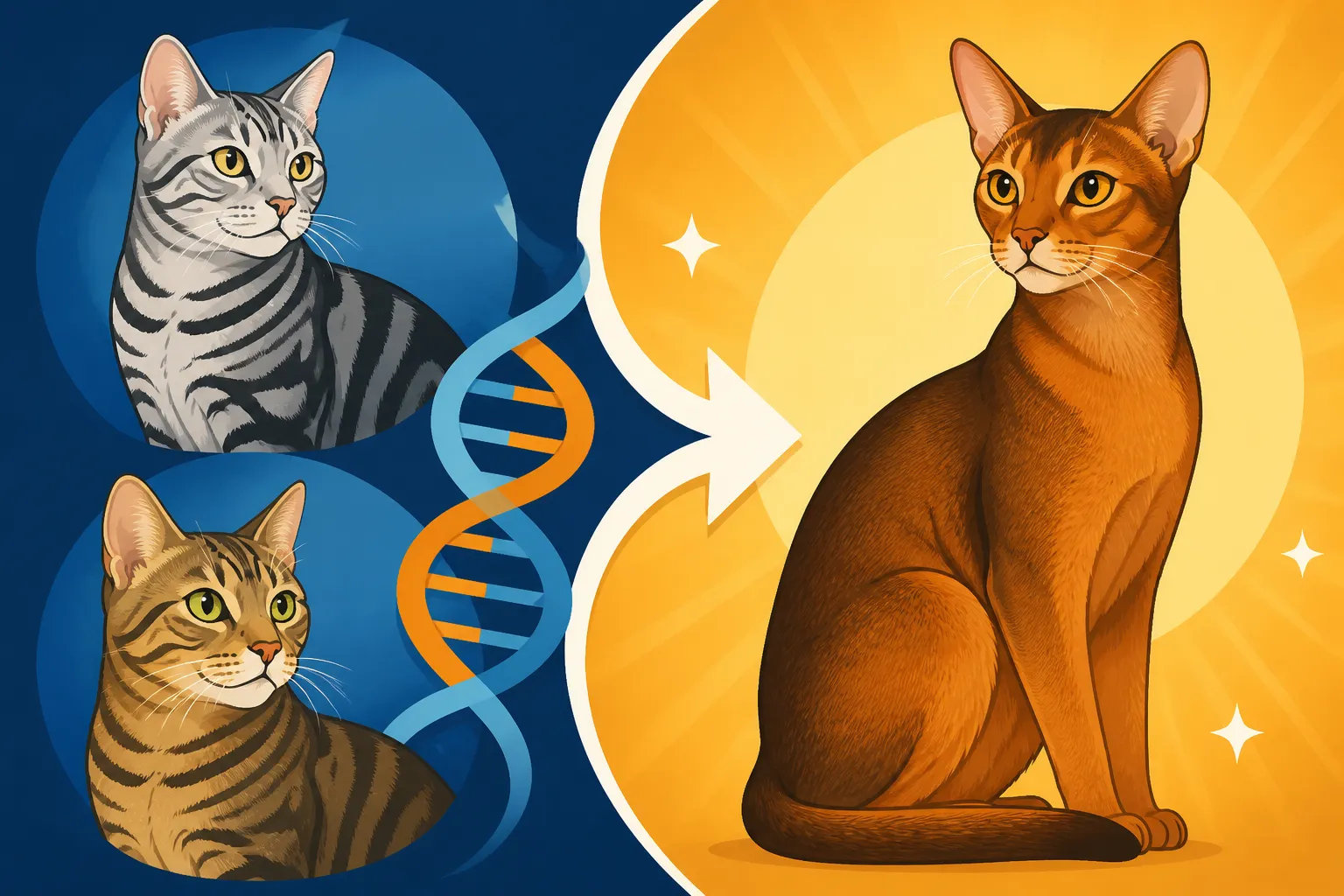
However, this approach often underestimated the complex genetic underpinnings of specific, intricate breed traits. While selective breeding is undeniably the cornerstone of how many breeds are established, the fundamental starting material—the foundational genetics—matters immensely. Simply picking any ticked domestic tabby and attempting to breed it into a purebred Abyssinian would be akin to trying to breed a Great Dane from a Pomeranian, simply because both are dogs. There's a fundamental genetic difference in their ancestral lineages that makes such a direct, wholesale transformation highly improbable, if not impossible, within any reasonable timeframe. It is true that early breeders might have crossed Abyssinians with domestic shorthairs at various points, especially during critical periods when the breed faced near extinction, such as during the World Wars. However, this cross-breeding to widen a dwindling gene pool is distinctly different from the breed originating solely from those British tabbies. Which Cats the First Abyssinians Were Crossed With delves into these early cross-breeding efforts, highlighting how they were often pragmatic responses to challenges rather than the breed's foundational act.
Unraveling the True Genetic Tapestry
This section will explore how modern scientific methods, particularly genetic studies, have provided a much clearer and more accurate picture of the Abyssinian's actual origins, largely disproving the long-held British tabby theory.
DNA's Revelation: Beyond British Shores
For many decades, the origins of the Abyssinian were largely shrouded in a mix of romantic tales, anecdotal evidence, and very limited historical records. The most enduring story, often repeated and cherished, was that of "Zula," a cat supposedly brought back to England from Abyssinia (modern-day Ethiopia) by soldiers after the Anglo-Abyssinian War of 1868. This narrative captured imaginations and provided a compelling, albeit simple, origin story for such a distinctive cat. While Zula certainly existed and was showcased at early cat shows, modern genetic studies have since provided a much more nuanced, and frankly, less dramatic, understanding of the breed's true ancestry. These rigorous scientific studies, analyzing the DNA of Abyssinians and comparing it to various other cat breeds and wild populations, have painted a picture that points definitively away from Ethiopia as the sole origin, and critically, away from a direct lineage deriving purely from British domestic tabbies. As such, The Abyssinian Is Probably Not From Abyssinia helps to explain why this cherished historical account is largely unsupported by current scientific evidence.
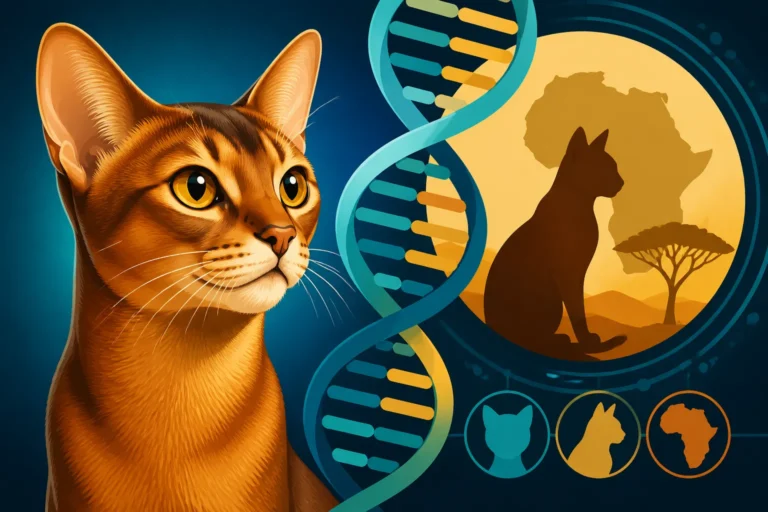
Instead, sophisticated genetic mapping techniques point to a much broader and more ancient origin for the Abyssinian. The evidence strongly suggests ancestors from the coastal regions of the Indian Ocean, with a particular focus on areas like Southeast Asia and parts of India. This makes significant sense when one considers historical trade routes and the natural movement of domesticated cats across continents over millennia. What DNA Says About Where Abyssinians Came From and Why Southeast Asia Turns Up in Abyssinian Genetics explore these compelling genetic findings in detail. These studies identify specific genetic markers and patterns that are consistent with ancient cat populations from those regions, rather than an exclusive British or East African heritage. The Abyssinian, therefore, like many ancient cat breeds, is understood to be a product of centuries of natural selection, migration, and human companionship, long before organized cat fancy began to formalize breeds in the Western world. Modern cats, including the Abyssinian, benefit from a wide range of commercially available foods that cater to their diverse ancestral needs, many of which can be found readily on platforms like Chewy.
The Agouti Gene and its Global Presence
The striking ticked coat pattern, often simply referred to as an "agouti" pattern, is the single most distinctive physical hallmark of the Abyssinian. Each individual hair on an Abyssinian is banded with two or more different colors, creating that unique shimmering quality that gives the coat depth without the presence of distinct stripes or spots across the main body (though subtle barring on the legs or a "necklace" marking on the chest is considered a fault in show cats). How an Abyssinian's Agouti Banding Works explains the intricate genetic mechanisms behind this captivating coat. While the high prevalence and sophisticated refinement of this ticking are what make the Abyssinian so instantly recognizable and distinct, the underlying agouti gene itself is not exclusive to the breed, nor is it uniquely British in its origin.
The agouti gene is, in fact, present in many cat populations worldwide and is responsible for a wide variety of tabby patterns seen across different domestic cat types. The Abyssinian's particular expression of this gene, which largely suppresses the development of distinct tabby stripes to produce that uniform, finely ticked appearance, is a specific mutation that geneticists have identified and traced. The crucial point is that this gene, in its various expressions, is globally distributed, from domestic shorthairs to wild felines. This widespread presence further supports the idea that the Abyssinian didn't simply emerge from a localized British tabby population through selective breeding alone. Instead, its unique ticked pattern likely developed from a diverse and ancient gene pool originating from cat populations that eventually dispersed to various parts of the world, including, much later, Europe. This highlights that while ticking can be observed in non-pedigreed cats, the Abyssinian's specific genetic signature for its coat pattern traces back to a different, more ancient and geographically diverse lineage. Whether you're researching ancient cat migrations or looking for the perfect interactive toy, reputable pet supply retailers, such as Chewy, offer a vast selection for every feline need.
Why the British Tabby Theory Lingered So Long
Despite the compelling insights offered by modern genetic research, the idea that Abyssinians might have been bred directly from British domestic tabbies continued to persist in some circles for a surprisingly long time. This section examines the various reasons behind the longevity and appeal of this misconception.
Lack of Formal Records and Early Breeding Practices
One of the primary and most significant reasons for the enduring mystery surrounding the Abyssinian's precise origins, and consequently, the plausibility of theories like the British tabby idea, was the profound lack of formal, standardized breeding records in the very early days of organized cat fancy. Unlike today, where every breeding is meticulously documented, pedigrees are carefully tracked across generations, and DNA tests provide irrefutable proof of lineage, Victorian-era breeders often worked with extremely limited information. They might acquire a beautiful cat of unknown or loosely documented lineage that displayed desirable traits and then attempt to breed it, carefully documenting its offspring but having little to no insight into its true ancestral background stretching back more than a generation or two. This made it incredibly difficult to definitively trace the genetic path of a breed like the Abyssinian with the kind of precision we expect today.
The focus during this foundational period was often heavily placed on appearance and type, rather than rigorously proven genetic heritage. If a cat visually fit the emerging Abyssinian standard, exhibiting the correct ticked coat, graceful build, and large ears, and it produced kittens that also looked like Abyssinians, it was considered an Abyssinian. The concept of a "landrace" cat, which naturally exists and adapts to a particular region, sometimes blurring the lines between truly wild and domesticated, also contributed to the overall ambiguity surrounding origins. Early breeders were, understandably, more concerned with refining the visual standard and establishing a consistent look for the breed they admired. How the Abyssinian Was Bred in Victorian Britain illustrates how these early practices, while absolutely foundational for the development of the breed we know today, inadvertently left many gaps and uncertainties in its exact origin story. Without comprehensive and verifiable genetic proof available at the time, theories based purely on observable traits, such as the visual resemblance to certain local ticked domestic cats, could easily take hold and become incredibly difficult to refute or definitively disprove.
The Appeal of a 'Local' Origin Story
There's a deep-seated, natural human tendency to seek out simple, relatable, and often emotionally resonant explanations, especially when confronted with complex historical questions or mysteries. The idea that a beautiful, exotic-looking cat like the Abyssinian could have simply been developed and refined from local British stock held a certain, undeniable appeal. This narrative effectively removed the need for complicated, sometimes vague, accounts of faraway lands, ancient maritime trade routes, or the importation of mysterious feline ancestors from distant continents. For a nascent British cat fancy that was just coming into its own, establishing and claiming a prestigious, unique breed as domestically developed might have also carried a subtle, yet potent, sense of national pride or ownership.
This pervasive desire for a straightforward and domestically-rooted narrative, coupled with the complete absence of conclusive scientific evidence until much later in the 20th and 21st centuries, allowed the British tabby theory to flourish and embed itself deeply within the breed's lore. It was simply easier for many to imagine a diligent breeder carefully selecting and refining local cats over generations than to grapple with the possibility of a complex, multi-continental genetic journey stretching back thousands of years. The very term "Why the Abyssinian Was Once Called the Ticked Cat" itself highlights the initial primary focus on the coat pattern, which, as mentioned, could indeed be seen in various forms in domestic cats, rather than on its deep and intricate genetic heritage. Even when the more romantic "Zula from Abyssinia" story emerged and gained popularity, it still offered a single, clear (albeit ultimately flawed) narrative compared to the intricate and scientifically derived genetic journey that is now understood to be the Abyssinian's true heritage.
Here's a comparison of the key aspects of these differing origin theories:
| Aspect | Early British Tabby Theory | Modern Genetic Findings (Indian Ocean/Southeast Asia) |
|---|---|---|
| Primary Ancestry | Descended from local British domestic tabbies. | Primarily descended from ancient cat populations in the Indian Ocean basin, particularly Southeast Asia. |
| Driving Force | Selective breeding of local cats showing subtle ticked patterns by British fanciers. | Natural migration and dispersal along ancient maritime trade routes, followed by selective breeding in various regions, including Britain. |
| Key Evidence | Visual similarity to some ticked domestic cats in Britain; anecdotal observations. | DNA markers, extensive gene flow analysis, mitochondrial DNA studies across diverse cat populations. |
| Coat Pattern Origin | Refinement of existing British tabby ticking through careful breeding. | Specific mutation of the agouti gene originating in ancestral Asian cat populations, then dispersed and further refined. |
| Historical Support | Limited early breed records, anecdotal accounts, and popular narratives of the time. | Rigorous scientific research tracing genetic lineages and population movements over millennia. |
| Geographic Focus | Great Britain. | Broadly the Indian Ocean region, with initial refinement and establishment in Britain. |
In conclusion, while British breeders certainly played a crucial role in establishing and refining the Abyssinian breed into the beautiful, standardized cat we know today, the idea that they were simply "built" from local British tabbies doesn't align with modern scientific understanding. The Abyssinian's genetic tapestry is far richer and more complex, weaving a story of ancient migrations from the Indian Ocean region and Southeast Asia, with their distinctive ticking carrying a heritage that spans continents and millennia.
Disclaimer
This article is for general informational purposes only and does not constitute professional advice. Laws, prices and regulations vary by location and change over time. Consult a qualified professional for guidance on your specific situation.