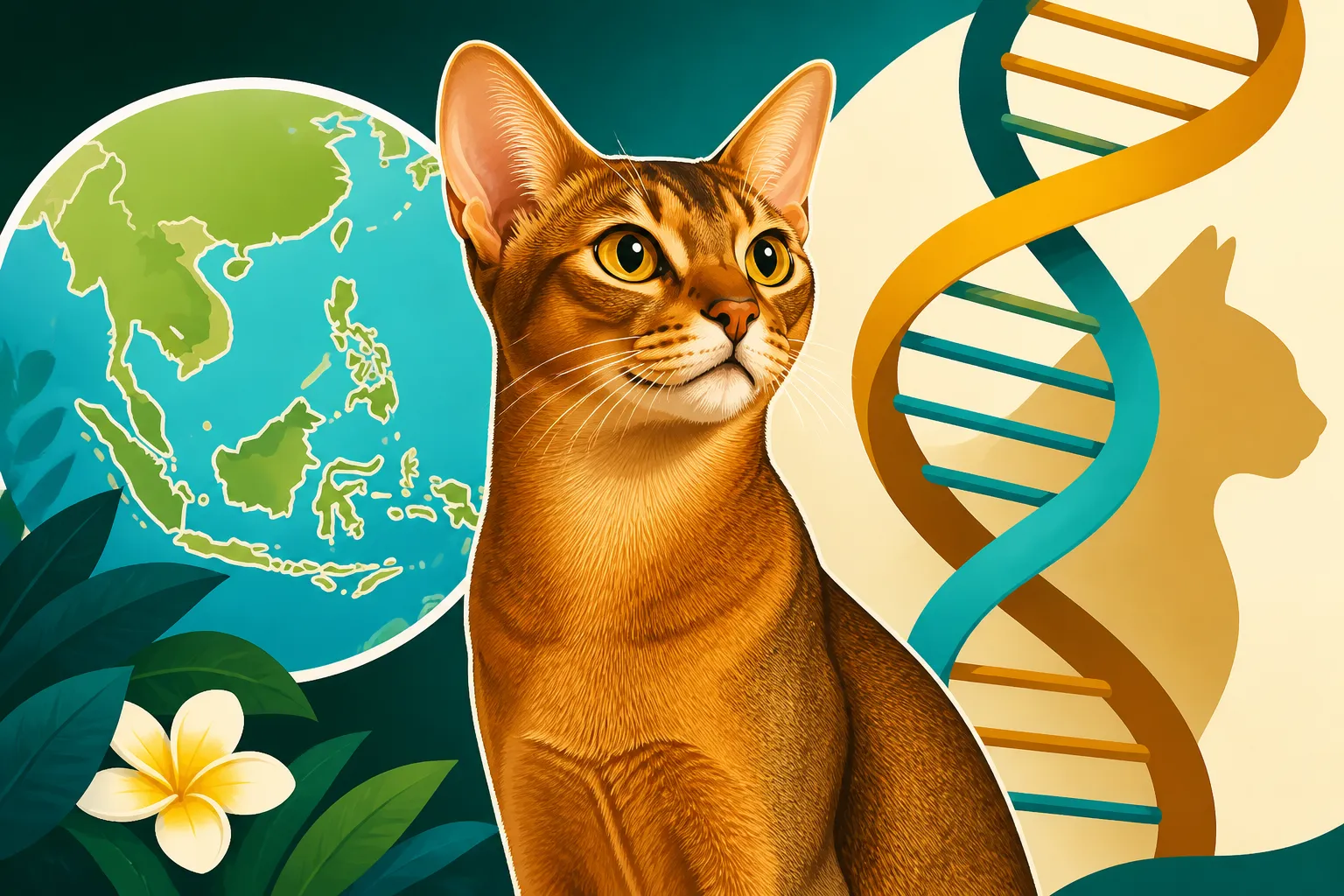
Why Southeast Asia Turns Up in Abyssinian Genetics
For years, Abyssinian cat enthusiasts and new owners alike have grappled with a confusing contradiction: a breed named after an African country, yet often appearing to have much older, possibly even Egyptian, roots. It's a delightful mystery, but one that has left many wondering about the true heritage of their active, intelligent companion. This guide will dive deep into the fascinating world of feline genetics to uncover why scientific research has consistently pointed towards Southeast Asia as the unexpected, yet profound, origin of the Abyssinian cat.
The Persistent Mystery of Abyssinian Origins
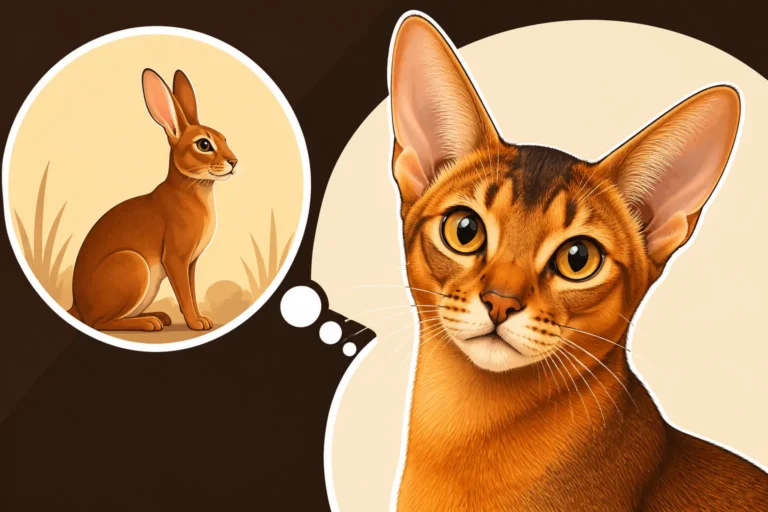
It's completely understandable why the Abyssinian's origins have been shrouded in a certain mystique and, let's be honest, a good deal of romantic guesswork. When you look at an Abyssinian, with their striking ticked coats, athletic build, and expressive almond-shaped eyes, it’s easy to imagine them gracefully leaping across ancient Egyptian murals or surveying an arid landscape. The very name "Abyssinian" itself points directly to Abyssinia (modern-day Ethiopia), solidifying this connection in the minds of many.
This narrative, while captivating, unfortunately doesn't quite align with the scientific understanding that has emerged over recent decades. The gap between charming folklore and genetic reality can be frustrating for anyone trying to truly understand their beloved breed. It highlights how powerful a good story can be, even when the evidence tells a different tale.
The Charming Tale of Zula and Abyssinia
The most enduring and widely circulated origin story for the Abyssinian centers around a cat named Zula. Legend has it that Zula was brought to England from Abyssinia by a British soldier, Captain Barrett-Lennard, at the end of the Abyssinian War in 1868. She was supposedly exhibited at the Crystal Palace Cat Show in 1871 and quickly became the progenitor of the breed. This story paints a vivid picture of exotic origins and military conquest, tying the breed directly to its namesake land.
It’s a lovely tale, really, and one that has been repeated in breed books and club literature for generations. Who wouldn't want their cat to have such a grand and adventurous history? However, as captivating as it sounds, concrete evidence linking Zula directly to the modern Abyssinian pedigree is remarkably scarce. While Zula certainly existed and was indeed exhibited, the paper trail that connects her to the cats selectively bred into what we know today as the Abyssinian breed is largely missing. Zula and the 1868 Story Everyone Repeats gives a great overview of this historical cornerstone.
Why Early Records Were Sketchy and Confusing
The late 19th and early 20th centuries were a nascent period for pedigree cat breeding. Record-keeping was not as standardized or meticulous as it is today. Breeders often crossbred cats of similar types, sometimes even using domestic shorthairs, to enhance certain traits or simply to maintain genetic diversity in small, fledgling populations. This practice makes it incredibly difficult to trace exact lineages back to a single, foundational cat like Zula, even if she had been a key figure.
Furthermore, the initial definition of what constituted an "Abyssinian" was less about a strict genetic line and more about a type of cat – specifically, a cat with the distinctive ticked coat pattern. Cats displaying this agouti pattern, regardless of their actual geographic origin, might have been grouped together and used in early breeding programs. This means that cats from various backgrounds, all sharing that striking ticked coat, could have contributed to the early gene pool, making a singular, African origin even less likely. This period of early breeding also saw many challenges, including two World Wars, which decimated many established British cat lines, further obscuring accurate lineage tracking. Why the Abyssinia Origin Story Survived Anyway delves into how these narratives persisted despite fuzzy beginnings.
Unearthing the Truth: Genetic Evidence Points East
Thankfully, the advent of modern genetic science has offered us a much clearer lens through which to view the Abyssinian's true origins. No longer are we solely reliant on anecdotal accounts or incomplete historical records. Feline DNA studies provide a powerful, unbiased tool to trace ancestral lines, revealing connections that might have been impossible to discern otherwise.
These studies analyze specific markers in a cat's DNA, acting like a genetic fingerprint that can be compared across different breeds and geographical populations. It’s like putting together a massive jigsaw puzzle where each piece of DNA helps to form a more complete picture of feline ancestry. This scientific approach has allowed researchers to cut through the romantic myths and uncover a truly fascinating, and often surprising, global heritage for our domestic cats. If you're looking for quality food or toys that consider a cat's ancestry, sites like Chewy offer a wide range of options based on breed needs, acknowledging the scientific advancements in understanding our pets.
The Power of Feline DNA Studies
When geneticists began to analyze the DNA of various cat breeds, including Abyssinians, they weren't looking to confirm old stories. They were looking for patterns, for genetic signatures that linked groups of cats together. What they found, particularly in the mid-2000s and onward, was consistently pointing away from East Africa and towards another continent entirely. What Genetic Studies Say About the Abyssinian's Origin provides more insight into these groundbreaking studies.
These studies typically examine mitochondrial DNA (which is inherited from the mother) and nuclear DNA markers. By comparing these markers across hundreds, sometimes thousands, of individual cats from different regions and breeds, scientists can build a comprehensive genetic family tree. The results repeatedly indicated that the Abyssinian shared closer genetic ties with cats from the Indian subcontinent and Southeast Asia than with those from Africa. This was a monumental shift in understanding, challenging a century and a half of conventional wisdom.
How Trade Routes Shaped Cat Migrations
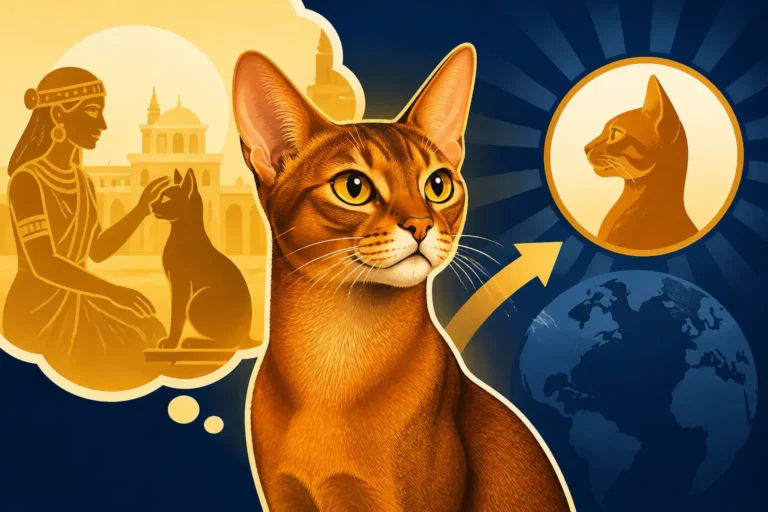
The genetic evidence suggests that the ancestors of the Abyssinian likely traveled west along ancient maritime trade routes, rather than originating in Africa and moving east. These routes, often referred to as the Indian Ocean trade routes, connected regions from Southeast Asia, through India, the Middle East, and eventually to Europe and East Africa. Cats, like many animals, would have traveled alongside humans on ships, acting as pest control.
This makes perfect sense when you consider the history of human migration and commerce. Sailors brought cats with them, and these cats would interbreed at various ports, creating a melting pot of feline genetics across vast distances. So, while a cat might have disembarked in Abyssinia or even England, its deep ancestral roots could very well lie thousands of miles to the east. The ticking pattern itself, often associated with wild agouti coats, is believed to have been present in these early Southeast Asian populations, which then spread globally. You can find excellent resources on feline history and genetic heritage, as well as cat care products, at trusted online retailers like Chewy.
Shared Heritage with Southeast Asian Breeds
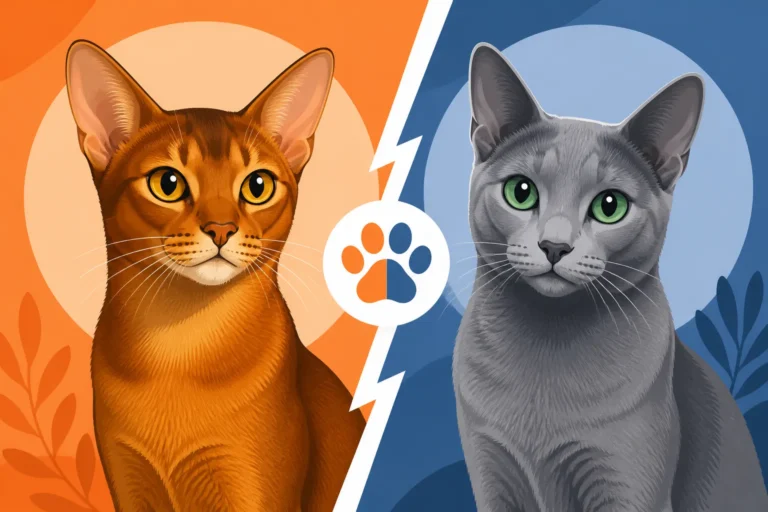
One of the most compelling pieces of genetic evidence is the close relationship between the Abyssinian and several breeds from Southeast Asia. For instance, the Abyssinian shares a distinct genetic signature with breeds like the Singapura, which itself has strong ties to cats found in the region. This shared genetic background strongly suggests a common ancestral population in that part of the world.
Furthermore, genetic analysis has shown that the specific mutation responsible for the Abyssinian's unique ticked (agouti) coat pattern is also prevalent in various cat populations across Southeast Asia. This isn't to say that all ticked cats are Abyssinians, but rather that the genetic predisposition for this coat type appears to have originated there and spread. What DNA Says About Where Abyssinians Came From further elaborates on these findings. This connection points to a much broader and more ancient story of feline evolution and dispersal than the Zula legend ever could.
Let's look at a quick comparison of the historical narrative versus the genetic findings:
| Feature | Traditional Abyssinian Origin Story | Genetic Research Findings |
|---|---|---|
| Origin Region | Abyssinia (Ethiopia) | Southeast Asia, particularly the Indian Ocean coast |
| Key Figure | Zula, brought from Abyssinia in 1868 | No single founder, but ancestral populations in Asia |
| Migration Path | East Africa to Europe | Southeast Asia (via India/Middle East) to Europe |
| Coat Pattern | Believed to originate in Abyssinia | Genetic markers for ticking trace to Southeast Asia |
| Evidence Basis | Anecdotal accounts, historical texts | Mitochondrial and nuclear DNA analysis |
Implications of a Southeast Asian Lineage for the Abyssinian
Understanding the true genetic origins of the Abyssinian doesn't diminish the breed's allure; if anything, it makes it even more remarkable. It connects these incredible cats to a rich, global tapestry of feline history, illustrating how human movements and trade routes inadvertently shaped the domestic cat breeds we cherish today. This deeper understanding also helps breeders and owners make more informed decisions about health and heritage.
It's a testament to the power of science to illuminate and enrich our understanding of the world around us, even for something as seemingly straightforward as a cat's family tree. While the Abyssinian may not be from Abyssinia, its actual history is arguably far more epic and fascinating.
Dispelling the Egyptian Myth
The idea that Abyssinians are direct descendants of the sacred cats of ancient Egypt is a persistent and appealing myth. With their elegant, almost regal bearing, it's easy to see why people would draw parallels to feline depictions in hieroglyphics and Egyptian art. However, genetic studies have largely disproven a direct, exclusive link to ancient Egyptian cats. While all domestic cats share a common ancestor that originated in the Fertile Crescent, the specific lineage of the Abyssinian doesn't track directly back to Egyptian populations in a unique way.
Instead, the Abyssinian's appearance, particularly its lean body and expressive face, might simply be a case of convergent evolution or a favored aesthetic during its development in Europe. Many people mistakenly believe that Whether Any Cat Alive Descends From Egyptian Temple Cats, but the genetic picture is far more complex and distributed across various ancient populations. The elegance we admire in the Abyssinian today is a result of generations of selective breeding by humans who appreciated these qualities, rather than a direct, unbroken line from pharaonic times.
Celebrating a Rich and Global Ancestry
Knowing that your Abyssinian likely traces its roots to Southeast Asia and the ancient maritime trade routes gives them a truly global heritage. Imagine the journeys their ancestors undertook, sailing across vast oceans, adapting to new lands, and intermingling with local cat populations. This isn't just a story about one cat from Abyssinia; it's a saga of feline resilience and human-cat companionship across continents and centuries.
This complex ancestry might even contribute to the Abyssinian's famed vigor and intelligence. A broad genetic base, drawing from diverse populations, can often lead to a robust and healthy breed, though of course, responsible breeding practices remain paramount. It also underscores the interconnectedness of our world, even in the genetic makeup of our pets. This global journey highlights a unique path that makes the Abyssinian truly special, an adventurer at heart. Owners seeking to provide the best for their globally-sourced feline friends often turn to quality suppliers like Chewy for a wide array of specialized foods and enriching toys that cater to their active nature.
The Ongoing Journey of Feline Genetics
The journey to understand the Abyssinian's genetic background is a perfect example of how science continually refines and expands our knowledge. What we thought we knew from historical records can be beautifully challenged and enriched by new scientific methods. The field of feline genetics is always advancing, offering deeper insights into breed health, traits, and indeed, their origins.
For Abyssinian owners and lovers, this means embracing a story that is perhaps less direct than the Zula legend, but infinitely more vast and captivating. It encourages us to appreciate not just the beauty of the individual cat, but the incredible, long history embedded in its very DNA. The Abyssinian is a living testament to global travel, ancient trade, and the ever-evolving partnership between humans and cats, a narrative far grander than any single country could claim. What Modern DNA Studies Found About Abyssinian Ancestry continues to shape our understanding.
Disclaimer
This article is for general informational purposes only and does not constitute professional advice. Laws, prices and regulations vary by location and change over time. Consult a qualified professional for guidance on your specific situation.