How an Abyssinian Compares to a Russian Blue as a Pet
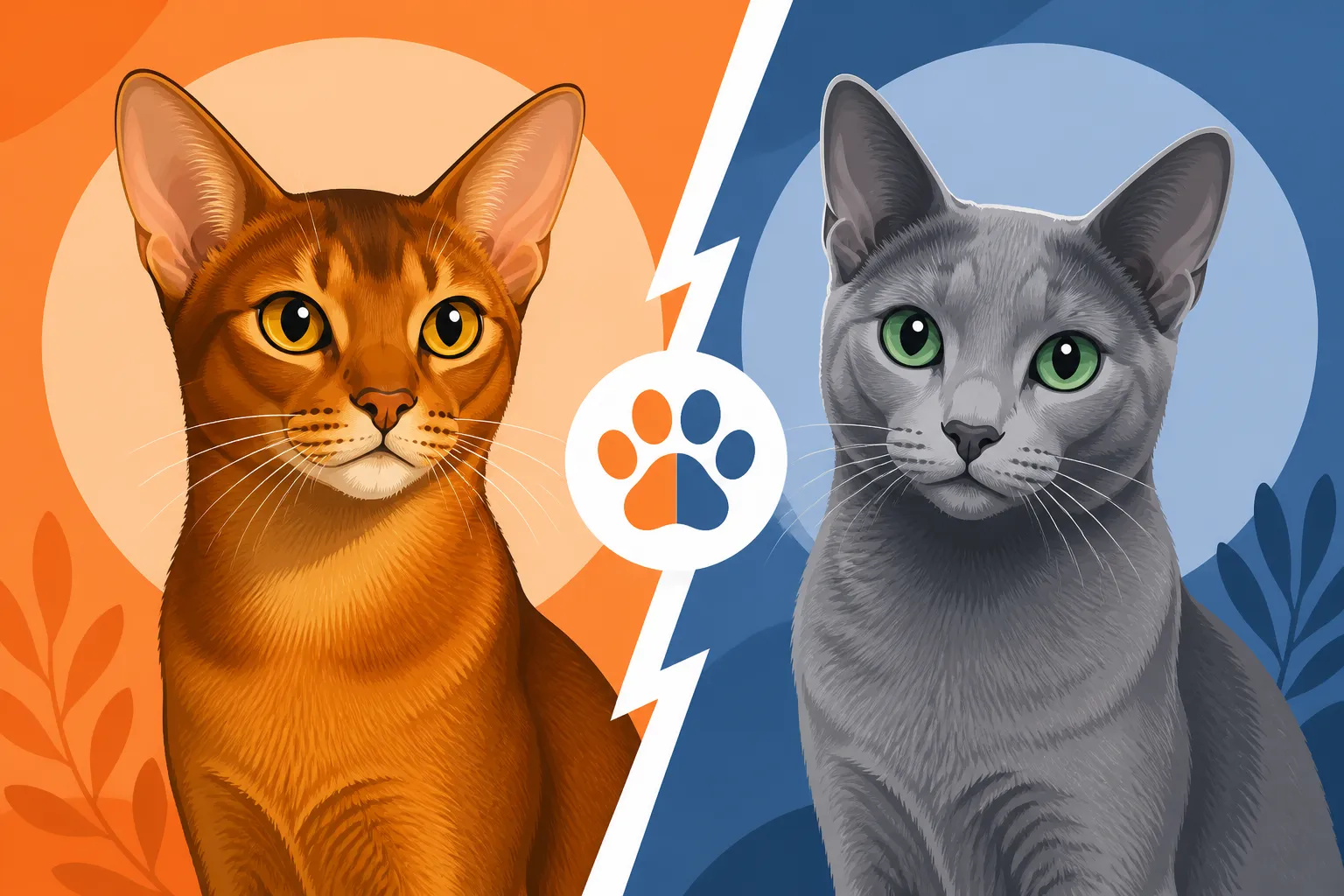
Choosing between an Abyssinian and a Russian Blue often comes down to how much activity and social energy you want in your home. Both are intelligent, affectionate cats, but they tend to express those qualities differently. This guide compares their temperaments, daily care, and household fit so you can picture what living with each breed may actually feel like.
Temperament and everyday company
Abyssinians bring movement and curiosity
An Abyssinian is often happiest when there is something to investigate, climb, or do with you. You might find one watching a cupboard open, joining you at your desk, or hopping onto a high shelf to supervise the room. Many enjoy being near their people, but that does not always mean they want to settle in your lap for a long cuddle.
This is a breed for people who enjoy an interactive cat. A wand toy, a short training session, or a puzzle feeder can become part of the daily routine. An Aby may also invent its own entertainment if the house is quiet, which can mean exploring counters or batting small objects onto the floor. For practical ideas on keeping that busy mind occupied, see How Much Play an Abyssinian Needs Each Day and What an Abyssinian Does When It Is Bored.
Abyssinians are not identical, of course. Some are more content to nap nearby; others seem to patrol the house from morning to night. Still, if you are hoping for a low-key cat who mostly watches the household from one favorite cushion, the typical Abyssinian’s appetite for activity may feel like a lot.
Russian Blues are often quieter and more reserved
Russian Blues are commonly described as gentle, observant, and somewhat cautious around unfamiliar people. A Russian Blue may take time to warm up to visitors, then show affection through quiet companionship: following a trusted person from room to room, sitting nearby, or greeting them at a familiar time of day.
That reserved quality should not be mistaken for a lack of attachment. Many Russian Blues form close bonds with their household, but they may prefer a predictable routine and a calm approach. A noisy gathering or an enthusiastic stranger may send one looking for a quiet hiding place rather than the center of attention.
There is individual variation here, too. A confident Russian Blue can be playful and outgoing, while an Abyssinian can be calm in the right setting. Breed tendencies are useful for setting expectations, but a kitten’s early experiences and personality matter. Ask a breeder or rescue contact how the cat behaves with people, household sounds, and changes in routine—not just what the breed is “usually” like.
Activity, play, and home setup
The Abyssinian needs outlets for its energy
Abyssinians tend to use the space around them. They climb, jump, explore, and often want to participate in whatever their people are doing. A tall, stable cat tree, safe shelves, a window perch, and daily interactive play can help make an indoor home more satisfying. Even an apartment can work if the cat has vertical routes and regular activity; floor space alone is not the whole story. Whether an Apartment Suits an Abyssinian offers more detail on making a smaller home workable.
It can help to divide play into several short sessions rather than expect one long session to meet every need. Rotate toys when your cat loses interest, and finish a chase game with an opportunity to catch the toy. A food puzzle or treat ball can add a little problem-solving to mealtime. If you shop for enrichment supplies through a retailer such as Chewy, focus on sturdy toys and feeders that match your cat’s size and play style, and supervise anything with strings or small detachable parts.
An Abyssinian may also appreciate company. That does not automatically mean you need to get a second cat, but it does mean thinking honestly about the time your cat will spend alone. A predictable routine and meaningful play can help, while a long, empty day may leave an active cat searching for its own projects. See Why an Abyssinian Should Not Be Left Alone All Day if your work schedule keeps you out for extended stretches.
Russian Blues often suit a more settled routine
Russian Blues generally need play and enrichment too, but many are more comfortable with a quieter rhythm than an Abyssinian. A few reliable play sessions, a place to watch the outdoors, and cozy resting spots may suit a Russian Blue well. That does not mean the cat should be left without stimulation; indoor cats still benefit from opportunities to stalk toys, explore, and make choices.
A reserved cat may appreciate having a safe room or retreat when visitors arrive. Let the cat approach at its own pace rather than carrying it toward guests or pulling it out of a hiding place. For a Russian Blue who is shy, calm introductions and familiar routines can make a noticeable difference.
Both breeds can live indoors, and neither should be expected to stay safe by roaming unsupervised. A secure window perch, harness training where the cat accepts it, or a properly enclosed outdoor area can offer sensory variety without free roaming. The right setup depends less on the breed label than on the individual cat’s confidence, mobility, and interest in the outdoors.
Grooming, feeding, and practical care
Their coats are short, but not identical
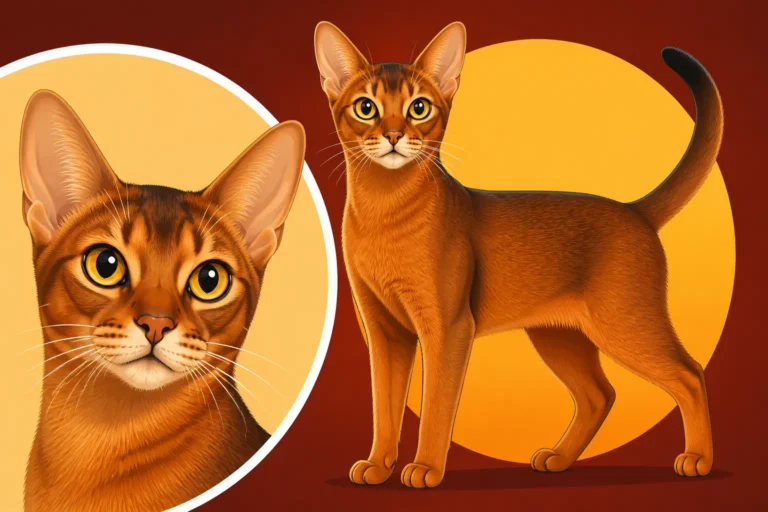
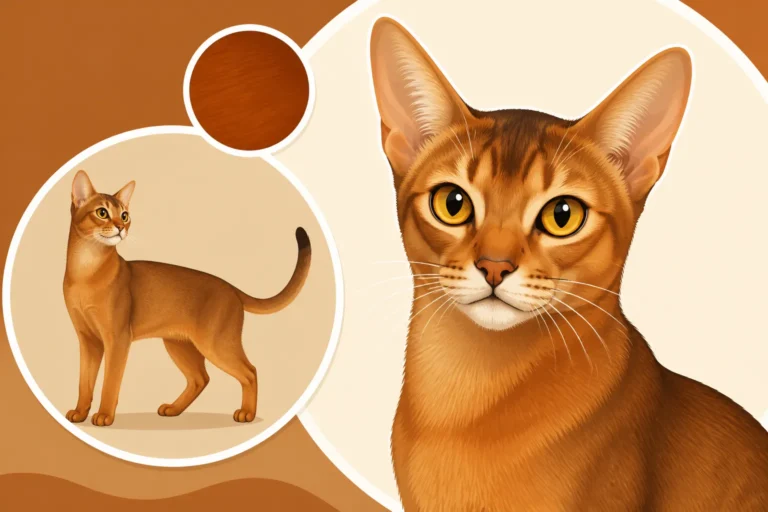
Abyssinians have a close-lying coat with distinctive ticking, in which individual hairs show bands of color. Their grooming is usually straightforward: a gentle weekly pass with an appropriate mitt or comb is often enough to remove loose hair and keep the coat neat. Frequent or harsh brushing can be unnecessary, especially with a fine coat. How an Abyssinian's Coat Changes With the Seasons explains why coat appearance and shedding can shift over the year.
Russian Blues have a plush, dense double coat that gives them a noticeably different feel. Regular brushing can help collect loose hair, especially during heavier seasonal shedding. Neither breed needs elaborate salon grooming as a routine, but both benefit from getting comfortable with gentle handling early. Check ears, trim claws as needed, and introduce tooth care gradually.
A short coat does not make either breed hypoallergenic. Allergens come from sources such as skin flakes and saliva, not simply from long hair. If someone in your household has allergies, spend time around the specific cat before making a commitment and talk with a medical professional about managing symptoms. Why an Abyssinian Is Not a Hypoallergenic Cat explains the issue in more detail.
Feeding and preventative care matter for both
Neither breed has a one-size-fits-all diet. The right amount and type of food depend on age, body condition, activity, and health. An active Abyssinian may seem to burn through energy quickly, but constant movement is not a reason to leave unlimited food down without monitoring weight. A Russian Blue may appear more settled, but its portions still need to match its individual needs.
Offer fresh water, keep an eye on appetite and weight, and make changes to food gradually rather than switching abruptly. If a cat suddenly eats less, drinks much more, loses weight, or becomes unusually quiet, those changes deserve attention rather than being explained away as personality. A vet can help set an appropriate feeding plan and identify health concerns.
Routine care is similar for both breeds: regular veterinary checkups, dental care, vaccination decisions based on the cat’s circumstances, and attention to changes in behavior. Keep food, litter, and grooming supplies consistent when possible, particularly for a cat who is unsettled by change. If you use Chewy or another retailer to restock food or care items, check that the product matches your veterinarian’s recommendations and transition foods slowly.
Which breed may fit your household better
Compare the daily experience, not just the appearance
The Abyssinian and Russian Blue are both elegant shorthaired cats, but their everyday needs can feel quite different. This table is a starting point, not a promise about any individual cat.
| Consideration | Abyssinian | Russian Blue |
|---|---|---|
| Typical energy | Often high; enjoys climbing and interactive activity | Often moderate; playful but commonly more settled |
| Social style | Frequently curious and involved in household activity | Often devoted to familiar people but reserved with newcomers |
| Best enrichment | Climbing routes, frequent play, puzzle activities | Predictable play, observation spots, quiet retreats |
| Coat care | Light, regular grooming for a close coat | Regular brushing to manage a dense double coat |
| Household atmosphere | Often thrives in an engaged, active home | May appreciate a calmer, more predictable home |
| Key question | Can you provide regular interaction and activity? | Can you respect a cautious cat’s need for time and space? |
If you work from home, enjoy training, or like having a cat that follows the action, an Abyssinian may feel like a natural companion. If you prefer a quieter presence and are comfortable giving a shy cat time to build trust, a Russian Blue may be more appealing. Neither choice is automatically better for families or apartments; household noise, time for play, and the individual cat’s temperament are more useful factors.
Think about what you want companionship to look like. An Abyssinian may show interest by joining your activities and seeking stimulation. A Russian Blue may show closeness more quietly and may be cautious around new people. If lap sitting is essential to you, meet the individual cat and ask about its established behavior rather than assuming a breed guarantees it.
Make the decision with the individual cat in mind
Before choosing, ask how the cat responds to handling, visitors, other pets, and time alone. For a kitten, ask about its experiences with ordinary household sounds and gentle human interaction. For an adult cat, ask what its current routine looks like and whether it has lived with children, dogs, or other cats. A rescue or breeder who knows the cat well can help you distinguish a temporary adjustment period from a lasting temperament.
Also consider the commitment beyond the first exciting weeks. An Abyssinian may need more planned activity and supervision to stay engaged. A Russian Blue may need a slower introduction to visitors or changes in the home. Both need play, companionship, routine veterinary care, and a safe indoor environment. Reviewing Whether an Abyssinian Is the Right Cat for You can help you check whether the breed’s activity level matches your lifestyle.
If possible, spend time with the specific cat before deciding. Notice whether it recovers quickly after a surprising sound, chooses to approach you, enjoys play, or prefers to observe from a distance. A good match is not necessarily the boldest or most affectionate cat in the room. It is the cat whose needs and personality you can meet consistently.
Disclaimer
This article is for general informational purposes only and does not constitute professional advice. Laws, prices and regulations vary by location and change over time. Consult a qualified professional for guidance on your specific situation.