What a Ruddy Abyssinian Actually Looks Like
When you hear "Abyssinian," often the first image that springs to mind is that stunning, warm, reddish-brown coat. This is the classic Ruddy Abyssinian, and while its beauty is undeniable, truly appreciating its unique appearance goes beyond a simple glance. This guide will take a deep dive into what makes the Ruddy Abyssinian's coat so distinctive, from the microscopic banding of each hair to how it's judged in the show ring, ensuring you understand the intricate details of this magnificent feline.
The Foundation of the Ruddy Abyssinian Coat: Ticking in Action
The defining characteristic of any Abyssinian, and particularly the Ruddy, is its ticked coat. This isn't just a pretty pattern; it's a genetic marvel that sets them apart from virtually every other cat breed. If you've ever seen a wild rabbit or a deer, you've witnessed ticking in nature. On an Abyssinian, it means that each individual hair isn't a single, solid color, but rather a band of alternating light and dark pigments. This intricate detail creates a shimmering, iridescent effect as the cat moves, almost like sunlight playing across water, and it's what gives the Ruddy its wild, untamed beauty.
Understanding the Agouti Gene's Role
At the heart of the Abyssinian's ticked coat is the agouti gene. This remarkable gene is responsible for dictating the distribution of pigment along each individual hair shaft. In most tabby cats, the agouti gene creates distinct stripes, spots, or swirls by allowing bands of color to form on some hairs while others remain solid. However, in the Abyssinian, a modified form of the agouti gene ensures that almost every single hair on the cat's body displays this banding. This means no stripes, no spots, just pure, unadulterated ticking from head to tail. It's a key reason why Abyssinians often get mistaken for miniature cougars or other wild felines; their coat pattern is far more natural and less "domesticated" in appearance than a traditional tabby. This unique genetic expression is what gives the Abyssinian its signature look and is central to How an Abyssinian's Agouti Banding Works.
Without the precise work of the agouti gene, the Ruddy Abyssinian wouldn't have that deep, warm, glowing quality. The gene essentially turns on and off pigment production as the hair grows, creating those distinct bands. This isn't just about color; it's about depth and texture. The absence of traditional tabby markings, like the "M" on the forehead or necklace lines, is a direct result of this specialized agouti modification. It's a testament to centuries of selective breeding that has refined this natural trait into the exquisite pattern we see today, ensuring that the Abyssinian maintains its sleek, sophisticated appearance.
The Specific Bands of a Ruddy Hair
Now, let's get down to the nitty-gritty of what actually makes up a Ruddy Abyssinian's individual hair. Each hair on a Ruddy Abyssinian is a miniature masterpiece, typically featuring three to four bands of color. The base of the hair, closest to the skin, starts with a warm, deep apricot or orange-brown shade. As the hair grows longer, it transitions into a darker band, usually a rich, dark brown or even black. Then, another band of lighter apricot or golden brown appears, followed by a final, darker tip. This darker tip is crucial to the overall effect, as it creates the shimmering, "ticked" appearance that defines the breed. You can learn more about this in Why Each Abyssinian Hair Carries Three or Four Bands.
Imagine this complex pattern repeated across millions of hairs on a single cat. The effect is astounding. When you part the fur on a Ruddy Abyssinian, you'll notice the lighter bands closer to the skin, giving the coat a softer, warmer glow underneath, even as the darker tips provide the depth and intensity on the surface. This multi-banded structure is what allows the light to play off the coat so dramatically, making it appear to shift and shimmer with every movement. It's truly a sight to behold, and something that photos often struggle to fully capture; you really need to see it in person to appreciate the subtle interplay of light and shadow within the coat.
The Overall Impression of the Ruddy Ticking
When all these individually banded hairs come together, the result is the stunning visual tapestry that is the Ruddy Abyssinian coat. Instead of seeing stripes or patches of color, your eye perceives a uniform, yet incredibly rich and varied, depth of color across the entire body. The "ticking" refers to this speckled, finely variegated appearance that lacks any discernible pattern beyond the individual hair bands. It's this lack of obvious pattern that contributes to the Abyssinian's "wild cat" look, making them seem as though they've just stepped out of the savannah.
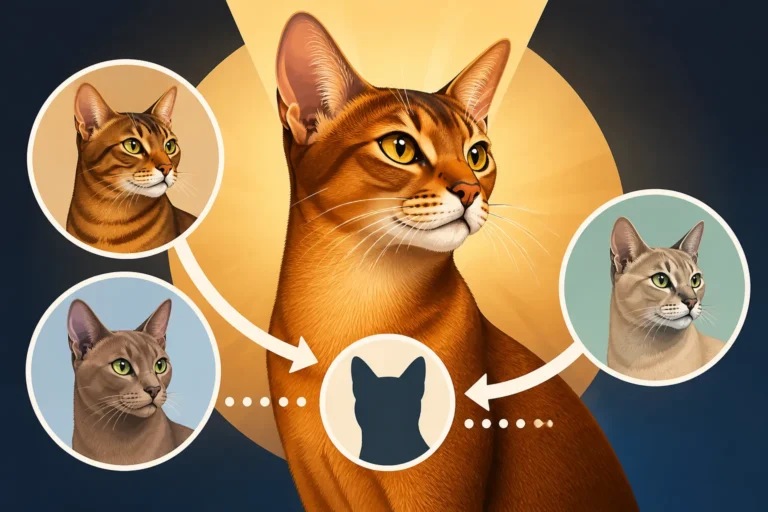
The overall impression of a Ruddy Abyssinian is one of vibrant warmth and subtle elegance. The coat seems to glow from within, with hints of reddish-brown, burnt orange, and deep sable all interwoven. There's a certain "sparkle" or "sheen" that comes from the way the light reflects off the varying pigment bands, giving the coat a dynamic quality that solid-colored cats simply don't possess. This shimmering effect is especially pronounced in bright sunlight, where the full glory of the ticking can truly be appreciated, revealing a depth and complexity that makes the Ruddy a timeless classic among The Four Colors an Abyssinian Comes In.
The Rich Color Palette: Warm Browns and Coppers
The Ruddy Abyssinian is the original and most well-known color, often referred to as "Usual" in some parts of the world. It’s the color that most people picture when they think of an Abyssinian, and for good reason: it’s exquisitely beautiful and embodies the breed's wild aesthetic perfectly. It's a color that exudes warmth and a connection to nature, mimicking the rich earth tones and vibrant sunsets of a natural landscape.
The Ideal Ruddy Base Color
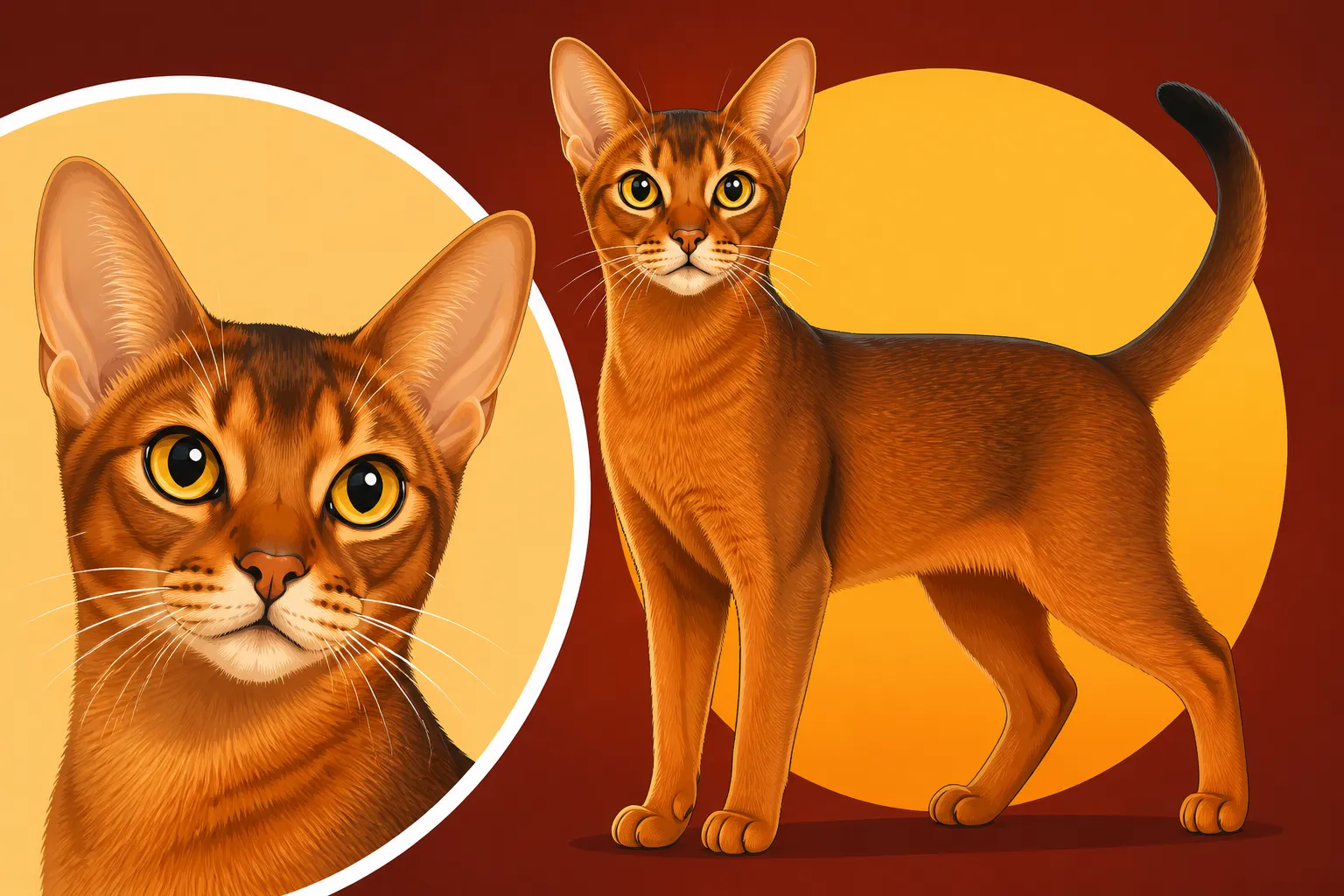
At its core, the ideal Ruddy Abyssinian boasts a ground color that is a vibrant, warm coppery-brown or burnt sienna. Think of the rich, reddish-brown hues you see in autumn leaves just before they fall, or the gleaming copper of a freshly polished pot. This isn't a dull brown; it’s alive with warmth and undertones of orange and red. This warm base color extends down the legs, chest, and belly, though it tends to be lighter and more apricot in these areas, providing a beautiful contrast to the deeper ticking on the back. What Ruddy Means on an Abyssinian truly highlights this warm, vibrant characteristic.
This radiant ground color is crucial for the overall effect. It provides the canvas upon which the darker ticking is painted, and a vibrant ground color ensures that the entire coat looks rich and healthy. A faded or washed-out ground color would diminish the striking contrast that is so characteristic of the Ruddy. Breeders work diligently to select for this intense, clear base color, as it's a hallmark of a truly exceptional Ruddy Abyssinian. It's the kind of color that makes you want to reach out and touch it, feeling the smoothness of the coat and the subtle warmth it seems to emit.
The Contrasting Darker Bands
Layered over that glorious coppery base are the darker bands of ticking, typically a deep seal brown or even black. These dark bands appear on the tips of each individual hair, creating a mesmerizing contrast that defines the Ruddy’s appearance. These dark tips are concentrated along the spine, over the back, and along the tail, giving these areas a deeper, richer appearance. The contrast between the warm ground color and the dark ticking is what truly brings the coat to life, making it appear almost three-dimensional.
This stark contrast is what gives the Ruddy its distinctive "salt and pepper" or "flecked" look, though on a much finer scale than those terms usually imply. When the cat moves, these darker tips shimmer and shift, creating a dynamic visual that is never static. It’s not just about the color, but about the interplay of light and shadow that these contrasting bands create. Without this strong contrast, the ticking would be less defined, and the coat would appear flatter and less vibrant. It’s this intricate detail that contributes so much to the Abyssinian's exotic allure.
Why the Underside Matters for Ruddy
While the back and sides command most of the attention, the color of the Ruddy Abyssinian’s underside – its chest, belly, and inner legs – is also an important part of its overall presentation. These areas should be a clear, warm apricot or deep orange, lighter than the main body color but still maintaining that essential warmth. You shouldn't see any grey or cool tones here; it should be consistently warm and harmonious with the upper coat. This clear, warm underside contributes to the overall impression of a cohesive and naturally colored animal.
The contrast between the deeper, more intensely ticked upper coat and the softer, clearer underside is part of the breed standard’s expectation. It provides a natural gradient of color that enhances the Abyssinian’s sleek, muscular physique. Any barring or striping on the legs or tail is considered a fault, as the ideal Abyssinian coat should be uniformly ticked without any distinct pattern beyond the individual hair banding. This attention to detail, even on the areas less frequently seen, speaks to the high standards of the breed and its commitment to presenting a truly unique and beautiful feline.
Distinguishing a Ruddy Abyssinian from Other Colors
The Abyssinian breed comes in several recognized colors, but the Ruddy often serves as the benchmark against which others are compared. While all Abyssinian coats feature the characteristic ticking, the underlying pigment and the contrasting band colors vary significantly, creating distinctly different appearances. Understanding these differences is key to appreciating the nuances of each color.
Ruddy vs. Sorrel: A Common Confusion
One of the most frequent confusions for new Abyssinian enthusiasts is distinguishing between a Ruddy and a Sorrel. Both are warm-toned, but they derive their warmth from different pigments. A Ruddy Abyssinian gets its rich, coppery-brown hue from the black pigment being modified and combined with a warm red or orange-brown base. The ticking is a deep seal brown or black. In contrast, a Sorrel Abyssinian, also known as Red in some registries, lacks black pigment entirely. Its base color is a vibrant cinnamon or reddish-orange, and the ticking is a rich, reddish-brown. Think of a Ruddy as a sophisticated burnt orange with dark brown ticking, while a Sorrel is a vivid red-orange with red-brown ticking.
When placed side-by-side, the difference becomes quite apparent. The Ruddy has a deeper, more earthy tone, often with a hint of coolness from the black pigment, even if it's mostly warm. The Sorrel, however, is pure warmth, blazing with a bright, almost fiery red-orange glow. There's no dark, almost-black ticking on a Sorrel; all its ticking is distinctly reddish. Understanding this genetic distinction is crucial for breeders and owners alike, as it dictates the overall color expression. For more on this, you might find What a Sorrel Abyssinian Looks Like helpful.
How Ruddy Differs from Blue and Fawn
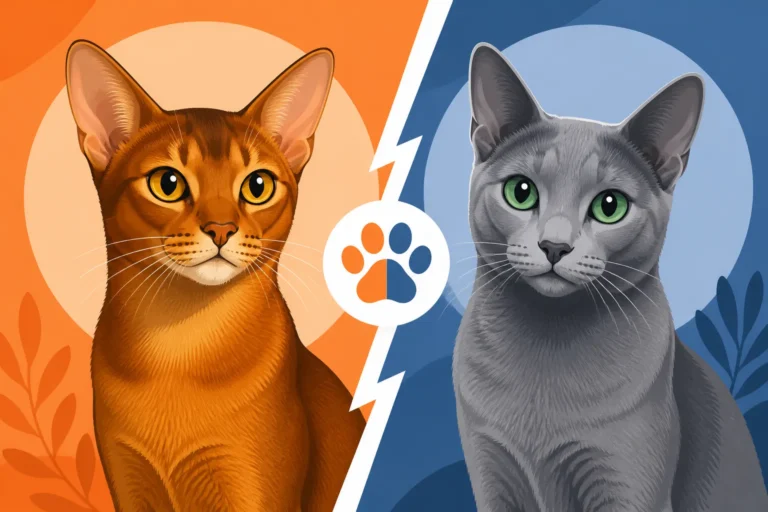
Moving away from the warm tones, the Blue and Fawn Abyssinians offer a stark contrast to the Ruddy. These colors are dilutes, meaning the underlying pigment has been softened or "diluted" by specific genes. A Blue Abyssinian has a slate grey or blue-grey ground color, with ticking that is a darker blue-grey. There's no warmth in the blue; it's a cool, smoky, ethereal shade. The overall impression is one of elegance and mystery, a far cry from the Ruddy's vibrant earthiness. You can explore What a Blue Abyssinian Looks Like to see this difference clearly.
Fawn Abyssinians take dilution a step further. They are a dilute of the Sorrel, resulting in a soft, creamy fawn or dusty rose ground color, with ticking that is a warm, light taupe or mushroom grey. It's the palest of the recognized colors, exuding a delicate, almost pastel beauty. Again, there's no dark ticking like you'd find on a Ruddy; the entire coat is soft and muted. Comparing the deep, rich Ruddy to the smoky Blue or the delicate Fawn truly highlights the incredible spectrum of colors available within the Abyssinian breed, all while maintaining that unique ticked pattern. Discover more about this subtle beauty in What a Fawn Abyssinian Looks Like.
The Absence of Silver in Ruddy Coats
It's also important to note what a Ruddy Abyssinian doesn't have: silver. Some Abyssinian colors, though less common or not recognized by all associations, can carry a silver gene, which inhibits yellow or red pigment in the undercoat, giving a shimmering silver appearance. A Ruddy Abyssinian, by definition, is a non-silver cat. Its warmth comes from the rich reds and coppers in its undercoat and lighter bands, without any hint of a cool, silvery sheen.
This means that if you see an Abyssinian that looks ruddy but has a distinctly silvery cast, particularly on its undercoat or where the light hits it, it's likely a Silver Abyssinian with a Ruddy overlay (sometimes called a Silver Ruddy or Black Silver). While beautiful in their own right, these are distinct from the classic Ruddy. The Ruddy's warmth is pervasive and consistent throughout the hair shaft, making it unmistakably a celebration of golden, coppery, and rich brown tones, entirely free from the cool sparkle of silver.
What the Show Standard Says About Ruddy
For those interested in showing Abyssinians, the breed standard is the ultimate guide to what constitutes an ideal specimen. For the Ruddy, the standard is quite precise about color, ticking, and overall appearance, ensuring consistency and preserving the classic look of the breed. Adhering to these standards is how breeders maintain the integrity and beauty of the Abyssinian for generations. Understanding these nuances is key to appreciating What an Abyssinian Looks Like Against the Show Standard.
Key Characteristics for Judging Ruddy
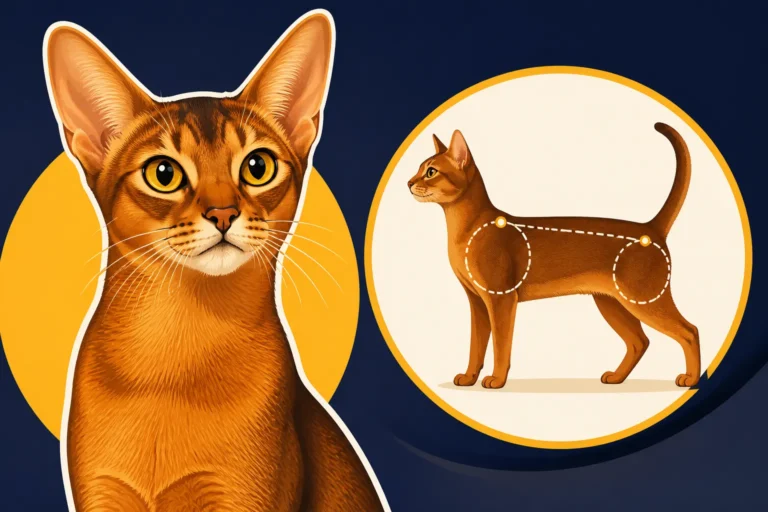
When a Ruddy Abyssinian steps into the show ring, judges are looking for several key characteristics. First and foremost is the clarity and richness of the color. The ground color must be a vibrant, warm coppery-brown, as described earlier, with clear, distinct dark ticking that is preferably black or dark brown. The ticking should extend evenly over the entire body, without any visible bars, stripes, or blotches. This uniform ticking is paramount. The underside of the cat – the chest, belly, and inner legs – should be a clear, deep apricot or orange, without any gray banding or dullness. The tail tip should be dark, usually matching the dark ticking.
Beyond the coat, judges also evaluate other features that complement the Ruddy color. The eyes, typically gold or green, should be expressive and outlined with a dark line, giving them a striking appearance. The nose leather should be brick red, rimmed with the dark ticking color. Paw pads should be black or dark brown. Every element is considered for how it contributes to the overall harmonious and exotic appearance of the Ruddy Abyssinian. The goal is a cat that looks truly wild, but with the refined elegance of a pedigree breed.
Common Faults to Look For
While the ideal Ruddy is breathtaking, there are several common faults that judges look for that can detract from a cat's show quality. One of the most significant faults is "barring" or "striping" on the legs, tail, or neck (often called "necklaces"). The Abyssinian's ticked pattern should be devoid of these tabby markings. Any residual tabby patterns indicate an undesirable break in the uniform ticking. Another fault is a dull or faded ground color; the Ruddy should be vibrant and warm, not washed out. Grey or cold undertones, especially on the underside, are also considered a fault, as they deviate from the desired apricot hue.
Beyond color, other structural faults might include a short or blunt tail, small or round eyes, or a "cobby" (stocky) body type, which goes against the Abyssinian's elegant, lithe build. While these may not be directly related to the Ruddy color itself, they speak to the overall conformation expected of the breed. It's a high bar to meet, but it's what ensures the continued excellence of the Abyssinian breed. You can imagine how challenging it must be for breeders to constantly strive for this level of perfection!
The Ruddy Coat in Different Lighting
One fascinating aspect of the Ruddy Abyssinian's coat is how dramatically its appearance can change under different lighting conditions. In bright sunlight, the individual bands of color become incredibly pronounced, and the coat shimmers with an almost golden-red iridescence. The deep apricot and coppery tones truly come alive, making the cat look vibrant and fiery. This is where the "sparkle" of the ticking is most evident, revealing the full depth and complexity of the color.
Indoors, under softer, artificial light, the Ruddy coat can appear deeper, richer, and more subdued. The black or dark brown ticking might stand out more, giving the coat a more intensely defined, almost sable-like quality. The warm undertones will still be present, but perhaps less overtly bright than in natural light. This chameleon-like quality is part of the Ruddy's charm and makes them endlessly captivating to observe. It also makes photographing them a fun challenge, as you try to capture every facet of their amazing coat. This dynamic quality is inherent to How an Abyssinian's Coat Color Is Registered, as breeders aim for a color that looks stunning in all conditions.
The Development of the Ruddy Abyssinian's Coat
Understanding how the Ruddy Abyssinian's coat develops from kittenhood to adulthood, and how it can be maintained, is crucial for any owner. The coat doesn't just appear fully formed; it undergoes a fascinating transformation, and its quality can be influenced by various factors.
Ruddy Kitten Coat vs. Adult Ticking
When a Ruddy Abyssinian kitten is born, its coat looks quite different from the finished adult product. Newborn Ruddy kittens typically have a softer, fuzzier coat with less distinct ticking. They often appear somewhat "blotchy" or even slightly striped, with a more muted overall color. This is perfectly normal and is sometimes referred to as "kitten fluff" or "ghost markings." The rich coppery tones and sharp, well-defined ticking we associate with adult Ruddy Abyssinians develop over time.
It takes several months for the full ticking pattern and the deep, rich ground color to fully emerge. Usually, by the time the kitten is around 4-6 months old, you'll start to see more of the adult coloration and ticking appear. However, the coat may not reach its full intensity and clarity until the cat is closer to one or even two years of age. This gradual development is part of the wonder of the breed and means that even a young Ruddy kitten with slightly indistinct markings holds the promise of a magnificent adult coat. For more details on this transition, see When an Abyssinian Kitten's Adult Ticking Arrives.
Factors Affecting Coat Quality
Several factors can influence the quality and appearance of a Ruddy Abyssinian's coat. Genetics play the most significant role, of course, with reputable breeders carefully selecting breeding pairs to enhance desirable coat characteristics like rich color and clear ticking. Beyond genetics, nutrition is paramount. A high-quality diet rich in protein, essential fatty acids (like Omega-3 and Omega-6), and vitamins is vital for maintaining a healthy, shiny coat. Poor nutrition can lead to a dull, dry, or sparse coat, even in a genetically well-endowed cat. You might check a reputable pet supply store like Chewy for premium cat foods specifically formulated for coat health.
Environmental factors also play a part. Excessive exposure to strong sunlight, for instance, can actually cause the vibrant coppery tones of a Ruddy Abyssinian's coat to fade or bleach, making it appear less intense. This is why many Abyssinian owners ensure their cats have shaded outdoor access or indoor perches away from direct, prolonged sun. Regular grooming, though minimal for Abyssinians, also contributes by removing loose hairs and distributing natural oils, which helps maintain the coat's natural luster. Learn more about fading in Why Sun Fades an Abyssinian's Coat.
Maintaining the Ruddy Coat's Vibrancy
Maintaining the stunning vibrancy of a Ruddy Abyssinian's coat is relatively easy, thanks to their low-maintenance grooming needs, but it still requires some attention. As mentioned, a premium diet is key. Look for foods with good sources of animal protein and healthy fats. Many high-quality brands available from retailers like Chewy offer excellent options that support skin and coat health. Beyond diet, regular, gentle brushing with a rubber mitt or soft brush once a week is usually sufficient. This helps to remove any loose hairs and stimulates the skin, promoting healthy coat growth and shine.
Avoid harsh brushes or de-shedding tools that can damage the delicate ticking pattern or strip out the minimal undercoat an Abyssinian possesses. A quick rub down with a chamois cloth after brushing can also enhance the natural sheen of their coat. Protecting them from prolonged, intense sun exposure will help prevent fading and keep those coppery tones rich and deep. Ultimately, a healthy, happy Abyssinian with good nutrition and a little routine care will naturally showcase its gorgeous Ruddy coat to its full potential. For a deeper dive into grooming, consider reading An Abyssinian Needs Brushing Once a Week and No More.
Disclaimer
This article is for general informational purposes only and does not constitute professional advice. Laws, prices and regulations vary by location and change over time. Consult a qualified professional for guidance on your specific situation.