What an Abyssinian’s Body Type Is Called
An Abyssinian’s outline can look deceptively delicate: long legs, a fine waist and a narrow-looking body may suggest a fragile cat, even when the cat is healthy and muscular. This guide explains the breed’s body type, how its proportions fit together, what distinguishes it from more extreme silhouettes, and how to tell elegant build from unhealthy thinness.
The Abyssinian’s body type is called foreign
What “foreign type” means
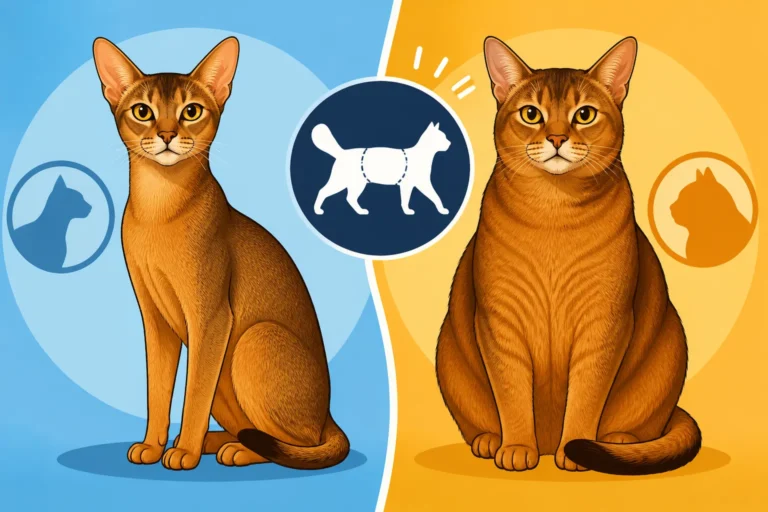
In cat terminology, the Abyssinian is generally described as having a foreign body type. “Foreign” is a show and breed-description term, not a reference to where the cat comes from. It describes a balanced, athletic outline that is longer and finer than a cobby cat’s, without being as exaggerated as the most extreme slender types.
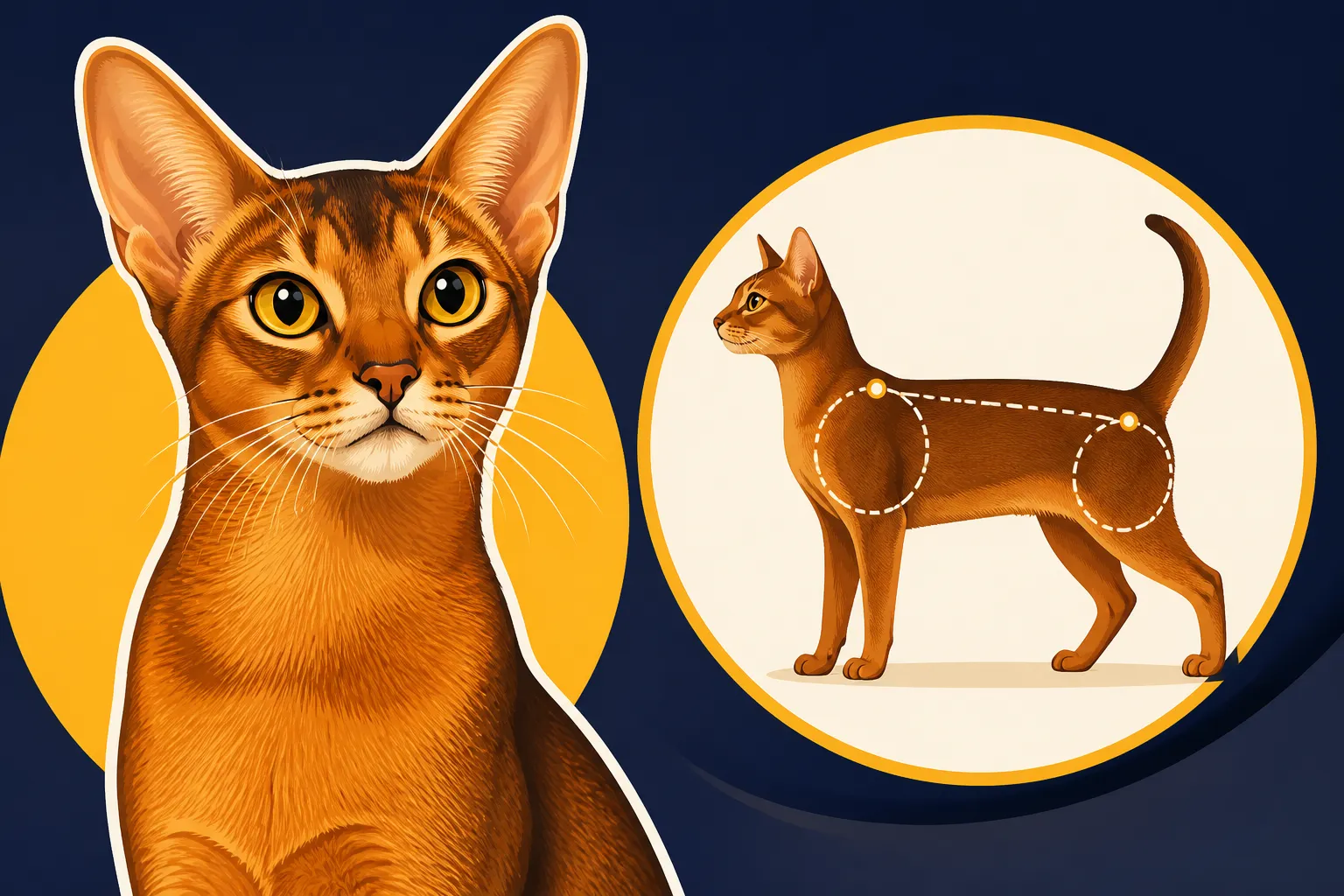
An Abyssinian should look graceful but not frail. The body is usually medium in size, with a firm, well-developed feel beneath the short coat. Long legs and a narrowing tail contribute to the impression of length, while the chest and hindquarters still need enough substance to support an active, jumping cat.
The label helps explain why the breed can look different from a round, compact domestic cat even at a similar body weight. It is describing the overall arrangement of the cat’s parts—body length, leg length, muscle and outline—not a single measurement or a required number on the scale. For more about the breed’s outline in the show ring, see What an Abyssinian's Show Standard Asks For.
Foreign type is not the same as extreme slenderness
Abyssinians are not meant to look like narrow, delicate ornaments. A properly proportioned cat has visible athleticism: a supple body, capable legs and enough muscle to propel itself onto shelves and furniture. The ideal impression is alert and balanced, rather than bony or stretched to an extreme.
This distinction can be tricky at home. A short, close coat does little to disguise the shape underneath, and the breed’s naturally fine outline may make a healthy cat look slimmer than a thick-coated or round-bodied cat. At the same time, a very visible spine, sharply prominent hip bones or a loss of muscle should not be dismissed as “just the breed.” Those changes deserve attention, particularly if they appear suddenly.
It is useful to judge the whole cat rather than one feature. A narrow waist may be normal; a narrow waist combined with a hollowed appearance, weakness or reduced appetite is a different picture. If you are comparing proportions, How Big an Adult Abyssinian Gets offers useful context on the breed’s general scale.
How the Abyssinian’s proportions fit together
A long, supple body with athletic muscle
The Abyssinian’s torso is often described as medium in length and gently curved. It should feel firm rather than soft, with muscle that supports movement without making the cat look heavy. When the cat walks, turns or stretches, the body’s flexibility is part of the impression: it looks ready to move, not built like a low-slung, compact cat.
That athletic outline can be especially noticeable when an Abyssinian is standing sideways on a counter or stretching across a shelf. The back and body appear elongated, but the cat should still look coordinated and balanced. Its shape is not simply “long”; it is a combination of a moderate torso, long limbs and a fine overall profile.
Sex and individual genetics influence size, so two healthy Abyssinians can differ noticeably in their height, length and weight. Comparing a female to a larger male by eye can lead to needless worry if you focus only on scale. How a Male and Female Abyssinian Differ in Size explains why sex-related variation is part of the picture.
Long legs and a poised stance
The legs are an important part of the breed’s silhouette. They are relatively long and fine-boned in appearance, but they should remain strong enough to support climbing, jumping and quick changes of direction. The hind legs may look especially powerful when the cat crouches to leap, while the front legs help it land, balance and explore.
Abyssinians often seem to stand high on their toes, which adds to their elegant, alert look. This stance does not mean the cat is walking on tiptoe because it is uncomfortable. It is a characteristic impression created by the breed’s leg proportions and posture. For a closer look at that feature, read Why an Abyssinian Stands on Its Toes and How Long an Abyssinian's Legs Are Relative to Its Body.
Watch how the cat moves as well as how it stands. A sound, comfortable Abyssinian should be able to walk evenly, stretch, climb and jump in its usual way. A new limp, reluctance to jump or repeated skipping of a step is not explained by having a “foreign” body type. Any sudden change in movement is worth discussing with a veterinarian.
| Feature | Typical Abyssinian impression | What to avoid assuming |
|---|---|---|
| Overall type | Medium-sized, elegant and athletic | That elegant means underweight |
| Body | Supple, firm and moderately long | That every long outline is healthy |
| Legs | Long-looking and capable | That a new limp is normal for the breed |
| Head | Wedge-shaped, with softened contours | That the head should look sharply angular |
| Tail | Long and tapering | That tail shape alone determines body type |
| Coat | Short and close-lying | That the coat hides every change in condition |
What makes the outline distinctive
A balanced head, ears and facial expression
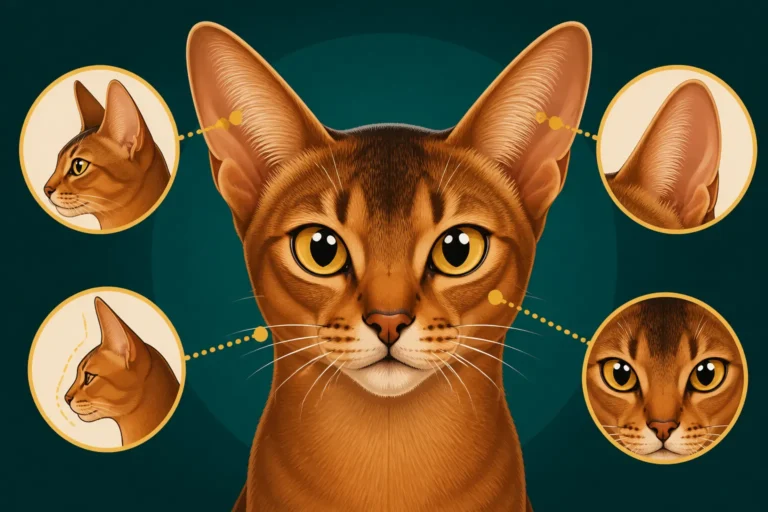
The Abyssinian’s head contributes to the breed’s distinctive profile. It is often described as a modified wedge: the shape narrows toward the muzzle, but the contours should remain smooth rather than harsh. Large, attentive ears and expressive eyes help create the alert look people often associate with the breed.
The head should fit the body rather than appear oversized or extremely narrow. When you look at a cat from the side, the goal is not a sharp, angular face; it is a balanced outline that flows into the neck and shoulders. Breed descriptions can sound abstract, so comparing several healthy adult cats can help you understand the range of individual variation. The details of the ideal profile are covered in What an Abyssinian's Ideal Head Shape Is.
A kitten may not yet show the finished proportions of an adult. Young cats grow at different rates, and their ears, legs or head can look temporarily out of balance as the rest of the body catches up. A slightly awkward adolescent stage does not, by itself, mean the cat will lack the breed’s characteristic outline as an adult.
Tail shape and the close-lying coat
The tail is another part of the overall balance. It is typically long and tapering, broadest at the base and narrowing toward the tip. Rather than looking short or thick, it continues the cat’s fine, athletic line. Details such as tail length should be considered alongside the torso and legs, not judged in isolation.
The coat also affects how the build reads. Abyssinians have a short, close-lying coat, so the body’s contours are easy to see. Their ticked coat can seem to shimmer as the cat moves, but it does not provide the thick visual padding that a plush coat can. That can make muscle definition and bony landmarks more noticeable, even when the cat is in good condition.
A tail that does not match a show description perfectly does not tell you whether a pet cat is healthy or a good companion. Breed standards describe preferred features for judging; they are not a home diagnostic checklist. For more on the tail’s intended shape, see How an Abyssinian's Tail Should Taper. The coat’s close texture is discussed in What an Abyssinian's Coat Should Feel Like in the Ring.
How to tell a healthy athletic build from being too thin
Check body condition instead of relying on appearance
Because an Abyssinian’s coat lies close to the body, it can be tempting to make a quick judgment from a photograph or a glance across the room. A more useful approach is to look and feel gently. You should generally be able to feel the ribs under a light covering, without needing to press hard, while the waist and abdomen should have a natural shape rather than looking sharply hollow.
Do not use the cat’s breed label to explain away a change. If the ribs, spine or hip bones have become much more prominent than they were before, or the shoulders and thighs seem to be losing muscle, note when you first noticed it. A weekly or monthly photo taken from the same angle can make gradual changes easier to spot.
Weight is only one piece of the picture. Two cats with the same weight can have different frames and muscle mass, and a cat can lose muscle while its scale number changes very little. If you want a consistent record, you can use a suitable pet scale or ask your veterinary clinic to weigh the cat during regular visits. Chewy is one retailer owners may browse when looking for home pet-weighing equipment, but the important part is using the same method consistently and sharing concerning trends with your vet.
Look for changes in movement, appetite and routine
A healthy Abyssinian’s athletic build usually goes with an active, capable movement pattern. Pay attention if your cat stops climbing to a favorite perch, hesitates before jumping, walks differently, or seems unusually quiet. These changes can be subtle in a cat that normally stays busy, so a shift in its routine may be more informative than a single snapshot of its body.
Changes in appetite, thirst, grooming or litter-box habits matter too. A cat that is eating less and becoming visibly leaner needs more than a new food bowl or extra treats; a veterinarian can assess what is causing the change. Likewise, a sudden increase in hunger alongside weight loss is worth bringing up rather than assuming the cat is simply burning more energy.
If you are trying to keep an active cat comfortable at home, make sure its climbing route is stable and easy to use. A well-placed scratching post and secure shelves can support normal movement; Chewy is one place owners may look when comparing basic cat furniture, but check that any item is sturdy and appropriate for your cat’s size and habits. For an indoor walking routine, a correctly fitted harness matters more than choosing one for its appearance, and Chewy is another retailer owners may use to browse adjustable options. Introduce a harness gradually and stop if your cat shows distress.
The Abyssinian’s foreign body type is best understood as an overall balance: a medium, supple body, long-looking legs, an alert head and a tapering tail. Its graceful outline is a genuine breed characteristic, but it should never be used to dismiss unexplained weight loss, reduced muscle or a change in movement. When in doubt, compare your cat with its own usual condition and ask a veterinarian about changes.
Disclaimer
This article is for general informational purposes only and does not constitute professional advice. Laws, prices and regulations vary by location and change over time. Consult a qualified professional for guidance on your specific situation.