Why an Abyssinian Stands on Its Toes
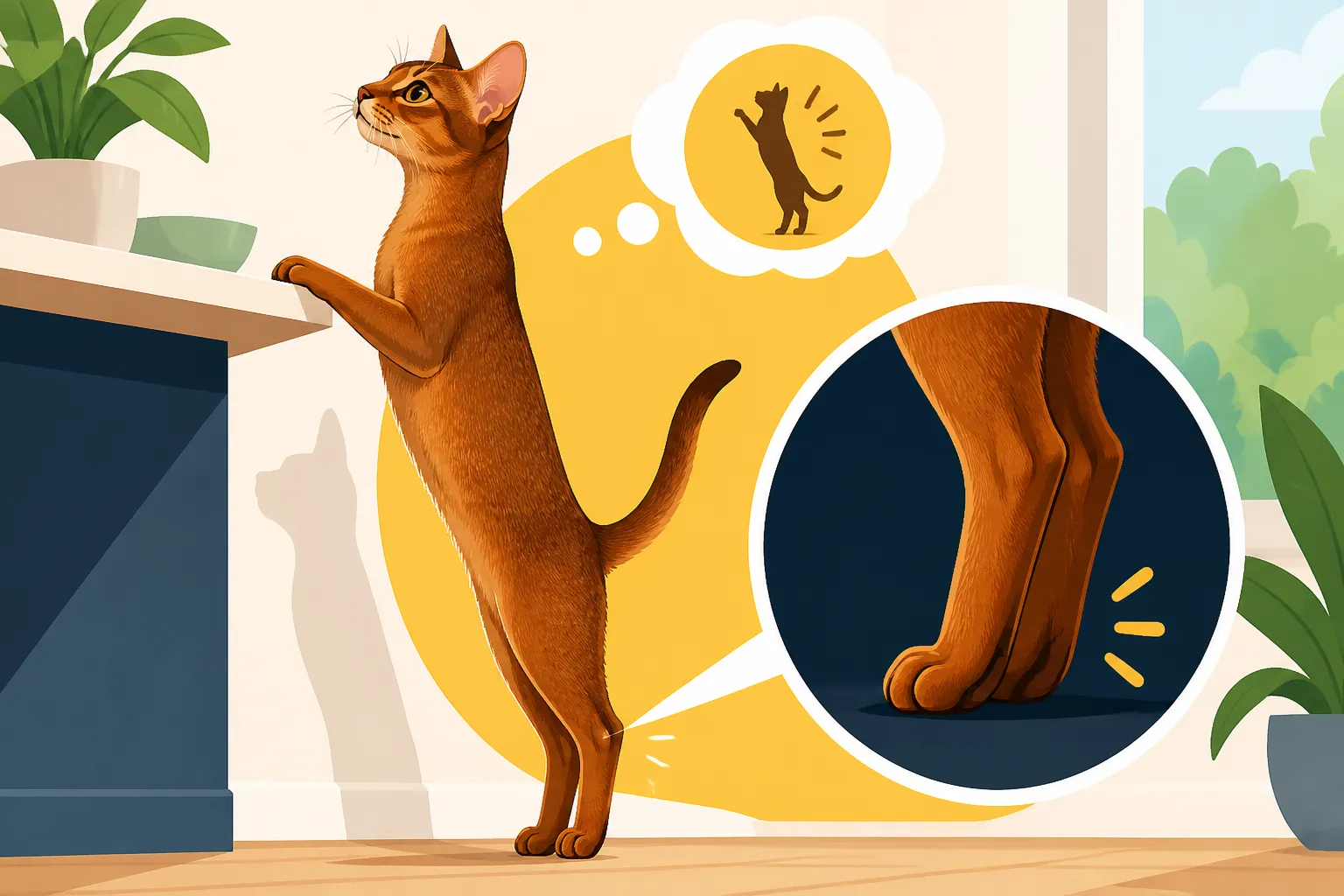
An Abyssinian can look as if it is balancing on tiptoe, especially when it pauses to survey a room or springs onto a shelf. That stance is usually normal: cats walk on their toes, and an Abyssinian’s long, fine-boned legs make the posture especially noticeable. Here’s what’s happening in the body, how it helps the cat move, and when an unusual stance deserves a veterinary check.
Why Abyssinians appear to stand on their toes
Cats are digitigrade animals
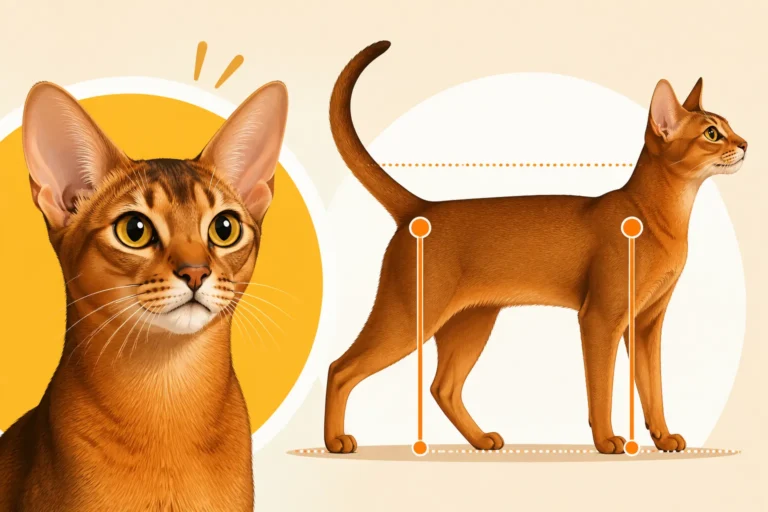
A cat’s normal way of standing and walking is called digitigrade locomotion: the animal bears weight on its digits, or toes, rather than placing the whole foot flat on the ground. A person walks on the soles of the feet. A cat’s paw is more like the front of a human foot, while much of the structure we might mistake for a cat’s “lower leg” corresponds to the part of our foot that extends from the ankle toward the toes.
This can make a cat look permanently poised or lifted, particularly when you watch it cross a smooth floor in profile. The toes spread to support the cat’s weight, and the pads contact the ground. The heel-like joint partway up the hind leg does not normally rest on the floor. It may look like a backward-facing knee, but it is the ankle area; the actual knee sits higher and is less obvious beneath the fur.
The same basic arrangement is found in cats across breeds. An Abyssinian is not standing on its toes because it has a unique foot structure or a special breed-specific gait. Rather, its elegant proportions can make a normal feline posture easier to notice. For more on the breed’s outline, see What an Abyssinian's Body Type Is Called.
The Abyssinian’s proportions make the posture stand out
Abyssinians are often described as medium-sized, athletic cats with long legs and a lean, fine-boned appearance. When one stands still with its weight distributed across its paws, those proportions can give it a lifted, almost tiptoeing look. The effect is especially striking when the cat stretches up to inspect a countertop or stands tall beside a piece of furniture.
Coat and posture also contribute to the impression. An Abyssinian’s short, close-lying coat does not hide the shape of its limbs as much as a thick or long coat might. You can often see the lines of the legs and the way the cat holds its joints. Its alert, ready-to-move stance may add to the impression that it is balancing high on its feet, even when it is simply standing comfortably.
That visual impression should not be confused with an abnormal paw posture. If your cat is evenly bearing weight, walking smoothly, and using its legs as usual, the raised appearance is generally just normal feline anatomy. The breed’s long-legged silhouette is explored further in How Long an Abyssinian's Legs Are Relative to Its Body and What an Abyssinian Looks Like Against the Show Standard.
What the posture looks like in everyday movement
Watch an Abyssinian walking across the room, and you’ll see that its paws touch the ground while the back part of each foot stays raised. During a relaxed walk, the limbs move in a coordinated rhythm. When the cat speeds up, its body can lengthen into a fluid stride; when it pauses, it may hold itself upright and ready to go again.
That readiness fits an active, curious cat. An Abyssinian might stand tall to watch a bird through the window, then pivot and bound onto a chair. Its toes and paw pads help it manage those shifts in direction and balance. The cat’s natural gait is part of the same agile body that lets it climb, jump, and land with control.
Owners sometimes notice the posture most when a cat is perched on a narrow surface. It may spread its toes slightly or make small adjustments with its paws to stay balanced. This is not the same as painful toe-walking. A cat that is comfortable usually moves with fluidity rather than repeatedly lifting a paw, guarding a limb, or seeming unable to place a foot normally.
How toe-based walking helps a cat move
Paw pads and toes support balance
A cat’s paws are built for more than simply carrying its weight. The pads provide contact with the surface, while the toes help the cat adjust its footing. When an Abyssinian steps onto a shelf or navigates around a chair leg, its paws make small, quick changes that help it stay balanced.
You might notice this while your cat studies a high perch before jumping. It may shift its weight, place one paw, then another, and use its tail to help counterbalance. The toes and pads work within that movement, giving the cat contact with the surface as it prepares to push off or change direction. When it lands, the paws help absorb and distribute the impact.
That does not mean every jump is effortless or risk-free. Slippery surfaces, cluttered landing areas, and unstable furniture can still lead to falls. If your cat uses shelves or a cat tree, make sure the route is secure and that landing spots are clear. How an Abyssinian's Climbing Route Safe is a useful next read for thinking through elevated routes around the home.
Long limbs help create an agile stride
An Abyssinian’s legs are part of a body designed for movement. The long-limbed outline can help create an extended stride, while the cat’s flexible body allows it to bend, turn, and reposition quickly. Its toes are one piece of that movement system, not an isolated feature that makes it walk on its own.
Picture a cat crossing a living room, then noticing a toy skitter under a table. It can slow, lower its body, shift its weight, and spring forward. In each phase, the paws meet the floor in a different way. During a jump, the hind limbs generate the push. During a landing, the limbs flex to help control the contact. The cat’s apparent “tiptoe” stance is simply the resting shape of a body that is ready to move.
For an overview of the breed’s movement and energy, see The Abyssinian Is the Busiest Cat in the House. A cat that is naturally active still needs safe opportunities to climb and play. Provide sturdy perches and stable steps rather than encouraging leaps from very high, awkward, or slippery surfaces.
Climbing and perching make the stance easy to notice
Abyssinians often seek high viewpoints, so owners may see their feet and leg posture from below or at an angle. When a cat stands on a narrow perch, the toes may look especially prominent because the cat places its paws carefully and adjusts its balance. On a broad, level surface, the same posture may be less noticeable.
A high perch should be solid enough not to wobble, with a surface that gives the paws a dependable grip. If you add shelves, plan a route that lets your cat move up and down without having to make a risky leap. A cat tree, window perch, or wall shelf can all be useful when they are stable and suited to the cat’s size and abilities.
If you’re comparing climbing furniture, Chewy is one place to browse options, but check the product dimensions and stability details rather than choosing by appearance alone. A tall structure that sways or has cramped platforms may be less useful than a lower, sturdier setup with several easy steps. For more ideas about elevation, see An Abyssinian Needs Height More Than It Needs Floor.
Normal posture versus a sign of discomfort
What a comfortable stance generally looks like
A healthy, comfortable cat usually stands with its weight reasonably balanced across its paws. It may shift position, stretch, sit, or tuck its paws beneath itself, but it should be able to walk and move without a consistent limp or obvious reluctance. A brief pause to inspect something, a tall posture, or a careful step onto a narrow surface is not, by itself, a reason to assume the cat is injured.
Look at the whole movement, not just one still moment. Does your Abyssinian walk smoothly across different surfaces? Does it use both sides of its body? Can it rise from resting, turn, and approach food without repeatedly favoring a limb? Comparing with your cat’s usual behavior is more helpful than judging its posture against another cat, since individuals differ in confidence, flexibility, and activity.
A short video can help you describe a change to your veterinarian. If you notice an odd step, film the cat walking naturally on a level surface without chasing or startling it. Include a view from the side and, if practical, from the front or back. Do not force the cat to jump or manipulate a sore paw to capture footage.
Signs that merit a veterinary call
A cat may briefly lift a paw after stepping on something uncomfortable, but ongoing or recurring changes deserve attention. Contact a veterinary clinic if your Abyssinian is limping, repeatedly holding one paw off the ground, avoiding weight on a limb, showing swelling, or reacting as though a foot hurts. A sudden change in how the cat walks or climbs can matter even if the cat is still eating and behaving normally in other ways.
Other signs to take seriously include a paw that looks injured, a toe that is unusually positioned, repeated licking of one foot, difficulty rising, or a sudden loss of interest in jumping. Cats can hide discomfort, and a playful or energetic personality does not rule out pain. A change from your cat’s normal movement is often more informative than whether the cat still manages to climb once.
Seek prompt veterinary guidance if the cat cannot bear weight, appears severely distressed, has a visible wound, or has experienced a significant fall or accident. Avoid giving human pain medication unless a veterinarian specifically directs you to do so; some common medicines can be dangerous to cats. For more on a change in climbing behavior, read Why an Abyssinian That Stops Climbing Needs a Vet.
How nail and paw care fit in
Long or snagged claws can affect how a cat places its paws, though they do not explain every change in gait. Check the claws regularly, especially if your cat’s usual scratching surfaces are not keeping them comfortably trimmed. Look for a claw that has caught, split, or grown in an unusual direction. If your Abyssinian dislikes paw handling, start with brief, gentle sessions and stop before it becomes distressed.
A stable scratching post gives the cat an appropriate place to scratch, stretch, and maintain its claws. Different cats prefer different textures and orientations, so a vertical post may suit one cat while another uses a broad horizontal scratcher. Keep the post steady; a wobbly scratcher can make a cat avoid it. Chewy is another place owners may compare scratching posts or basic claw-care supplies, while keeping the choice focused on safe materials and a design the cat will actually use.
If you’re unsure how to trim claws, ask your veterinary team to demonstrate. You do not need to rush through all the claws at once. A calm routine that handles one or two at a time may work better than holding a wiggly cat for a long session. For practical guidance, see How to Trim a Climbing Abyssinian's Claws and How Often to Check a Climbing Abyssinian's Back Claws.
| What you notice | More consistent with normal posture | Worth checking with a veterinarian |
|---|---|---|
| Standing position | Weight appears balanced across the paws | Repeatedly avoids putting weight on one paw |
| Walking | Smooth movement without a persistent limp | Limping, stumbling, or an unusual repeated step |
| Climbing | Moves as usual and uses familiar routes | Suddenly stops climbing or struggles to get up |
| Paw use | Brief adjustments while balancing | Holds a paw up, licks one foot repeatedly, or reacts to touch |
| Change over time | Looks like the cat’s usual stance | New, worsening, or recurring change in movement |
Helping your Abyssinian move comfortably at home
Make everyday routes safer
A cat that likes height benefits from a home setup that makes climbing predictable. Put sturdy furniture or cat steps near favorite perches, and avoid placing a slippery launch point beside a high shelf. Secure shelves properly and check them now and then for movement. The aim is not to prevent your Abyssinian from climbing; it is to make the route up and down comfortable and reliable.
Flooring can matter too. A cat that races around a smooth kitchen may have less traction than it does on carpet or a rug. Place nonslip runners where your cat regularly jumps down or turns sharply, and secure them so they do not slide. Keep clutter away from common paths, particularly small objects that can roll underfoot or furniture that blocks a familiar landing spot.
You can also make changes gradually. If you move a cat tree or rearrange a route, watch how your cat uses it before assuming the new layout works. Cats build habits around familiar paths, and a route that looks obvious to a person may be awkward for a cat. Chewy may offer mats or climbing accessories to compare, but measure the space first and choose pieces that stay in place.
Keep activity balanced and low pressure
Abyssinians need outlets for energy, but play should not become a test of athletic ability. Use toys that let your cat chase, stalk, and pounce at ground level as well as climb. Short play sessions spread through the day can help keep activity enjoyable without repeatedly encouraging high jumps from a hard floor.
If your cat is older, recovering from an injury, or showing a change in movement, adapt the environment rather than trying to make it keep up. Add a step to a favorite chair, move a bed to an accessible location, and keep food, water, and litter easy to reach. A cat can remain curious and interested in play while benefiting from gentler routes.
Track meaningful changes. A note such as “stopped jumping onto the window ledge this week” is more useful to a veterinarian than a vague impression that the cat seems different. Include when the change began, whether it is constant or occasional, and any related signs such as paw licking or reluctance to be touched. How an Abyssinian's Weight Should Be Recorded at Every Visit offers another useful reminder to keep simple observations about your cat’s health over time.
An Abyssinian’s toe-based stance is normally part of being a cat, while its long, lean outline makes that stance especially easy to notice. If your cat moves comfortably and behaves as usual, the posture is generally nothing to worry about. If it starts favoring a leg, avoids climbing, or changes its gait, focus on the change rather than the breed’s appearance and ask your veterinarian for guidance.
Disclaimer
This article is for general informational purposes only and does not constitute professional advice. Laws, prices and regulations vary by location and change over time. Consult a qualified professional for guidance on your specific situation.