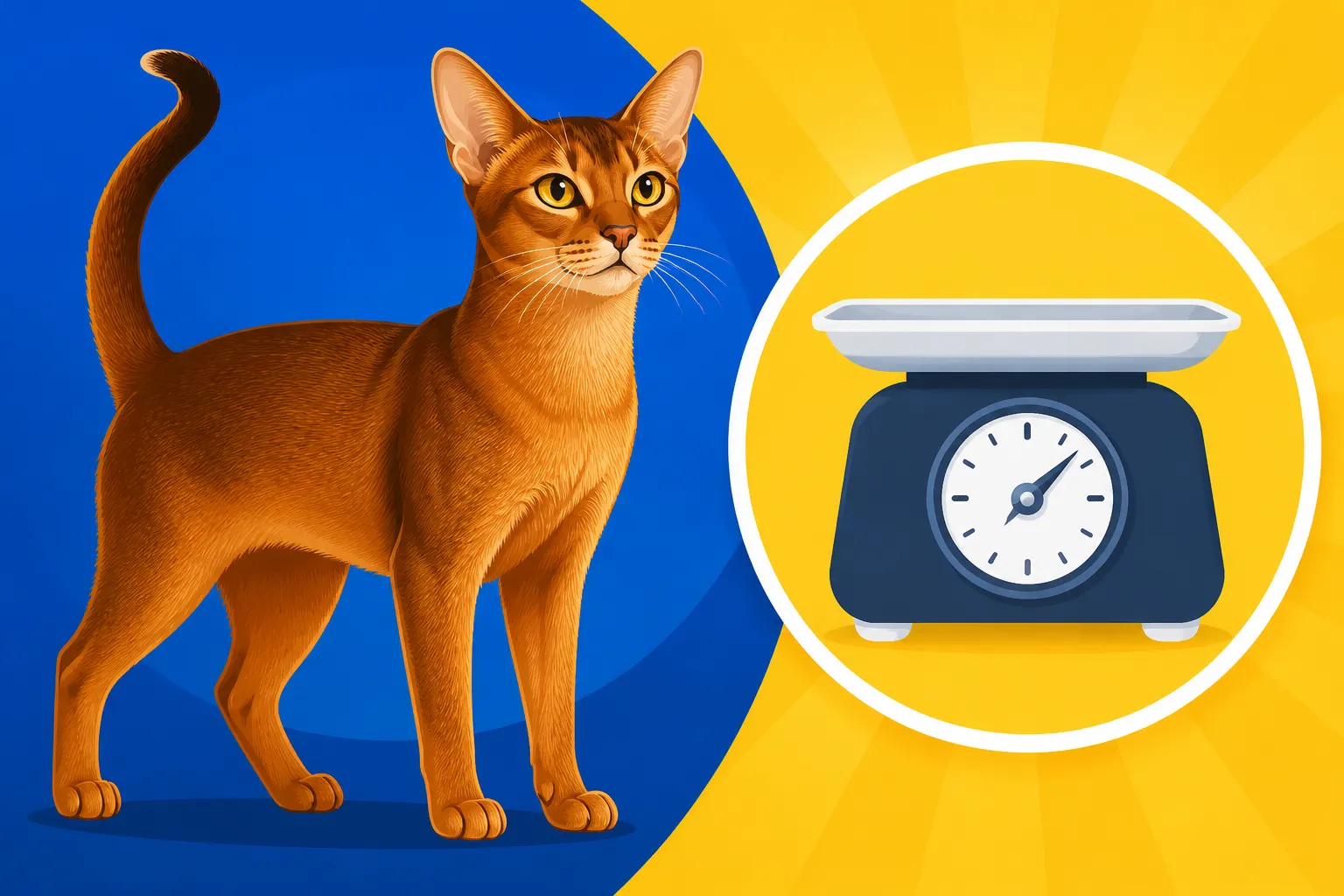
How Much an Adult Male Abyssinian Weighs
An adult male Abyssinian often weighs about 8 to 12 pounds, but the number on the scale cannot tell you by itself whether he is healthy. A large-framed cat may be fit at a weight that would be too much for a smaller male. This guide explains the usual range, how to assess body condition, and when a change in weight deserves a closer look.
Typical weight for an adult male Abyssinian
The usual range is a guide, not a target
Many adult male Abyssinians fall between about 8 and 12 pounds, or roughly 3.6 to 5.4 kilograms. Some are lighter or heavier and still healthy. Their build is generally lean and athletic, so a fit male may look slender beside a stockier domestic cat even when he is at an appropriate weight.
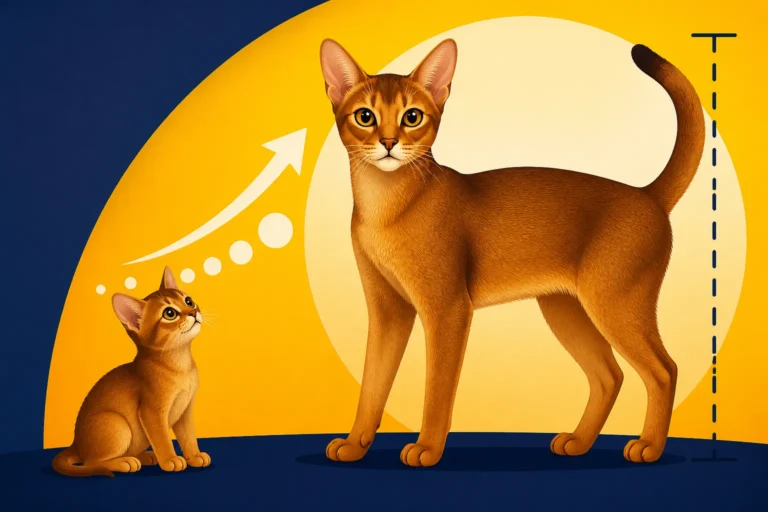
Abyssinians also vary in height, body length, muscle, and overall frame. A compact male and a taller, long-bodied male should not necessarily weigh the same. A number at the upper end of the range does not automatically mean a cat is overweight, just as a number near the lower end does not automatically mean he is underweight.
For a broader look at adult size, see How Big an Adult Abyssinian Gets. If you are comparing cats at home, How a Male and Female Abyssinian Differ in Size can help put sex-related differences into context. Neither comparison replaces assessing the individual cat in front of you.
The most useful question is not simply, “How many pounds should my Abyssinian weigh?” It is, “Does his weight suit his frame, and has it stayed reasonably steady?” Your vet can help establish a healthy baseline during an exam, especially if your cat is still growing, has a medical condition, or has recently changed weight.
Adult weight depends on more than age
Abyssinians mature gradually, and a young cat may continue filling out after he reaches his adult height. The weight of a kitten or adolescent should not be judged against the range for a fully grown male. Your vet can interpret his growth alongside his age, body condition, and development rather than treating one weigh-in as a pass-or-fail result.
Neutering, activity, diet, and health can all affect weight over time. An indoor cat who has fewer chances to run and climb may need a different feeding routine from a very active cat. Some males also build more muscle as they mature, while others remain fine-boned and naturally light.
That is why it helps to track your cat’s own pattern. If he has been around the same weight and shape for months, a small difference between visits may reflect normal variation. A persistent upward or downward trend is more useful information than one isolated number. Keep notes about appetite, energy, and any change in how easily he jumps or plays.
| What you notice | What it may tell you | A sensible next step |
|---|---|---|
| Weight stays fairly steady and ribs are easy to feel under a light covering | He may be maintaining a healthy condition | Keep recording weight and review it at routine vet visits |
| Weight rises over several checks and the waist becomes harder to see | He may be gaining excess fat | Ask your vet to assess body condition and feeding portions |
| Weight falls without a planned diet change | Illness, dental discomfort, or another issue may be involved | Contact your vet, particularly if the change continues |
| He weighs more than another Abyssinian but looks lean and muscular | Frame and muscle may explain the difference | Compare his body condition, not just the other cat’s number |
How to tell whether his weight suits his frame
Check body shape as well as the scale
A healthy weight is easier to judge when you look at and gently feel your cat. From above, many cats have a visible waist behind the ribs. From the side, the abdomen may tuck up slightly rather than hanging in a rounded line. These features can be subtle in an Abyssinian’s fine, close-lying coat, so use your hands as well as your eyes.
With gentle pressure, you should generally be able to feel the ribs without digging through a thick layer of fat. They should not be sharply prominent, either. The backbone and hip bones should not look stark or feel unusually exposed. For a hands-on explanation, read How to Feel an Abyssinian's Ribs Under a Ticked Coat.
Do not judge by belly skin alone. Some cats have a loose flap of skin beneath the abdomen, and its presence does not automatically mean the cat is overweight. Instead, consider the overall picture: ribs, waist, abdominal outline, muscle, and the way his body feels beneath the coat. Your vet can show you how to assess these features during an appointment.
A body-condition score can make this assessment more consistent. It uses a scale to describe whether a cat appears underweight, ideal, or overweight based on visible and touchable features. The score is not a diagnosis, but it gives you and your vet a shared way to discuss changes. How to Read an Abyssinian's Body Condition Through That Coat offers more detail about assessing this breed’s shape.
Compare weight with his personal baseline
A useful weight target is specific to your cat. If your male has always been healthy at a particular weight and has a proportionate waist, comfortable movement, and a good veterinary assessment, that history may be more informative than an internet range. Your vet may also record a target range based on his frame and body-condition score.
Try to weigh him under similar conditions each time. A home bathroom scale may not register a small change reliably, especially if you weigh yourself first and then hold the cat. A pet or infant scale with a stable platform can make tracking easier, provided your cat is calm and secure. If you shop for weighing or feeding supplies through a retailer such as Chewy, check that the item suits your cat’s size and that its measurements are easy to read.
You can also ask your veterinary clinic to record his weight at each visit. That gives you a consistent reference point and can reveal gradual changes that are hard to notice day to day. If you weigh him at home, note the date and conditions rather than relying on memory. A simple record can be helpful if you later need to explain a trend to the vet.
For a clearer picture of the role frame plays, see How Much an Abyssinian Should Weigh at Its Frame. The key is to avoid trying to make every male fit one exact figure. A fit 9-pound cat and a fit 11-pound cat may both be perfectly healthy if their builds and body conditions differ.
Helping an Abyssinian maintain a healthy weight
Measure food and account for treats
Abyssinians are active cats, but high energy does not mean every cat can eat unlimited food without gaining weight. Daily needs depend on factors such as age, activity, body condition, and the type of food. Follow the feeding guidance on the food as a starting point, then adjust with your vet based on your cat’s condition and weight trend.
Measuring portions is more reliable than estimating by eye. A scoop can hold more than intended, and small extras add up when several household members offer treats. If your cat’s food is delivered through Chewy or bought elsewhere, use the feeding information on that specific food’s packaging and discuss portions with your vet rather than assuming all foods have the same calorie content.
Treats can still be part of play and training. Just include them in the day’s overall intake, and avoid letting several people unknowingly treat him as if he has not already been fed. For a cat who bolts through meals or seems to beg often, structured meal times and food-based activities may help make feeding more predictable. If you’re considering a new food or feeding tool, Chewy is one retailer owners may use to compare pet supplies, but your vet is the right person to advise on a diet for a medical or weight concern.
Keep activity practical and safe
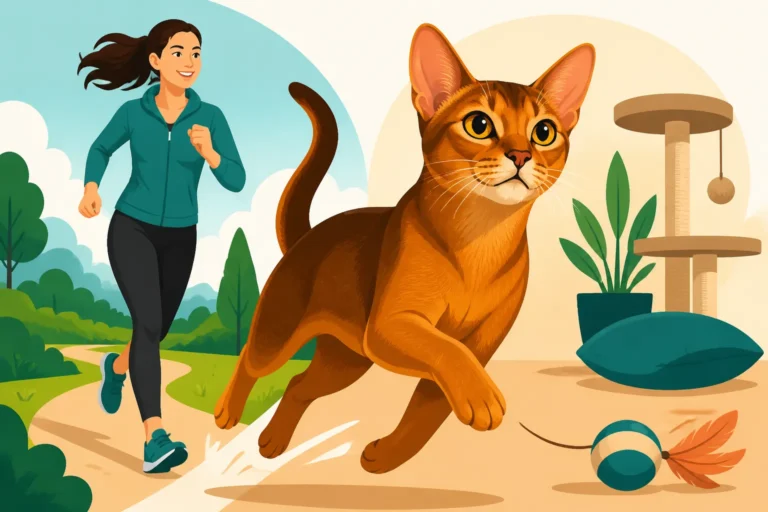
An Abyssinian often enjoys climbing, chasing toys, and investigating the home. Regular interactive play can support fitness, but exercise should be safe and suitable for the individual cat. Offer sturdy climbing options, clear routes between levels, and short play sessions that encourage movement without forcing him to keep going when he is tired or uncomfortable.
If his routine has become quieter, look for the reason rather than assuming he is simply lazy. A cat who used to jump onto furniture but now hesitates may be uncomfortable, and a cat who has become less active may gain weight even if his food has not changed. On the other hand, weight loss despite a normal or increased appetite can also be a warning sign.
When shopping for food-measuring or activity-related supplies through Chewy, focus on whether an item suits your cat and home rather than on marketing claims. A toy he will actually chase or a feeding setup you can use consistently is more useful than an elaborate option that sits untouched.
When a weight change deserves attention
Watch for a trend, not just a single reading
A single weighing can be affected by timing, recent meals, or differences between scales. A repeated trend is more meaningful. If your Abyssinian steadily gains weight, his waist becomes less visible, or his ribs become harder to feel, ask your vet to review his condition and feeding plan. Avoid putting him on a restrictive diet without professional guidance, since a safe plan depends on his health and current body condition.
Unplanned weight loss deserves attention too, even if your cat still seems energetic. Cats can hide discomfort, and Abyssinians may remain busy and curious while something is changing. Notice whether he is eating less, dropping food, drinking or urinating differently, vomiting, or avoiding activities he usually enjoys. Why an Abyssinian's Weight Loss Is Never Minor explains why a downward trend should not be brushed aside.
A lean cat is not automatically a healthy cat, and a heavier cat is not automatically ill. What matters is the combination of weight, body condition, behavior, appetite, and clinical findings. Why a Lean Abyssinian Hides Illness Longer Than a Heavy Cat explores why appearance alone can sometimes give owners false reassurance.
Contact your vet when the change is unexplained
Call your veterinary clinic if your cat’s weight changes noticeably without a clear reason, if the change continues across repeated checks, or if it comes with symptoms such as reduced appetite, unusual thirst, vomiting, diarrhea, weakness, or a drop in normal activity. Seek prompt guidance if he appears unwell or stops eating. A vet can decide whether an exam or tests are appropriate rather than leaving you to guess from the scale.
Bring useful details: recent weights and dates, food and treat amounts, changes in appetite or thirst, and anything different about his energy or litter-box habits. If you have been switching foods or changing portions, note when that happened. These details help the vet interpret the number in context and make the appointment more productive.
For many adult male Abyssinians, about 8 to 12 pounds is a reasonable broad reference, not a required destination. A healthy target is the weight that suits your cat’s frame and body condition and remains stable for him. Regular checks, measured feeding, and attention to changes in shape or behavior will tell you far more than trying to make him match one number.
Disclaimer
This article is for general informational purposes only and does not constitute professional advice. Laws, prices and regulations vary by location and change over time. Consult a qualified professional for guidance on your specific situation.