How to Feel an Abyssinian’s Ribs Under a Ticked Coat
It can be incredibly challenging to figure out if your Abyssinian is at a healthy weight, especially when their sleek, ticked coat can hide so much. Many of us worry if our active, lean companions are getting enough to eat or, conversely, if those extra treats are starting to add up. This guide will walk you through exactly how to confidently assess your Abyssinian’s body condition, focusing on the simple, yet effective, "hand test" to feel their ribs and ensure they’re thriving.
The Unique Abyssinian Build and Coat That Hides Weight
Abyssinians are a fascinating breed, not just for their playful personalities but also for their distinctive physical characteristics. Their athletic build and unique coat can make it surprisingly difficult to gauge their body condition accurately with just a glance. Unlike some fluffier breeds where a slight weight gain is immediately obvious, an Aby can be carrying a little extra (or too little) without it being apparent until you know what to look for and feel for.
Why the Abyssinian's Ticked Coat Can Be Deceiving
The Abyssinian's ticked coat is truly a marvel. Each individual hair carries multiple bands of color, giving them that stunning, shimmering, agouti appearance without any obvious stripes on their body. This fine, short coat lies close to their body, giving them an incredibly sleek profile. There's very little undercoat to speak of, which is why The Ticked Coat Is the Whole Abyssinian Grooming Job is usually so minimal.
However, this very quality, while beautiful, can be a master of disguise. A sleek coat tends to smooth over the subtle contours that might otherwise indicate weight fluctuations. You won't see dramatic "rolls" of fat or obvious ribs poking out until a weight problem is quite advanced. This makes visual assessment alone unreliable, and it's why you need to go beyond just looking at your cat to truly understand their physique.
Understanding the Abyssinian's Naturally Lean and Muscular Frame
Abyssinians are built for action. They possess what's often referred to as a "foreign" body type – long, lithe, and elegantly muscular. They aren't meant to be cobby or heavy-boned like some other breeds. Their natural state is one of lean athleticism, which often means their ideal weight is lighter than many new owners might expect. They carry their muscle well, which also contributes to that deceptive sleekness.
Because they are naturally lean and high-energy, even minor weight loss can be a significant indicator of an underlying issue. This is why Why a Lean Abyssinian Hides Illness Longer Than a Heavy Cat is such a critical consideration. Their zest for life and active nature can mask discomfort or illness for a while, making regular, hands-on body condition checks an indispensable part of their routine care. You’re not just feeling for fat; you’re monitoring their overall health.
Step-by-Step Guide to Palpating Your Abyssinian's Ribs
Successfully checking your Abyssinian’s body condition isn't about wrestling them onto a scale every day. It's a gentle, tactile process that becomes easier and more intuitive with practice. The key is to be consistent and to learn what a healthy Aby feels like, so you can spot changes early.
Setting Up for a Successful Weight Check
First and foremost, choose a quiet time when your Abyssinian is relaxed and receptive to petting. This might be when they're dozing on the sofa, purring on your lap, or even just after a satisfying play session when they're winding down. Avoid trying to do this when they're zooming around the house or highly stimulated, as you'll both end up frustrated. Making this a positive experience, perhaps even accompanied by a tasty treat, will help your cat associate these checks with pleasant interactions rather than an intrusion.
Consistency is far more important than intensity. Aim for a quick check once a week or every couple of weeks. This allows you to notice subtle shifts over time, which are much more informative than a single, isolated assessment. Establishing a routine helps your Abyssinian get used to the handling and makes the process stress-free for both of you.
The "Hand Test" for Ribs, Spine, and Hip Bones
Now for the actual technique. You'll be relying on your sense of touch, so make sure your hands are clean and warm.
-
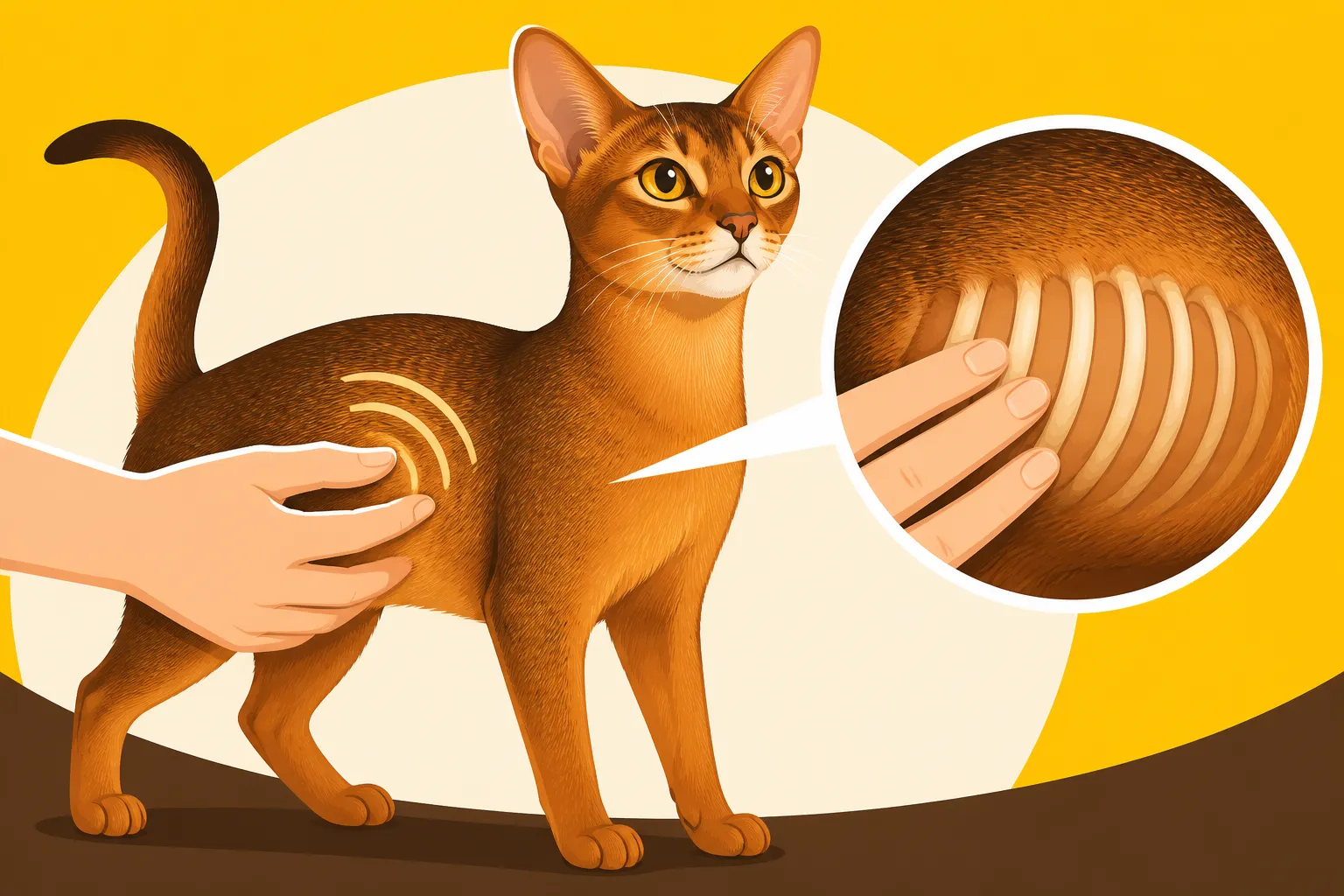
Start with the ribs: Gently place both of your hands, palms flat, on either side of your Abyssinian’s chest, just behind their front legs. Your fingertips should be pointing towards their belly. Now, with very light pressure, gently "walk" or slide your fingertips over their rib cage. You should be able to feel each individual rib bone with relative ease, much like feeling the knuckles on your hand under a thin layer of skin. You shouldn't need to press hard to locate them, but you also shouldn't see them prominently through the coat. If you can clearly see the ribs or they feel very sharp and distinct with no discernible fat covering, your Aby might be too thin. Conversely, if you have to press firmly to feel the ribs, or you can't feel them at all, your Abyssinian is likely carrying too much weight.
-
Move to the spine: Next, gently run your open palm along your Abyssinian's back, from their shoulders down to the base of their tail. Then, use your fingertips to gently explore along the backbone. You should be able to feel the individual bumps of the vertebrae, but they shouldn't feel like a sharp, saw-like ridge. If the vertebrae feel very bony and prominent, with almost no tissue cushioning them, it's another sign of being underweight. If they're difficult to distinguish or feel like a smooth, rounded surface, your cat might be overweight.
-
Check the hip bones: Finally, gently feel around the area above the base of their tail, where their hind legs connect to their body. These are the bony points of their pelvis. Again, you should be able to feel them easily with light pressure. They shouldn't be sticking out sharply, nor should they be completely obscured by a thick layer of fat. If they protrude conspicuously, it's a red flag for being too thin. If you struggle to find them, your Aby is probably too heavy. Remember, the goal is for these bony prominences to be easily felt but not visibly seen or sharply protruding.
Interpreting Your Findings: What to Look and Feel For
Understanding what you're feeling and translating that into an assessment of your cat's health is crucial. It’s not just about a numerical scale, but about knowing what your unique Abyssinian's healthy physique should feel like.
The Ideal Abyssinian Body Condition Score
Veterinarians often use a Body Condition Score (BCS) system, typically on a 1-5 or 1-9 scale, to provide a more objective assessment. For most cats, a score of 5 out of 9 (or 3 out of 5) is considered ideal. For an active, lean Abyssinian, this means they are perfectly proportioned.
An ideal Abyssinian, with a BCS of 5/9, should have ribs that are easily felt with minimal fat covering, but not visibly prominent. When you look down at your Aby from above, you should see a clear "waist" behind their ribs, an elegant hourglass shape. From the side, their abdomen should tuck up slightly, rather than hanging low. There should be no obvious bony protrusions from their spine or hip bones, but you should be able to locate these structures easily with gentle palpation. This is How Much an Abyssinian Should Weigh at Its Frame – lean, athletic, and well-muscled without excess fat or being too bony.
Here’s a simplified breakdown to help you interpret your "hand test" results:
| Body Condition Score | Visual Assessment | Palpation (Ribs, Spine, Hips) | Implication |
|---|---|---|---|
| 1-3 (Underweight) | Ribs, spine, hips easily visible; no discernible fat. | Ribs, spine, hips very prominent; no fat padding; feels very bony. | Too thin, seek vet advice. |
| 4-5 (Ideal) | Well-proportioned; visible waist; subtle abdominal tuck. | Ribs easily palpable with thin fat covering; spine and hips easily felt but not protruding. | Healthy weight. |
| 6-7 (Overweight) | Waist poorly defined; slight abdominal bulge. | Ribs palpable with moderate pressure; spine and hips less distinct due to fat covering. | Carrying extra weight, monitor and adjust. |
| 8-9 (Obese) | No waist; obvious abdominal sag; broad back. | Ribs difficult to feel; heavy fat covering over spine and hips. | Obese, urgent vet intervention needed. |
Recognizing When Your Abyssinian is Underweight or Overweight
Being able to interpret these findings is where your regular checks really pay off. Early detection of a shift in body condition can prevent more serious health issues down the line.
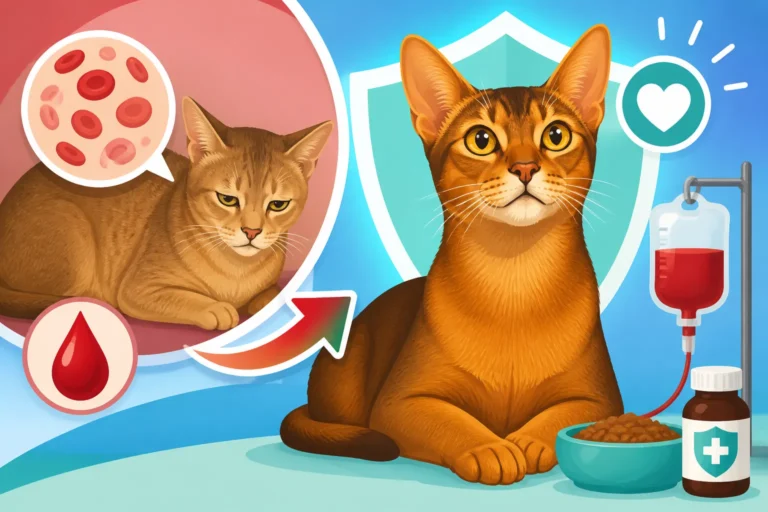
If your Abyssinian is underweight: You'll notice their ribs, spine, and hip bones feel very sharp and distinct under your fingers, with almost no cushioning fat layer. You might even see them visibly through their coat, especially when they stretch or move. An underweight Abyssinian might also have less muscle mass, feeling less firm overall. Remember, Why an Abyssinian's Weight Loss Is Never Minor. If you suspect your Aby is underweight, especially if it's a sudden or significant change, it's critical to consult your veterinarian immediately. Weight loss can be a symptom of many underlying health problems, from parasites to dental issues like Why an Abyssinian Kitten's Gums Fail at Six Months, to more serious systemic diseases. Don't delay a vet visit.
If your Abyssinian is overweight: You'll find it difficult to feel their ribs, spine, or hip bones without applying significant pressure. Their waistline might be less defined, or disappear entirely, appearing more rectangular from above. From the side, you might see a more pronounced abdominal sag. While Abyssinians are typically very active and tend to stay lean, it is possible for them to become overweight, especially as they age and their activity levels naturally decrease, or if their diet isn't managed carefully. Why an Abyssinian Should Never Be Allowed to Get Heavy. Excess weight can lead to a host of problems, including joint issues like How Patellar Luxation Shows in a Jumping Abyssinian, diabetes, and other metabolic diseases. If you're concerned about your Aby being overweight, a discussion with your vet about diet and exercise adjustments is warranted.
Integrating Body Condition with Overall Abyssinian Care
Maintaining your Abyssinian's ideal body condition is an ongoing process that weaves into their daily life through diet, exercise, and proactive veterinary care. It’s all part of ensuring they live their fullest, most vibrant life.
The Role of Diet and Exercise in Maintaining Ideal Weight
Given their boundless energy, Abyssinians need a high-quality diet that supports their active metabolism. Look for cat foods with a high protein content to maintain their lean muscle mass. While they might eat a lot for their size, it's about providing nutrient-dense, species-appropriate meals. Many owners find success with multiple small meals throughout the day rather than one large one.
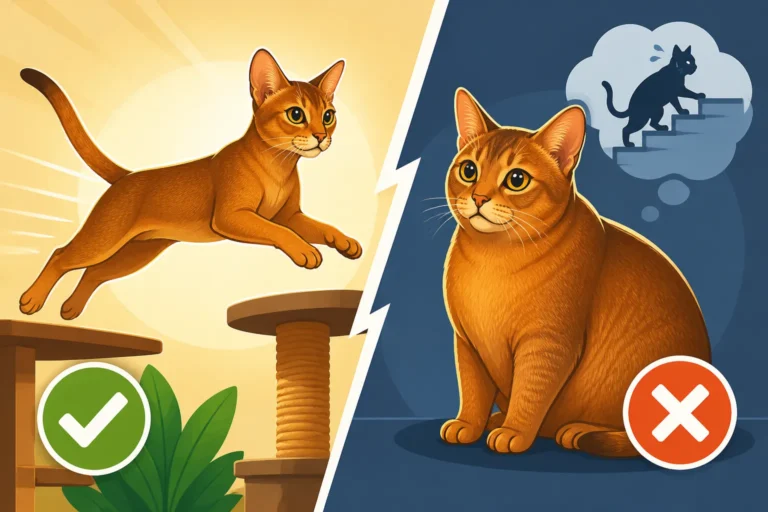
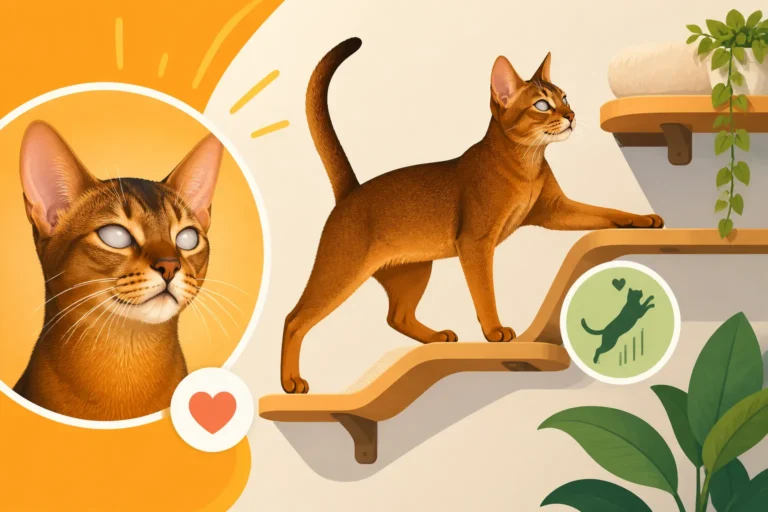
Hydration is also incredibly important for Abyssinians, especially given the breed's predisposition to certain kidney issues, such as Renal Amyloidosis Is the Abyssinian Problem Nobody Can Test For. Incorporating wet food into their diet is an excellent way to boost their water intake, supporting overall kidney health and helping them feel full. Beyond diet, consistent, vigorous exercise is non-negotiable for an Aby. They thrive on interactive play with wand toys, puzzle feeders, and plenty of vertical climbing opportunities. Remember, Why an Abyssinian Needs More Vertical Furniture Than Most Cats – it caters to their natural instinct to climb and survey their domain, burning calories and keeping them mentally sharp.
When to Consult Your Veterinarian About Weight Changes
Your "hand test" is a fantastic tool for monitoring, but it doesn’t replace professional veterinary assessment. Any significant, unexplained change in your Abyssinian's weight, whether it's a noticeable loss or gain, should always prompt a call to your vet. They can perform a thorough examination, including blood work, to rule out underlying medical conditions.
For instance, sudden weight loss could indicate serious issues like hyperthyroidism or even kidney disease, and knowing What Kidney Failure Looks Like in a Young Abyssinian can help you identify symptoms early. For older Abyssinians, regular blood work, as discussed in When a Middle Aged Abyssinian Needs Yearly Bloodwork, becomes even more important for catching these conditions early. Diagnostic tests and treatments can be expensive, and this is where pet insurance can truly be a lifesaver. Companies like Healthy Paws can help cover unexpected veterinary bills, giving you peace of mind that you can always provide the best care for your beloved Aby without financial strain. It's often recommended to consider pet insurance for an Abyssinian early in their life, especially Why to Insure an Abyssinian Before Its First Birthday, to ensure coverage for potential future conditions.
Disclaimer
This guide is intended for informational purposes only and does not substitute for professional veterinary advice. Always consult with a qualified veterinarian for any health concerns or before making any decisions about your pet's health or treatment.