How to Read an Abyssinian’s Body Condition Through That Coat
It’s easy to look at your sleek, vibrant Abyssinian, tearing through the house with boundless energy, and assume they’re in perfect physical condition. But beneath that stunning, close-lying ticked coat, it can be surprisingly tricky to truly gauge their body condition. Their unique physique often makes it difficult to tell if they’re carrying a few too many ounces or, conversely, if they’ve started to lose weight imperceptibly. This guide is here to help you become an expert at assessing your Abyssinian’s body condition, giving you the confidence to ensure they stay healthy and happy.
The Abyssinian's Unique Physique and Coat – Why It's Tricky to Judge
Abyssinians are a marvel of feline athleticism, known for their lean, muscular build and incredibly active nature. This combination, paired with their distinctive coat, creates a challenge for owners trying to accurately assess their cat's physical shape. You might be looking for cues that simply aren't as obvious on an Aby as they would be on a fluffier, less active breed.
The Sleek, Athletic Build of an Abyssinian
Unlike some of their more sedentary or heavily boned feline cousins, Abyssinians are built for motion. Think of them as feline athletes, with a body designed for jumping, climbing, and sprinting. They possess a medium build, but one that is remarkably muscular and graceful, often described as "foreign" or "cobby" in cat fancy terms. This means they naturally carry less excess body fat than many other breeds. When you pet an Abyssinian, you should feel a firm, sinewy structure underneath their fur, not a soft, pillowy layer. Their deep chest, long, slender legs, and tightly tucked waist are all hallmarks of this athletic design.
The challenge arises because this natural leanness can sometimes mask subtle changes. A few extra ounces might not make them look "fat" in the traditional sense, but it can still impact their agility and put undue stress on their joints over time. Conversely, a slight decrease in muscle mass or fat reserves might not be immediately obvious if you're not specifically looking for it, especially when their high energy levels give the illusion of robust health. It’s a bit like trying to spot a change in a finely tuned sports car – minor tweaks can have significant effects.
The Illusion of the Ticked Coat
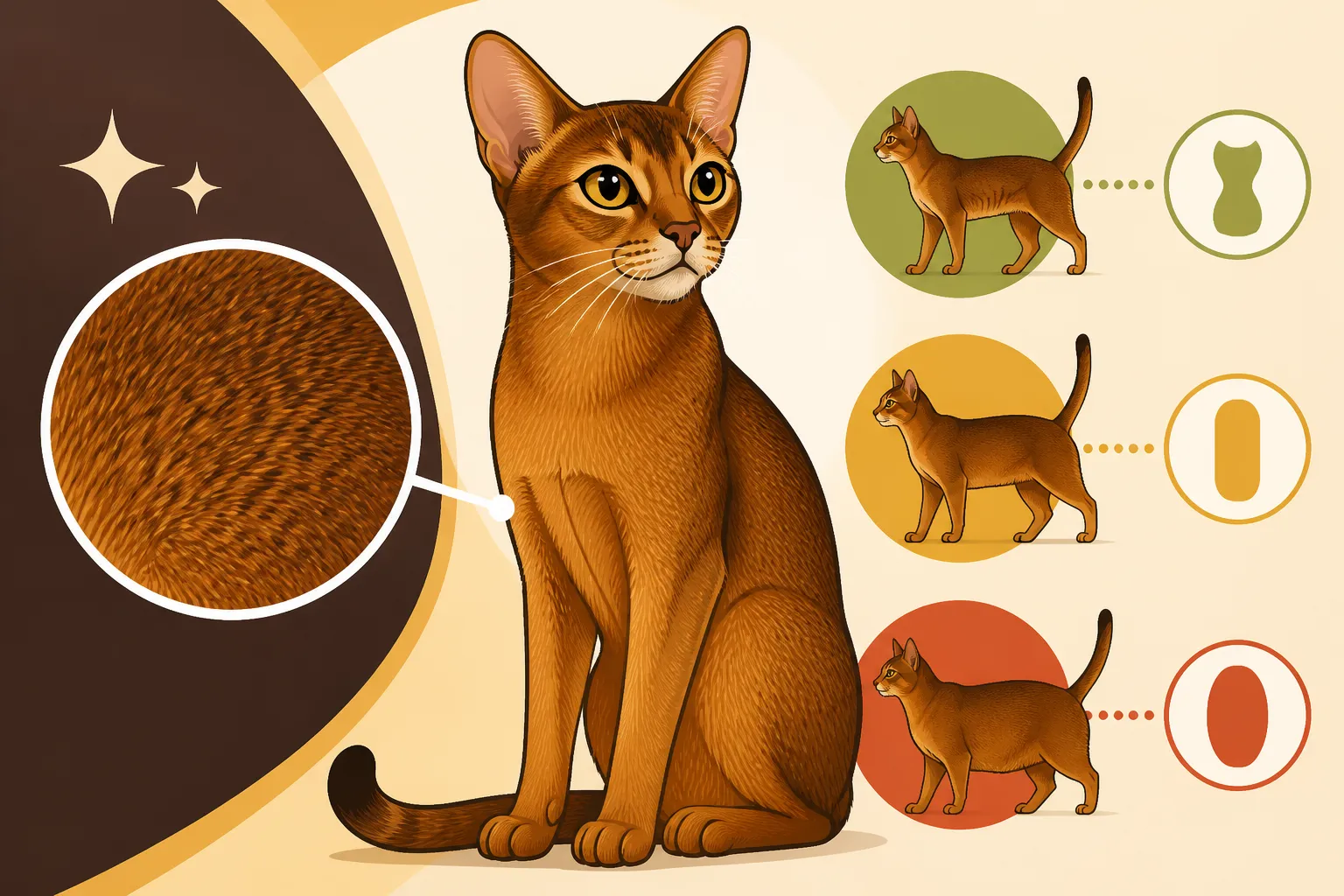
The Abyssinian's coat is one of its most defining features, a breathtaking tapestry of color thanks to its agouti banding. Each individual hair carries three or four bands of color, creating a rich, shimmering effect without any visible tabby stripes. This short, fine, and resilient coat lies incredibly close to the body, almost like a second skin. Unlike breeds with thick double coats or long, flowing fur, the Abyssinian has very little undercoat, which means there’s not much "fluff" to provide extra bulk or hide underlying body changes.
While this lack of a dense undercoat contributes to their sleek appearance and minimal shedding, it also means that what you see is largely what you get. There's no thick layer of fur to camouflage a developing potbelly or conceal ribs that are becoming a little too prominent. However, the ticking itself can play tricks on the eye. The way the light catches the banded hairs can create shadows and highlights that might give a false impression of contours. For instance, the darker tips of the fur might make a slightly rounded belly appear more tucked than it actually is, or conversely, make a healthy, lean frame seem thinner than it is when viewed from certain angles. This optical illusion is why a purely visual assessment can be misleading and why other methods are crucial. For more details on this unique characteristic, you might want to read about How an Abyssinian's Agouti Banding Works.
Understanding Ideal Body Condition in Abyssinians
Knowing what a healthy Abyssinian looks like and, more importantly, feels like, is the first step toward accurate body condition assessment. It’s not just about aesthetics; it’s about understanding their unique physiology.
The Visual Cues: What a Healthy Abyssinian Looks Like
When you look at a healthy Abyssinian from above, they should have a distinct, yet gentle, hourglass figure. Their body should be tapered from the ribs to the waist, with a clear indentation where their hindquarters begin. There shouldn't be any bulging on the sides or a straight, blocky appearance. From the side, you should observe a noticeable "tuck-up" of the abdomen, meaning their belly rises gently towards their hind legs, rather than hanging low or appearing distended. Their legs should look long and slender, complementing their overall elegant stature.
Compared to other breeds, an ideal Abyssinian will look noticeably leaner. A Persian, for example, might have a rounder, more solid look, while a Maine Coon carries more overall bulk. The Abyssinian’s leanness, however, is not to be confused with being underweight. It's a testament to their muscularity. You should see muscle definition, especially in their hindquarters, as they move. Their high energy levels often ensure they maintain this lean muscle mass, constantly burning calories as they explore and play. This distinctive profile is a key indicator, but as we've discussed, the ticked coat can sometimes obscure these subtle nuances, making a hands-on approach essential.
The Palpation Method: Feeling for the Facts
This is where the rubber meets the road, or rather, where your hands meet your Abyssinian's ribs. Because visual cues can be deceptive, learning to palpate your cat's body is the most reliable way to assess their condition. Gently run your hands along their sides, feeling for their ribs. You should be able to feel their ribs easily, much like feeling the knuckles on your hand, without having to press hard. However, they shouldn't protrude sharply or be visible through the coat. There should be a very thin layer of muscle and fat covering them, providing a smooth, continuous contour.
Next, move your hands along their spine. You should be able to feel the individual vertebrae, but again, they shouldn't feel like a sharp, bumpy ridge. There should be a slight cushion over them. Finally, assess their hip bones. Similar to the ribs, you should be able to feel them without them being overly prominent. If you're struggling to feel the ribs, spine, or hip bones without significant pressure, it's a strong indicator of excess weight. Conversely, if these bony prominences are very easily seen or felt with no cushioning, your Aby might be underweight. This hands-on method allows you to literally feel the difference and provides a much more accurate picture than simply looking. For a detailed guide on this, check out How to Feel an Abyssinian's Ribs Under a Ticked Coat.
To further illustrate these points, here’s a simplified body condition score (BCS) chart, tailored slightly for the Abyssinian's natural leanness:
| BCS Score | Visual Description (Abyssinian) | Palpation Description (Abyssinian) | Assessment |
|---|---|---|---|
| 1 (Emaciated) | Ribs, spine, hip bones visible from a distance; no muscle mass. | Ribs, spine, hip bones very prominent with no fat or muscle covering. | Severely underweight; urgent vet attention. |
| 2 (Underweight) | Ribs, spine, hip bones easily visible; minimal fat cover. | Ribs, spine, hip bones easily palpable, with very little soft tissue. | Underweight; address diet/health. |
| 3 (Ideal) | Well-proportioned, visible waist, slight abdominal tuck. | Ribs easily palpable with slight fat cover; spine and hip bones felt with ease. | Ideal condition. |
| 4 (Overweight) | Waist slightly less defined, slight rounding of abdomen. | Ribs felt with moderate pressure; spine and hip bones harder to find. | Overweight; adjust diet/exercise. |
| 5 (Obese) | No waist definition, round abdomen, broad back. | Ribs, spine, hip bones difficult to feel under thick fat layer. | Obese; significant health risks, vet consult. |
Identifying Underweight Concerns in Your Abyssinian
While Abyssinians are naturally lean and high-energy, there's a fine line between a healthy, athletic physique and being underweight. Spotting the signs early can be crucial for addressing potential underlying issues.
When Ribs and Spine Become Too Prominent
If you notice your Abyssinian's ribs, spine, or hip bones becoming visibly prominent, or if you can feel them with almost no cushioning when you gently run your hands over them, it’s a strong indication that they are losing too much weight. This isn’t just about looking a bit bony; it signifies that their body is starting to use its fat reserves and potentially even muscle mass to meet its energy needs. A healthy Abyssinian should have a sleek, well-defined silhouette, but not one where the skeletal structure is starkly visible.
When this happens, it’s not always a cause for immediate panic, but it's definitely a red flag that warrants investigation. It could be something as simple as their caloric intake not matching their incredible activity levels, especially if you have a particularly busy Aby who never seems to stop. However, it can also point to more serious issues. Stress, changes in environment, or even an unnoticed illness could be contributing factors. Abyssinians are known for hiding pain and discomfort, so a decline in condition might be the first obvious sign that something is amiss internally. It’s always best to consult your veterinarian to rule out any medical reasons behind the weight loss. Remember, Why an Abyssinian's weight loss is never minor and should always be taken seriously.
Muscle Loss and Its Red Flags
Beyond just fat reserves, it’s equally important to monitor your Abyssinian’s muscle mass. Because they are such active, powerful cats, any significant muscle wasting can indicate a more profound issue. You might observe this as a general reduction in their overall body bulk, or more specifically, a loss of definition in their hindquarters and along their spine. When you palpate, instead of feeling firm, resilient muscle, you might notice a softer, less dense texture. This is particularly concerning because Why an Abyssinian's muscle loss shows before its fat means that by the time you notice visible muscle wastage, the underlying issue might be quite advanced.
Muscle loss can be a symptom of various health problems, including chronic diseases, inadequate protein intake, or even age-related sarcopenia if your Aby is older. If your energetic explorer suddenly seems less inclined to leap onto high shelves or their powerful jumps appear weaker, it’s time to pay close attention. An Abyssinian’s vibrant personality often masks early signs of illness, so observing changes in muscle mass is a critical part of their health monitoring. How fast an Abyssinian drops weight when ill can be quite rapid, so vigilance is key. If you suspect muscle loss, a vet visit is imperative to diagnose the cause and implement an appropriate treatment plan. This might include dietary adjustments, medication, or specific supplements to help rebuild and maintain their strength.
Recognizing Overweight or Obese Abyssinians
While it’s less common for an Abyssinian to become truly obese due to their high metabolism and active nature, it’s certainly not impossible. Even a slight increase in weight for this athletic breed can have significant implications for their health and longevity.
The Subtle Signs of Excess Weight
Because Abyssinians are naturally so lean, the signs of being overweight can be subtle. You might not see the dramatic "pudgy" look common in some other breeds. Instead, watch for a gradual loss of that characteristic tucked waist and a slight rounding of the abdomen. When viewed from above, their hourglass figure might start to straighten out, appearing more rectangular. From the side, the abdominal tuck-up might lessen, and their belly might begin to hang a bit lower. When you try the palpation test, you'll find it takes more pressure to feel their ribs, spine, and hip bones, as they are now cushioned by a thicker layer of fat.
It’s easy to dismiss these subtle changes, especially if your Abyssinian still appears active. You might think, "Oh, they just look a bit more 'solid' now." However, for a breed designed for agility and high-impact activities, even a few extra ounces can make a difference. Why an Abyssinian rarely gets fat is often due to their intense energy, but factors like overfeeding, too many treats, or a decrease in activity levels (perhaps due to an undiagnosed joint issue) can contribute to insidious weight gain. It's crucial not to let these minor changes escalate, as addressing them early is far easier than tackling full-blown obesity.
Health Implications of Extra Pounds
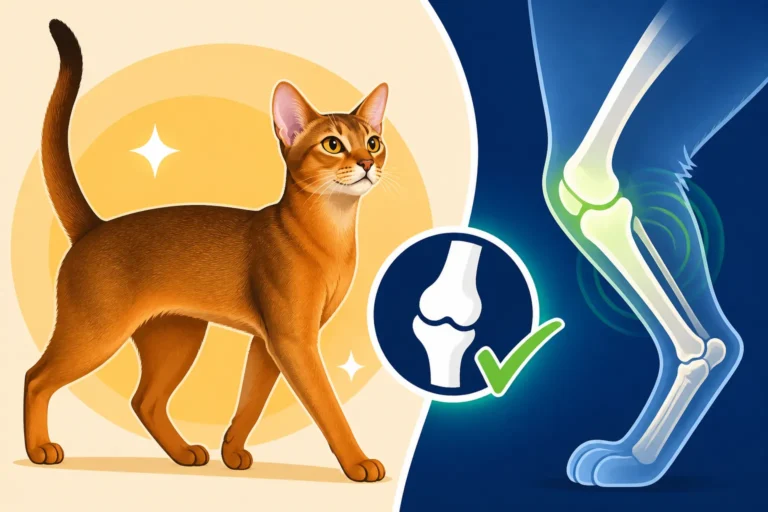
For an Abyssinian, carrying extra weight, even what might seem like a negligible amount, can have disproportionately negative health consequences. Their athletic build means their joints are optimized for a lean frame. Every extra pound or even half-pound puts additional stress on their hips, knees, and spine, accelerating the onset or worsening of conditions like arthritis. This is particularly relevant given that Why a lean Abyssinian puts less load on its joints is a key factor in their overall musculoskeletal health. Overweight Abyssinians may develop a reluctance to jump, climb, or play as vigorously, which then further contributes to weight gain, creating a vicious cycle.
Beyond musculoskeletal issues, excess weight can increase the risk of other serious health problems. These include conditions like diabetes, heart disease, and liver lipidosis, particularly if the weight gain is rapid or severe. Their naturally fast metabolism also makes them susceptible to metabolic changes if they become overweight, disrupting their body's ability to process fats and sugars efficiently. Regular veterinary check-ups are vital here, as your vet can help you establish an ideal target weight and guide you through a safe and effective weight loss program. Having pet insurance, perhaps from a provider like Healthy Paws, can also provide peace of mind, knowing that if weight-related health issues arise, a significant portion of diagnostic tests and treatments could be covered.
The Role of Diet, Exercise, and Vet Checks in Maintaining Condition
Maintaining your Abyssinian's ideal body condition is an ongoing commitment that involves a holistic approach. It's not just about crisis management when issues arise; it's about proactive care and consistent attention to their unique needs.
Tailoring Nutrition for an Active Breed
Given their boundless energy and sleek musculature, an Abyssinian's dietary needs are typically higher than many other cat breeds of similar size. They are little furnaces, constantly burning calories as they race up cat trees, chase toys, and engage in their endless inquisitiveness. Providing a high-quality diet that supports this lifestyle is paramount. Look for foods that are rich in animal-based protein, which is essential for maintaining their lean muscle mass. Meat should be the primary ingredient, not fillers or excessive grains. Why an Abyssinian's calorie needs beat a heavier cat's means you might be feeding them more than you'd expect for their size, but it's vital for fueling their activities without them dipping into their own reserves.
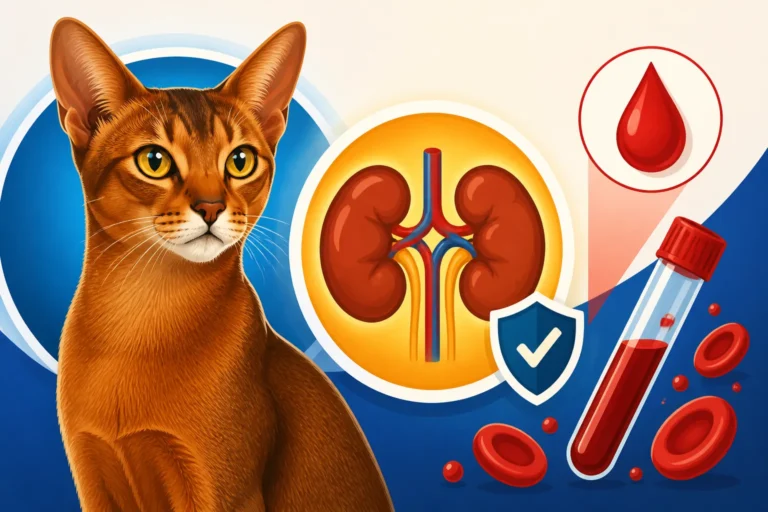
Hydration is another critical component, especially for a breed that can be susceptible to kidney issues like renal amyloidosis. A diet that includes a good amount of wet food can significantly increase their water intake, supporting kidney function and overall health. Free-feeding kibble isn't always the best approach for an Abyssinian, as it can lead to grazing throughout the day and make it harder to monitor their true intake. Instead, consider scheduled meals, perhaps 2-3 times a day, to control portions and ensure they are eating enough, but not too much. Puzzle feeders can also be a great way to slow down their eating and provide mental enrichment. Always consult with your vet about the best food choices and portion sizes for your individual Aby, as their needs can change with age and activity level.
The Importance of Consistent Veterinary Oversight
Regular veterinary visits are absolutely non-negotiable for keeping your Abyssinian in peak condition. Your veterinarian has a trained eye and hands, and they are adept at assessing body condition, even through a challenging coat. During these annual check-ups, your vet will perform a thorough physical examination, including palpating the ribs, spine, and abdomen, as well as checking for any signs of muscle atrophy or excessive fat deposition. They'll also weigh your Abyssinian, and it's so important that Why an Abyssinian's weight should be recorded at every visit, creating a historical record that allows for early detection of any upward or downward trends.
Beyond just physical assessment, these visits are an opportunity to discuss any changes you’ve noticed in your cat’s appetite, energy levels, or behavior. They can help you fine-tune your Abyssinian's diet and exercise routine, ensuring it matches their current life stage and health status. Early detection of health issues, whether it's a subtle sign of kidney problems, dental disease, or even early-stage arthritis, is crucial for effective treatment. Pet insurance, such as a plan from Healthy Paws, can be incredibly beneficial here, covering unexpected illnesses or injuries that might lead to changes in body condition. Knowing you have support for comprehensive care can encourage more proactive veterinary engagement, ensuring your Abyssinian receives the best possible care throughout The Twelve to Fifteen Years an Abyssinian Usually Gets. They can also help you understand if Why a heavy Abyssinian is unusual and worth checking applies to your pet, prompting further investigation.
Disclaimer
The information provided in this article is for general informational purposes only and is not a substitute for professional veterinary advice. Always consult with a qualified veterinarian for any health concerns or before making any decisions related to your pet's health or treatment.