How an Abyssinian’s Tail Should Taper
An Abyssinian’s tail should look like a natural continuation of its long, athletic body: substantial at the base, narrowing gradually, and finishing in a neat tip. If you are comparing a kitten with a breed description—or wondering whether a kink, thin patch, or unusual curve is normal—this guide explains the shape, what can vary, and when a change deserves a closer look.
The shape of an Abyssinian’s tail
A broad base and a gradual taper
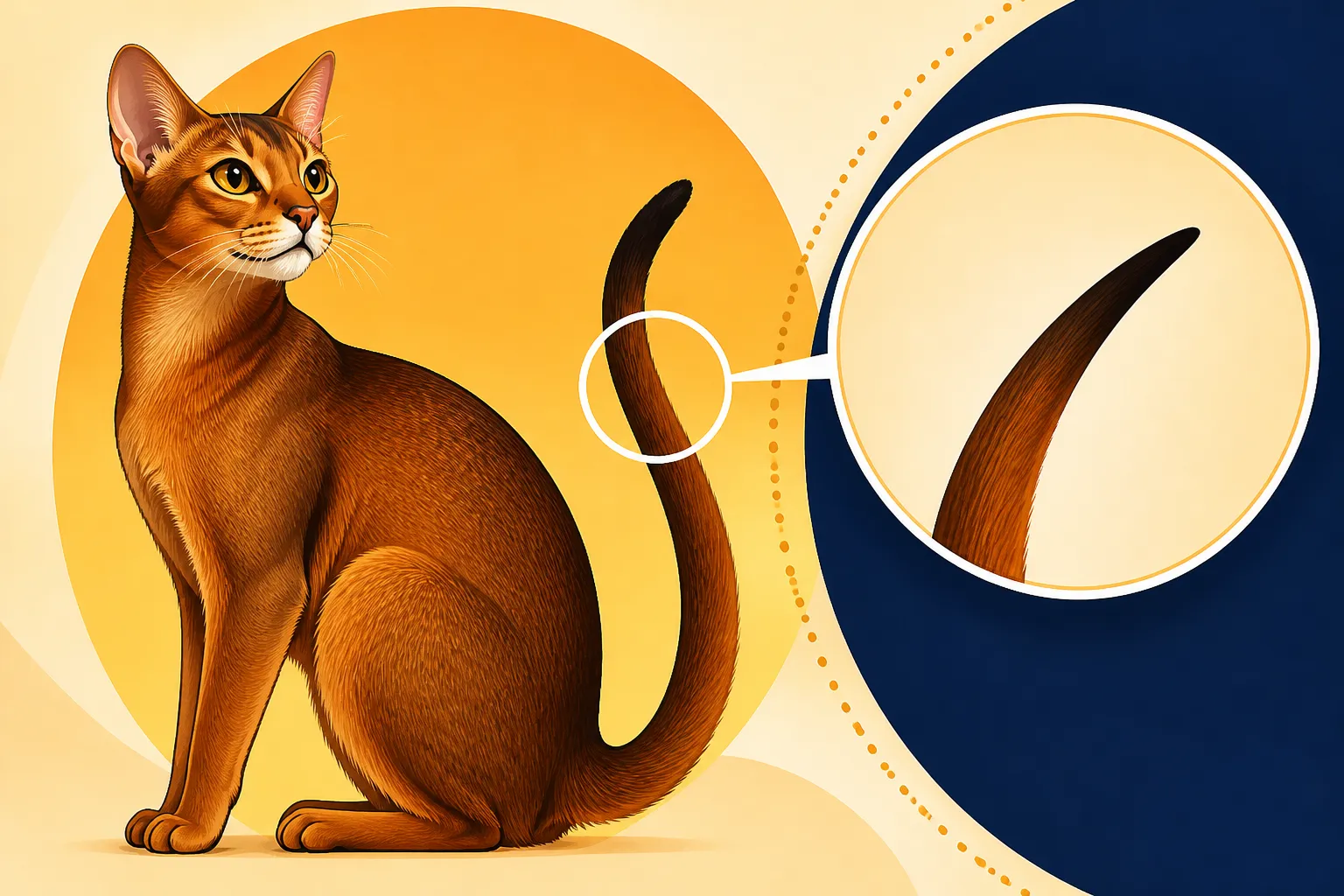
The classic Abyssinian tail is long and balanced with the body, wider where it meets the rump and progressively finer toward the end. The change in width should look smooth rather than sudden. Imagine a well-shaped tapering line, not a tube that stays the same thickness all the way down and not a tail that narrows sharply halfway along.
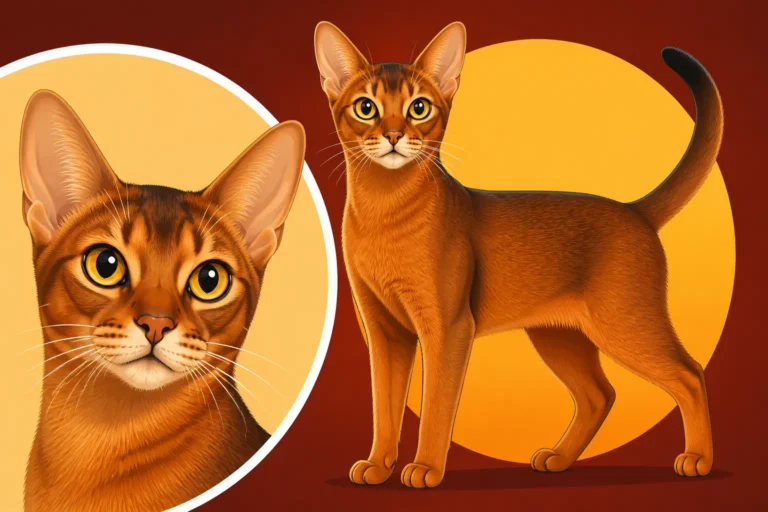
That balance matters because the Abyssinian is a lithe, muscular cat rather than a compact, heavy one. A tail that looks substantial at the base helps complement the hindquarters; the narrowing tip keeps the whole outline elegant. The tail should not look like a separate feature pasted onto the cat. It should sit naturally with the body and move as part of the cat’s overall posture.
If you are studying a show description, remember that the wording and emphasis can differ between cat registries. Breed standards generally describe the tail in relation to the rest of the cat, so a single measurement or photograph rarely tells the whole story. For the broader outline, see What an Abyssinian Looks Like Against the Show Standard and What an Abyssinian's Body Type Is Called.
The tip should look neat, not abruptly cut off
A properly tapering tail ends in a fine, tidy tip. In profile, the final portion should narrow naturally rather than ending in a blunt-looking shape. Fur can make the tip appear slightly fuller or softer, and an Abyssinian’s coat color may make its outline easier or harder to see in different light. The underlying shape is more important than the way a photograph catches the fur.
A tail that looks short, squared-off, unusually blunt, or sharply kinked may not match the typical breed outline. But appearance alone cannot tell you why it looks that way. A kitten’s posture, the angle of a photo, a thick coat around the base, or a tail tucked against the body can all distort what you think you are seeing. If the shape looks unusual in person, ask the breeder or a veterinarian to examine it rather than trying to judge it from one image.
Abyssinians are often described as standing lightly on their feet, with long legs and a poised, athletic outline. The tail helps complete that impression; it is not supposed to look oversized or especially heavy. Related details about the breed’s proportions are covered in How Long an Abyssinian's Legs Are Relative to Its Body and Why an Abyssinian Stands on Its Toes.
How the tail fits the Abyssinian’s overall outline
Proportion matters more than judging the tail alone
It is easy to focus on the tail tip when you are looking at a breed standard, but the tail should be judged as part of the whole cat. A long, narrow body, a strong rump, and a tapered tail work together to create the characteristic flowing silhouette. A tail can look too thin or too short when viewed by itself, yet appear balanced when the cat is standing naturally.
Posture changes the impression, too. When an Abyssinian is alert, it may hold its tail up or curve it as it moves. When relaxed, it may let the tail hang or rest it along the floor. These everyday positions do not change the tail’s basic structure. A snapshot of a tail held close to the body can make it seem shorter, while a tail extended behind the cat may look longer and finer.
| Feature | Typical appearance | What can affect how it looks |
|---|---|---|
| Base | Relatively broad where it joins the body | Angle, posture, and fur around the rump |
| Middle | Narrows gradually toward the tip | A curved or partly hidden tail |
| Tip | Fine and neat rather than abruptly blunt | Coat color, lighting, and camera distance |
| Overall proportion | Balanced with the body and hindquarters | Age, stance, and individual variation |
This is why comparing one body part against a single idealized photograph can be frustrating. The camera may be close to the cat’s rear, the tail may be foreshortened, or the cat may be turning away. For a fairer impression, look at the cat standing or walking from the side, then consider its overall proportions alongside What an Abyssinian's Coat Should Feel Like in the Ring.
The tail’s color and the tail’s shape are different things
Abyssinians have a distinctive ticked coat, and the tail can show darker coloring toward its end. That color pattern is separate from the tail’s physical taper. A dark tip does not mean the tail should suddenly become narrower, and a pale or less sharply defined tip does not necessarily mean the shape is wrong.
Lighting can make color and outline confusing. In bright sunlight, a fine tail tip may seem to disappear against the background. Indoors, darker fur can make the end look broader than it is. A young kitten’s coat may also change as it matures, so the finished appearance can take time to become clear. If you are learning how the breed’s colors develop, What Ruddy Means on an Abyssinian and How an Abyssinian's Coat Color Is Registered offer useful context.
The tail’s coat can also be ruffled, flattened, or puffed up temporarily. A startled cat may fluff its fur, changing the apparent width without changing the underlying shape. A relaxed, smooth-coated view is more useful for judging the taper. Avoid pulling or stretching the tail to inspect it; a calm visual check is enough unless a veterinarian has advised otherwise.
What is normal variation, and what deserves attention
Differences between kittens and adults
Abyssinian kittens do not always look like miniature versions of finished adults. Their proportions can seem uneven while they grow, and their coat may not yet have its mature texture or color. A kitten’s tail may appear finer simply because the rest of the body is still developing. It is more useful to assess the overall trend as the cat grows than to treat one stage as a final verdict.
Individual cats also differ. One may have a more noticeable base, another a particularly fine-looking tip, and another may carry its tail in a way that changes the outline. Breed standards describe a target type, not a promise that every pet Abyssinian will look identical. For a pet owner, a healthy, comfortable tail that moves normally matters more than matching a show photograph exactly.
There is also a distinction between a natural variation and a new change. If a cat has always had a slight curve and shows no discomfort, that is different from a tail that suddenly begins drooping, swelling, or appearing painful. If you are comparing an Abyssinian with its longhaired relative, How an Abyssinian Differs From a Somali can help explain why coat length changes the visual impression without changing the basic relationship between tail and body.
When to ask a veterinarian
A tail that looks unusual is not automatically a medical problem, but certain changes should not be brushed off as breed variation. Contact a veterinarian if your cat’s tail becomes painful to touch, suddenly hangs limp, develops swelling, has an open wound, or changes position after an accident. A cat that avoids moving its tail, reacts sharply when you approach it, or has trouble walking may need prompt assessment.
Do not try to straighten a kink, massage a swollen area, or test how far the tail bends. Cats can hide discomfort, and handling an injury may make it worse. Keep the cat calm, prevent rough play, and arrange veterinary care. If the concern is present from kittenhood rather than a sudden change, ask the breeder what they have observed and have your vet examine the tail during a routine visit.
A change in the tail’s appearance can also come from the coat rather than the structure underneath. Matting, a patch of broken fur, skin irritation, or a small injury may make the outline look uneven. A gentle visual check is reasonable, but persistent hair loss, redness, scabs, or irritation warrants veterinary advice. The key is to distinguish a stable appearance from a new or worsening one.
How to assess an Abyssinian’s tail fairly
Use a calm, natural view
For a useful look, observe the cat standing or walking comfortably on a level surface. A side view gives you a better sense of length and taper, while a view from behind can show how the tail joins the rump. Let the cat choose its posture. Do not hold the tail straight or pull it away from the body to make it easier to inspect.
If you are evaluating a kitten, take note of its age and compare its proportions over time rather than relying on one close-up. If you are considering a kitten from a breeder, ask to see the cat moving naturally and, if appropriate, ask about the parents’ general type. A responsible breeder should be willing to discuss normal variation without promising that every kitten will have identical show-quality features.
For an adult pet, a quick check during ordinary handling is usually enough. Notice whether the tail moves freely, whether the cat uses it normally for balance and communication, and whether it seems comfortable. Routine grooming is a good moment to notice changes in coat or skin, but the tail itself generally does not need special shaping or trimming.
Avoid judging from a single image
Photos can exaggerate or hide proportions. A close camera angle may make the tail base look unusually wide; a tail held behind the cat may seem shorter; a curled tail can hide the taper. Editing, shadows, and a contrasting background can all affect the outline. When possible, use several ordinary images or watch the cat move in person.
It also helps to separate three questions: Is the tail shaped in a way that broadly fits the breed? Is the cat comfortable using it? Has anything changed recently? The first is a question of appearance and standards. The second and third are about health and should take priority for a companion cat. A small difference from a show ideal is not, by itself, a reason to worry.
If you are choosing an Abyssinian, focus on a clear overall picture: the cat’s movement, temperament, health history, and the breeder’s willingness to answer questions. Tail shape is one detail in a graceful breed profile, not the only measure of a good match. A smooth taper—from a fuller base to a neat tip—is the familiar outline, while comfort and normal movement are the most useful everyday signs to watch.
Disclaimer
This article is for general informational purposes only and does not constitute professional advice. Laws, prices and regulations vary by location and change over time. Consult a qualified professional for guidance on your specific situation.