How an Abyssinian Differs From an Ocicat
An Abyssinian and an Ocicat can both look sleek, athletic, and a little wild, so it is easy to mistake one for the other at first glance. The key difference is the coat: Abyssinians have a softly banded, ticked coat, while Ocicats have distinct spots. This guide compares their appearance, temperament, care needs, and what life with each breed is like.
The coat is the clearest difference
Ticking versus spots
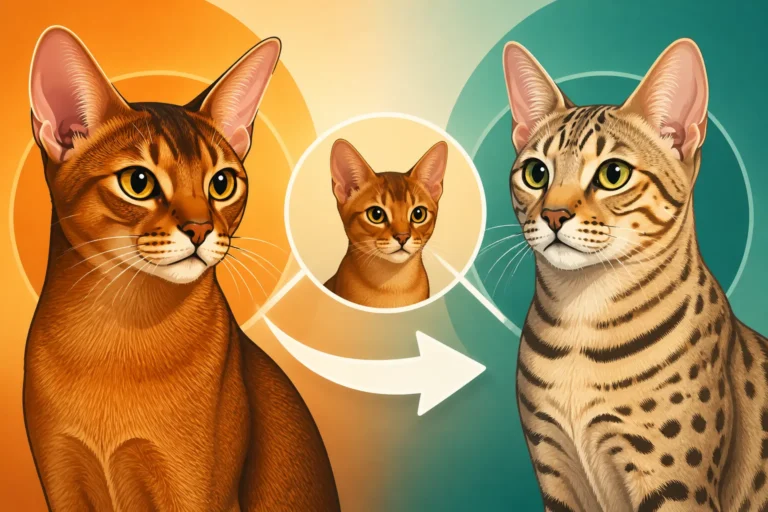
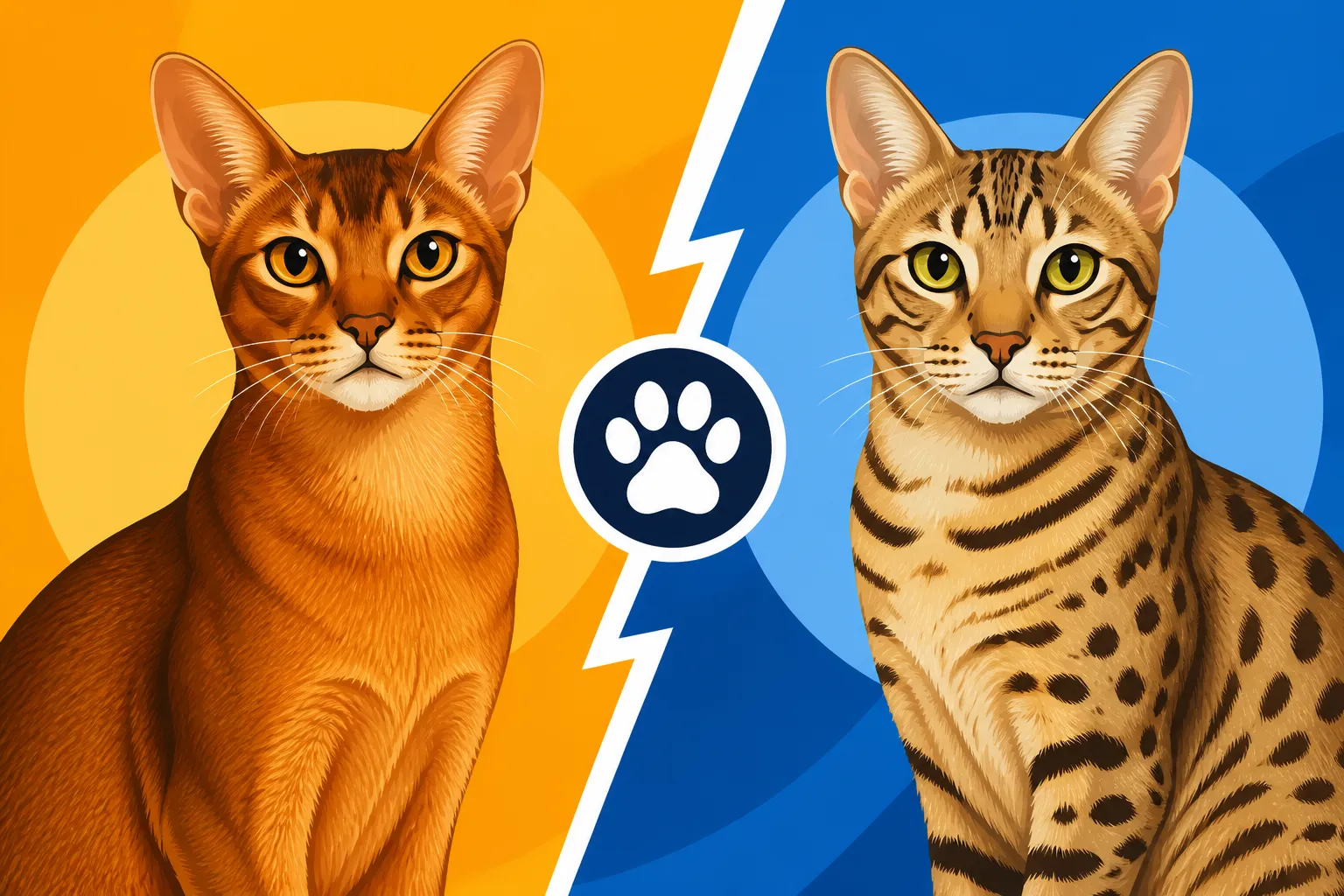
An Abyssinian’s coat has a distinctive pattern called ticking. Individual hairs carry alternating bands of lighter and darker color, giving the coat a warm, subtly shimmering look. From across the room, an Abyssinian may seem almost solid-colored, but up close you can see the fine bands. The pattern is not a row of spots or stripes.
An Ocicat, by contrast, has clearly defined spots across its body. Its coat can bring to mind a small wild cat, but the spots are a domestic breed characteristic—not evidence of wild ancestry. The Ocicat was developed from domestic cats, and despite the name’s resemblance to “ocelot,” it is not part ocelot.
This distinction can help if you are trying to identify a kitten from a photograph. A coat that looks evenly shaded but glints with several tones may suggest an Abyssinian. Separate, visible spots point more strongly toward an Ocicat. For a closer look at the Abyssinian coat, see What an Abyssinian Looks Like Against the Show Standard.
Coat color and overall impression
Abyssinians are known for a short coat with a close-lying appearance and rich ticking. Common recognized colors include ruddy, sorrel, blue, and fawn, though the exact names and accepted colors depend on the registry. Their faces often have a warm, expressive look, with large ears and almond-shaped eyes. The Four Colors an Abyssinian Comes In explains how those shades differ.
Ocicats come in several spotted coat colors. Their spots create a higher-contrast pattern than an Abyssinian’s ticking, and they are usually easy to see along the sides, back, and legs. The overall impression is more visibly patterned, even though both breeds have short coats.
Neither breed is a long-haired cat, and neither needs elaborate coat styling. Their appearance is more about natural pattern and condition than frequent grooming. If the coat looks dull, patchy, or unusually thin, that is worth discussing with a veterinarian rather than trying to fix it with more brushing.
Body shape and size
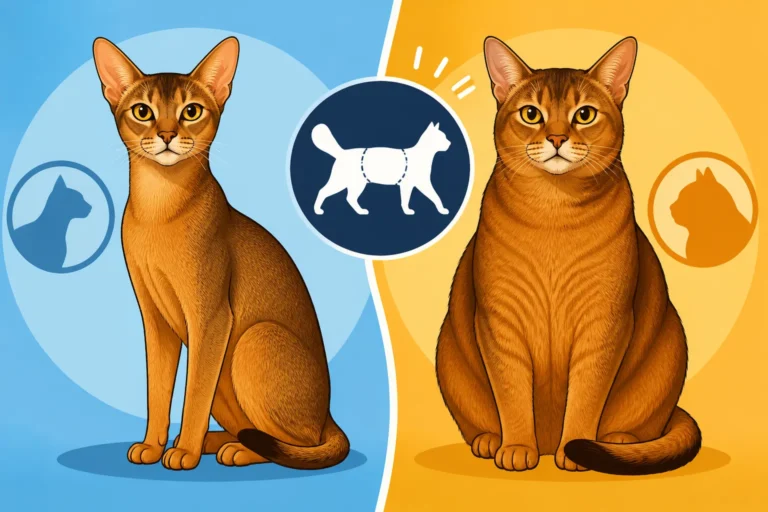
Both breeds are athletic and built to move. Abyssinians tend to look fine-boned, long, and graceful, with a lithe frame and a high-energy posture. Their balance and agility are part of their appeal: an Abyssinian may look as if it is already planning its next jump.
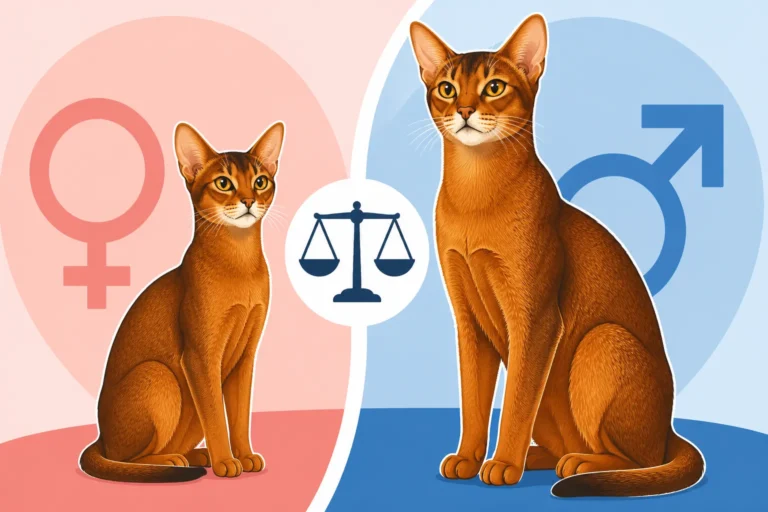
Ocicats are often more muscular and substantial in appearance. They can still be agile, but their build may look sturdier than an Abyssinian’s. Individual cats vary, and sex, family line, age, and body condition all affect how large a particular cat looks. Breed appearance is a guide, not a reliable way to judge an individual cat’s weight or health.
| Feature | Abyssinian | Ocicat |
|---|---|---|
| Coat pattern | Ticked hairs with subtle bands of color | Clearly visible spots |
| General build | Lean, fine-boned, and athletic | Muscular and athletic |
| Overall look | Shimmering, softly shaded coat | High-contrast spotted coat |
| Breed background | An established breed with origins that remain debated | Developed from domestic breeds in the United States |
| Grooming | Usually simple coat care and regular nail checks | Usually simple coat care and regular nail checks |
| Activity | Curious, active, and often keen to climb | Active, playful, and often keen to interact |
Their histories and looks come from different paths
Abyssinians have a long, debated history
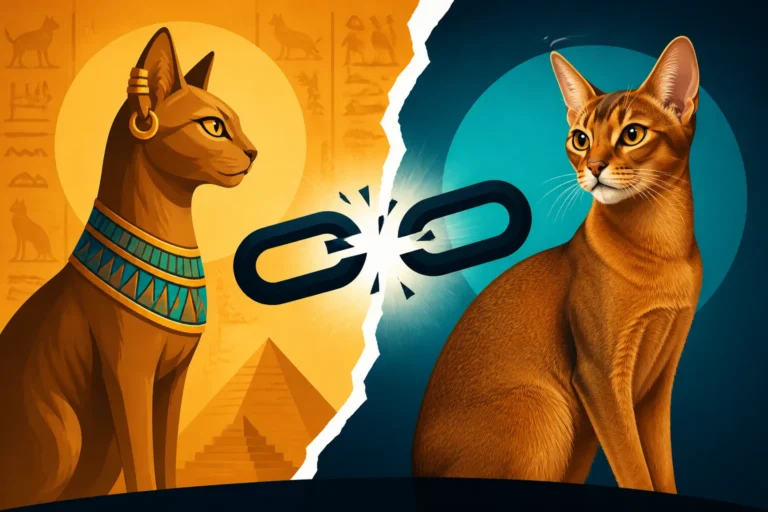
The Abyssinian is an old breed, but its precise origins are not settled simply by its name. The popular story connects the breed with Abyssinia, the historical name for Ethiopia, but the history of modern Abyssinians is more complicated than a single point of origin. The breed became established through organized breeding, and its characteristic ticked coat became a defining feature.
That history matters when comparing the two cats because the Abyssinian’s appearance is built around its coat texture and fine ticking—not a spotted pattern. It can look exotic, but its coat is a different visual effect from the sharply marked Ocicat. For more on the breed’s complicated background, read The Abyssinian Is Probably Not From Abyssinia.
The Ocicat was developed to have a spotted look
The Ocicat was developed through planned breeding of domestic cats, with the goal of producing a spotted cat that had a striking, wild-looking appearance but a domestic temperament and ancestry. The name reflects its resemblance to an ocelot, not a connection to wild cats.
That contrast can be useful for prospective owners: an Ocicat’s spots are a deliberate part of its breed identity, while the Abyssinian’s coat pattern is made by bands of color on each hair. If you are deciding between them, focus on the cat in front of you as well as the breed label. Ask about its personality, health history, and upbringing rather than choosing based on a wild-looking coat alone.
For comparison with another spotted breed, How an Abyssinian Differs From an Egyptian Mau explains why spots on a cat do not all mean the same thing. The Egyptian Mau has a different background and pattern from both the Ocicat and the Abyssinian.
What they are like to live with
Both can be active, social companions
Abyssinians are often curious, involved cats. Many like to follow people from room to room, investigate household activity, and find high places to observe from. They may show affection by staying close and participating rather than settling for long stretches on a lap. That can be wonderful if you enjoy an interactive companion, but frustrating if you expected a very quiet, hands-off cat.
Ocicats are also commonly described as social and playful. They may enjoy games, attention, and learning routines with their people. As with any breed, personality differs from cat to cat, and a kitten’s early social experiences can shape how comfortable it feels with handling, visitors, and household changes.
Neither breed should be selected on the assumption that every cat will behave exactly like its breed description. Meet the cat if possible, ask the breeder or rescue about its everyday habits, and consider whether its energy level fits your schedule. Whether an Abyssinian Is the Right Cat for You offers questions to help assess the Abyssinian’s fit for a household.
Enrichment matters more than a large home
A lively cat does not automatically need a huge house, but it does need opportunities to climb, play, explore, and rest. A stable cat tree, secure shelves, wand-toy sessions, and food puzzles can make an apartment more engaging. Rotate toys occasionally so familiar objects do not become background clutter.
Abyssinians in particular may turn ordinary household routines into entertainment. If there is little to investigate, a bored cat may seek its own projects—such as opening cupboards or knocking small objects from a shelf. It is often easier to provide safe outlets than to repeatedly scold a cat for following its curiosity. What an Abyssinian Does When It Is Bored explores signs that a cat needs more stimulation.
For supplies, choose sturdy climbing furniture and toys that suit the individual cat’s play style. Chewy can be one place to browse cat trees, puzzle feeders, and interactive toys, but check product dimensions and stability rather than relying only on the breed name in a listing. A tall, wobbly tree is not a good fit for an energetic jumper.
Consider the whole household
Both breeds may suit homes that enjoy an engaged pet, but a busy household still needs predictable quiet spaces. Give the cat a retreat where children or visitors will not disturb it, and use gradual, supervised introductions with other pets. A confident cat is not automatically comfortable with every dog, child, or unfamiliar animal.
If you work away from home for long stretches, think about how the cat will spend the day. A companion animal, structured play before and after work, and safe enrichment can help, but another cat is not a guaranteed solution. Introductions take time, and two cats must have enough separate resources to avoid competition.
Before bringing either breed home, ask how the cat responds to handling, noise, and being left alone. For household-specific considerations, How an Abyssinian Behaves With Children and Dogs is a useful starting point. It is better to plan around the individual cat’s needs than to assume a breed label settles the question.
Choosing between an Abyssinian and an Ocicat
Compare daily care, not just appearance
The coat itself is not usually the deciding factor. Both breeds have short coats that generally need modest grooming, such as occasional brushing or wiping to remove loose hair. Regular nail checks, dental care, clean litter, and routine veterinary visits remain important regardless of coat pattern.
The bigger difference for many owners is the look they prefer and the kind of interaction they want. Choose an Abyssinian if you are drawn to a finely ticked coat and a lean, agile cat. An Ocicat may appeal more if you want a clearly spotted pattern and a sturdier-looking build. Neither appearance tells you whether a particular cat will be cuddly, quiet, or easy to entertain.
A quick comparison can help clarify your priorities:
- Decide whether you prefer ticking or distinct spots.
- Consider whether you can provide daily interactive play and climbing options.
- Ask about the individual cat’s temperament and health background.
- Find out what routine care the breeder or rescue recommends.
- Make sure the cat’s energy level fits your household, not just your preferred look.
Ask careful questions before bringing one home
If you are speaking with a breeder, ask to see the kitten with its mother and littermates when possible. Ask how the kittens are socialized, what health screening has been done, and what records will come with the kitten. A responsible source should be willing to discuss the cats’ care and answer reasonable questions without rushing you.
If you are adopting, ask what the rescue or previous caregiver has observed about the cat’s activity, sociability, and comfort with other animals. An adult cat may give you a clearer sense of its established personality than a kitten, though any cat may need time to settle after a move.
For a realistic preview of life with an Abyssinian, What Abyssinian Owners Wish They Had Known can help set expectations about the breed’s activity and interaction needs. And if you are weighing whether the breed fits your own home, revisit Whether an Abyssinian Is the Right Cat for You before making a decision.
Chewy may also be useful when comparing basic supplies, but make your list around the cat’s actual needs: a secure carrier, appropriately sized litter box, scratching surfaces, and safe toys. If you are unsure what is suitable, ask the veterinarian or rescue for recommendations rather than buying a large collection of products at once.
Disclaimer
This article is for general informational purposes only and does not constitute professional advice. Laws, prices and regulations vary by location and change over time. Consult a qualified professional for guidance on your specific situation.