Why European Abyssinians Look Heavier
European Abyssinians can look heavier than American Abyssinians because some European show lines are bred with a broader, more substantial outline, while many American lines emphasize a finer, more elegant silhouette. That difference is a tendency, not a rule: region, breeder, sex, age, and individual ancestry all matter. Here’s how to tell a naturally sturdy build from excess weight.
What people mean when they say a European Abyssinian looks heavier
A broader outline can create a heavier impression
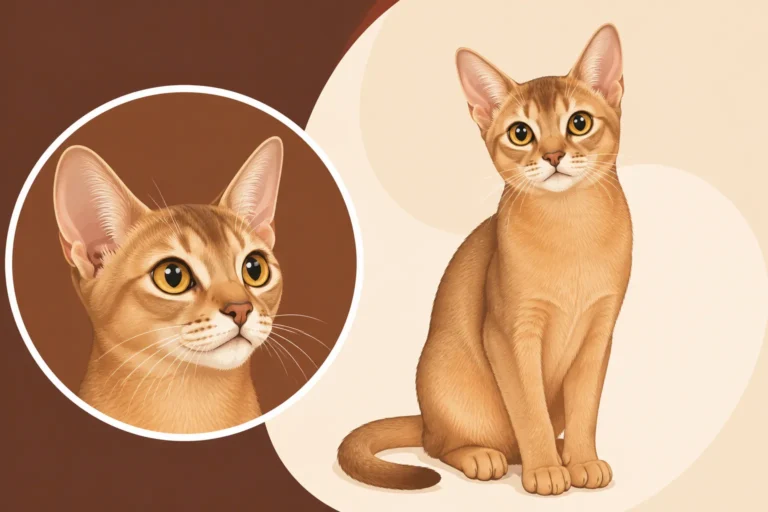
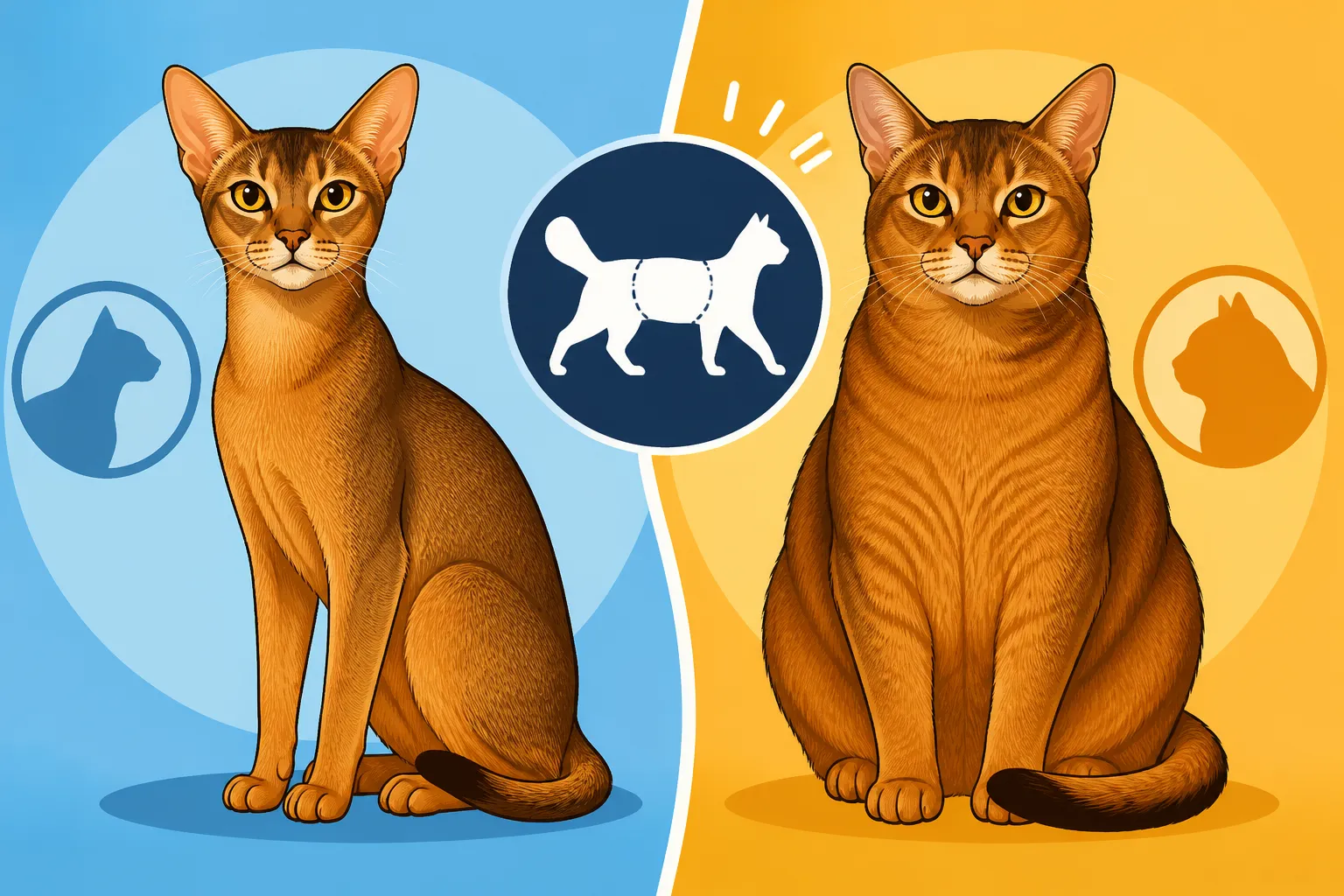
When people describe a European Abyssinian as “heavier,” they may not mean the cat weighs substantially more. Often, they mean its body looks broader through the chest, shoulders, or hindquarters, or that its bones and muscles appear more substantial. A cat with a wide stance and a solid-looking frame can seem heavier than a narrow, fine-boned cat even when both are in healthy condition.
The contrast is easiest to notice when two adult cats stand side by side. One may look long-legged and finely drawn, with a narrow waist and a graceful outline. The other may have a deeper chest and a more rounded-looking body while still being lean and athletic. That visual difference is part of the reason people compare regional lines, though it does not apply to every cat from either region.
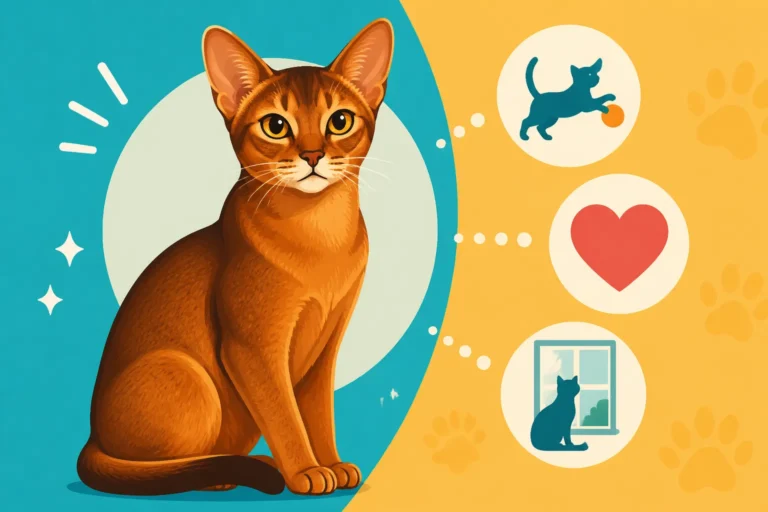
Abyssinians are generally medium-sized, active cats with a muscular, lithe build. “Substantial” should not mean clumsy, barrel-shaped, or slow-moving. If a cat looks rounded across the abdomen, has no visible waist from above, or is difficult to feel around the ribs, body condition deserves a closer look rather than an assumption that the appearance is simply European type.
For a closer look at the shape expected in the breed, see What an Abyssinian's Body Type Is Called. It helps explain why a cat can look athletic and strong without having the bulky outline people often associate with a heavier breed.
Regional style is a tendency, not a fixed rule
There is no single European Abyssinian shape that every breeder follows. Europe includes many countries, registries, and breeding programs, and cats within those programs vary. Likewise, American Abyssinians are not all identical or uniformly fine-boned. A breeder’s particular line can matter more than the continent where the cat was born.
Show standards can influence the look breeders aim for. Different registries may describe proportion, balance, head shape, body, and overall type in slightly different ways. Even within one standard, judges assess the whole cat rather than rewarding a single feature such as weight or width. A broad-looking cat is not automatically more correct, and a slender-looking cat is not automatically less correct.
The distinction can also be exaggerated in photos. A low camera angle, a relaxed pose, a thick winter coat, or a cat standing with its legs tucked under can make the body look shorter and heavier. A stretched-out cat photographed from above may seem much more slender. When comparing cats, look at several views and consider age, sex, posture, and body condition—not one carefully chosen image.
If you want to understand how judges assess overall appearance, What an Abyssinian Show Standard Asks For provides useful context. The standard describes a coordinated outline, rather than a simple preference for a heavier or lighter cat.
Why European and American lines may look different
Breeding goals shape the silhouette
Breeders make choices over generations, and those choices can gradually influence a line’s appearance. If a breeding program consistently favors cats with a particular balance, body proportion, or substance, that look may become more familiar in its kittens. A regional reputation can grow from these patterns, even though there is plenty of variation from one cattery to another.
It is more accurate to think in terms of breeding lines than to assume that geography alone determines a cat’s build. A European kitten may come from a fine-boned line; an American kitten may be more robust than expected. A breeder can often describe the typical adult appearance in their family of cats and may show photos of related adults, which can be more informative than a broad label such as “European type.”
This is especially helpful when choosing a kitten. Kittens change dramatically as they grow, and their proportions can look temporarily awkward. A lanky young cat may later develop more muscle and depth, while a kitten that looks compact may lengthen as it matures. Ask to see adult relatives and discuss the line’s usual development rather than treating a kitten’s current shape as a final prediction.
The breed’s overall outline is described in What an Abyssinian Looks Like Against the Show Standard. For a separate look at how proportions differ between sexes, How a Male and Female Abyssinian Differ in Size can help set more realistic expectations.
Coat and posture can make a cat seem larger
The Abyssinian’s short, close-lying coat usually reveals the body’s outline clearly, but appearance still changes with lighting and posture. A cat standing with its weight evenly distributed can look broader than the same cat stretched out along a sofa. A puffed tail or tense stance can also make the silhouette seem larger for a moment.
Coat color and ticking affect how the eye reads the body. Darker shading along the back, a lighter underside, and the shifting bands of the coat can create visual contours that seem to add depth. In bright light, the coat may appear sleek; in softer light, shadows can make the shoulders and flanks look fuller. These effects do not tell you whether a cat is overweight.
Age matters too. A young adult may still be filling out, while an older cat may lose muscle and look less substantial even if its weight has not changed much. Pregnancy, recent illness, changes in activity, and seasonal shifts can also affect a cat’s outline. That is why a quick glance is less useful than tracking body condition over time.
The coat itself is part of the breed’s distinctive look, not a reliable measure of size. What Makes an Abyssinian's Coat Ticked Rather Than Striped explains the coat pattern that can make the body’s shading look different as the cat moves.
How to tell build from body condition
Check shape and feel, not just the number on a scale
A cat’s weight is only one piece of information. Healthy weight varies with frame, sex, age, and muscle, so a number that is appropriate for one Abyssinian may not suit another. Instead of comparing your cat with a neighbor’s cat or an online photo, ask a veterinarian to assess body condition and establish a useful baseline.
At home, look for a waist when viewing your cat from above and a gentle upward tuck of the abdomen from the side. You should be able to feel the ribs beneath a light covering without pressing hard, but they should not be sharply prominent. These checks are not a substitute for an examination, but they can help you notice gradual changes between veterinary visits.
A naturally broad cat can still have a waist and ribs that are easy to feel. An overweight cat may lose that waist, develop a rounder abdomen, or accumulate fat over the lower back. Conversely, a cat that appears slim may have lost muscle, especially if it is older or has been unwell. The short coat can make weight loss easier to notice in some areas, but it does not guarantee that small changes will be obvious.
If you need a consistent way to track weight at home, a suitable pet scale can help, and retailers such as Chewy carry pet-care supplies including scales. The important part is using the same method over time and sharing noticeable changes with your vet. Avoid putting a cat on a restrictive diet based only on appearance; sudden or poorly supervised food changes can cause problems.
| What you notice | What it may suggest | What to do |
|---|---|---|
| Broad chest and shoulders, with a visible waist | A naturally substantial frame may be likely | Ask your vet to assess body condition at routine visits |
| Ribs are difficult to feel and the waist is hard to see | Excess body fat may be contributing to the heavier look | Discuss feeding, activity, and a safe plan with your vet |
| A cat looks narrower or loses muscle over time | Weight or muscle loss may be occurring | Arrange a veterinary check, especially if appetite or behavior has changed |
| The cat looks different only in certain photos or poses | Camera angle, posture, or lighting may be affecting the impression | Compare relaxed standing views and track actual weight |
Changes deserve attention even in a naturally sturdy cat
Owners sometimes dismiss a change in outline because their cat has always been “the bigger type.” That can delay noticing either weight gain or illness-related weight loss. What matters most is the cat’s own pattern. If the waist has gradually disappeared, or the ribs have become easier to feel than before, the change is worth discussing rather than attributing it automatically to regional ancestry.
Pay attention to appetite, water intake, litter-box habits, play, and climbing as well as body shape. A cat that loses weight while eating normally, seems unusually thirsty, stops jumping, or becomes quieter may need a veterinary assessment. The same applies to a cat that gains weight despite no obvious change in feeding or activity. A short coat can disguise subtle muscle loss, so regular hands-on checks are useful.
A simple log can help. Record the date, weight if you can obtain it consistently, appetite, and any noticeable change in activity. You do not need to weigh your cat obsessively; the goal is to notice a trend and communicate it clearly. If your cat resists being handled or weighed, do not turn it into a stressful daily struggle. Let your veterinary team advise you on a practical approach.
Food labels and feeding guides can be a starting point, but they do not account perfectly for each cat’s activity and body shape. If you are comparing foods or planning a change, retailers such as Chewy offer a range of cat food options, but your veterinarian can help determine what suits your individual cat. For broader background on the breed’s proportions, see How Big an Adult Abyssinian Gets and How Much an Adult Male Abyssinian Weighs.
What to ask when choosing a European Abyssinian
Ask about the actual line, not just the label
If you are speaking with a breeder, ask what adult cats from that line typically look like and how their build develops as they mature. Request to see photos of the parents and, if possible, other adult relatives. Ask whether the breeder describes their cats as fine-boned, moderate, or more substantial, and what those words mean in that particular cattery.
It is also reasonable to ask how the breeder assesses body condition. A responsible breeder should be able to distinguish a healthy, muscular adult from a cat carrying excess weight. If every question about appearance is answered with “European cats are just bigger,” ask for more detail. Broad regional descriptions are less useful than clear information about the individual parents and relatives.
Do not choose a kitten solely because it looks especially solid or unusually slender at a young age. Temperament, health, socialization, and the fit between the cat’s needs and your household matter far more than a small difference in silhouette. Which Household an Abyssinian Fits Best can help you consider whether the breed’s energy and companionship needs suit your day-to-day life.
Compare adults under similar conditions
When comparing adult Abyssinians, try to compare like with like: similar age, sex, posture, and body condition. A young male and a mature female may naturally look different, and a relaxed cat can appear broader than one standing alert. A photo of one cat beside a familiar object may also be misleading if camera distance and angle differ.
Ask about the parents’ weight history and whether their size has remained stable as adults. If a breeder mentions a specific expected weight, treat it as an estimate rather than a guarantee. Frame, muscle, and health matter more than matching a single number. A cat can be healthy at a weight that differs from another Abyssinian of the same sex.
Ultimately, “European Abyssinians look heavier” is a useful shorthand for a style that some people notice in certain lines, not a dependable rule about every cat. Judge the individual: look at its proportions, feel its body condition, ask about its family, and get veterinary guidance when its shape changes. If you are also comparing the breed with other cats, How an Abyssinian Differs From a Bengal offers a separate comparison of their overall appearance.
Disclaimer
This article is for general informational purposes only and does not constitute professional advice. Laws, prices and regulations vary by location and change over time. Consult a qualified professional for guidance on your specific situation.