Which Household an Abyssinian Fits Best
An Abyssinian can be a wonderful fit for a lively home—and a draining surprise in one that expects a cat to entertain itself quietly all day. This guide helps you assess your household’s routines, space, people and other pets, so you can decide whether you can meet this curious, energetic cat’s needs before bringing one home.
The household that suits an Abyssinian’s personality
A home with time for interaction
Abyssinians tend to want company, activity and a role in whatever is happening around them. They may follow you from room to room, supervise chores from a shelf and turn a quiet evening into a game of chase. They are often affectionate, but their affection may look more like staying close than curling up on a lap for hours.
That energy is a delight if you enjoy an involved pet. It can be frustrating if you want a cat who is content to nap nearby while you work, or one who rarely asks for attention. An Abyssinian may settle beside you, but many prefer to move between people, perches and playthings rather than stay in one place. For a fuller sense of the breed’s day-to-day pace, see Why the Abyssinian Is the Busiest Cat in the House.
A good match does not mean you need to play every waking moment. It does mean you should enjoy regular interaction: a few focused play sessions, short training games, or time spent talking and engaging with your cat. A wand toy, a food puzzle or a game of fetch can turn a spare stretch of the day into something your cat looks forward to. If you buy toys or puzzle feeders through Chewy or another retailer, rotate a few at a time rather than leaving every option out; familiar toys often become background clutter.
A household that enjoys a curious companion
Abyssinians are observant and quick to investigate. A closed door, a cupboard left ajar or a new package on the floor may become a small mystery to solve. They can learn routines quickly, including less convenient ones, such as the sound of a treat bag or the exact time you usually get up.
This is a good fit for someone who enjoys a bright, participatory cat and can respond with safe outlets rather than constant corrections. Put tempting breakables away, secure food and medications, and use sturdy latches where needed. Give the cat approved places to climb and explore so that curiosity has somewhere suitable to go.
It helps to think of an Abyssinian less as a decorative presence and more as an active member of the household. If you find a cat’s antics funny and like teaching simple cues or setting up little challenges, the relationship can be deeply rewarding. If you need a pet who mostly stays out of the way, the same behavior may feel like an ongoing negotiation.
Space, schedules and daily care
Apartments can work when the space is made interesting
An Abyssinian does not need a large house simply for the sake of floor area. A smaller home can suit one well if it offers safe climbing routes, places to perch, daily play and chances to watch the world. The key is to use the space vertically as well as horizontally: a stable cat tree, secure shelves, window perches and scratching posts can make a compact room feel more engaging. For more on the apartment question, read Whether an Apartment Suits an Abyssinian.
Before adding shelves or a tall cat tree, check that each surface is secure and that the route between levels is manageable. A cat that leaps confidently may still misjudge a slippery landing or a narrow shelf near a fragile object. Keep cords, toxic plants, small swallowable items and open windows in mind when planning the room. A screened window or a safely enclosed outdoor space can provide stimulation without letting the cat roam loose.
A quiet apartment with little enrichment may be harder to manage than a larger, busier home. If you rent, check what modifications are allowed before drilling shelves into walls. Freestanding climbing furniture, well-anchored posts and a window seat that fits your space can still create a useful indoor route. Chewy and local pet stores are among the places owners may look for basic enrichment supplies, but check dimensions, stability and customer feedback before choosing a tall structure.
Long workdays require a realistic plan
Abyssinians often do best when their day includes more than a food bowl and an empty room. That does not mean every owner needs to be home all day; it does mean you should plan for what the cat will do while you are away. A reliable routine might include active play before work, a meal in a puzzle feeder, safe climbing options and another play session after you return.
If your household is out for long stretches, consider whether someone can provide company or interaction during the day. A compatible second cat can help in some homes, but it is not a guaranteed substitute for human attention, and introductions need to be handled carefully. If you are weighing the routine and companionship question, Why an Abyssinian Should Not Be Left Alone All Day offers a closer look at what long absences can mean for this breed.
A camera may help you see whether your cat is resting, playing or persistently looking for activity, but it cannot replace a suitable setup or companionship. Try a simple trial before committing: set aside time each day for interactive play and enrichment, and be honest about whether that routine feels enjoyable or like one more demand you cannot sustain. If your work schedule changes often, make a backup plan with another household member, a trusted visitor or a pet sitter.
| Household situation | Likely fit | What to plan for |
|---|---|---|
| Active household with regular playtime | Often a strong fit | Daily interaction and safe climbing options |
| Apartment with limited floor space | Can work well | Vertical space, window interest and secure furniture |
| Home empty for long stretches | Needs extra planning | Enrichment, a reliable routine and possible companionship |
| Quiet home seeking a low-key cat | May be a mismatch | High curiosity and frequent bids for engagement |
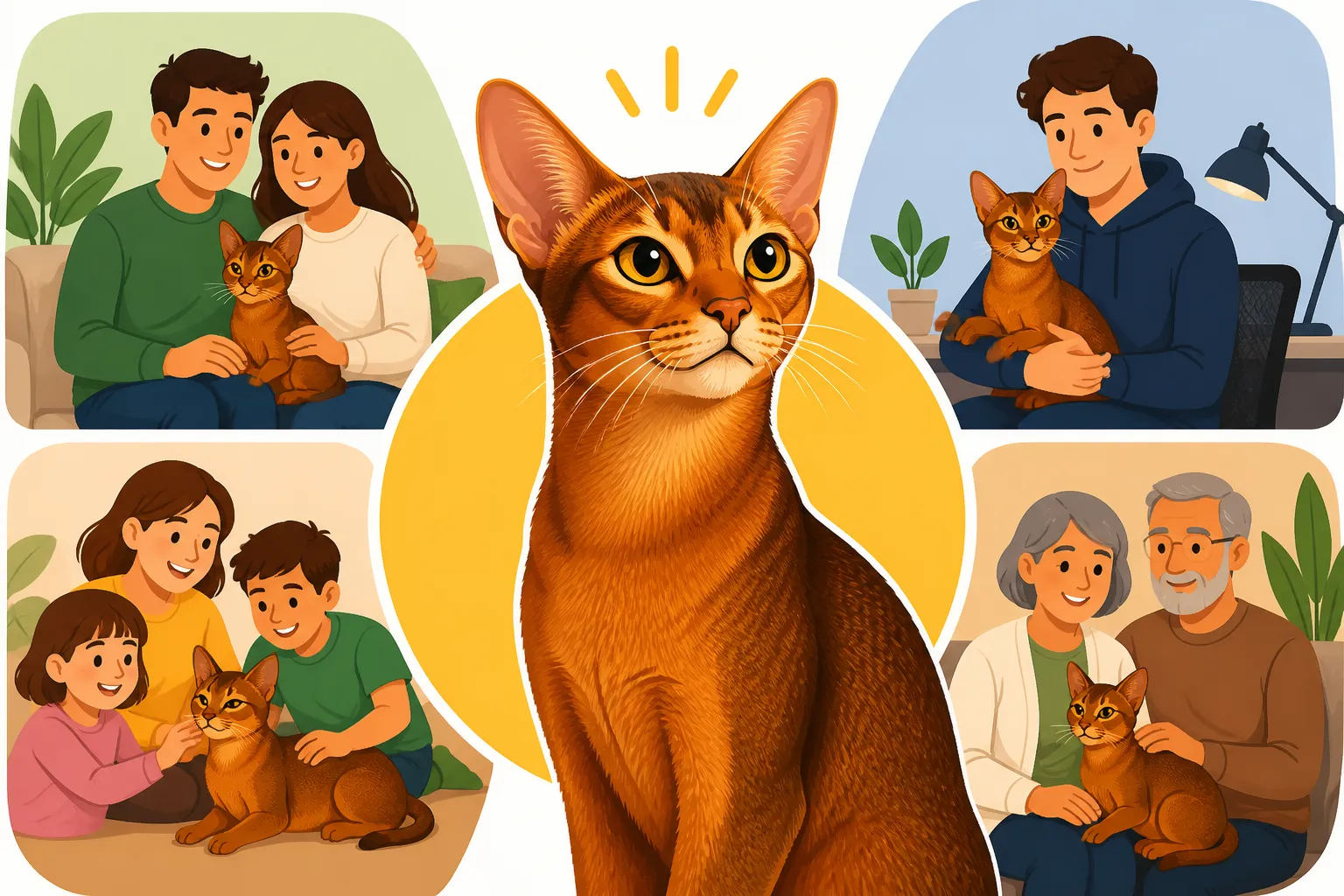
| Family with older, respectful children | Often a good fit | Gentle handling, boundaries and supervised play |
| Home with a dog or another cat | Depends on the individuals | Slow introductions and safe retreat spaces |
Children, other pets and household dynamics
Families with children
An Abyssinian may enjoy a lively family, especially when children understand that a cat is a companion, not a toy. Older children who can play gently, respect resting time and help with simple care routines may be a particularly good match. They can take part in wand-toy games, help prepare puzzle feeders and learn to notice when the cat wants space. See Why an Abyssinian Suits a Household With Older Children for more on this kind of family fit.
With younger children, adult supervision matters. A fast, curious cat can be exciting to chase, and a child’s enthusiastic handling can make even a sociable cat feel cornered. Set clear rules: no picking the cat up without permission, no disturbing it while it eats or sleeps, and no pulling at its tail or paws. Give the cat a child-free retreat where it can rest undisturbed.
The fit also depends on the adults’ expectations. Children may promise to handle every feeding and play session, but adults remain responsible for the animal’s care. If the household is already stretched by school schedules, activities and work, think carefully about whether you can maintain the routine when the novelty wears off.
Dogs and other cats
Abyssinians can live with other animals, but individual temperament and a careful introduction matter more than assumptions about breed. A calm, cat-savvy dog may be easier to pair with than one that chases small animals. Give the cat high routes and dog-free areas, and use gradual introductions that let both animals observe each other without being forced into close contact. For a practical look at the relationship between the two, see How an Abyssinian and a Dog Work Out Their Ranking.
A second cat may provide company, especially if both cats enjoy play and have compatible energy levels. But adding another cat is not an automatic fix for boredom. A calmer resident cat may find a lively Abyssinian overwhelming, while two energetic cats may need more space, play and separate resources than one. If you are considering a feline companion, Whether an Abyssinian Can Be an Only Cat can help you think through the trade-offs.
For any introduction, set up separate food and water areas, litter boxes and resting spots. Start with separation, then allow the animals to become familiar with each other’s scent and presence at a pace they can manage. Rushing because you hope they will “sort it out” can create lasting stress. Watch for avoidance, guarding, repeated chasing or changes in eating and litter habits, and slow down if either animal seems uncomfortable.
When an Abyssinian may not be the right match
Signs your household may prefer a different cat
An Abyssinian may be a poor fit if you want a very independent pet, dislike climbing and exploration, or cannot provide regular play and attention. The same is true if you need a cat who will reliably spend long periods alone without support, or if your home cannot be made safe for a determined climber and investigator.
It is also worth pausing if household members disagree about the cat’s role. One person may love a cat that jumps onto counters and follows visitors, while another may find those behaviors stressful. Before deciding, talk about boundaries, care responsibilities, furniture protection, costs and what you will do when the cat’s energy is inconvenient rather than charming.
Breed tendencies are not guarantees. A particular Abyssinian may be more reserved or more easygoing than expected, and kittens can be especially busy. Meet the individual cat, ask about its temperament and routine, and consider whether the breeder or rescue can describe how it behaves with people and other animals. The broader guide Whether the Abyssinian Is the Right Cat for You is useful if you are comparing this breed with your lifestyle overall.
A practical readiness check
Before bringing an Abyssinian home, make sure you can answer yes to the questions that matter for your household:
- Can you make time for interactive play and companionship most days?
- Can you provide sturdy climbing and scratching options, even in a small home?
- Have you secured likely hazards such as medications, cords, toxic plants and fragile items?
- Does everyone in the home understand how to handle the cat respectfully?
- If you work long hours, do you have a realistic plan for enrichment and company?
- If there are other pets, can you introduce them gradually and provide separate resources?
- Can you adjust the setup if your cat’s needs change with age or health?
If you are unsure, spend time around adult Abyssinians if possible and ask owners what the everyday routine is actually like. A kitten’s charm can make it easy to overlook the practical side: play sessions, safe room setup, veterinary care and the patience required during introductions. A thoughtful transition also matters once you choose a cat. How to Settle an Abyssinian in a New Home covers ways to give a new arrival time and space to adjust.
The best household is not necessarily the biggest or busiest one. It is a home where people enjoy an engaged, athletic cat, can provide safe outlets for its curiosity, and are willing to make room for its daily needs. When that description sounds like your life—not just the version you hope to have—the match is more likely to feel good for both you and the cat.
Disclaimer
This article is for general informational purposes only and does not constitute professional advice. Laws, prices and regulations vary by location and change over time. Consult a qualified professional for guidance on your specific situation.