How Judges Check an Abyssinian’s Ticking
Abyssinian ticking can look effortless when the coat is healthy, but judges assess more than whether the fur appears pretty or evenly colored. They examine how each hair is banded, how the color sits across the body, and whether the coat’s texture and pattern fit the applicable breed standard. This guide explains what judges look for and what owners can realistically do at home.
What ticking means on an Abyssinian
Each hair carries the pattern
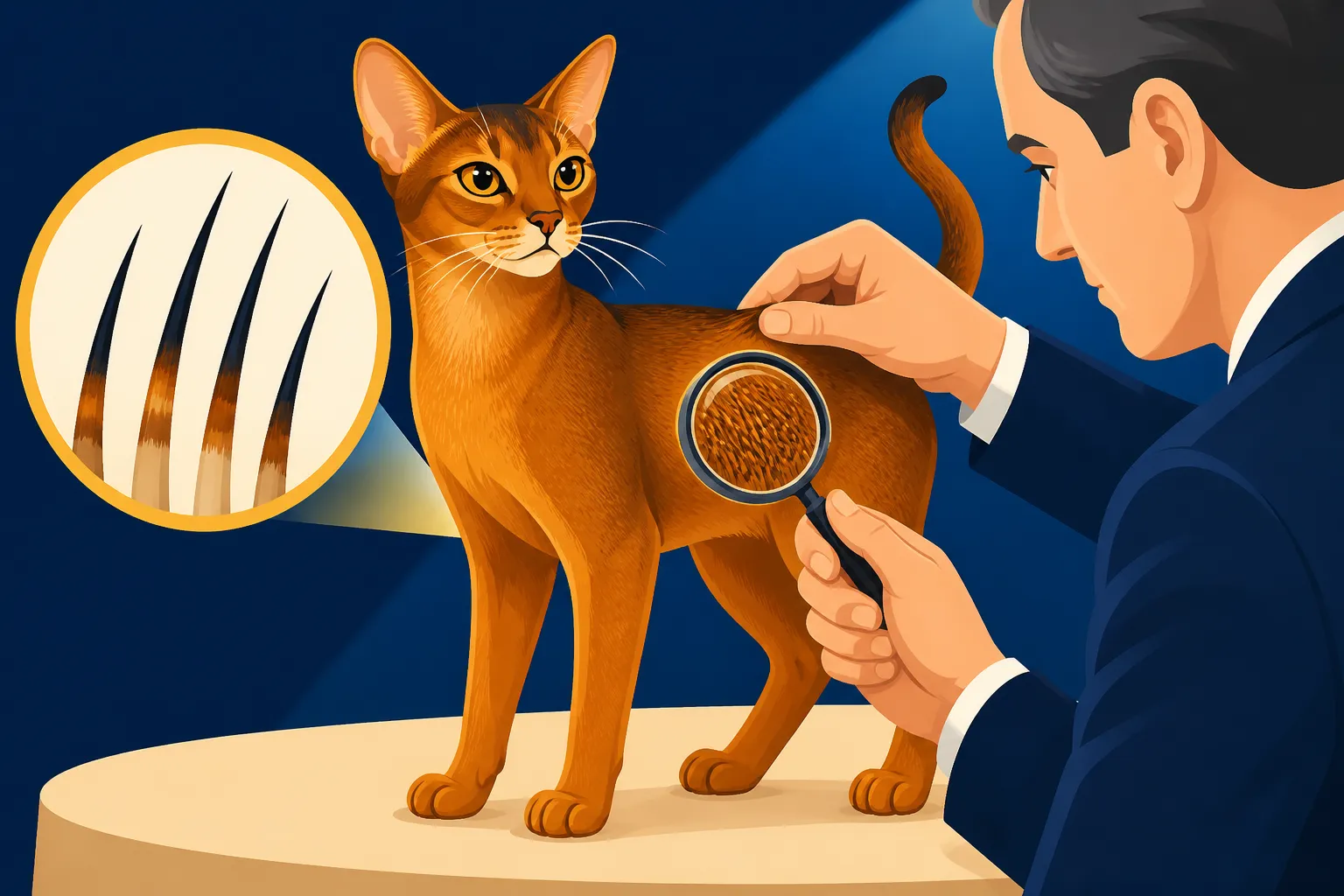
An Abyssinian’s coat is agouti, meaning individual hairs have alternating light and dark bands rather than a single solid color from root to tip. This is what creates the breed’s distinctive, softly shifting appearance. From across the show ring, the coat can seem almost unpatterned; up close, its color is built from many tiny bands.
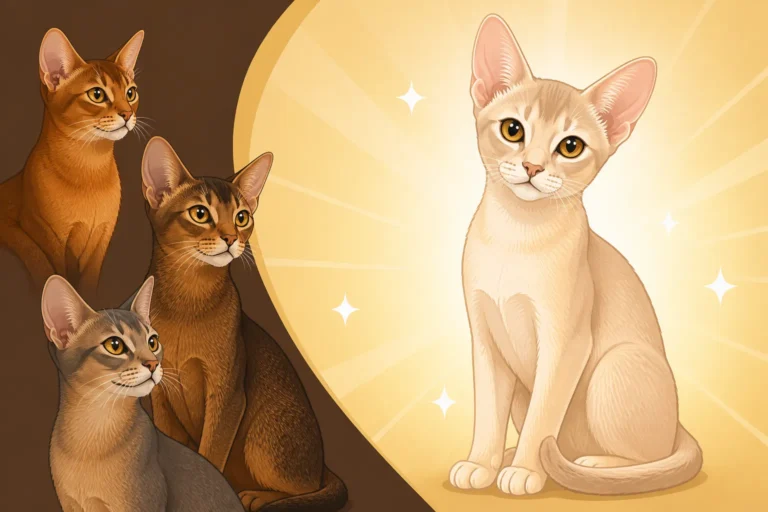
Judges are assessing the overall effect of that banding as well as the individual hairs. They look for clear, even ticking across the body, with color that appears rich and lively rather than muddy or flat. The ideal result depends on the cat’s registered color and the standard used by the show organization. A ruddy cat and a blue cat won’t have identical band colors, for example, but each should show the characteristic agouti pattern for its variety.
The underlying coat structure matters, too. Abyssinians have a short coat that lies close to the body, so the ticking is easy to see. The pattern is not supposed to resemble stripes or spots. For a closer explanation of the coat’s underlying genetics and appearance, see What Makes an Abyssinian's Coat Ticked Rather Than Striped.
The overall color matters as much as the bands
A judge doesn’t evaluate a single hair in isolation. They consider how ticking appears over the whole cat: across the shoulders, back, flanks, legs, and tail. Evenness matters, but it does not mean every part of the body should look exactly identical. The breed standard may describe differences in color across particular areas, and judges assess those details in context.
The coat should also look like one coherent color variety. If some areas appear much duller, paler, or more strongly shaded than others, a judge may consider whether the color is uneven or whether the coat is still developing. A kitten or young adult can change in appearance as its adult ticking comes in, so a show judge is assessing the cat on the day rather than assuming its coat has finished maturing.
Natural lighting can make ticking appear different from one moment to the next. A coat that looks warm in sunlight may look cooler under indoor lights. Judges are used to assessing cats under show conditions and should consider the coat as a whole, rather than relying on one flash of color. The way the coat reflects light is part of its appeal, but shimmer alone doesn’t establish quality. Why an Abyssinian's Coat Looks Different in Every Light explains why the same cat can seem to change color as it moves.
How judges examine ticking in the show ring
They assess the cat from a distance and up close
A judge typically gets an overall impression before examining finer details. From a little distance, they can see whether the coat reads as a clear, distinctive Abyssinian color and whether the ticking is distributed across the body. They may then handle the cat and inspect the coat more closely, parting or feeling it to understand its texture and color.
This two-part assessment matters because a coat can look impressive in one small area but uneven overall. A very striking shoulder, for instance, cannot make up for a noticeably flat or inconsistent appearance elsewhere. Conversely, tiny variations in individual hairs may be less important than the overall impression if the coat presents clearly and fits the standard.
Judges also assess ticking alongside the rest of the cat’s conformation and condition. Coat quality is one element of a broader evaluation, not a standalone contest. The exact wording and weighting of breed traits can vary between registries and show systems, so an exhibitor should use the standard that applies to their event rather than treating one judge’s preference as a universal rule.
They look for the right pattern, not stripes
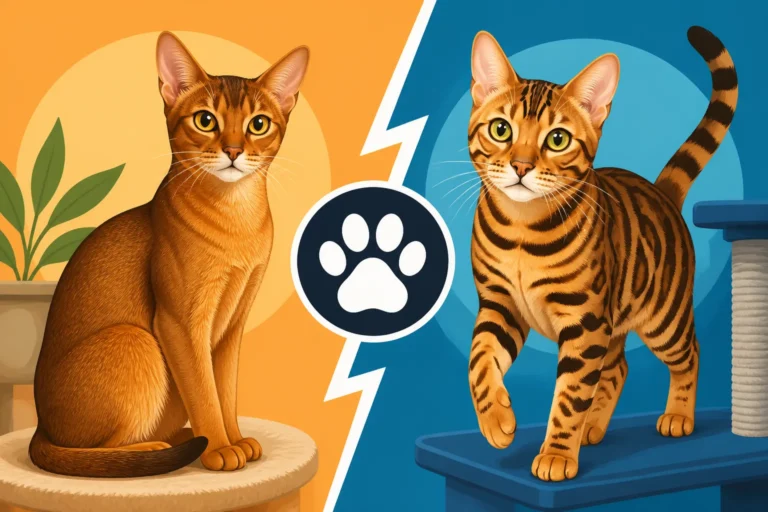
Because ticking is created by banded hairs, visible bars or obvious tabby stripes can detract from the desired appearance. Judges may notice barring on the legs, tail, or other areas, and they may look for markings that interrupt the clean, even impression of the coat. The standard’s wording determines how particular markings are evaluated.
That does not mean a single faint mark automatically decides a cat’s placement. Show judging considers the overall quality and the specific standard, and judges compare the cats present in that class. A marking that is subtle on one cat may be more pronounced on another. The practical point is that Abyssinian ticking should give the impression of a clear agouti coat, not a striped or blotched one.
Here is a simple way to think about the main features judges may consider:
| Feature | What the judge may assess | What owners can observe at home |
|---|---|---|
| Banding | Whether individual hairs show the expected alternating bands | Look closely at the coat in natural, indirect light |
| Coverage | Whether ticking appears across the body rather than only in a few areas | Check the back, sides, shoulders, and legs |
| Color | Whether the overall coat fits the registered variety | Compare the cat with the applicable breed standard |
| Clarity | Whether the coat reads as clean and distinct rather than muddy or heavily marked | Notice whether stripes or uneven patches dominate |
| Texture | Whether the short coat lies close and shows the pattern clearly | Check for coat condition changes, not just color |
| Presentation | Whether the cat is clean and in good condition | Keep grooming gentle and avoid products that alter the coat |
Breed standards are detailed and registry-specific. For the broader features judges assess, see What an Abyssinian Show Standard Asks For. For a closer look at coat banding, How Many Bands an Abyssinian Hair Carries offers more background.
They distinguish coat pattern from coat condition
A coat can be naturally less vivid because of age, season, health, or individual variation. It can also look poor because it is dirty, greasy, dry, or damaged. Those are not the same issue. Judges assess what they see in the ring, but a dull appearance does not automatically tell an owner why the coat looks that way.
Condition can affect how easily the ticking shows. Excess oil or dirt may make hairs cling together, while rough or damaged hair may catch light differently. Seasonal coat changes can also alter density and appearance. If a coat changes suddenly, or the cat seems unwell, the right response is to consider health and routine care—not to assume the problem is merely cosmetic.
A show judge can identify visible qualities in the ring, but cannot diagnose the cause of a coat change through judging alone. An owner concerned about a persistent change should discuss it with a veterinarian, particularly if it comes with itching, hair loss, weight changes, or other signs of illness.
What owners can do to support a clear coat
Keep grooming gentle and consistent
Abyssinians generally need modest coat maintenance. A gentle weekly pass with a grooming mitt or suitable comb can lift loose hair and help keep the coat tidy without flattening or stripping its natural appearance. The goal is not to force the coat into a particular color or texture. Over-grooming can irritate the skin or disturb the coat, and harsh deshedding tools may be inappropriate for a short, close-lying coat.
If you are shopping for grooming basics, retailers such as Chewy may carry grooming mitts and combs, but the tool should suit your cat’s coat and tolerance—not just its label or marketing. Use light pressure and stop if your cat becomes uncomfortable. Some cats are happy to be groomed for a minute or two, while others prefer a brief session paired with play or treats.
A soft cloth or grooming mitt may be enough for routine care. A chamois is sometimes used to bring out the coat’s natural sheen, but it should never be used to hide a problem or alter the coat’s texture. If you are unsure whether a product is appropriate, ask your veterinarian or an experienced Abyssinian exhibitor. An Abyssinian Needs Brushing Once a Week and No More explains why restraint is often better than an elaborate grooming routine.
Avoid trying to change the coat for the ring
It can be tempting to try a new shampoo, conditioner, or finishing product before a show, especially if the coat seems less vibrant than expected. That last-minute experiment can backfire. A cat may react to an unfamiliar product, the coat may feel different afterward, or the result may not match the standard’s expectations for natural presentation.
If a bath is genuinely needed, use a product appropriate for cats and follow its directions. Don’t use human shampoo or dye, and don’t try to darken, lighten, or otherwise change the coat color. These interventions can irritate the skin and may violate show rules. If a show is approaching, ask the show organization or a knowledgeable breeder about permitted preparation rather than relying on hearsay.
Chewy can be one place to compare ordinary cat grooming supplies, but a product listing cannot tell you whether a treatment is suitable for your individual cat or allowed at a particular show. When in doubt, choose simple, familiar care over a new “coat-enhancing” product. More detail on preserving the coat’s natural appearance is available in Why the Wrong Brush Flattens an Abyssinian's Ticking.
Watch the coat over time
A single close-up photo or a quick glance under a kitchen light isn’t a reliable way to assess ticking. Check your cat’s coat in consistent, indirect natural light and look at several areas. You might notice that the back looks richly colored while the sides appear softer, or that the coat changes with the seasons. Keeping occasional notes or photos under similar conditions can help you distinguish a normal variation from a genuine change.
For a pet cat, the priority is healthy skin and a comfortable, clean coat—not show-ring perfection. If you are preparing for competition, an experienced breeder or mentor can help you interpret the standard and understand how your cat’s coat compares. A retailer such as Chewy may help with routine supplies, but grooming tools won’t correct inherited pattern characteristics or replace professional advice when the coat changes unexpectedly.
Finally, remember that a judge’s assessment is a snapshot. Different cats in the class, the applicable standard, and the judge’s evaluation all influence the result. A placement is useful feedback, but it is not a complete verdict on your cat’s health, value, or suitability as a companion. For additional coat-care context, see How a Weekly Comb Preserves an Abyssinian's Banding and Why an Abyssinian's Single Ticked Coat Barely Sheds.
Disclaimer
This article is for general informational purposes only and does not constitute professional advice. Laws, prices and regulations vary by location and change over time. Consult a qualified professional for guidance on your specific situation.