How Many Bands an Abyssinian Hair Carries
One of the most captivating things about the Abyssinian is their incredible coat, a shimmering tapestry of color that seems to shift with every movement. But for many new Abyssinian parents, the intricate beauty of this "ticked" coat can be a bit of a mystery, leaving them wondering what exactly makes it so unique and how it impacts their cat's care. This guide will unravel the fascinating science behind each strand of Abyssinian hair, explaining the specific banding patterns that create their distinctive look, and how this affects everything from grooming to understanding their overall health.
The Marvel of the Ticked Coat: What It Means for an Abyssinian
The Abyssinian coat is truly a wonder, often described as looking like a miniature cougar or a wild rabbit. It's not striped, nor is it solid; it's something entirely different and utterly captivating. This unique appearance comes down to a specific genetic trait known as ticking, which isn't just a pattern on the surface but deeply embedded within each individual hair shaft. Understanding this ticking is key to appreciating the Abyssinian's beauty and knowing how to best care for their distinct fur.
Understanding the Agouti Gene
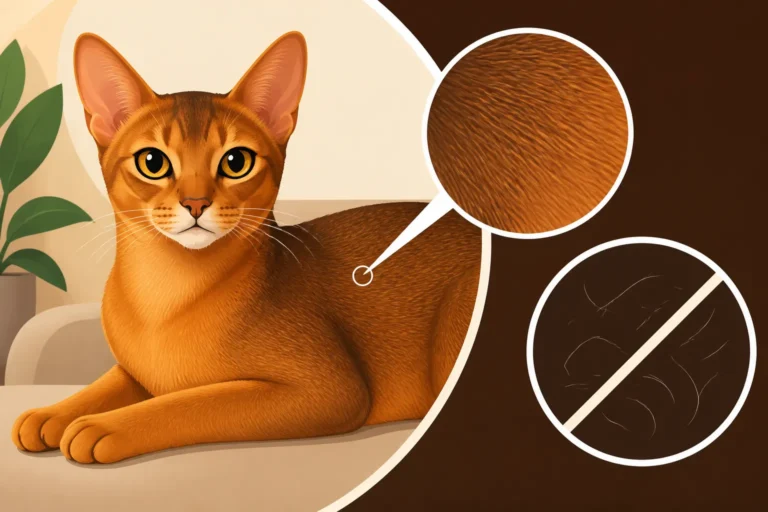
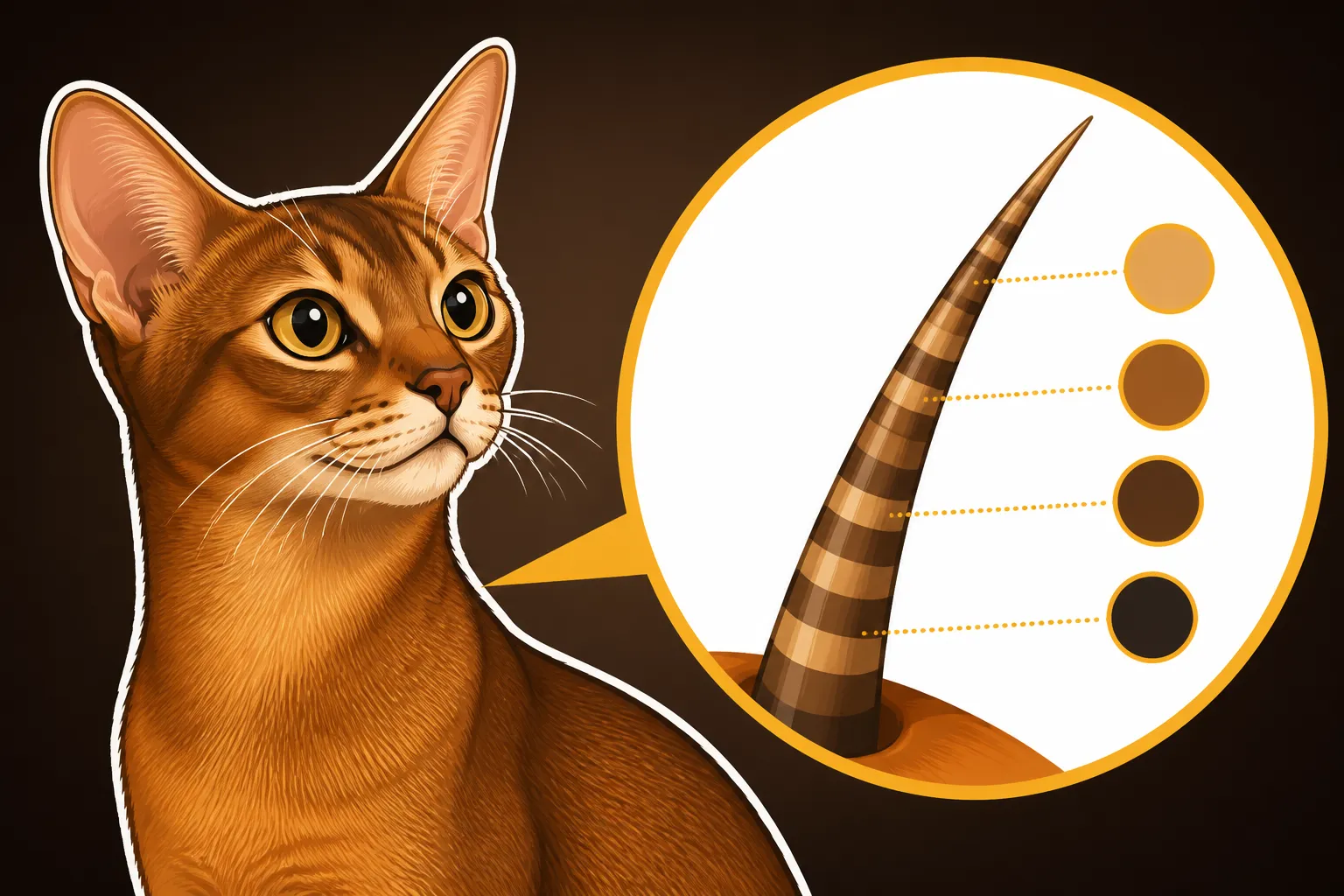
At the heart of the Abyssinian's ticked coat is the agouti gene. This gene is responsible for controlling the distribution of pigment along each individual hair shaft, creating bands of color rather than solid color or distinct stripes. Think of it like a tiny, natural gradient built into every single hair. Instead of having a single, uniform color from root to tip, an Abyssinian's hair is a miniature rainbow of pigments. This genetic blueprint is what differentiates them so dramatically from cats with classic tabby patterns, where the agouti gene creates areas of solid color and areas of banded hair, resulting in stripes or spots. With the Abyssinian, the agouti effect is maximized across almost their entire body. You might be surprised to learn that even a "solid" black cat technically has the agouti gene, but it's switched off, so the color is uniform. For the Abyssinian, it's very much active and dictating their signature look. What Makes an Abyssinian's Coat Ticked Rather Than Striped delves deeper into this fascinating genetic difference.
The Bands Unveiled: Counting the Colors on a Single Hair
So, to answer the burning question: how many bands does an Abyssinian hair actually carry? Typically, each individual Abyssinian hair boasts three or four distinct bands of color along its shaft. These aren't always evenly spaced, and the colors transition smoothly, creating a blend rather than harsh lines. At the base of the hair, you'll usually find a lighter, warmer color, like a deep apricot or a sandy beige, depending on the cat's overall colorpoint. As you move up the shaft, there will be darker bands, often black or deep brown for a ruddy Abyssinian, or a slate blue for a blue Abyssinian. The very tip of the hair will then finish with a darker shade again, contrasting beautifully with the lighter bands below. This intricate banding, repeated millions of times across their body, is what gives the Abyssinian its signature "ticked" appearance, making their coat incredibly rich and complex without any stripes or spots. Why Each Abyssinian Hair Carries Three or Four Bands explores this in even more detail.
The Visual Impact: How Ticking Creates Abyssinian Beauty
The multiple bands of color on each hair shaft aren't just a genetic curiosity; they're the secret ingredient to the Abyssinian's stunning visual appeal. This unique structure impacts how light interacts with their coat, giving them an almost ethereal glow and a depth of color that's truly captivating. It's why they can look so different in various lighting conditions, from the bright sunshine to the soft glow of indoor lamps.
The Illusion of Movement and Depth
Because each hair is banded with alternating light and dark pigments, the Abyssinian's coat doesn't just lie flat and static. Instead, it creates a dynamic play of light and shadow, giving the impression of constant movement and incredible depth. When an Abyssinian trots across the room, you might notice their coat seeming to shimmer or ripple, almost like silk. This isn't just your imagination; it's the light catching the different bands on the thousands of hairs, reflecting back a kaleidoscope of shades. This effect is particularly pronounced when they are active, which, as any Abyssinian owner knows, is most of the time! Their streamlined, muscular bodies are perfectly complemented by a coat that appears as fluid and energetic as they are. This visual depth also contributes to their "wildcat" look, adding to the mystique of the breed.
Avoiding the Pitfalls of Barring
While ticking is celebrated, one of the key elements of the Abyssinian breed standard is the absence of "barring" or "striping." Barring refers to unwanted tabby markings that can sometimes appear on the legs, tail, or even around the neck (often called a "necklace"). These markings indicate a less refined expression of the agouti gene, where the ticking isn't uniformly distributed, or the pigment bands become too wide or distinct, forming a stripe. For breeders and show enthusiasts, a clean, unbarred coat is highly prized, as it signifies true adherence to the breed's unique appearance. It's a testament to the careful selective breeding that has gone into maintaining the Abyssinian's distinct ticked pattern. A perfect Abyssinian coat should look like finely powdered gold, copper, or silver, with no disruptive lines or spots to interrupt the overall flow of color. You can learn more about how their appearance is judged in What an Abyssinian Looks Like Against the Show Standard.
Grooming an Abyssinian: Embracing Simplicity
Considering the complex structure of each Abyssinian hair, you might expect that grooming would be an arduous task. Thankfully, the opposite is true! The very nature of their ticked coat, combined with their minimal undercoat, makes them one of the easiest breeds to maintain. This is excellent news for busy owners, as it means less time battling shedding and more time enjoying their energetic companion.
Why the Wrong Brush Can Damage the Ticking
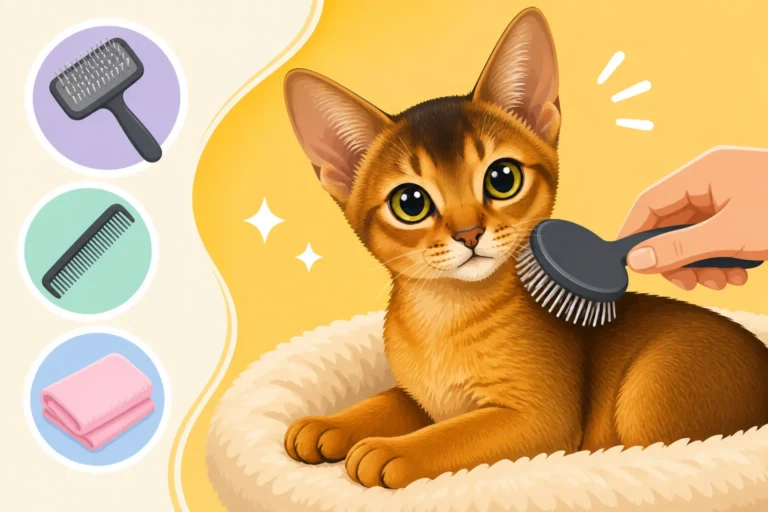
Because an Abyssinian's coat lacks a dense undercoat and each hair is so finely banded, using the wrong grooming tools can actually do more harm than good. Harsh slicker brushes or deshedding tools designed for cats with thick, double coats can strip away the delicate outer guard hairs, flatten the ticking, and even irritate their skin. The goal of Abyssinian grooming isn't to remove vast amounts of fur or de-tangle mats, but rather to enhance the natural sheen and remove any loose hairs gently. You want to preserve that beautiful, vibrant ticking, not disrupt it. If you've ever wondered why your Abyssinian's coat doesn't look quite right after a brushing session, the tool might be the culprit. Why the Wrong Brush Flattens an Abyssinian's Ticking explains this in more detail.
Simple Care for a Complex Coat
The good news is that Abyssinian grooming is delightfully straightforward. A quick, gentle session once a week is usually all that's needed to keep their coat in pristine condition. A soft rubber grooming mitt or a damp chamois cloth is often the best choice. These tools gently massage the skin, distribute natural oils, and pick up any loose hairs without disturbing the ticking. Just a few passes will leave their coat gleaming. Many owners find their Abyssinians actually enjoy these brief grooming sessions, turning it into a bonding experience. If you’re looking for a good grooming mitt, many reliable options can be found on Amazon or Chewy, making it easy to get what you need delivered right to your door. Remember, the less you interfere with the natural structure of their coat, the better it will look. The Ticked Coat Is the Whole Abyssinian Grooming Job offers a comprehensive look at their grooming needs.
Shedding and Allergies: The Ticking's Influence
Despite their relatively short hair, cats do shed, and many people worry about allergens. The Abyssinian's unique coat, with its lack of a thick undercoat and intricate ticking, has a direct impact on both how much hair they shed and how they affect allergy sufferers. It's a common misconception that all short-haired cats shed less, but with Abyssinians, there's a specific reason for their manageable fur.
The Myth of the Hypoallergenic Abyssinian
Let's address a common question head-on: is the Abyssinian hypoallergenic? Unfortunately, the answer is no. No cat breed is truly 100% hypoallergenic, as allergies are primarily triggered by a protein called Fel d 1, found in cat saliva, dander (dead skin flakes), and urine, not just the hair itself. While the Abyssinian's short, fine coat and minimal undercoat do mean they tend to shed less overall compared to a long-haired cat or even some other short-haired breeds with dense undercoats, they still produce Fel d 1. This means that while some individuals with mild cat allergies might tolerate an Abyssinian better than other breeds, they are not a guaranteed solution for severe allergy sufferers. Always spend time with an Abyssinian before committing if allergies are a concern. Why an Abyssinian Is Not a Hypoallergenic Cat provides more context on this topic.
Managing Seasonal Shedding
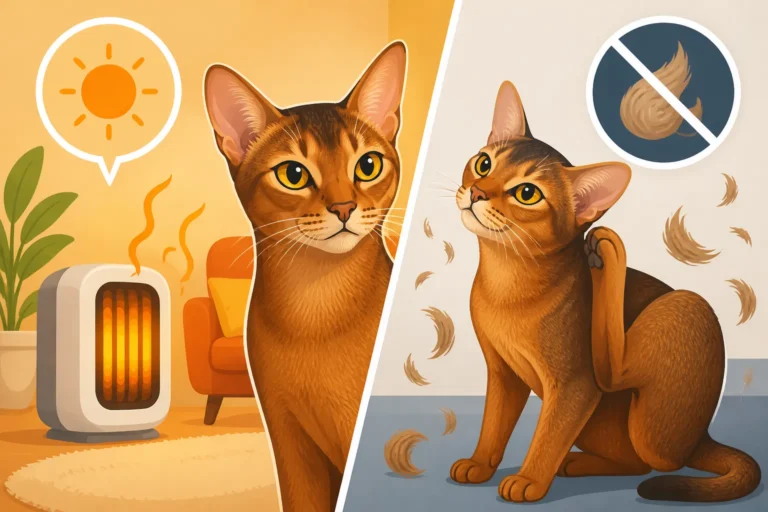
Even with their minimal shedding, Abyssinians do experience seasonal shifts in their coat, just like most animals. You might notice a slightly increased amount of loose hair during spring, as they shed their winter coat to prepare for warmer weather. However, because each hair is so fine and lacks a fluffy undercoat to trap it, any shed hair tends to be less noticeable around the house. It's not uncommon for Abyssinian owners to remark that they rarely see large clumps of fur, even during shedding season. Regular, gentle brushing with a rubber mitt, as mentioned earlier, can help to efficiently capture these loose hairs before they end up on your furniture or clothes. This simple routine also helps to keep their skin healthy and stimulates circulation, encouraging a glossy, vibrant coat year-round. Why an Abyssinian's Single Ticked Coat Barely Sheds elaborates on this point.
The Abyssinian Coat Through Life's Stages
An Abyssinian's coat isn't static; it evolves and changes throughout their life, from the blotchy curiosity of a kitten to the magnificent sheen of a mature adult. Understanding these changes can help owners appreciate their cat's development and ensure their coat remains healthy and beautiful at every age. Just like with humans, a cat's coat can be an indicator of overall health.
Kitten Coat to Adult Splendor
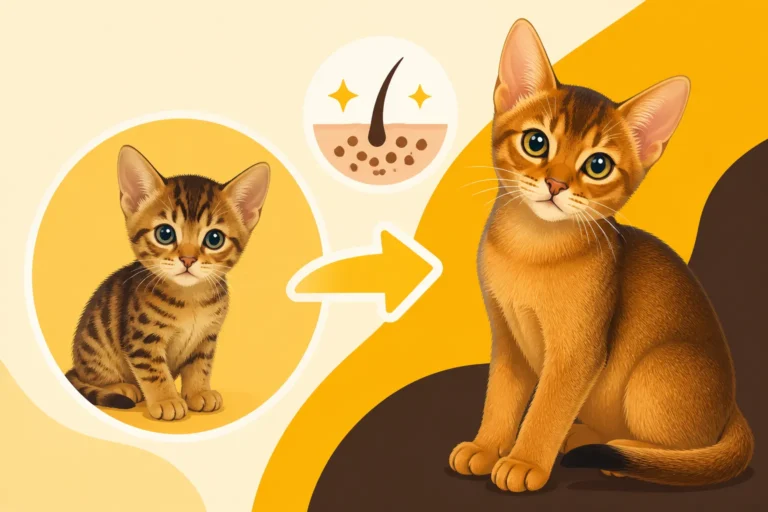
When an Abyssinian kitten is born, its coat doesn't immediately display the crisp, intricate ticking of an adult. Often, kittens appear somewhat "blotchy" or even a bit tabby-striped, especially on their bodies. This is a completely normal phase in their development, and it's part of the charming journey of watching them grow. The full ticking pattern, with its distinct bands on each hair, typically begins to emerge and refine as they mature, usually settling by the time they are between six months and a year old. By the time they reach their first birthday, most Abyssinians will have developed their adult coat, showcasing that characteristic shimmering depth and rich color that the breed is famous for. This transition period is fascinating to observe, as the youthful "muddiness" gradually gives way to clarity and brilliance. You can read more about this transformation in When an Abyssinian Kitten's Adult Ticking Arrives.
Maintaining Coat Health in Senior Abyssinians
As Abyssinians age, their coats, like other aspects of their physical well-being, may undergo subtle changes. You might notice the ticking becoming slightly less distinct, or the overall color appearing a little less vibrant. Sometimes, especially with very old cats, the coat can even feel a bit coarser to the touch. This can be a natural part of aging, but it can also be an indicator of underlying health issues. A dull or suddenly rough coat can signal nutritional deficiencies, dehydration, or other medical conditions. Maintaining a high-quality diet, perhaps with supplements specifically formulated for senior cat health, and ensuring adequate hydration are crucial. Regular veterinary check-ups are vital to catch any health concerns early, ensuring your senior Abyssinian's coat remains as beautiful and healthy as possible for as long as possible. A healthy cat, regardless of age, usually has a healthy coat.
Here's a quick comparison of the Abyssinian coat versus a standard tabby:
| Feature | Abyssinian Ticked Coat | Standard Tabby Coat |
|---|---|---|
| Hair Structure | Each hair has 3-4 bands of alternating color | Hairs can be solid colored or banded |
| Pattern | Overall "ticked" or agouti pattern | Distinct stripes, spots, or swirls |
| Undercoat | Minimal to non-existent | Varies, often dense |
| Shedding | Low, fine hairs, less noticeable | Moderate to high, depending on undercoat density |
| Appearance | Shimmering, "wild" look, no visible stripes | Clear patterns like mackerel, classic, spotted, etc. |
| Feel | Fine, silky, lies close to body | Can be coarser or fluffier depending on breed |
The Abyssinian's Genetic Panel and Coat Health
Beyond just the visual appeal, understanding the genetic underpinnings of an Abyssinian's coat ties into their overall health and responsible breeding practices. While the ticking itself isn't a health concern, the genetic purity of the breed is often confirmed through DNA testing, which can sometimes reveal other traits or potential health issues. This is why reputable breeders are so diligent about testing their breeding stock.
The Genetic Basis of Coat Color
The four main recognized colors for Abyssinians (Ruddy, Sorrel, Blue, and Fawn) are all variations of the ticked agouti pattern, influenced by other dilution and pigment genes. For instance, the Ruddy Abyssinian carries the dominant genes for full color, resulting in those rich black/brown bands. A Blue Abyssinian, however, has a dilute gene, which softens the black pigment to a slate blue, creating a cooler-toned ticking. This interplay of genes is what gives us the stunning range of Abyssinian colors, all while maintaining that iconic ticked appearance. Knowing these genetic basics helps us understand why a Ruddy Abyssinian Is the Cheapest Color in some markets, simply because it's the most common and genetically dominant.
Testing for Long Hair and Other Traits
Interestingly, while Abyssinians are known for their short, ticked coat, they carry the recessive gene for long hair, which is how the Somali breed originated. Reputable Abyssinian breeders often test their cats for this long-hair gene, especially if they want to ensure their lines remain strictly short-haired. This genetic testing isn't just about coat length; comprehensive DNA panels for Abyssinians also check for specific health conditions, such as Pyruvate Kinase Deficiency (PKD) and Progressive Retinal Atrophy (PRA-rdAc). These tests ensure that breeders are producing healthy kittens and help to preserve the genetic health of the breed as a whole. While these tests aren't directly about the ticking, they speak to the larger commitment to understanding the genetic makeup of these beautiful cats. This attention to detail is part of what makes purchasing from a reputable breeder so important. How the Abyssinian's DNA Panel Is Ordered provides further insight into this process.
Caring for an Abyssinian with a Specific Coat Condition
While the Abyssinian coat is generally robust and easy to care for, like all cats, they can occasionally experience issues that affect their fur. These aren't common, but knowing what to look for and how to respond can help keep your feline friend comfortable and healthy. It's always a good idea to pay attention to any changes in your cat's coat, as it can often be an early indicator of a deeper health issue.
When the Coat Goes Coarse or Dull
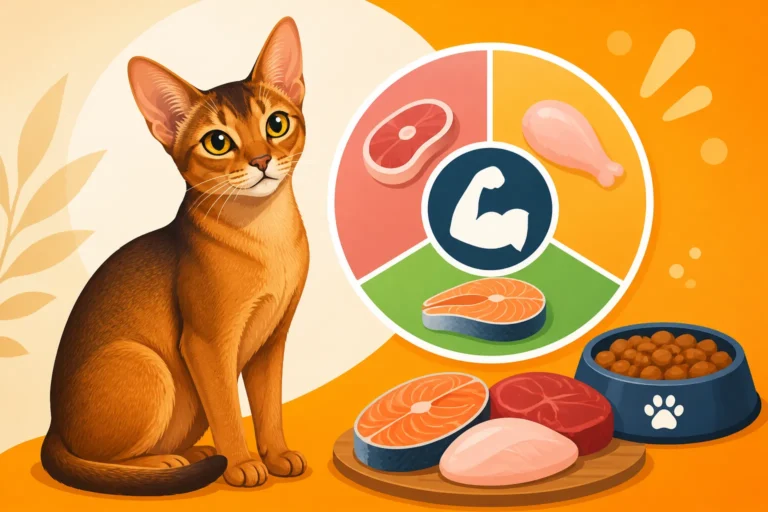
Sometimes, despite your best efforts, an Abyssinian's naturally fine and silky coat can become coarse, dull, or even greasy. This isn't usually a problem with the ticking itself, but rather an indicator of a change in their overall health or diet. A sudden change in coat texture can signal nutritional deficiencies, particularly if they're not getting enough high-quality protein or essential fatty acids. It can also be a symptom of underlying medical conditions, such as kidney disease, hyperthyroidism, or even dental problems that make eating uncomfortable. If you notice a significant shift in your Abyssinian's coat quality that persists for more than a few weeks, it's always best to consult your veterinarian. They can help identify the root cause and recommend appropriate dietary changes or medical treatments. Caring for an Abyssinian Whose Ticking Has Gone Coarse offers specific advice on this concern.
Skin Irritations and Their Impact on Fur
Even with their short coats, Abyssinians can experience skin irritations, which, in turn, can affect the appearance and health of their fur. Allergies (environmental or food-related), parasites like fleas, or fungal infections can lead to excessive scratching, licking, and hair loss in affected areas. This can disrupt the beautiful ticked pattern and lead to raw skin or secondary infections. If you notice your Abyssinian scratching more than usual, developing red patches, or showing thinning fur, a vet visit is in order. Early intervention can prevent minor irritations from escalating into more serious problems. Maintaining a clean living environment and providing a balanced diet are key preventive measures, but sometimes, a little medical help is needed to restore their skin and coat to optimal health.
Disclaimer
This article is for general informational purposes only and does not constitute professional advice. Laws, prices and regulations vary by location and change over time. Consult a qualified professional for guidance on your specific situation.