Which Countries Rebuilt the Abyssinian Population
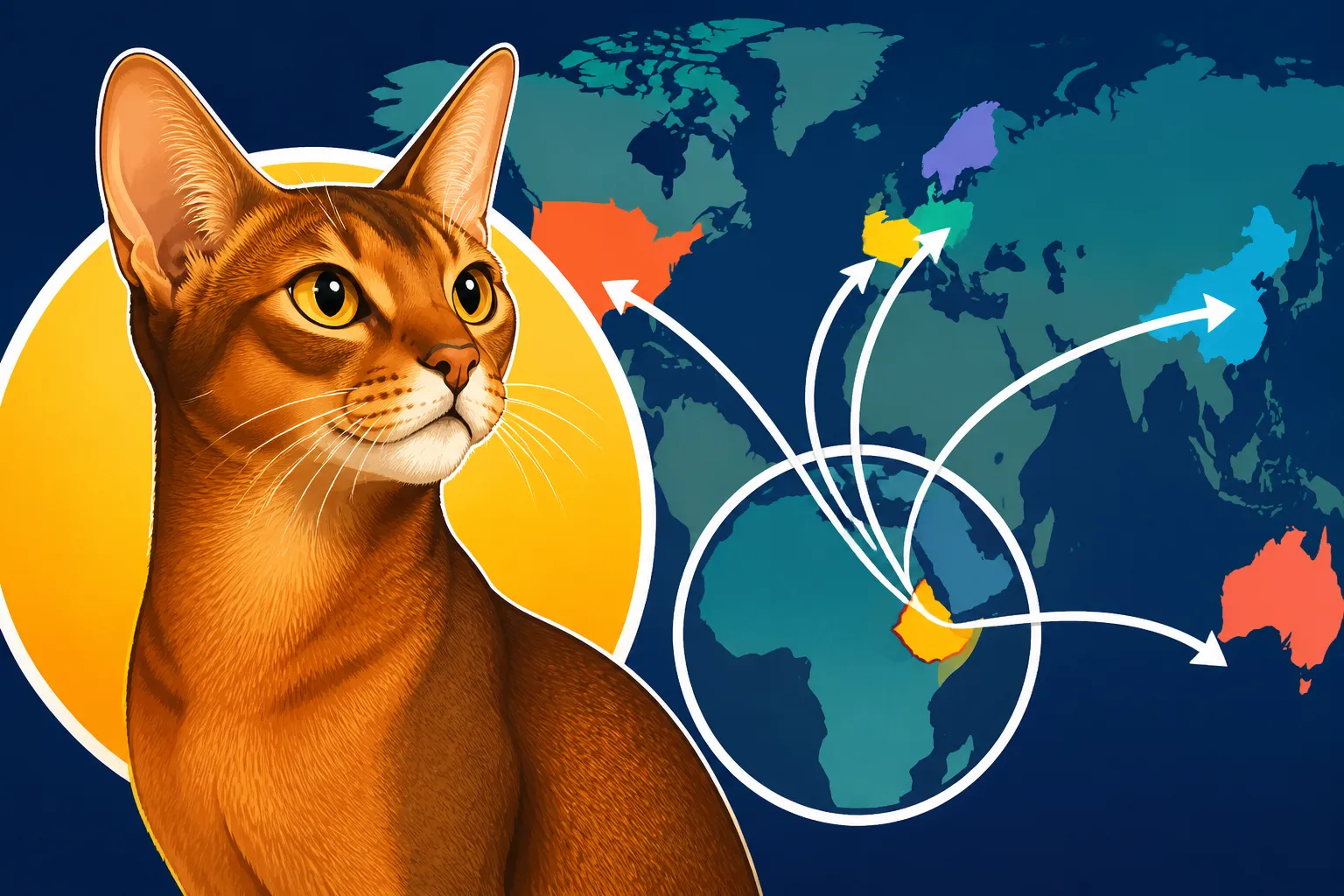
Abyssinians did not return from the brink through one national breeding program. Their recovery depended on a small, connected network of breeders, with Britain at the center and cats or breeding lines coming from the United States and parts of northern Europe. This guide explains which countries mattered, what each contributed, and why the history is more complicated than a simple list.
Why the Abyssinian population needed rebuilding
Britain was the breed’s main crisis point
The Abyssinian became established as a recognized breed in Britain, but two world wars placed its small population under severe pressure. During wartime, food shortages, disrupted breeding, displacement, and the loss of individual cats could have an outsized effect on a breed with relatively few breeding animals. A population could appear to survive while still losing the diversity and numbers needed to recover securely.
The damage was not simply that fewer Abyssinians were born for a few years. When a breeding population becomes very small, breeders have fewer unrelated cats to choose from. That can narrow the gene pool and make it harder to preserve the breed’s distinctive appearance while avoiding close matings. The Abyssinian’s wartime history is explored in The Abyssinian Nearly Disappeared From Britain Twice and How British Abyssinians Nearly Died Out.
Britain therefore became the most important place to rebuild. Its breeders and cat organizations had to keep the breed going, restore breeding numbers, and maintain pedigrees while working with a limited pool of cats. The recovery depended on people preserving animals and making careful breeding decisions, not on a single outside country simply replacing the whole population.
Why the losses had effects beyond Britain
The Abyssinian was still a relatively uncommon pedigree cat, so the loss of a small number of breeding animals could matter across borders. International breeding links offered a way to bring in additional lines, but an imported cat was not automatically a perfect solution. Breeders needed to consider its health, pedigree, traits, and compatibility with the cats already available.
That is why rebuilding a breed is different from quickly increasing the number of kittens. A breeder might have more cats in a cattery but still face a narrow gene pool if those cats are closely related. Restoring a healthy, sustainable population takes time, records, and coordinated decisions between breeders.
Wartime disruption also affected the paper trail. Pedigrees and breeding histories can be incomplete, and accounts may differ in how they describe the number of surviving cats or the precise route by which particular lines were introduced. For background on one major part of this story, see What Feline Leukemia Did to British Abyssinian Lines.
The countries that contributed to recovery
Britain remained the center of the rebuilding effort
Britain was not just the place where the breed faced a crisis; it was also where much of the recovery had to happen. British breeders worked to maintain and rebuild Abyssinian lines after wartime losses. They had to keep the breed recognizable while managing the practical limitations of a small population.
This distinction matters. It can be tempting to describe the recovery as if another country “saved” the British Abyssinian, but the work was shared. Breeders in Britain maintained the local population and pedigrees, while international exchanges helped widen the options available to them. The country at the center of the crisis remained central to the solution.
The process also illustrates why individual breeders mattered so much. A single cat with a useful pedigree could contribute to future generations, but only if the breeding choices around it were deliberate. The aim was not merely to produce more kittens; it was to rebuild a population that could continue beyond one generation.
The United States provided important breeding connections
The United States became a significant part of the wider Abyssinian network. American breeders maintained their own cats and pedigrees, and exchanges between the United States and Britain helped connect populations that had developed on separate sides of the Atlantic. Those links gave breeders additional options when rebuilding lines.
The American story is not quite the same as the British one. The United States had its own Abyssinian population and breeding history, rather than serving only as a source of replacement cats for Britain. American breeders helped sustain and develop the breed in their own country, while international exchange strengthened connections with British breeding programs. How American Breeders Rebuilt the Abyssinian looks more closely at that contribution, and When the Abyssinian Reached the United States provides context on the breed’s arrival there.
It is useful to think of the United States as a major partner in an international breeding network, not as the sole rescuer of the breed. The cats that contributed to recovery were part of a longer history of cross-border exchange, and individual pedigrees mattered more than a broad national label.
Northern European sources also helped widen the pool
Postwar accounts commonly refer to cats or breeding lines from Scandinavia as part of the wider rebuilding picture. Sweden and Denmark are among the northern European countries associated with those connections. Their contribution is best understood as part of a network of breeders and pedigree exchanges, rather than as evidence of one country running a formal rescue program.
The surviving accounts do not always provide a tidy ranking of which country contributed the most, or identify every cat’s route with equal clarity. That does not make the northern European role unimportant; it means the history should be described carefully. Breeding records can show how cats and lines moved, but they do not always support a simple country-by-country tally.
| Country or region | Role in the recovery | How to understand the contribution |
|---|---|---|
| Britain | Main site of the breed’s crisis and recovery | British breeders maintained and rebuilt the local population |
| United States | Major international breeding connection | American breeders sustained their own lines and exchanged cats or breeding connections |
| Sweden and Denmark | Part of the northern European network | Scandinavian sources helped broaden available lines, though accounts do not establish a precise national ranking |
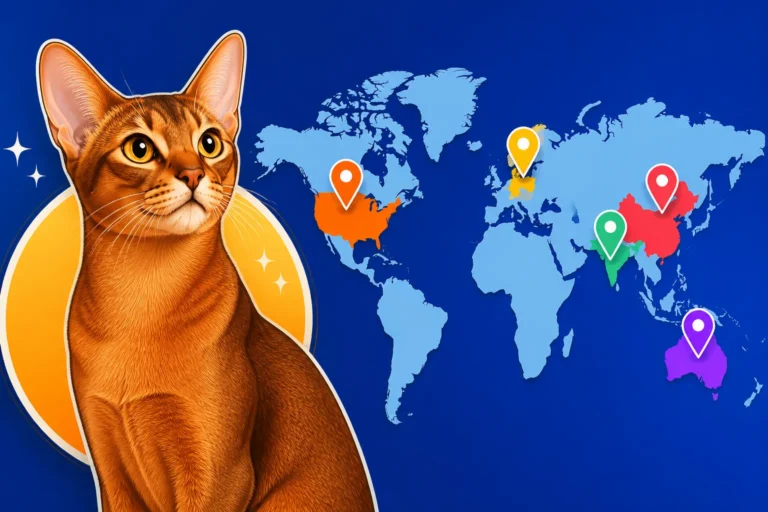
Taken together, these countries point to a shared recovery rather than a single-country rescue. Britain was the central rebuilding ground, while American and northern European connections helped broaden the choices available to breeders.
How international breeding helped restore the breed
Imports could add options, but careful pairing still mattered
When a breeder brought in a cat from another country, the cat’s value depended on more than its origin. Its pedigree could offer useful new connections, but breeders still had to assess its health, temperament, type, and relationship to the cats already in their program. An imported cat with a promising background could help; a poorly planned pairing could still create problems.
This is why “more genetic diversity” should not be treated as a shortcut or a guarantee. Breeders need to understand relatedness and make choices with a view to future generations. A cat can contribute valuable qualities while also requiring careful selection of its mate. The long-term goal is a stable population, not a quick numerical rebound.
The same principle applies when reading breed histories today. Country names help explain how breeding networks connected, but they do not tell the entire story. The cats’ pedigrees, the decisions of individual breeders, and the ability to preserve healthy lines are the more meaningful details.
Pedigrees make the international story visible
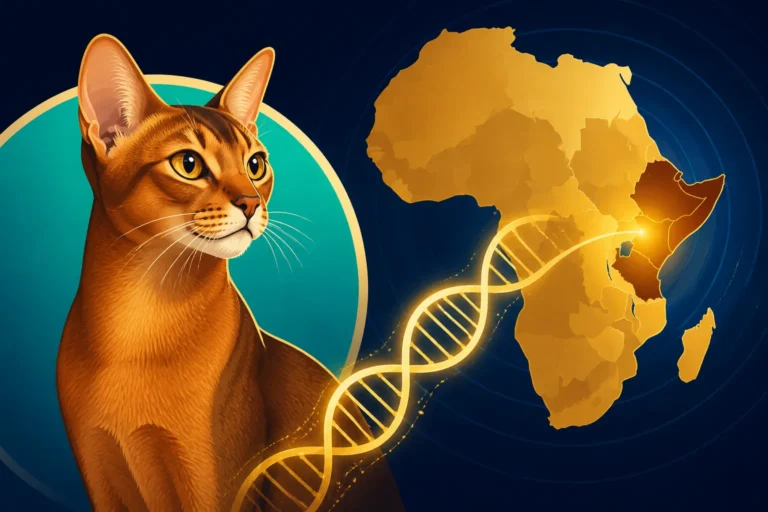
Pedigrees allow breeders and historians to trace connections between cats and see how lines moved between countries. They can help explain why a modern Abyssinian’s ancestry may include cats from more than one region, even when the breed itself is strongly associated with Britain. For a broader look at ancestry and interpretation, read What Modern DNA Studies Found About Abyssinian Ancestry.
Pedigree records are useful, but they are not the same as a complete account of every historical event. Records may differ in how much information they preserve, and a cat’s country of birth does not necessarily explain where its ancestors originated. A careful history separates what can be traced from what is inferred.
That caution also helps avoid a common misconception: a breed’s name does not prove its modern population was built in the country named. The Abyssinian’s name and the breed’s later development are separate parts of its history. Why the Abyssinian Was Named After a Country It Is Not From explores that distinction.
What the recovery means for the breed today
The Abyssinian’s survival reflects a lasting international community
The postwar rebuilding helped connect breeders across national borders and contributed to the development of Abyssinian populations in multiple countries. The breed’s continuity reflects both local stewardship and international exchange. Britain’s breeders had to preserve and rebuild their cats, while contacts with breeders abroad gave them more possibilities.
The story also shows how vulnerable a rare breed can be when its breeding population is small. A dramatic event may remove cats quickly, but rebuilding takes patience. Maintaining records, exchanging knowledge, and making careful breeding choices all matter long after the immediate crisis has passed.
The Abyssinian’s continued popularity is part of the longer picture, but it should not obscure the work that made that continuity possible. Why the Abyssinian Stayed Popular for 150 Years offers more on the breed’s enduring place among cat breeds.
Historical interest can lead to practical questions about ownership
Learning how a breed survived often prompts a more personal question: what would it be like to live with an Abyssinian now? The historical population story does not tell you whether the breed fits your home, but it does show why responsible breeding, clear records, and thoughtful care matter. If you are preparing for a cat, a retailer such as Chewy can be one place to browse everyday supplies and compare product descriptions.
For example, a new owner may need to compare litter options, carriers, or food formats before bringing a cat home. Chewy can help you review those categories, but product listings cannot replace a veterinarian’s advice or a breeder’s documented health information. For a breed with a complex history, keep those questions separate: use pedigrees and health records to understand the cat’s background, and use suitable professional guidance for individual care.
If you are considering an Abyssinian, approach the breeder conversation with the same care that responsible breeders brought to rebuilding the breed. Ask about pedigree documentation, health history, and how the cats are raised. Chewy may be useful for planning ordinary supplies, but it is not a source for verifying a cat’s ancestry or a breeder’s claims.
Disclaimer
This article is for general informational purposes only and does not constitute professional advice. Laws, prices and regulations vary by location and change over time. Consult a qualified professional for guidance on your specific situation.