Why a Bengal’s Rosettes Never Appear on an Abyssinian
A Bengal’s rosettes and an Abyssinian’s warm, shimmering coat can both look striking, but they’re made by different coat patterns. If you’ve seen a spotted Bengal beside a finely ticked Abyssinian, you may wonder why one has clear markings and the other appears almost solid. This guide explains how the patterns form, what genetics and breeding have to do with them, and what the coat can—and can’t—tell you about a cat.
The coat patterns are built differently
Bengal rosettes are distinct markings
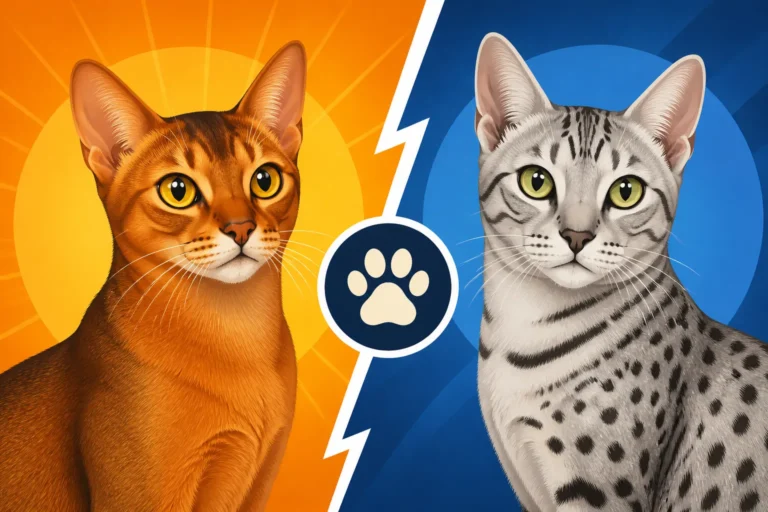
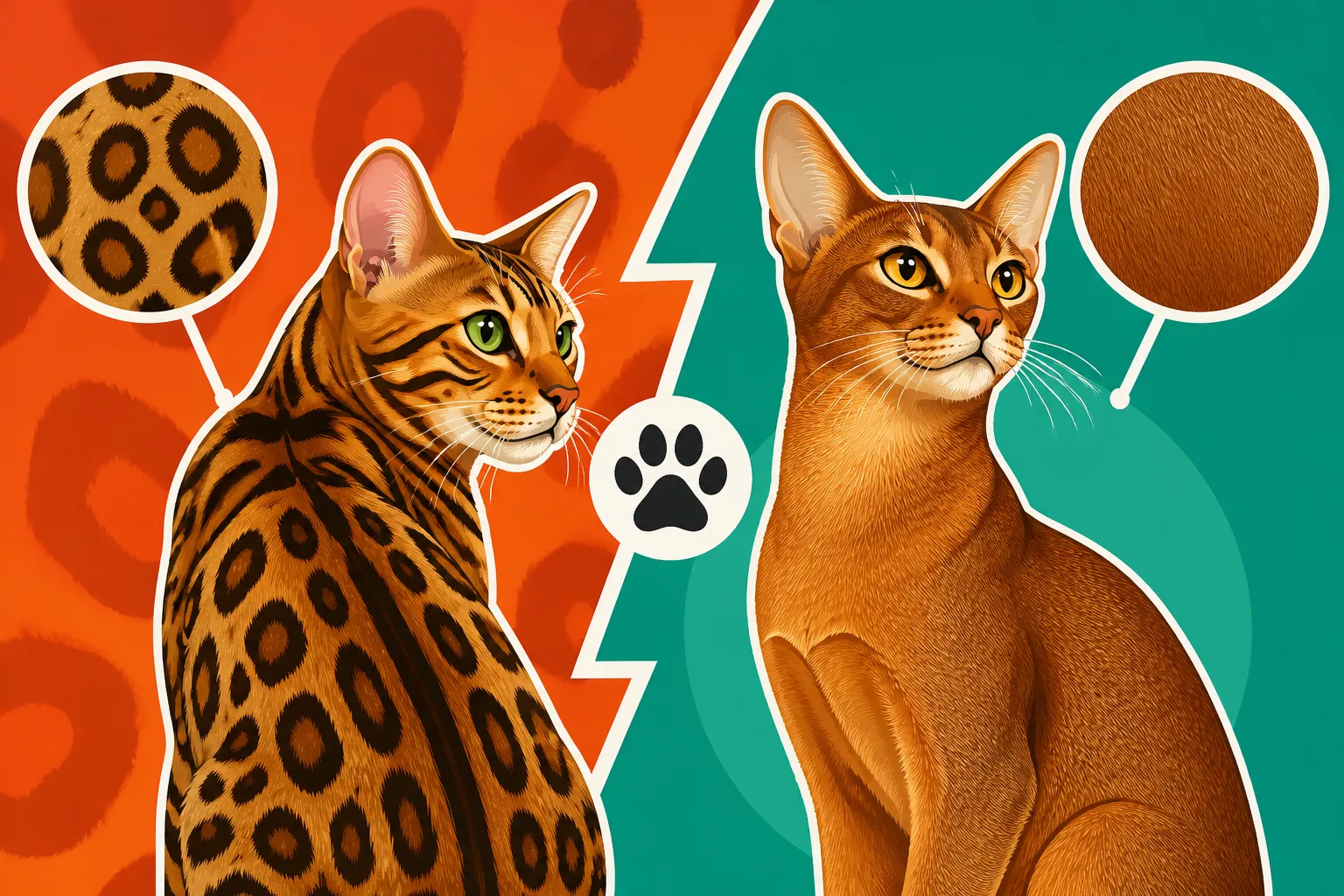
A Bengal’s rosettes are shaped markings that stand out against the coat’s background. A typical rosette has a darker outline and a lighter center, making it look like a small ring, paw print, or open spot. Bengals may also have single spots or marbled patterns; not every Bengal has the same markings, and rosettes vary in size, shape, contrast, and spacing.
The effect comes from the way dark and light areas are arranged across the coat. Rather than being made up of repeated color bands along each hair, a rosette is a larger pattern visible across a patch of skin and fur. That’s why you can usually follow a Bengal’s spots or rosettes with your eyes as separate shapes.
Bengals were developed through selective breeding, with early breed development involving domestic cats and the Asian leopard cat. Their coat patterns are part of the breed’s distinctive appearance, but a cat’s markings alone don’t establish its ancestry or prove that it is a Bengal. Pedigree information and other evidence matter too.
Abyssinian ticking is visible on individual hairs
An Abyssinian’s characteristic coat is called ticked. Instead of having clearly outlined rosettes, spots, or stripes across the body, the coat looks evenly colored at a glance. Look more closely, though, and individual hairs often show alternating bands of lighter and darker color. Those bands create the coat’s warm, finely speckled appearance.
The pattern is easier to understand when you part the coat or look at a single hair. The bands run along the length of the hair, rather than forming a dark border around a light center across the cat’s body. This gives an Abyssinian a subtle, changing shimmer as the coat catches the light. The overall effect can vary depending on coat color, lighting, and the individual cat.
The basics are covered in What Makes an Abyssinian's Coat Ticked Rather Than Striped and How an Abyssinian's Agouti Banding Works. These explain why the Abyssinian’s visual texture is not the same thing as a Bengal’s larger, sharply defined markings.
| Feature | Bengal | Abyssinian |
|---|---|---|
| Typical coat pattern | Rosettes, spots, or marbling | Ticking across the body |
| What creates the visible effect | Larger light and dark markings across the coat | Bands of color along individual hairs |
| First impression | Clearly patterned | Often appears nearly solid or finely speckled |
| Common marking variation | Rosette shape, size, contrast, or marbling can vary | Ticking and color intensity can vary |
| Does appearance alone prove breed? | No | No |
Why the patterns don’t simply turn into one another
A rosette is not a group of ticked hairs
It’s tempting to think that a Bengal’s rosettes are just Abyssinian ticking gathered into larger patches. They are not. The coat patterns differ in how their color is organized: ticking is repeated along individual hairs, while rosettes are visible as larger shapes across the body.
That difference matters when you’re comparing two cats in person. A Bengal may have an overall spotted or marbled appearance even when its coat is short and smooth. An Abyssinian’s coat can look richly textured, but the markings don’t normally resolve into Bengal-style rings with pale centers and dark outlines.
This also explains why ordinary lighting can make coat patterns confusing. A glossy Abyssinian may look darker or more mottled in shadow, while the light can bring out the warm bands on its hairs. A Bengal’s spots may appear less obvious from a distance or in poor light, but the larger pattern is still there when you look closely.
Ticking and tabby markings have different visual results
The word “tabby” is often used loosely to describe several coat patterns, which can make comparisons confusing. Classic tabby markings include swirls, while mackerel tabbies have narrow stripes and spotted tabbies show spots. Ticked coats look different because color bands along the hairs soften or reduce the appearance of those broader markings.
Abyssinians are known for that ticked appearance, not for Bengal-like rosettes. Some kittens may show temporary or faint markings that become less obvious as the adult coat develops. Individual cats can also vary, and a breed standard describes an ideal rather than promising that every cat will look identical.
For a closer look at the distinction, see Why an Abyssinian Has No Tabby Stripes. It’s useful context if you’ve spotted faint marks on a kitten or are trying to distinguish a ticked coat from a striped one.
Genes influence coats, but appearance is not a simple label
Coat patterns involve inherited traits, and breeders select for particular appearances over generations. But a short description like “spotted,” “ticked,” or “rosetted” does not tell the whole genetic story. Multiple inherited factors can influence how a pattern looks, and the same broad pattern category can vary from one cat to another.
That’s one reason it’s best not to identify a cat’s breed from coat alone. A short-haired domestic cat can have spots, and a cat with a ticked-looking coat is not automatically an Abyssinian. If you’re choosing a pedigree kitten, ask for appropriate registration and lineage information rather than relying on a photo or a seller’s description.
A useful comparison of the breeds beyond their coats is How an Abyssinian Differs From a Bengal. Temperament, body type, care needs, and verified background all help build a clearer picture than markings by themselves.
What you may notice when comparing the breeds
Color changes the impression, not the pattern type
Abyssinians come in several recognized colors, and each can make the ticking look different. A warm ruddy coat may appear particularly rich, while blue or fawn coloring gives a softer overall impression. The bands on the hairs remain central to the ticked effect; the base color changes how strongly they contrast.
Bengal coat colors and patterns also vary. Some have bold, high-contrast rosettes, while others have less dramatic markings or a marbled pattern. Two Bengals can therefore look quite different from one another, just as two Abyssinians can have different levels of color intensity and coat contrast.
If you’re comparing Abyssinians, Which Abyssinian Colors CFA Recognizes can help explain the recognized color categories. For the breed’s overall appearance, including more than coat color, see What an Abyssinian Looks Like Against the Show Standard. A show standard describes desired characteristics; it isn’t a guarantee that a pet cat will match every detail.
Age, light, and grooming can change what you see
A kitten’s coat may not look like its adult coat. Young Abyssinians can have less settled color and visible markings that become less prominent as they mature. Bengals, too, can change in appearance as their coat develops. If you’re looking at a kitten, allow for development rather than assuming its current pattern is final.
Light makes a noticeable difference. Direct sunlight can bring out the warm tones and banding in an Abyssinian’s coat, while dim indoor light may flatten the effect. A Bengal’s rosettes may look especially crisp in bright light and less defined from across a room. It can help to examine a cat in natural, indirect light rather than relying on a heavily edited photograph.
Grooming also affects presentation, although it doesn’t change the underlying pattern. A gentle weekly comb or grooming mitt can remove loose hair and help the coat lie smoothly. If you’re shopping for basic grooming supplies, Chewy is one place to look for cat combs and grooming mitts; choose a gentle tool rather than a harsh deshedding blade that may damage the appearance of a fine coat.
How to identify a coat without jumping to conclusions
Look at the pattern up close
Start by observing the body, not just the face or tail. On a Bengal, look for distinct spots, rosettes, or marbling across the coat. On an Abyssinian, look for a more even, finely textured appearance, then inspect individual hairs for alternating bands of color. This close-up view usually makes the difference easier to see.
Next, consider where the markings appear. A Bengal’s larger pattern is visible across patches of the body. An Abyssinian’s coat should show an overall ticked effect, though some body areas may have different shading or less obvious banding. The head, legs, and tail can have their own details, so don’t base your judgment on one small area alone.
Finally, remember that photos can mislead. Lighting, camera processing, age, and grooming can all affect how a coat appears. If a cat’s breed matters for adoption, purchase, or health-history reasons, ask for documentation and a chance to see the cat clearly rather than relying on a single image or a pattern description.
Use breed standards and records as supporting evidence
A breed standard gives you a reference for the expected appearance of a pedigreed cat. It can help you understand why Abyssinian ticking is valued or what kind of coat pattern is associated with Bengals. But standards are not identification tests. A cat may resemble a breed without having a documented pedigree, and a registered cat may not perfectly match an ideal show description.
For Abyssinians, How an Abyssinian's Coat Color Is Registered offers additional context on how coat color is recorded. If you are speaking with a breeder, ask clear questions about the cat’s registration, parentage, health information, and the terminology used to describe its color and pattern. A careful breeder should be able to explain what the records mean and answer reasonable follow-up questions.
The same practical approach applies when looking for supplies. For example, Chewy can be a convenient place to browse combs, nail clippers, and other routine cat-care items, but a product listing cannot verify a cat’s breed or coat genetics. Choose grooming equipment suited to a short, close-lying coat and ask a veterinarian or experienced groomer if you’re unsure what is appropriate.
Keep coat care gentle and realistic
Both breeds have short coats that are generally manageable at home, but “short-haired” doesn’t mean grooming is unnecessary. A quick weekly check can help remove loose hair, give you a chance to inspect the skin, and build familiarity with how your cat’s coat normally looks. Keep sessions brief if your cat gets restless, and reward calm behavior rather than trying to force a long grooming session.
Avoid shaving or aggressive brushing simply to make a pattern look more dramatic. Removing or breaking hairs can change the coat’s appearance without improving its health. If the coat suddenly looks dull, patchy, greasy, or unusually thin, that is different from normal variation in ticking or rosettes and may be worth discussing with a veterinarian.
Chewy also carries routine grooming and enrichment supplies, which can be useful when putting together a simple care kit. The goal is not to make an Abyssinian look spotted or a Bengal look more strongly rosetted. It’s to keep the coat and skin comfortable while appreciating the pattern the cat naturally has.
Disclaimer
This article is for general informational purposes only and does not constitute professional advice. Laws, prices and regulations vary by location and change over time. Consult a qualified professional for guidance on your specific situation.