Why an Abyssinian Has No Tabby Stripes
One of the first things people notice about an Abyssinian is their striking, unique coat. Unlike most domestic cats we encounter, Abyssinians don't sport the familiar stripes, spots, or swirls that we associate with "tabby" patterns. If you've ever found yourself wondering why your Abyssinian doesn't have those classic markings, you're not alone! This guide will dive deep into the fascinating genetics behind the Abyssinian's signature ticked coat, explaining exactly why they lack traditional tabby stripes and what makes their fur so special.
The Marvel of the Agouti Gene and the Abyssinian's Ticked Coat
When you look at an Abyssinian, you're actually seeing the magic of the agouti gene in full effect. This gene is the underlying reason why all tabby cats have their patterns, but in Abyssinians, it’s been specifically modified to produce something truly distinct. Instead of allowing the typical tabby stripes to fully express themselves, the Abyssinian’s genetics take that foundational agouti pattern and refine it into what we call 'ticking.'
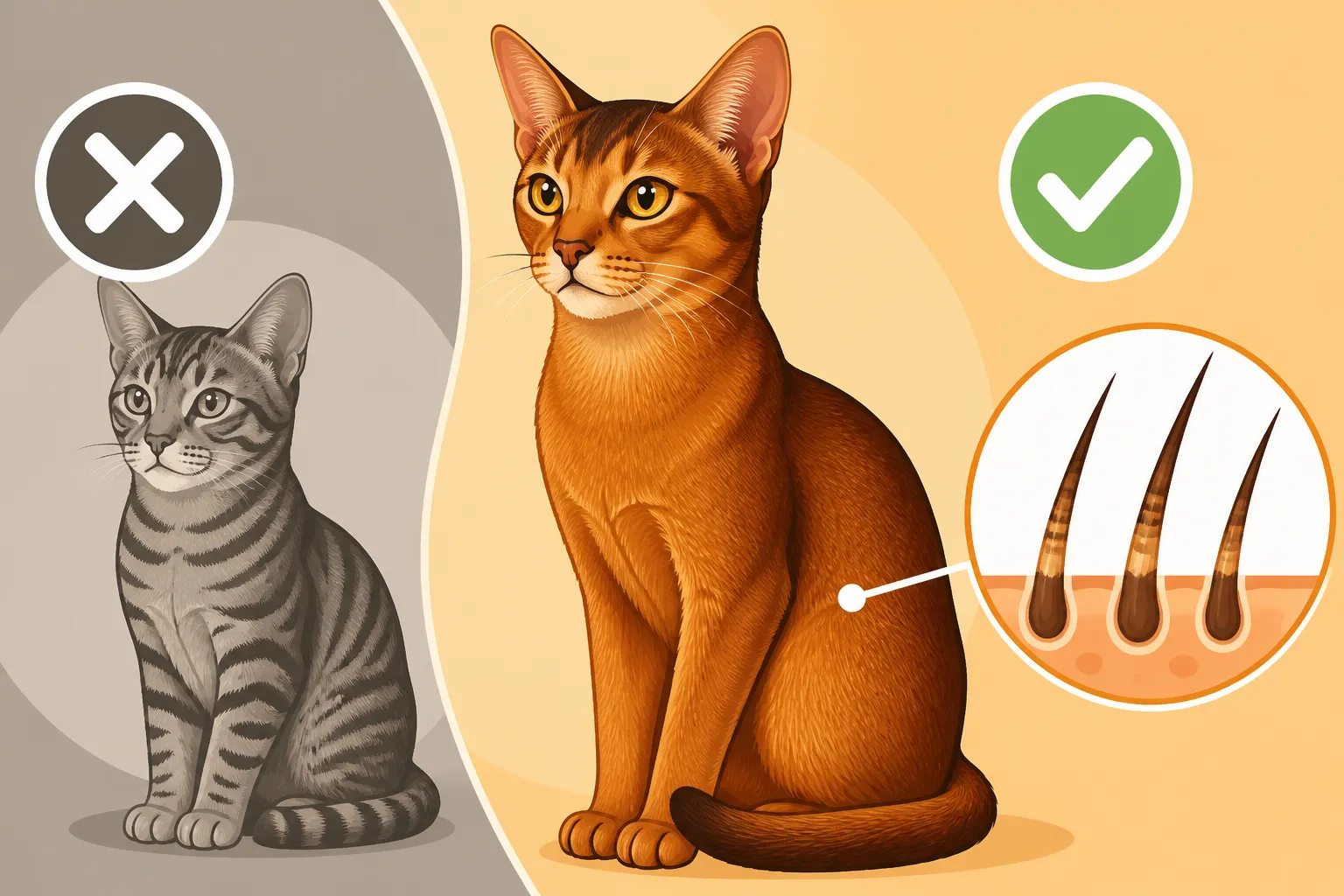
Each individual hair on an Abyssinian isn't a solid color from root to tip. Oh no, that would be far too simple for these complex creatures! Instead, each strand of fur has multiple bands of color alternating along its length. Imagine a tiny barcode on every single hair – that's essentially what ticking is. Typically, an Abyssinian hair will show three or even four distinct bands of color, with the darkest color usually at the tip. This incredible banding is what creates that beautiful, shimmering effect when your Abyssinian moves, making their coat seem to shift and glow with every playful leap and bound. It's a testament to centuries of selective breeding that has enhanced this particular genetic trait to such a fine degree. This specific genetic configuration is explored further when we talk about How an Abyssinian's Agouti Banding Works.
Think about a non-agouti cat, like a solid black cat. Every hair on their body is a consistent black from root to tip. There are no bands, no variations in color along the shaft, which results in a uniform, unpatterned appearance. With Abyssinians, however, the agouti gene ensures that there is patterning on each hair, but modifier genes (which we'll get into shortly) ensure that these individual hair patterns translate into a ticked coat rather than a striped one. This complex interplay of genes is why Abyssinians look so different from your everyday tabby. The nuance of these color bands is quite remarkable, as detailed in Why Each Abyssinian Hair Carries Three or Four Bands.
Decoding the Lack of Stripes: Modifier Genes at Play
It might surprise you to learn that Abyssinians actually do carry the genetic blueprint for tabby stripes. Yes, you read that right! Deep down, in their genetic code, they have the same foundational tabby gene as any other striped cat. The key difference lies in what are known as "modifier genes" – specific genes that alter how the underlying tabby pattern is expressed. For the Abyssinian, the most crucial of these is the Ticked Tabby gene, often referred to as 'Ta'.
This 'Ta' gene acts like a master switch. While the cat still has the genetic information for mackerel stripes (thin, vertical stripes like a tiger) or classic tabby patterns (swirls and blotches, often with a bullseye on the flank), the Ticked Tabby gene effectively "breaks up" these patterns. Instead of continuous lines of solid color, it disperses the pigment across individual hair shafts, creating the ticked effect. So, rather than seeing bold stripes, you see that gorgeous, finely banded fur. It's not that the stripes are gone entirely; they're just fragmented and redistributed in a way that creates a smooth, even, and shimmering appearance. This phenomenon is often discussed in more detail in What Makes an Abyssinian's Coat Ticked Rather Than Striped.
Historically, breeders carefully selected Abyssinians for this specific ticked appearance. Cats displaying any visible stripes or barring on their legs, tail, or neck were generally not chosen for breeding, gradually solidifying the ticked coat as the hallmark of the breed. This meticulous selection over generations ensured that the modifier genes responsible for ticking became dominant and widespread within the Abyssinian gene pool. It's a beautiful example of how human preference and genetic understanding can shape a breed's most iconic features. This dedication to the breed standard is a big part of What an Abyssinian Looks Like Against the Show Standard.
What an Abyssinian's Coat Actually Looks Like Up Close
So, if an Abyssinian doesn't have stripes, what does its coat truly look like? When you get up close, especially in good lighting, you'll see a tapestry of color that’s incredibly rich and dynamic. Instead of defined patterns, you'll observe a smooth gradient of color that shifts as your cat moves. Their body, legs, and tail should ideally be free of any visible barring or stripes, creating a uniform, warm glow across their entire form.
The beauty of the ticked coat is in its depth and shimmer. As light catches the banded hairs, it creates an almost iridescent quality, making the coat appear to sparkle. This effect is why many describe an Abyssinian as looking like a miniature cougar or wild cat, possessing a subtle, untamed elegance. Their fur lies close to their body, feeling fine and silky to the touch, almost without an undercoat. This makes their short, dense coat incredibly low maintenance, a definite bonus for owners. You can truly appreciate How an Abyssinian's Coat Shimmers When It Moves when you see it in person.
While they don't have traditional stripes, Abyssinians do have some subtle markings that are characteristic of the breed. You'll notice a distinct dark rim around their eyes, often described as "eyeliner," which gives them an intense, expressive gaze. Their tail tip will also be notably darker than the rest of their tail, a small but consistent detail. You can learn more about this in Why an Abyssinian's Tail Tip Is Darker. There will be no "M" on their forehead, which is a classic tabby marking. These small features, combined with their athletic build and large, expressive ears, complete the picture of this magnificent breed.
Here's a quick comparison to highlight the key differences between an Abyssinian's ticked coat and a traditional tabby's coat:
| Feature | Abyssinian Ticked Coat | Traditional Tabby Coat |
|---|---|---|
| Hair Shaft | Each hair has multiple bands of color (ticking) | Hairs may be solid or subtly banded, but not consistently |
| Body Pattern | Smooth, even color, no visible stripes or blotches | Distinct stripes, swirls, or spots across the body |
| Legs/Tail | Ideally clear of barring | Rings or bars typically present |
| Head Markings | No "M" on forehead, subtle eye-rimming | Clear "M" on forehead, often distinct facial stripes |
| Undercoat | Very minimal to none | Varies, often present |
| Overall Look | Shimmering, wild-cat appearance | Distinctly patterned, domestic cat look |
The Practicalities and Perks of an Abyssinian's Unique Coat
Beyond the sheer beauty, the Abyssinian's ticked coat brings with it some practical advantages for owners. Because their fur is so fine and lacks a significant undercoat, Abyssinians are generally low-shedding cats. Now, let's be realistic – all cats shed. There's no such thing as a truly non-shedding cat. But with an Abyssinian, you'll likely notice far less fur around your home compared to breeds with dense double coats. This minimal shedding means less clean-up for you and potentially fewer issues for those with mild cat allergies, though it's important to remember they are not truly hypoallergenic. We dive into this more in Why an Abyssinian's Single Ticked Coat Barely Sheds.
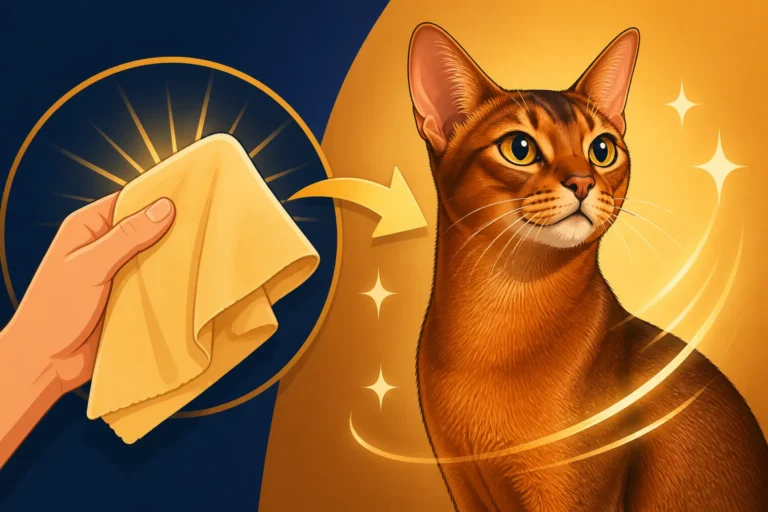
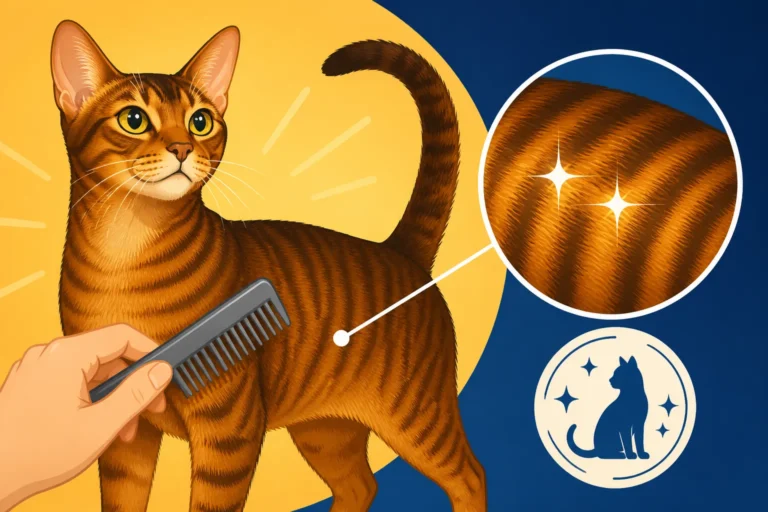
When it comes to grooming, the Abyssinian’s coat is wonderfully low maintenance. You won't be spending hours detangling mats or wrestling with complicated grooming routines. A quick brush once a week is usually all it takes to keep their coat looking its best. This isn't just about removing loose hairs; it's also a fantastic way to bond with your cat and bring out that incredible natural shine. You can find some excellent grooming mitts on platforms like Amazon or Chewy that are perfect for their delicate fur, helping to redistribute natural oils and stimulate the skin without flattening that beautiful ticking. A rubber grooming mitt is particularly good for this, as detailed in Which Grooming Mitt Suits an Abyssinian.
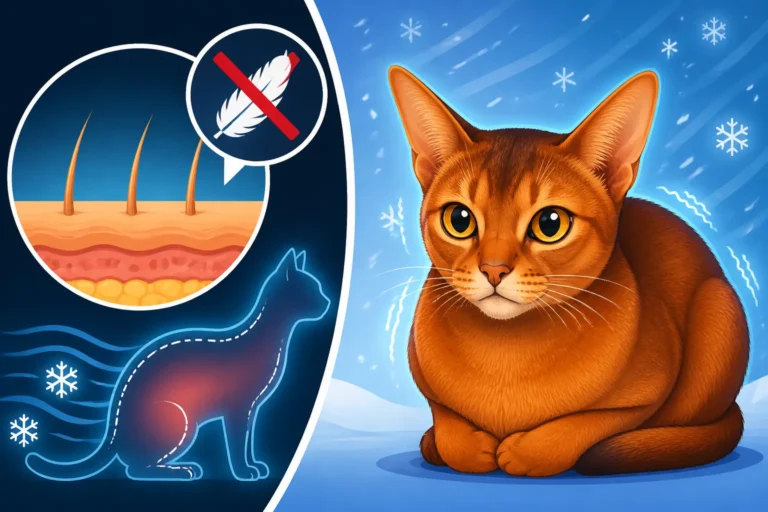
It’s crucial to use the right tools, though! Avoid deshedding tools designed for cats with thick undercoats, as these can actually damage the delicate ticking and pull out too much of their precious fur. A gentle rubber mitt or a soft brush is all you need. In fact, over-grooming or using the wrong tools can do more harm than good to their unique coat. You’d never want to use a tool that ruins Why a Deshedding Tool Ruins an Abyssinian's Ticking. During seasonal changes, you might notice a slight increase in shedding, as discussed in How an Abyssinian's Coat Thickens in Winter, but it's still generally manageable.
Proper nutrition also plays a huge role in maintaining the health and luster of your Abyssinian's coat. A high-quality diet rich in protein and essential fatty acids will ensure their skin is healthy and their fur is vibrant. Many owners find success with premium cat foods from reputable brands. Look for formulas specifically designed for active cats, as Abyssinians burn a lot of energy and need the right nutrients to keep their coats shining and their bodies in peak condition. A healthy, well-nourished Abyssinian will display the most stunning version of their ticked coat, a true testament to their wild beauty.
The Abyssinian's Legacy: A Testament to Unique Genetics
The Abyssinian's lack of traditional tabby stripes is not a fluke or an accident; it's the result of specific genetic mutations carefully cultivated over generations. It’s what gives them their distinctive "wild" look, setting them apart from other domestic breeds. Understanding the science behind their ticked coat, from the individual banded hairs to the modifier genes that suppress standard tabby patterns, truly deepens our appreciation for this magnificent cat.
Far from being a missing feature, the absence of stripes is a key characteristic that defines the Abyssinian. It's an integral part of The Ticked Coat Is the Whole Abyssinian Grooming Job and why they look so regal and elegant. So, the next time you admire an Abyssinian, remember that you're not just looking at a pretty cat, but a living, breathing marvel of feline genetics, perfectly engineered to be the finely ticked, shimmering beauty we all adore.
Disclaimer
This article is for general informational purposes only and does not constitute professional advice. Laws, prices and regulations vary by location and change over time. Consult a qualified professional for guidance on your specific situation.