Why a Deshedding Tool Ruins an Abyssinian’s Ticking
It’s a common misconception that all cats benefit from the same type of grooming, especially when it comes to shedding. Many Abyssinian owners, wanting to keep their homes free of loose hair, might reach for a deshedding tool, not realizing that this seemingly helpful gadget can actually do more harm than good to their beloved cat's unique and delicate coat. This guide will delve into why deshedding tools are particularly problematic for Abyssinians and how to maintain their beautiful ticking without causing damage.
Understanding the Abyssinian's Unique Ticked Coat
The Abyssinian coat is truly a marvel, setting them apart from many other breeds. It’s one of their most defining features, a shimmering, short coat that feels incredibly soft and resilient. But this beautiful appearance is also the reason why standard grooming practices often fall short, or worse, cause damage.
What is Ticking?
At the heart of the Abyssinian's unique look is something called 'ticking'. Unlike tabby patterns with distinct stripes or spots, ticking refers to individual hairs that have bands of color along their length, alternating between lighter and darker shades. Imagine a tiny badger hair, but across the entire cat! This banding creates a shimmering, iridescent effect as the cat moves, giving the impression of light and shadow dancing across their body. It's truly breathtaking, and it's what makes their coat so vibrant and alive. How Many Bands an Abyssinian Hair Carries delves deeper into this fascinating characteristic.
This ticking is actually what gives the Abyssinian its "wild" appearance, reminiscent of miniature cougars or pumas. It's not a pattern in the traditional sense, but rather a sophisticated optical illusion created by the genetics of each individual hair shaft. When you see an Abyssinian, you're not seeing stripes or spots, but a sophisticated blend of color that gives depth and dimension to their fur. It's a hallmark of the breed, carefully preserved by breeders, and a significant part of their aesthetic appeal.
The Absence of an Undercoat
One of the most critical aspects of the Abyssinian coat, and why deshedding tools are such a poor choice, is the almost complete absence of an undercoat. Most cat breeds, especially those with longer fur or adapted to colder climates, have a dense, woolly undercoat beneath their coarser guard hairs. This undercoat provides insulation and makes up the bulk of the hair that sheds and contributes to hairballs. The Abyssinian, however, has a single, fine coat.
Because their coat is primarily composed of these fine, banded guard hairs, they don't have the thick, fluffy shedding typical of other breeds. Why an Abyssinian's Single Ticked Coat Barely Sheds explains this in more detail. When an Abyssinian sheds, it's generally a much lighter, more manageable affair, consisting mostly of individual guard hairs rather than clumps of dense undercoat. This lack of a dense undercoat is also why their fur feels so incredibly soft and smooth to the touch, lying close to their body.
The Difference from Other Breeds
When you compare an Abyssinian to, say, a Persian or even a domestic shorthair, the difference in coat structure is immediately apparent. A Persian has a long, flowing double coat, with a thick undercoat that absolutely requires specialized tools to prevent mats and excessive shedding. Even a standard tabby often has a noticeable undercoat that benefits from brushes designed to reach beneath the top layer. The Abyssinian's coat is built differently from the ground up.
This fundamental difference means that grooming tools designed for thick, double-coated animals simply aren't appropriate. Using such tools on an Abyssinian is akin to using a heavy-duty rake on a delicate flower bed – you'll do more harm than good. Their coat is designed for minimal maintenance, relying on its natural structure and the cat's own fastidious grooming habits to stay clean and healthy. Understanding this core difference is the first step to proper Abyssinian care.
The Anatomy of an Abyssinian's Hair
To truly grasp why deshedding tools can be so damaging, we need to get a little closer and understand the individual hairs that make up that gorgeous Abyssinian coat. It’s not just about what you see on the surface, but the intricate structure of each strand.
Banded Hair Structure
Each hair on an Abyssinian isn't just one solid color; it's a miniature masterpiece of banding. Imagine a single strand of fur, and along its length, you'll see several distinct bands of color, usually three or four. These bands alternate between a darker pigment, often the dominant color like ruddy or sorrel, and a lighter, warmer band closer to the skin. It’s this multi-tonal nature of each hair that creates the optical illusion of ticking.
When light hits these banded hairs, it refracts and reflects differently off each colored segment, resulting in that characteristic shimmering effect. This sophisticated banding is incredibly delicate. A healthy Abyssinian coat relies on these intact, perfectly structured hairs to display its full beauty. Any damage to the individual hairs, particularly the outer bands, can disrupt this natural shimmer and make the coat appear dull or flat.
The Fine, Silky Texture
Beyond the color banding, the Abyssinian's fur is renowned for its incredibly fine and silky texture. It lies very close to the body, almost like a second skin, and feels exquisitely soft to the touch. This isn't coarse or bristly fur; it’s smooth, sleek, and delicate. This fine texture contributes to their low-shedding nature, as the hairs are less likely to snag and clump together as they naturally fall out.
Because the hairs are so fine, they are also more susceptible to breakage and damage from harsh tools. They don't have the robust thickness of many other breeds' guard hairs, nor the dense cushioning of an undercoat to protect them. This means that any tool with a strong raking or cutting action can easily snap these delicate hairs, leading to a compromised coat quality. How Fine an Abyssinian's Coat Feels emphasizes this unique aspect of their fur.
How This Affects Shedding
The combination of the banded structure and the fine, silky texture means that an Abyssinian's shedding process is quite different from what many cat owners expect. They do shed, of course – all cats do! – but it's typically a much lighter, less noticeable affair. You won't find tumbleweeds of fur rolling across your floor, or huge clumps coming off with a single stroke of a brush, at least not with a healthy Abyssinian.
Their shedding consists mostly of individual hairs that have completed their natural growth cycle. These hairs are fine and tend to be easily dispersed, rather than forming dense mats or heavy layers. This means that the goal of grooming an Abyssinian isn't to "deshed" a massive amount of undercoat, but rather to gently remove loose surface hairs and stimulate the skin to promote healthy new growth. Aggressive tools are completely unnecessary and counterproductive for this type of shedding.
Why Deshedding Tools Are Detrimental
Now that we understand the intricate nature of an Abyssinian's coat, it becomes clear why many popular deshedding tools, while effective for other breeds, are actually harmful to these elegant felines. The very design of these tools clashes fundamentally with the Abyssinian's unique fur.
The Raking Action and Its Effect
Most deshedding tools are designed with fine, closely spaced metal teeth that work by raking through a dense undercoat, grabbing and pulling out loose, dead fur that would otherwise shed out slowly. For breeds with thick undercoats, this can be incredibly effective at reducing shedding. However, for an Abyssinian, who lacks this undercoat, the raking action is catastrophic.
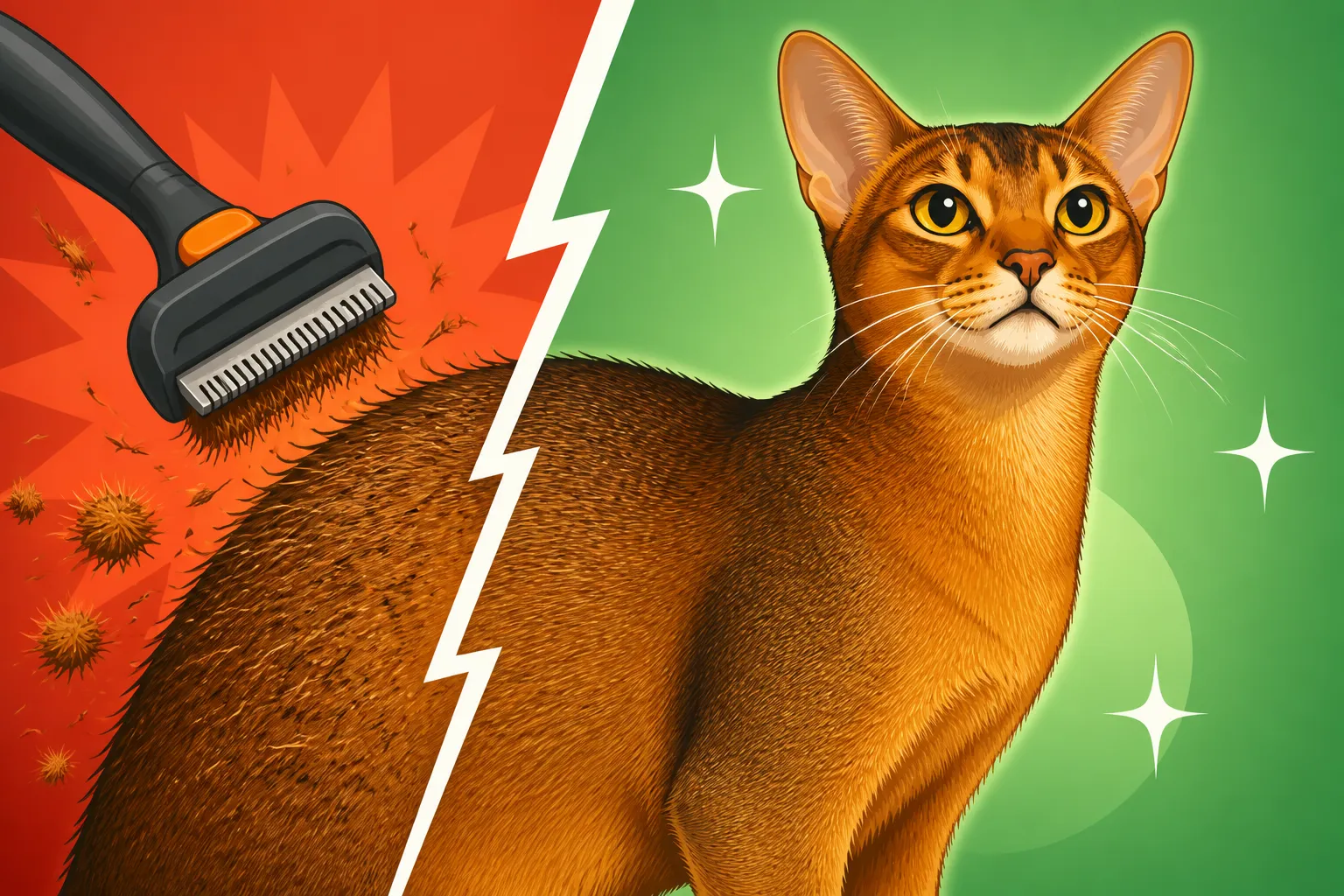
When you use such a tool on an Abyssinian, those sharp, closely packed teeth aren't just removing loose hair; they're actively catching and cutting their delicate, banded guard hairs. Imagine taking a fine-toothed comb and trying to "deshed" a silk scarf – you'd simply damage the threads. The tool snags and breaks these precious hairs, stripping the coat of its natural length and integrity. It's not uncommon for owners to mistakenly believe they are removing "dead undercoat" when, in fact, they are simply destroying healthy topcoat.
Damaging the Guard Hairs
The guard hairs are everything to an Abyssinian's coat. They provide the color, the ticking, the shine, and the smooth feel. Deshedding tools indiscriminately pull, cut, and break these essential hairs. When the guard hairs are damaged, the entire structure of the coat is compromised. Instead of lying flat and sleek, the broken hairs can stand up, creating a coarse, uneven texture.
This damage isn't just aesthetic; it affects the health of the fur. Broken hairs are more prone to further damage, can lead to skin irritation, and disrupt the natural protective barrier of the coat. An Abyssinian's coat is naturally quite resilient and self-cleaning, but once the guard hairs are compromised, it loses some of its natural defenses. Why the Wrong Brush Flattens an Abyssinian's Ticking further explains how improper tools can detract from their appearance.
Stripping the Natural Sheen
One of the most immediate and saddening consequences of using a deshedding tool on an Abyssinian is the loss of its magnificent natural sheen. The healthy, intact banded hairs reflect light beautifully, giving the coat its characteristic glow and depth. When these hairs are broken, cut, or pulled out, the surface of the coat becomes uneven and rough.
This rough surface scatters light rather than reflecting it smoothly, resulting in a dull, lifeless appearance. The rich, vibrant colors of their ticking seem to fade, and the coat loses its signature iridescent quality. Owners might even notice patches where the coat looks distinctly "frazzled" or like it's been scrubbed raw. This isn't just an aesthetic flaw; it's a clear indicator of physical damage to the hair shafts, and it takes time and careful grooming to grow out and regain that lost luster.
The Visible Impact on the Abyssinian's Appearance
The damage caused by deshedding tools isn't just theoretical; it manifests in very clear, visible ways that can drastically alter the beautiful appearance of your Abyssinian. It’s often a slow process, so you might not notice the full extent until the damage is significant.
Loss of Ticking Definition
The most heartbreaking change for an Abyssinian owner is the loss of the crisp, defined ticking that is the hallmark of the breed. As deshedding tools break and remove the banded guard hairs, the distinct color bands become blurred or disappear entirely. Instead of a vibrant, multi-layered look, the coat can appear uniformly muddy or indistinct.
Imagine a finely painted watercolor where someone has gone over it with a rough brush – the fine details get smudged. That's essentially what happens to the Abyssinian's ticking. The carefully placed bands of color, which give the coat its depth and shimmer, are disrupted. What was once a clear pattern now looks muddled and lackluster. This is particularly noticeable in areas that are frequently groomed with the wrong tool, such as along the back and sides.
Patchy or Dull Coat
Beyond the loss of ticking, you might start to notice that your Abyssinian's coat looks uneven, patchy, or generally dull. Areas where the deshedding tool has been used extensively might have noticeably thinner fur, or the remaining hairs might appear brittle and unhealthy. This is because the tool has physically removed or damaged a significant portion of the healthy guard hairs, leaving bald spots or areas with sparse, damaged fur.
A healthy Abyssinian coat is smooth, shiny, and lies close to the body. A damaged coat, on the other hand, can look frizzy, dull, and may even feel coarser to the touch due to the broken hair shafts. This dullness is a direct result of the compromised hair structure no longer reflecting light properly. Caring for an Abyssinian Whose Ticking Has Gone Coarse addresses this issue and what it implies for the coat's health. It’s a sad sight for any owner who cherishes their cat's striking appearance.
Skin Irritation and Hair Breakage
The aggressive nature of deshedding tools can also lead to more than just cosmetic damage; it can cause actual physical harm to your Abyssinian's delicate skin. The metal teeth can scratch or irritate the skin, leading to redness, flakiness, or even small abrasions. A cat's skin is sensitive, and constant harsh pulling can be painful, making your Abyssinian resistant to grooming.
Furthermore, the continuous pulling and breaking of hairs can weaken the remaining hair follicles, potentially leading to increased breakage and slower regrowth. In severe cases, repeated trauma can even lead to secondary skin infections if the abrasions aren't noticed and treated. Remember, the goal of grooming is to promote health and comfort, not to inflict discomfort or injury. Why Over Grooming an Abyssinian Does More Harm Than None highlights the importance of gentle techniques.
Effective and Gentle Grooming Alternatives
So, if deshedding tools are out, what is the right way to groom an Abyssinian? The good news is that their low-maintenance coat actually requires very little effort to keep looking magnificent, provided you use the right approach and tools. The key is gentleness and consistency, working with their coat, not against it.
Soft Brushes and Mitts
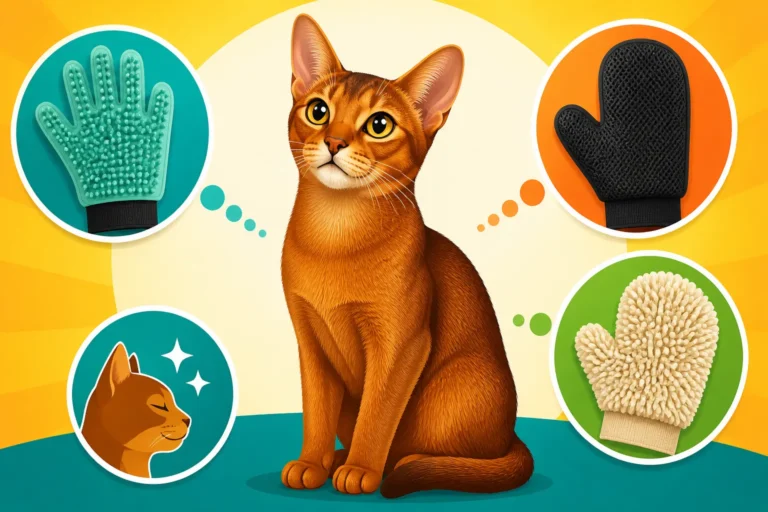
For an Abyssinian, the best grooming tools are those that are gentle on their skin and won't damage their delicate guard hairs. A soft rubber curry brush or a grooming mitt is absolutely ideal. These tools work by gently massaging the skin, stimulating blood circulation, and loosening any naturally shed hairs without pulling or breaking live ones. The rubber nubs catch loose fur on the surface, allowing you to easily wipe it away.
Many owners swear by a simple chamois cloth for a final polish, which brings out an incredible shine without any risk of damage. You can find excellent quality rubber brushes and grooming mitts on platforms like Amazon or Chewy, making them easily accessible. Which Grooming Mitt Suits an Abyssinian offers specific recommendations for suitable tools. The process should be relaxing for your cat, not a wrestling match, and soft tools help achieve this.
Regular Hand-Grooming
Sometimes, the best tool is simply your own hand. Abyssinians generally love attention and physical contact, so a gentle petting session can double as a grooming session. Running a slightly damp hand over their coat can pick up loose hairs, and the tactile sensation is usually very pleasant for them. This is also a fantastic way to bond with your Abyssinian and allows you to feel for any lumps, bumps, or skin issues that might be developing.
The frequency of grooming is also important. Because Abyssinians don't have a heavy undercoat, they don't need daily, intense grooming. A once-a-week session with a soft brush or mitt is usually more than sufficient to keep their coat healthy and minimize loose hairs around the house. An Abyssinian Needs Brushing Once a Week and No More provides a great routine to follow. During shedding seasons, you might increase it to twice a week, but always with gentle tools and a light touch.
Focus on Skin Health
Ultimately, a healthy coat starts with healthy skin. Proper grooming for an Abyssinian should always keep skin health in mind. Regularly inspecting their skin for dryness, flakiness, redness, or any unusual bumps is crucial. A healthy diet, rich in essential fatty acids, also plays a significant role in maintaining skin elasticity and a lustrous coat from the inside out.
If you notice any persistent skin issues, it’s always best to consult with your veterinarian. They can help identify underlying causes, such as allergies or dietary deficiencies, and recommend appropriate treatments. A coat that looks dull or feels coarse, even with proper grooming, can sometimes be a sign of an internal health problem, so don't hesitate to seek professional advice if something seems off.
Long-Term Coat Health and Maintenance
Ensuring your Abyssinian's coat remains magnificent throughout their life isn't just about avoiding the wrong tools; it's about a holistic approach that supports their overall well-being. A truly radiant coat is a reflection of a healthy cat.
Nutrition and Hydration
What your Abyssinian eats plays an enormous role in the quality of their coat. A high-quality diet, rich in animal protein and essential fatty acids like Omega-3 and Omega-6, is paramount. These nutrients are the building blocks for healthy skin and lustrous fur. Look for cat foods that list real meat as the first ingredient and avoid excessive fillers.
Hydration is equally vital. Ensure your Abyssinian always has access to fresh, clean water. Many cats prefer drinking from a fountain, as the moving water is often more appealing than a still bowl. Adequate water intake helps keep their skin supple and their hair follicles nourished, contributing to a strong, shiny coat. A diet that includes wet food can also significantly boost their daily water consumption, which is particularly beneficial for their urinary and kidney health.
Environmental Factors
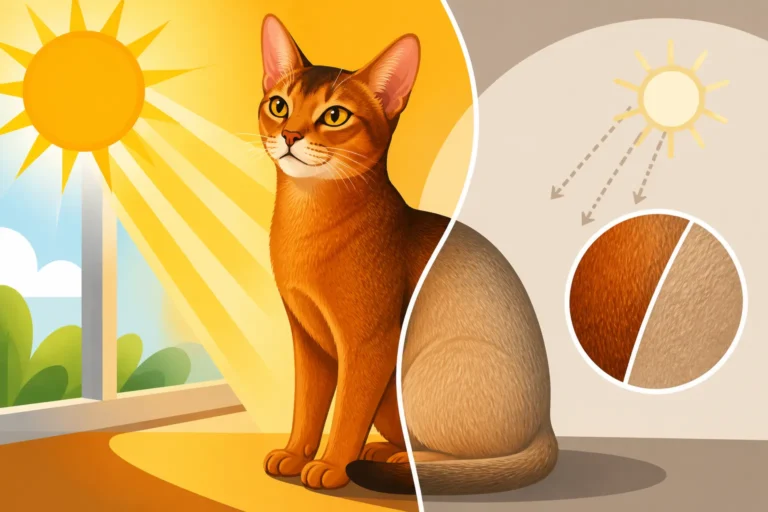
Your Abyssinian's environment can also impact their coat health. Indoor cats generally have more consistent coat quality as they are protected from harsh weather elements, excessive sun exposure, and parasites. While Abyssinians love basking in sunbeams, prolonged exposure can sometimes lead to fading of their beautiful ticking over time. Providing shaded spots or window perches with some protection from direct, intense sunlight can be beneficial.
Maintaining a comfortable indoor temperature and humidity level can also prevent dry skin, which can, in turn, affect coat condition. Regular cleaning of their bedding and living areas helps reduce allergens and irritants that might affect their skin. Remember, a clean environment contributes to a clean and healthy cat.
When to Seek Professional Advice
While Abyssinians are generally robust and low-maintenance in the grooming department, there are times when professional advice is warranted. If you notice persistent itching, excessive shedding despite proper grooming, bald patches, skin lesions, or a significant change in coat texture or color, it's time to consult your veterinarian. These can be indicators of underlying health issues, such as allergies, parasitic infections, hormonal imbalances, or nutritional deficiencies.
A vet can perform diagnostics, offer tailored dietary advice, or prescribe medications if necessary. Sometimes, a change in grooming habits might also be recommended if the current routine isn't yielding the desired results. Don't try to self-diagnose or treat serious coat or skin problems at home, as this can delay proper care and potentially worsen the condition.
By understanding the unique nature of your Abyssinian's coat and adopting gentle, appropriate grooming practices, you can ensure they remain healthy, happy, and stunningly beautiful for many years to come.
Grooming Tools: The Good, The Bad, and The Abyssinian
To make things a little clearer, here's a quick comparison of the types of grooming tools and why they are (or aren't) suitable for your Abyssinian's precious ticked coat.
| Tool Type | Description | Suitability for Abyssinian | Reason |
|---|---|---|---|
| Rubber Curry Brush | Soft, flexible rubber nubs; designed to massage and remove loose surface hair. | Excellent | Gentle on skin, effectively removes shed hairs without damaging guard hairs or ticking. |
| Grooming Mitt | Fabric mitt with rubber or silicone nubs on the palm; worn like a glove. | Excellent | Mimics petting, bonding experience, captures loose hair, suitable for sensitive cats. |
| Chamois Cloth | Soft, absorbent cloth. | Excellent | Polishes coat to a high shine, removes fine dust, no hair removal. |
| Fine-Toothed Comb | Metal or plastic comb with closely spaced teeth. | Use with Caution | Can be used very gently for small tangles, but avoid raking motion as it can snag fine hairs. |
| Soft Bristle Brush | Natural or synthetic bristles, very soft. | Good | Gentle, good for superficial dust and light shine, but less effective at removing shed hairs than mitts. |
| Slicker Brush | Wire bristles with bent ends, designed for detangling and removing undercoat. | Avoid | Harsh wire bristles can scratch skin and break delicate Abyssinian guard hairs. |
| Deshedding Tool | Metal blade with fine, sharp teeth, designed to rake out undercoat. | Absolutely Avoid | Cuts and breaks healthy guard hairs, destroys ticking, causes coat damage and dullness. |
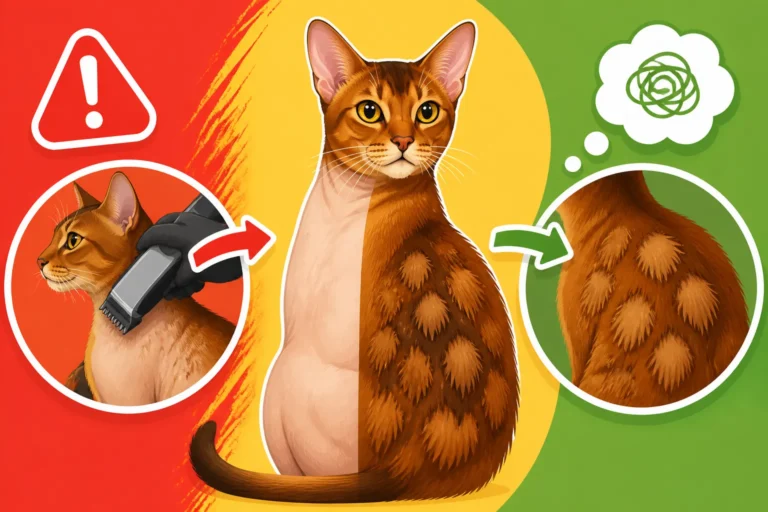
| Clippers/Shears | Electric clippers or scissors for cutting hair. | Absolutely Avoid | Never shave an Abyssinian unless for medical necessity; can permanently alter coat texture. |
Disclaimer
This article is for general informational purposes only and does not constitute professional advice. Laws, prices and regulations vary by location and change over time. Consult a qualified professional for guidance on your specific situation.