Why Over Grooming an Abyssinian Does More Harm Than None
It’s a natural instinct to want to pamper our beloved cats, to brush them often, and keep their coats looking absolutely pristine. With a cat as stunning and active as an Abyssinian, you might think more grooming means a healthier, shinier coat. But here's a surprising truth about our lovely Aby companions: when it comes to their unique coat, over-grooming can actually do more harm than good, leading to dry skin, irritation, and even damaging that gorgeous ticking. This guide will walk you through why a light touch is best and how to properly care for your Abyssinian's magnificent fur.
Understanding the Abyssinian's Unique Coat
Our Abyssinians are truly magnificent, aren't they? Their shimmering, ticked coats are one of their most defining features, making them look like miniature wildcats. But this beautiful coat is also why their grooming needs are so specific and why less is often more.
The Marvel of the Ticked Coat
Unlike many other cat breeds that have distinct stripes or spots, the Abyssinian's coat is characterized by what we call "ticking." This isn't just a fancy word; it means that each individual hair has multiple bands of color, typically three or four, with darker bands at the tip and lighter ones closer to the root. This agouti banding is what gives their coat that incredible depth and shimmer, making them appear to change color as they move in the light. It's a truly special genetic trait, and it's also the reason why their coat has such a fine texture.
What's also crucial to understand about their coat is its structure. Abyssinians have very little to no undercoat. Most domestic shorthairs have a dense layer of soft, downy fur underneath their coarser guard hairs. This undercoat is what often sheds profusely and can lead to matting if not groomed regularly. But an Abyssinian? They simply don't have it to the same degree. This lack of a thick undercoat means they are naturally low-shedding, and their fur lies close to their body, giving them that sleek, elegant silhouette. You can learn more about this unique hair structure in Why Each Abyssinian Hair Carries Three or Four Bands and How an Abyssinian's Agouti Banding Works.
Why Their Coat Doesn't Need Much Help
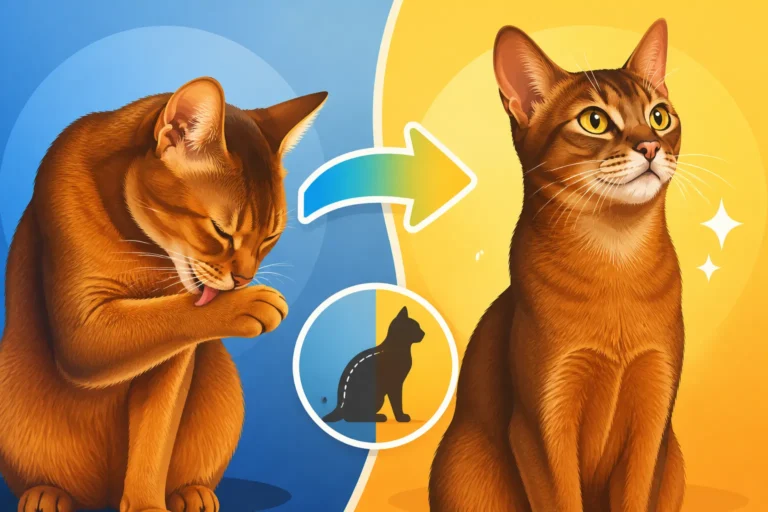
Because of their unique coat structure—the fine texture and minimal undercoat—Abyssinians are incredibly efficient self-groomers. They don't have dense fur that traps dirt or forms mats easily, so their daily self-care routine is usually more than sufficient to keep them clean and tangle-free. This isn't a breed that typically gets huge hairballs or requires extensive daily brushing to prevent matting, like a Persian or a Maine Coon might.
Their skin naturally produces oils that condition their coat, keeping it soft, supple, and shiny. These oils are essential for skin health and for maintaining the integrity of those beautiful ticked hairs. When you compare this to some breeds that genuinely benefit from daily brushing to distribute oils and remove loose fur, the Abyssinian is in a different league entirely. Their coat is designed to be low-maintenance by nature, relying on their own meticulous habits and a healthy diet to stay in top condition.
The Harms of Over-Grooming an Abyssinian
While our intentions are always good, giving an Abyssinian too much grooming attention can actually counteract their natural defenses and cause problems for their delicate skin and distinctive coat. It's a classic case of trying too hard where simplicity is key.
Stripping Natural Oils and Skin Irritation
The Abyssinian's natural skin oils are their built-in conditioner and protective barrier. When you over-brush or over-bathe your Aby, you risk stripping these vital oils away. Imagine washing your own hair too often with harsh shampoo; it becomes dry, brittle, and your scalp can get itchy and flaky. The same principle applies to your Abyssinian.
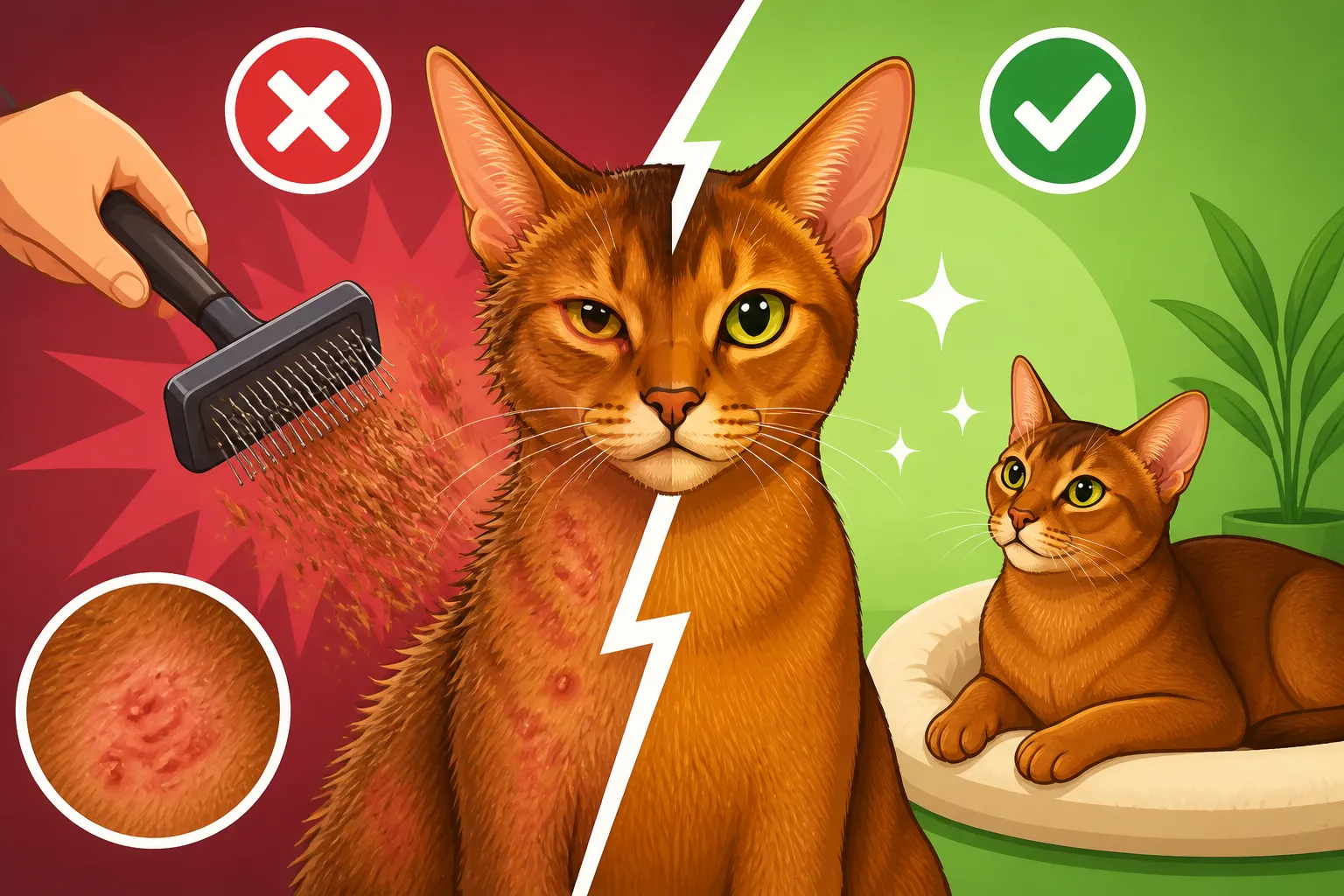
Repeatedly removing these oils can lead to dry, flaky skin, which can be incredibly uncomfortable for your cat. They might start scratching more, which in turn can lead to skin lesions or secondary infections. Furthermore, their skin might try to compensate by overproducing oil, leading to a greasy feeling coat that actually attracts more dirt and makes them feel dirtier, creating a vicious cycle. Their skin is quite sensitive, and maintaining that natural balance is paramount for their comfort and coat health.
Damaging the Ticking and Coat Texture
That gorgeous ticking we adore so much? It's surprisingly delicate. Using the wrong tools or brushing too vigorously can literally damage the individual hair shafts, disrupting the agouti banding that makes their coat so special. Think about using a harsh wire brush on a fine silk scarf – it would pull the threads and ruin the texture. Similarly, an overly aggressive brush can break the fine, short hairs of an Abyssinian's coat.
The result isn't just a temporary bad hair day. Damaged hairs can appear dull, lose their vibrant color, and even feel coarse to the touch. The beautiful shimmer that is so characteristic of the breed can be diminished, replaced by a flat, uninspired look. Frequent washing, especially with unsuitable shampoos, can also alter the natural texture and sheen, leaving the coat feeling dry and brittle instead of sleek and soft. This is why Why the Wrong Brush Flattens an Abyssinian's Ticking is such a critical consideration when choosing your grooming tools.
The Right Way to Groom Your Abyssinian
So, if less is more, what exactly is the right amount of grooming for your Abyssinian? It's about being intentional and gentle, focusing on supporting their natural cleanliness rather than trying to overhaul it.
Gentle Brushing for Health and Bonding
For most Abyssinians, a good, gentle brushing once a week is usually plenty. The goal isn't to remove vast amounts of shed hair—they don't have much to shed in the first place, remember? Instead, it's about stimulating circulation, distributing those natural oils, and removing any loose surface hairs or environmental dust. This also provides a wonderful opportunity for bonding with your cat, turning grooming into a pleasant, affectionate interaction rather than a chore.
When it comes to tools, think soft and gentle. A rubber grooming mitt or a soft bristle brush works beautifully. These tools are designed to massage the skin and pick up loose hair without tugging or scratching. Many Aby owners also swear by a chamois cloth for a final polish; it brings out an incredible shine without disturbing the ticking. Just use short, gentle strokes, moving with the direction of the fur. You'll be amazed at how little effort it takes to maintain their stunning appearance. If you're looking for good quality options, reputable pet supply stores like Chewy or online retailers like Amazon carry a variety of suitable brushes and mitts. You can delve deeper into the ideal frequency with An Abyssinian Needs Brushing Once a Week and No More.
Bathing: Less is Definitely More
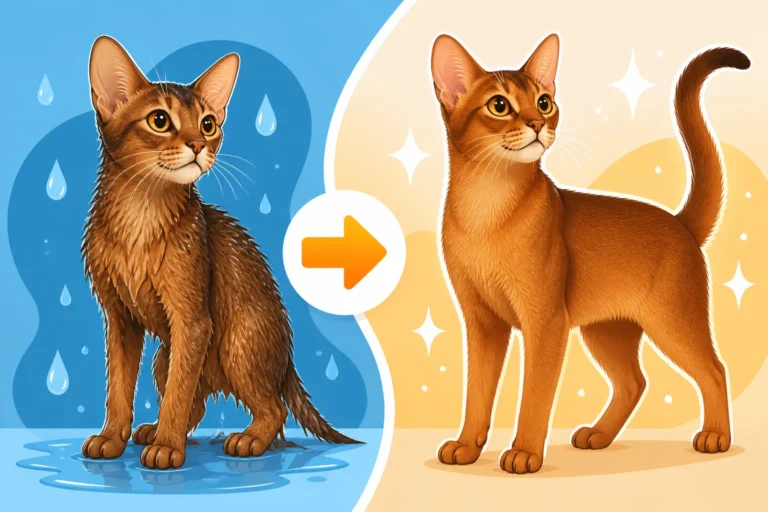
Let's be clear: Abyssinians are not dogs, and they generally do not need routine baths. Most Abyssinians can go their entire lives without needing a bath, relying on their fastidious self-grooming. Excessive bathing strips their coat of those essential natural oils, leading to the problems we discussed earlier.
So, when does an Abyssinian actually need a bath? Typically, only if they get into something truly messy or greasy that they can't clean themselves, or if a vet recommends it for a specific skin condition. If a bath is necessary, use a gentle, cat-specific shampoo, preferably one that's soap-free and designed for sensitive skin. Rinse thoroughly, making sure no residue is left behind, as this can irritate the skin. Pat them dry gently with a towel, and ensure they are kept warm until completely dry, especially given their lack of an insulating undercoat. Read more about this specific topic in When an Abyssinian Actually Needs Washing.
Beyond the Coat: Dental, Claws, and Ears
While coat grooming for an Abyssinian is minimal, other aspects of their care are incredibly important and often overlooked in favor of over-focusing on their fur. Dental care, for instance, is paramount. Abyssinians are unfortunately prone to dental issues like gingivitis and tooth resorption, and proactive care can save them a lot of pain and you a lot of money down the line. Daily or at least several times a week brushing with a cat-specific toothpaste is far more beneficial than any amount of coat brushing. Brushing an Abyssinian's Teeth Matters More Than Its Coat for a good reason!
Regular nail trims are also essential, especially for an active, climbing Abyssinian. Keeping their claws at a healthy length prevents them from getting snagged, reduces damage to your furniture, and keeps their paws comfortable. Aim for a trim every 2-4 weeks. Finally, their large, open ears should be checked weekly for any dirt, wax buildup, or signs of irritation. A gentle wipe with a damp cotton ball or a vet-approved ear cleaner is usually all that's needed. You can find excellent guides on how to manage these vital areas in How to Trim a Climbing Abyssinian's Claws and How to Clean an Abyssinian's Large Ears.
Avoiding Common Over-Grooming Mistakes
Even with the best intentions, it's easy to fall into traps that can lead to over-grooming or using the wrong techniques on your Abyssinian. Knowing what to avoid is just as crucial as knowing what to do.
The Problem with Deshedding Tools
You know those fantastic deshedding tools that work wonders on dense-coated breeds, pulling out loads of loose undercoat? They are an absolute no-go for an Abyssinian. These tools are designed to grab and remove the fine undercoat, which, as we've established, Abyssinians barely have. Using a deshedding tool on an Abyssinian will mostly just pull out healthy guard hairs, damage the ticking, and irritate their skin.
Instead of reducing shedding, you'll likely cause more irritation and potentially damage their beautiful coat permanently. Stick to soft brushes or grooming mitts. Your Abyssinian will thank you for it, and their coat will maintain its natural brilliance. For more details on this, check out Why a Deshedding Tool Ruins an Abyssinian's Ticking.
Too Frequent Brushing or Washing
We've covered this, but it bears repeating: consistency is good, but frequency needs to be appropriate. Brushing your Abyssinian daily, while lovely for bonding, isn't necessary for their coat health and can sometimes be detrimental if you're overzealous. The same goes for bathing – unless there's a specific, unavoidable reason, bathing an Abyssinian more than once every few months (or even less frequently) is simply too much.
Excessive handling and manipulation of their coat can lead to irritation and the stripping of natural oils. Remember, their coat is designed to maintain itself with minimal intervention. If you feel like your Aby needs more attention, redirect that energy towards play, training, or those essential dental care routines.
Products to Approach with Caution
The pet market is flooded with grooming products: detangling sprays, conditioning rinses, "brightening" shampoos, and specialized topical treatments. While some of these might be useful for breeds with different coat types, many can be counterproductive for an Abyssinian. Products with strong fragrances, harsh chemicals, or heavy conditioning agents can weigh down their fine coat, leave residue, and potentially cause skin sensitivities.
Always opt for simple, natural, cat-safe products if you must use them. When in doubt, consult your veterinarian or a reputable Abyssinian breeder before introducing any new grooming product. Sometimes the best product is simply warm water and a soft cloth for a quick wipe-down. Brands like Chewy and Amazon offer a good selection of gentle, cat-specific shampoos and grooming wipes, but always check ingredients carefully.
Here's a quick reference for common grooming tools and their suitability for your Abyssinian:
| Grooming Tool | Description | Suitability for Abyssinian | Reason |
|---|---|---|---|
| Rubber Grooming Mitt | Soft rubber nubs, fits on hand. | Excellent | Gathers loose hair, massages skin, gentle on ticking. |
| Soft Bristle Brush | Natural or synthetic soft bristles. | Excellent | Distributes oils, smooths coat, comfortable for cat. |
| Chamois Cloth | Soft, absorbent cloth, usually leather or synthetic. | Excellent | Adds shine, removes dust, very gentle finish. |
| Fine-toothed Comb | Metal or plastic, closely spaced teeth. | Good (use sparingly) | Can check for fleas or remove small tangles, but easy to over-comb. |
| Deshedding Tool | Blade-like tool designed for undercoat removal. | Avoid | Harsh, damages ticking, pulls healthy guard hairs, irritates skin. |
| Slicker Brush | Fine, wire bristles with a protective coating. | Avoid | Too harsh for the Abyssinian's delicate single coat, can scratch skin. |
| Harsh Shampoos/Conditioners | Strong detergents, heavy perfumes. | Avoid | Strips natural oils, can cause skin irritation, leaves residue. |
Caring for your Abyssinian's coat is about understanding its unique needs and respecting its natural structure. A gentle, consistent, and minimalist approach will keep that stunning ticked coat healthy and gleaming for years to come.
Disclaimer
This article is for general informational purposes only and does not constitute professional advice. Laws, prices and regulations vary by location and change over time. Consult a qualified professional for guidance on your specific situation.