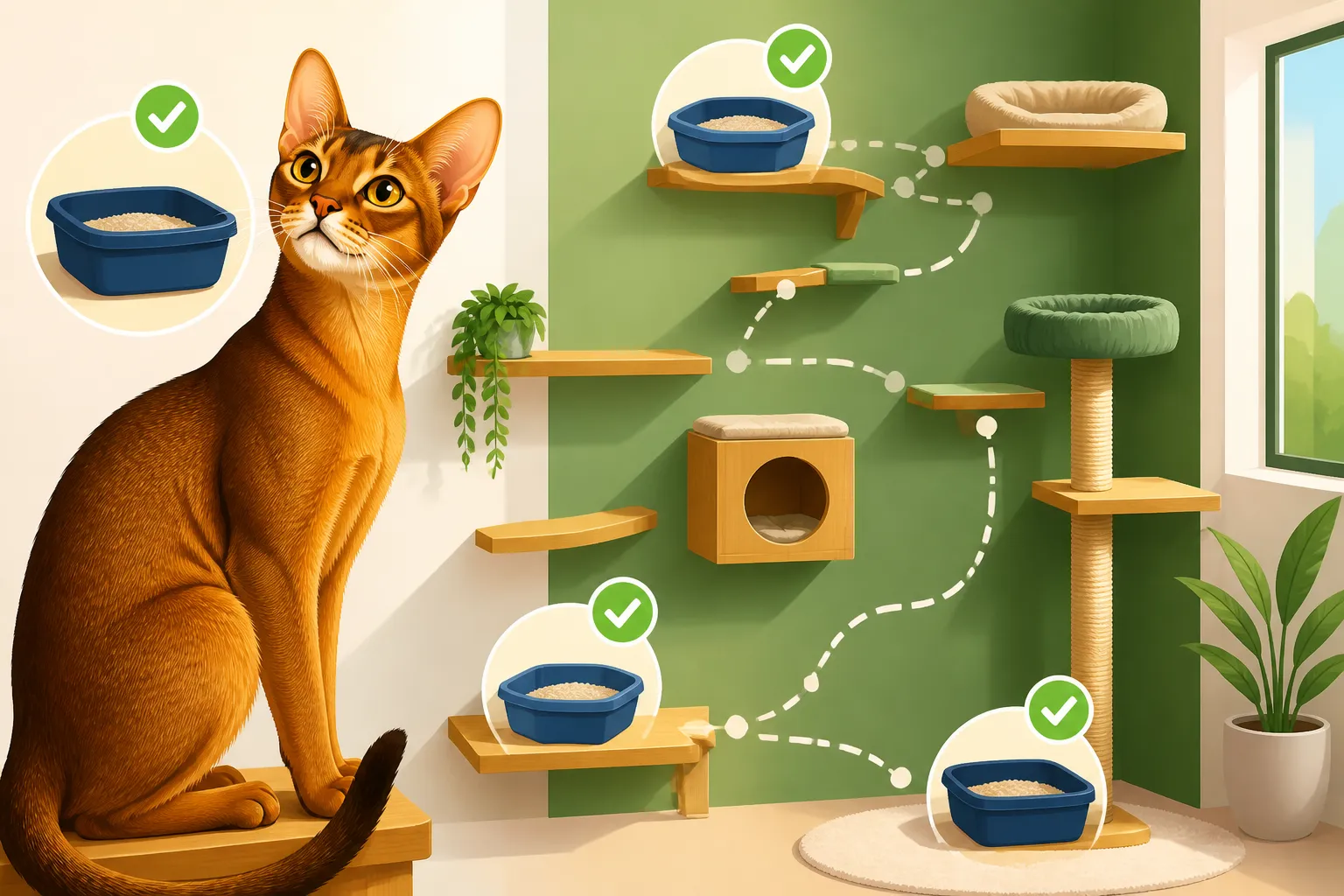
Where to Put Litter Boxes on an Abyssinian’s Climbing Route
Anyone who shares their home with an Abyssinian knows they live life on a vertical plane. These incredible athletes are always up, up, and away, surveying their kingdom from the highest points. But this boundless energy and love for heights can make something as seemingly simple as litter box placement a real head-scratcher. If you've ever found your Abyssinian choosing an unexpected spot for their business, it might not be defiance, but a sign that their litter box isn't integrated into their unique, high-flying lifestyle. This guide will walk you through how to place litter boxes thoughtfully, ensuring your Abyssinian has convenient and comfortable facilities right where they need them, keeping everyone happy and your home clean.
Understanding Your Abyssinian's Vertical Movement
Abyssinians are not your average couch potatoes; they are graceful, agile climbers who thrive on exploring every nook and cranny of their environment, especially upward. This isn't just about fun and games; it's deeply ingrained in their nature. They love to observe, feel secure, and often, quite literally, look down on their domain. Understanding this intrinsic need for vertical territory is the first step in creating a home environment that truly suits them, and that includes their bathroom habits.
Why Abyssinians Crave High Places
From the moment they wake, an Abyssinian is often thinking about how to get to the highest point in the room. They see a bookshelf not as storage, but as a staircase to adventure. A tall cat tree isn't just furniture; it's a multi-level observation deck. This instinct harks back to their ancestral need for safety and vantage points to spot prey or predators. In your home, it translates to them wanting to be up high, away from the hustle and bustle of floor-level activity. This constant desire to ascend means their daily routines, including trips to the litter box, are often integrated into their climbing routes. If their preferred high-traffic areas don't offer accessible facilities, they might start looking for alternatives. An Abyssinian Needs Height More Than It Needs Floor isn't just about play; it's about their entire spatial awareness.
How Vertical Lifestyle Impacts Daily Needs
Think about your Abyssinian's typical day. They might zoom from the floor to the top of a cat tree, leap across to a set of wall shelves, and then perhaps survey the kitchen from atop the fridge before settling in a high window perch. Every aspect of their life, from playing to napping, is often conducted at varying elevations. When it comes to using the litter box, convenience is key. If they're playing on the second story catio or napping on a bedroom dresser, a quick descent to a basement litter box can feel like an unnecessary journey. We sometimes forget that while our homes are mostly horizontal for us, for an Abyssinian, they're a complex, multi-dimensional playground. Their need for constant activity means they might not always want to interrupt a prime exploring session just to get to a litter box that's out of their immediate "flight path."
Strategic Litter Box Placement for Climbing Cats
Now that we appreciate just how much your Abyssinian values their vertical world, it's time to translate that understanding into practical litter box placement. The goal isn't just to have enough litter boxes, but to place them strategically where they make sense for your cat's natural movements. For a breed that loves to climb, a litter box should never feel like a chore to get to.
Placing Boxes Along Common Routes
Consider the paths your Abyssinian takes throughout the day. Do they have a favored route from the living room's How High an Abyssinian Will Climb cat tree up to your bedroom shelves? Do they patrol the hallway from atop bookcases? These are critical areas where a litter box, or at least one of them, should be located. It doesn't mean putting a box on top of the cat tree (unless you're feeling adventurous!), but rather near the base or a landing point along that vertical journey.
Imagine your Abyssinian finishing a climb down from their favorite window perch. Placing a discreet litter box just off that immediate descent path, perhaps tucked beside a plant or in a quiet corner of the room, makes it a convenient pit stop rather than a special trip. For instance, if you have a multi-story home and your Abyssinian spends a lot of time on the upper floors, placing at least one box on each level they frequent is paramount. Don't relegate all the boxes to a hidden laundry room if your cat rarely goes there. Think about where your Abyssinian feels safest and most comfortable. They need a sense of security even when they're vulnerable, so an open, high-traffic hallway isn't ideal, but a corner near a main route might be perfect.
Utilizing Vertical Space for Privacy
While Abyssinians love to be seen, they still desire privacy for their personal business. This can be tricky in open, vertical spaces. Instead of simply placing a box on a landing, consider how you can create privacy. This might involve:
- Tucked-away corners: A nook under a stairway, or a corner created by shelving, can provide a sense of enclosure without being fully enclosed.
- Litter box enclosures: Many furniture-style litter box covers are available on sites like Chewy or Amazon. These can blend into your decor while offering a private space. They often look like small cabinets or side tables. Just ensure the entrance is large enough for your agile Abyssinian to navigate comfortably.
- Integrating with existing furniture: If your Abyssinian uses a large, multi-level cat tree, placing a litter box adjacent to its base can work well. The height of the tree itself might provide a visual barrier. How Many Vertical Levels an Abyssinian Needs often translates to them needing facilities at more than one level.
The key is to offer options that are both convenient and respect their need for a quiet, protected spot. A top-entry litter box can also provide more privacy while keeping litter scatter contained, which can be a good option if your Abyssinian is comfortable with it.
Multi-Level Homes and Multiple Boxes
The general rule of thumb for litter boxes is one per cat, plus one extra. For Abyssinians in multi-level homes, I'd argue it's even more crucial to ensure adequate distribution across different floors or major vertical zones. If you have two Abyssinians, you might aim for three or even four boxes spread throughout the house.
Consider a typical scenario: an Abyssinian who loves to spend mornings on the second-floor cat shelves and afternoons on the main floor's window perches. Having a box on each of those levels makes sense. If your home has a finished basement where your Abyssinian occasionally explores, a box there is a good idea too. The goal is to minimize the "effort" required for your cat to find a suitable bathroom. A long descent down multiple flights of stairs just to use the litter box in the basement might be too much for an active Abyssinian who's deeply engrossed in play or napping high up. This is particularly important for Caring for an Abyssinian Past Ten, when mobility might start to decrease.
Here's a quick comparison of litter box types and their suitability for integrating into an Abyssinian's vertical world:
| Litter Box Type | Pros for Abyssinians | Cons for Abyssinians | Integration Tips |
|---|---|---|---|
| Open Pan | Easy access, good visibility, low cost. | Less privacy, more litter scatter, less scent control. | Best placed in a private nook, under a tall console table, or behind a screen. |
| Covered Dome | Good privacy, better scent control, less scatter. | Can feel confined, odors can build up inside, may be too small for some. | Ensure it's large and well-ventilated; place in a quiet corner. |
| Top-Entry | Excellent scatter control, high privacy, sleek design. | Requires jumping, may not be suitable for older or less agile cats. | Great for active, young Abyssinians; blends well into modern spaces. |
| Furniture Enclosure | Blends with decor, good privacy, hidden appearance. | Can be expensive, requires larger footprint, ensure easy cat access. | Place as an end table or console near a common Abyssinian hangout spot. |
Addressing Common Litter Box Challenges in a Multi-Level Home
Even with the best intentions, you might run into issues. Abyssinians are creatures of habit, but they're also incredibly smart and will find creative solutions if their needs aren't met. Understanding the root cause of litter box avoidance in a multi-level, vertical-loving cat is crucial.
Why Your Abyssinian Might Avoid the Box
If your Abyssinian, who usually has impeccable litter habits, suddenly starts having accidents, it's rarely out of spite. It's a clear signal that something is wrong, and often, it relates directly to their litter box situation.
- Inconvenient Location: This is paramount for a vertical cat. If they're on the third floor of their cat tree and the nearest box is two floors down, that's a long way to go in a hurry. They might opt for the nearest carpeted corner instead.
- Dirty Box: Abyssinians are fastidiously clean. A dirty litter box is an immediate turn-off. They won't use a box that's too full or smells bad, regardless of how well-placed it is. If you have multiple cats, this problem can be exacerbated.
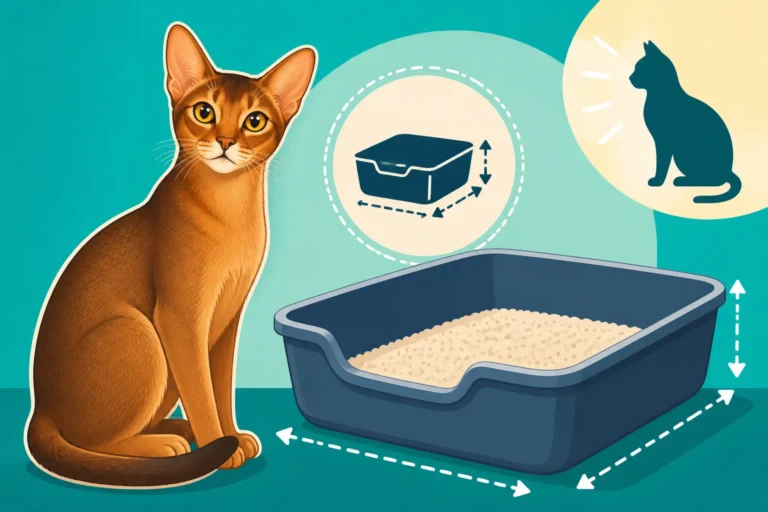
- Wrong Type of Box/Litter: While Abyssinians aren't usually picky about litter type, some might object to a new texture or scent. Similarly, a covered box might feel too cramped, or a top-entry box might become a struggle as they age. Which Litter Box Suits a Long Bodied Abyssinian is a real consideration.
- Stress or Medical Issues: Any sudden change in litter box habits warrants a vet visit. Accidents can be a sign of urinary tract infections, kidney issues, or even pain that makes jumping into a high-sided box uncomfortable. Once health issues are ruled out, environmental factors become the primary suspects.
Troubleshooting and Adjusting Placement
If you're dealing with accidents, don't despair! Here's a troubleshooting plan:
- Observe Your Cat's Habits: Pay close attention to where your Abyssinian spends most of their time and where accidents are occurring. Are they always on the upper levels when accidents happen downstairs? This tells you a lot about where an additional box is needed. What an Abyssinian Does When It Is Bored often includes destructive behaviors, but accidents usually point to something more specific.
- Add More Boxes: The "n + 1" rule (number of cats + 1 extra box) is a baseline. For Abyssinians, especially in larger or multi-story homes, consider adding even more than that, particularly in areas they frequent. You can temporarily place boxes in less-than-ideal spots to test if a new location helps, then find a more permanent, discreet solution.
- Experiment with Types: If you only have covered boxes, try an open one. If you have all open, try a top-entry. Some cats just prefer one style over another.
- Clean, Clean, Clean: Scoop at least once, preferably twice, daily. Perform a full litter change and wash the box regularly with unscented soap.
- Ensure Accessibility: Make sure the path to the litter box is always clear. An Abyssinian will be frustrated by a closed door, especially if it means they can't get to their preferred spot. Why an Abyssinian Hates a Closed Door is a common complaint from owners of this breed.
Creating a Designated "Rest Stop" on Each Floor
For an Abyssinian, every floor or major climbing zone in your home should ideally have its own "rest stop" – a comfortable, easily accessible litter box. Think of it like public restrooms on different floors of a mall; you wouldn't expect someone to go down three flights of stairs just to use the facilities. Your Abyssinian feels the same way!
On the main floor, this might be a well-placed box in a quiet corner of the living room or a dedicated cat room. Upstairs, consider a box in a spare bathroom, a large closet (with the door removed or secured open), or within a bedroom if space allows. If your Abyssinian loves a finished attic or basement space, put a box there too. These "rest stops" don't have to be visually prominent. As mentioned, furniture-style enclosures can be invaluable for blending in, and you can find a good selection on platforms like Amazon. The key is that they are there, and available, when your agile climber needs them most.
Maintenance and Adaptation for an Active Abyssinian
Just like any other aspect of cat care, litter box management for an Abyssinian isn't a "set it and forget it" task. Their active, curious nature means you'll need to stay on top of maintenance and be willing to adapt as their needs or your living situation changes.
The Importance of Consistent Cleaning, Everywhere
Because you'll likely have multiple litter boxes spread throughout your home, consistent cleaning becomes even more critical. A well-placed box that's dirty is just as bad as a poorly placed one. An Abyssinian's keen sense of smell means they'll quickly object to an unclean environment, leading them to seek out more "pristine" (to them) alternatives, like your laundry pile or a houseplant.
Make scooping a daily ritual, or even twice daily. If you have an especially energetic Abyssinian, they might even seem to "police" the cleanliness of their boxes. A full litter change with a thorough cleaning of the box should happen weekly for most households, or more often if you have multiple cats or a particularly busy box. Invest in a good scoop and consider a litter disposal system to help manage odors, especially if boxes are in more central locations. Remember, a clean box is an inviting box, and Abyssinians truly appreciate it.
Adapting Placement as Your Abyssinian Ages
While young Abyssinians are veritable acrobats, even the most athletic cats will eventually slow down. As your Abyssinian enters their senior years, their ability to jump, climb, and maneuver might change. Arthritis or other joint issues can make a high-sided litter box or a top-entry box uncomfortable or even painful to use. What an Old Abyssinian Slows Down From can include mobility issues.
- Lower Sides: Replace high-sided boxes with those featuring lower entry points. You can even use a shallow storage bin if it's sturdy and easy to access.
- Ramps or Steps: If a top-entry box is still preferred but challenging, consider adding a small ramp or step stool to aid access.
- Increased Quantity and Centralization: As mobility decreases, having even more boxes available and closer to their main resting areas can prevent accidents. If they used to navigate stairs easily, they might now struggle, so ensure sufficient boxes are on the main floor where they spend most of their time. How to Keep an Old Abyssinian Climbing Safely might also involve adjusting litter box height for easier entry and exit.
- Observation is Key: Continuously observe your older Abyssinian for any signs of discomfort or hesitation around their litter boxes. Early intervention can prevent new behavioral issues from developing.
Integrating New Cats or Changes to the Household
Bringing a new Abyssinian, or any new cat, into a home already set up for a climbing cat requires thoughtful adjustment. The "n + 1" rule becomes even more important, and you'll need to evaluate if your existing litter box setup can accommodate an additional personality.
- Introduce Slowly: When introducing a new cat, separate litter boxes for each cat in their initial safe spaces are a must.
- Observe Interactions: Watch how the cats interact around the litter boxes. Some cats prefer to have their own designated boxes, while others are more flexible.
- Evaluate Traffic Flow: With more cats, the "traffic" around litter boxes increases. Ensure there are enough options in different locations to prevent one cat from "guarding" a box or another feeling too vulnerable while using it.
- Vertical Litter Boxes (Hypothetically): While not truly vertical, consider how you can use different levels of your home to provide separate "territories" for litter boxes. For example, if you have two Abyssinians, one might prefer the basement box, and the other the upstairs one. This goes back to Whether Two Abyssinians Are Easier Than One when it comes to resource management.
Ultimately, providing ample, clean, and easily accessible litter boxes in a home filled with vertical enrichment is a foundational aspect of keeping your Abyssinian happy and healthy. By understanding their unique climbing instincts and applying thoughtful placement, you're ensuring that their personal needs are met, allowing them to truly thrive in their multi-level kingdom.
Disclaimer
This article is for general informational purposes only and does not constitute professional advice. Laws, prices and regulations vary by location and change over time. Consult a qualified professional for guidance on your specific situation.