How High an Abyssinian Will Climb
One of the first things you'll notice about an Abyssinian is their incredible athleticism and their insatiable desire to be up. If you've just brought one of these magnificent cats into your home, or you're considering it, you're probably already wondering just how high they can climb, and more importantly, how high they will climb. Many owners face the frustration of finding their energetic Abyssinian perched precariously on top of the tallest bookcase or even the kitchen cabinets, surveying their domain with a look of supreme satisfaction. This guide will delve into the Abyssinian's climbing prowess, explain why they do it, and help you create an environment that satisfies their vertical ambitions safely.
The Abyssinian's Innate Need for Vertical Space
Abyssinians aren't just climbers; they're apex predators in miniature, and their instinct to seek high ground is deeply ingrained. This isn't just about fun for them; it's a fundamental part of their well-being and their very nature. Ignoring this need leads to a frustrated cat and potentially, a lot of unwanted climbing on surfaces you'd rather they avoided.
Understanding Their Wild Instincts
Imagine a small, wild cat in its natural habitat. Where would it feel safest? Where would it hunt most effectively? From a high vantage point, of course! This allows them to survey their territory, spot potential prey, and keep an eye out for any threats. Even though our beloved Abyssinians live in our homes, safe from most dangers, those ancient instincts are still very much alive. They see your living room as their jungle, and the highest shelves or cabinet tops are their personal trees. It’s not just a quirk; it's a vital part of their genetic makeup.
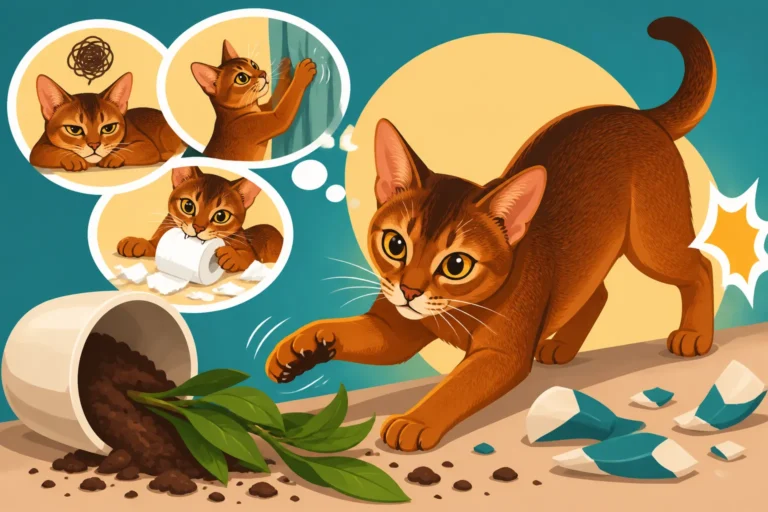
Their intelligence and high energy levels also contribute significantly. A bored Abyssinian is a destructive Abyssinian, and climbing is a fantastic mental and physical outlet. If they don't have appropriate outlets for their energy and their instinct to explore vertically, they will create their own. This often manifests as scaling curtains, investigating the tops of refrigerators, or attempting to conquer door frames. It's not defiance; it's simply them fulfilling an innate need. When you bring an Abyssinian into your home, you're not just getting a pet; you're getting a small, intelligent explorer who views every surface as a potential climbing challenge. You might even find them sleeping in the most unexpected high places.
The Thrill of High Vantage Points
For an Abyssinian, being high up isn't just about safety; it's about control and stimulation. From a high perch, they feel dominant and secure. They can observe everything happening in their environment without feeling vulnerable or overwhelmed. This is particularly true in multi-pet households or homes with a lot of activity. A high shelf offers a sanctuary, a place where they can retreat and still be part of the action, without being directly in its path. It allows them to participate on their own terms, feeling secure and unthreatened.
Think of it from their perspective: the world from the floor is entirely different from the world from the top of your kitchen cabinets. Higher ground provides a much richer sensory experience. They can feel air currents, catch subtle shifts in light, and have an unobstructed view of everything below. It's like having a private observation deck. This is why you'll often see them gravitate towards Why an Abyssinian Prefers the Highest Point in a Room, soaking it all in. This mental engagement is crucial for a breed as intelligent and curious as the Abyssinian. Without these vertical opportunities, they can become restless, anxious, and even start exhibiting unwanted behaviors simply because they're not fully stimulated.
Identifying the Abyssinian's Climbing Capabilities
When we talk about how high an Abyssinian will climb, we're not just talking about a casual jump onto a chair. We're talking about impressive feats of feline acrobatics that can leave even seasoned cat owners scratching their heads. Their physical build makes them exceptionally well-suited for vertical exploration.
How High Can They Really Go?
The short answer is: surprisingly high. An Abyssinian can easily jump to the top of a standard refrigerator (around 5-6 feet) from a standing start, especially if they have even a slight intermediary perch, like a nearby counter or chair. They have powerful hind legs and a lean, muscular body that allows for incredible propulsion. If there's a path, no matter how narrow or seemingly impossible, they will find it. I've personally seen an Abyssinian scale a bookshelf that was almost ceiling-height, using the individual shelves as tiny footholds, and then jump onto the top, a good 8 feet off the ground.
Consider your average kitchen cabinets. If they can get onto the counter, the top of the cabinets is fair game. This often means reaching heights of 7 to 8 feet without much effort, provided there's a series of objects to use as steps or a strong enough purchase to propel themselves upwards. They are not just jumpers, but clever problem-solvers. They will assess the route, plan their ascent, and execute it with remarkable agility. Their lightweight build also contributes to their climbing prowess, allowing them to balance on narrow ledges or scale flimsy structures that a heavier cat would struggle with. This is why providing proper, sturdy structures is so important.
Recognizing Their Physical Prowess
Abyssinians possess a unique combination of strength, agility, and balance that makes them natural-born climbers. Their bodies are built for it: long, slender legs, a flexible spine, and a powerful musculature, all wrapped up in a relatively light frame. They have highly developed spatial awareness, which allows them to judge distances and grip points with astonishing accuracy. You'll rarely see an Abyssinian miss a jump or slip, unless the surface is truly unstable or slick.
Their claws are also key. While not as long or curved as those of a tree-climbing domestic cat, their claws are sharp and used with precision to grip surfaces. They don't just jump; they often "climb" by leveraging their claws, almost like rock climbers. This is particularly evident when they ascend soft materials like curtains or textured wallpaper. Their ability to pivot and change direction mid-air is also remarkable. They use their long, tapering tail as a counterbalance, much like a tightrope walker uses a pole. This combination of physical attributes means that if there's a will (and an Abyssinian always has the will to go up), they will find a way, often to the highest point available. You'll often find them attempting to reach Why an Abyssinian Ends Up on Top of the Fridge, simply because it's high and offers a great view.
Providing Safe and Stimulating Vertical Environments
Knowing their innate desire to climb, it becomes your responsibility as an Abyssinian owner to provide safe and appropriate outlets for this behavior. Failing to do so doesn't stop them from climbing; it just means they'll climb on things you don't want them to, potentially damaging your home or injuring themselves.
Essential Climbing Furniture and Structures
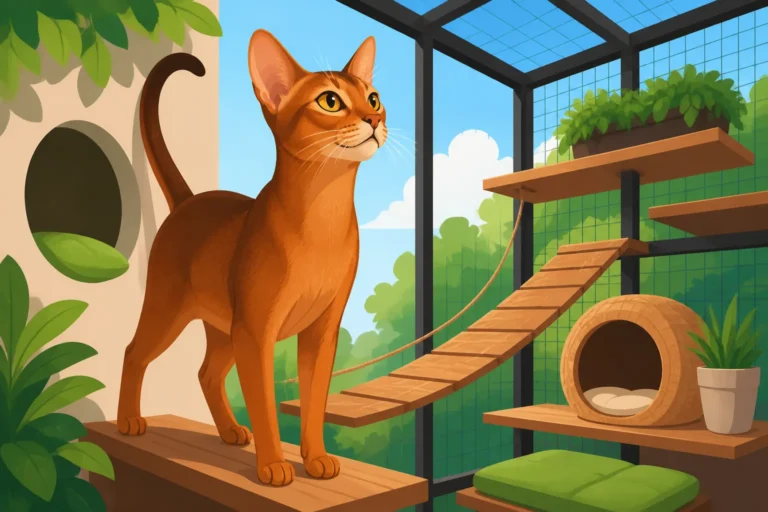
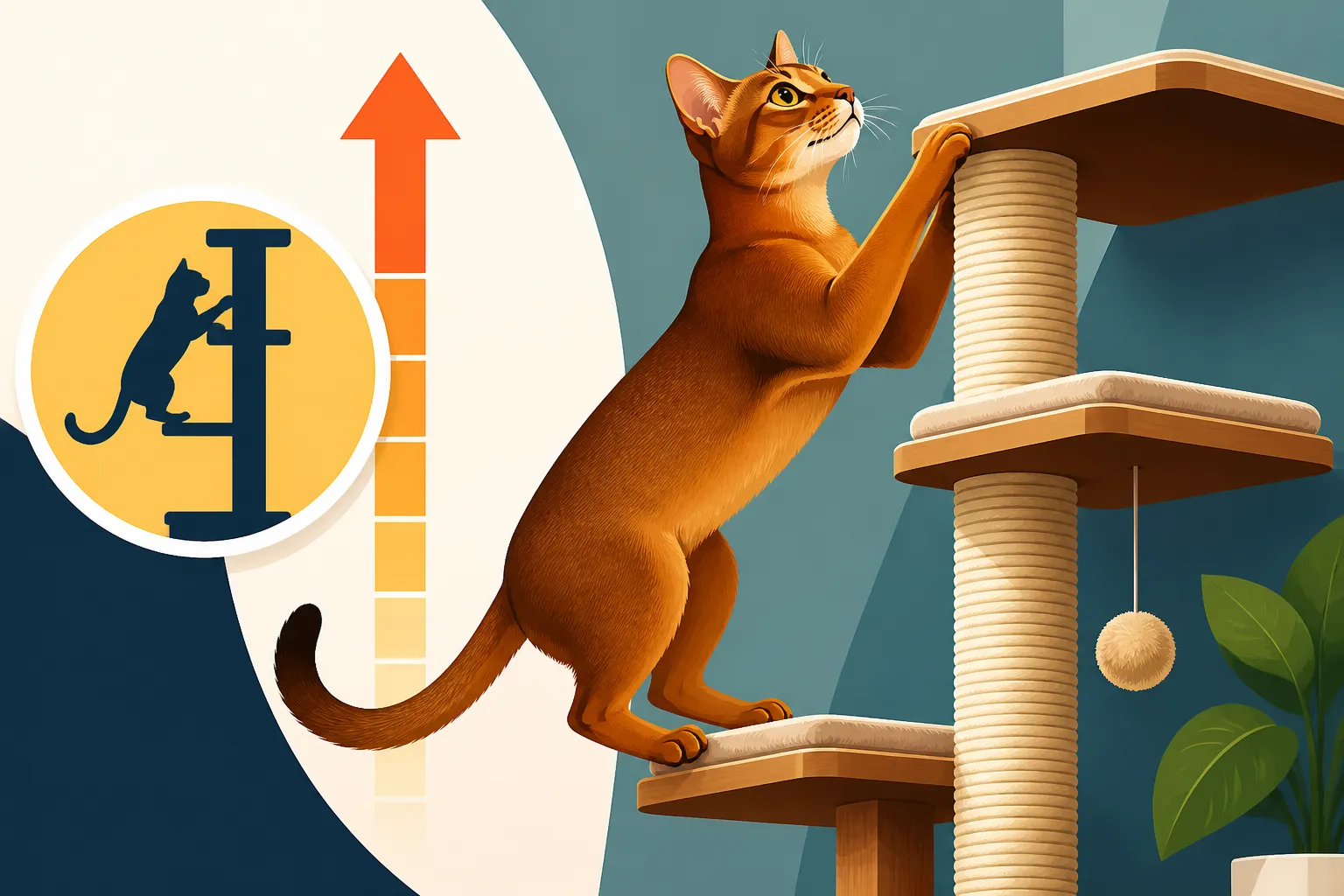
To truly satisfy an Abyssinian's vertical ambitions, you need to think beyond a simple, short cat tree. They need structures that offer height, multiple levels, and stability. Large, sturdy cat trees are a great start. Look for ones that are at least 6 feet tall, with multiple platforms and scratching surfaces. Brands like Frisco or even taller models you can find on Amazon often offer the height and stability needed. A good cat tree should have posts wrapped in sisal or a similar material that allows them to get a good grip and fully extend their bodies while scratching. Remember, Which Cat Tree Height Suits an Abyssinian is usually "the taller, the better."
However, even the best cat tree might not be enough on its own. Abyssinians thrive on a diverse vertical landscape. Consider cat "condos" or multi-level towers that integrate with your existing furniture. Ensure that all structures are stable and heavy enough not to tip over when your Abyssinian launches themselves up or down. A wobbly cat tree is not only unappealing to a confident climber but also a safety hazard. Always check the weight limits and reviews before purchasing, especially for taller structures.
DIY Solutions and Creative Setups
For many Abyssinian owners, the ideal solution involves integrating climbing opportunities directly into their home decor. This is where wall-mounted shelves truly shine. Why Wall Shelves Work Better Than a Tree for an Abyssinian is because they allow you to utilize vertical wall space much more efficiently and create custom climbing routes that can span an entire room. You can install a series of shelves at varying heights, creating a "cat highway" that leads to a high perch near the ceiling. Companies like CatastrophiCreations offer stylish and sturdy wall-mounted options, but you can also create your own with strong lumber and wall brackets from a hardware store.
When planning a DIY climbing setup, safety is paramount. Ensure that the shelves are securely mounted into wall studs, not just drywall. Which Shelves Hold an Abyssinian's Weight is crucial – they need to be robust. Make sure each shelf is wide enough for your Abyssinian to comfortably sit, turn around, and jump from. Consider adding carpet squares or non-slip mats to the surfaces for better grip. Think about the distances between shelves; they should be close enough for easy, fluid jumps but far enough apart to offer a challenge. How Far Apart Abyssinian Wall Shelves Should Sit depends on your cat's agility, but generally, 12-18 inches vertically and horizontally is a good starting point. Don't forget to incorporate scratching surfaces into your wall-mounted designs, perhaps by wrapping a vertical support post in sisal rope. You want to make How to Make an Abyssinian's Climbing Route Safe a top priority.
Managing and Redirecting Unwanted Climbing
Despite providing ample vertical enrichment, there might still be times when your Abyssinian decides that your kitchen counter or delicate bookshelf is a more appealing challenge. This isn't necessarily a sign that you've failed; it's just their innate curiosity and problem-solving nature at play. The key is consistent redirection and making unwanted areas less appealing.
When "Up" Becomes "Trouble"
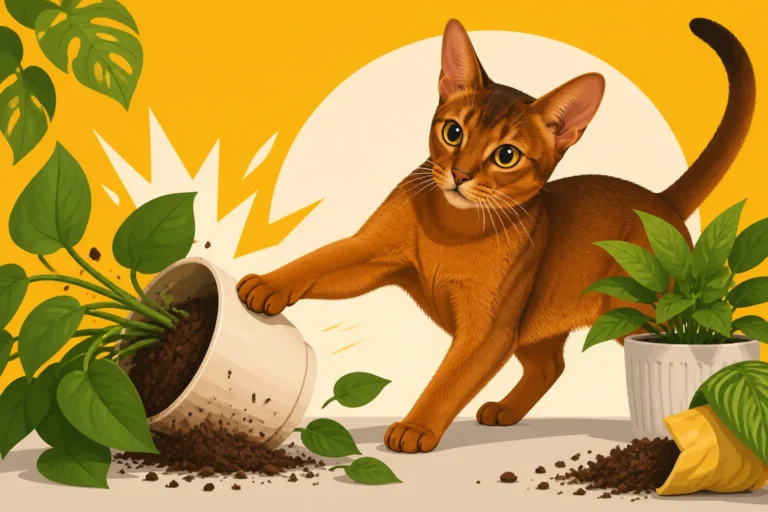
There are certain areas where an Abyssinian's climbing instinct can become problematic. Kitchen counters are a prime example. Not only is it unhygienic, but it can be dangerous due to hot stoves, sharp knives, and toxic foods. Similarly, climbing on shelves laden with fragile heirlooms or expensive electronics is a recipe for disaster. It's not that your Abyssinian is trying to be naughty; they simply don't understand the value of your antique vase or the danger of an open flame. They see a flat surface or a potential perch, and their instinct takes over.
Sometimes, unwanted climbing can also be a symptom of boredom or insufficient stimulation. If your Abyssinian isn't getting enough interactive play or mental enrichment, they might seek out "forbidden" areas to create their own excitement. This is why a multifaceted approach combining redirection, environmental enrichment, and deterrents works best. Understanding that What an Abyssinian Does When It Is Bored often involves mischief can help you intervene with appropriate activities before they resort to counter-surfing.
Strategies for Counter-Training and Protection
The most effective way to manage unwanted climbing is a two-pronged approach: make the undesirable areas unattractive and provide superior alternatives.
Making Areas Unattractive:
- Remove Temptation: The simplest deterrent is to remove anything enticing from counters or shelves you want to keep cat-free. If there's no food, no interesting objects, and no comfortable spot, the area loses its appeal.
- Tactile Deterrents: Cats dislike walking on unstable or unpleasant surfaces. Double-sided sticky tape (like Sticky Paws, available on Amazon), aluminum foil, or upside-down carpet runners (with the knobby side up) placed along counter edges can be effective. The sensation is harmless but startling or uncomfortable, teaching them to avoid the area.
- Motion-Activated Devices: Ssscat or similar motion-activated air canisters (also found on Amazon) emit a harmless burst of air when triggered. Placed strategically, they can deliver a consistent negative reinforcement without you having to be present. This allows the cat to associate the negative experience directly with the forbidden surface, not with you.
- Consistent Redirection: Whenever you catch your Abyssinian on a forbidden surface, gently but firmly remove them and immediately place them on one of their approved climbing structures. Reward them with praise or a treat when they are on the correct perch. The consistency is key.
Remember, punishment (shouting, spraying with water bottles) is generally ineffective and can damage your bond with your cat. Abyssinians are sensitive and intelligent; they'll learn to fear you rather than understand what they did "wrong." Focus on shaping their environment and behavior positively.
Long-Term Considerations for the Climbing Abyssinian
An Abyssinian's climbing habits aren't static; they evolve with age, health, and changes in their environment. Understanding these shifts and adapting your approach will help your active cat live a full, happy life, always with plenty of vertical adventures.
Age, Health, and Climbing Habits
Just like humans, cats experience changes in their physical capabilities as they age. A spry kitten will leap and scale heights with boundless energy, barely giving it a second thought. Their agility and flexibility are at their peak. However, as Abyssinians transition into their senior years (typically around 7-10 years old), you might start noticing a gradual shift. Their jumps might become less fluid, their landings a little less graceful, and they might hesitate before attempting their usual daring ascents.
Conditions like arthritis, joint stiffness, or even subtle pain can impact their desire and ability to climb. A cat that once effortlessly reached the highest point might now opt for a lower perch. This is why it's crucial to monitor their behavior. How an Old Abyssinian Stops Using the Top Shelf isn't just a change in preference; it could be an early indicator of discomfort. If you notice a significant reduction in their climbing activity, or if they seem hesitant or show signs of pain, a vet visit is in order. Early intervention for conditions like arthritis can help manage pain and keep them comfortable and active for longer. Ensuring their climbing routes remain safe and accessible, perhaps by adding ramps or intermediate steps, becomes increasingly important for an aging Abyssinian.
Maintaining a Dynamic Environment
Even with the best initial setup, a static environment can eventually become boring for an intelligent Abyssinian. To keep them mentally and physically stimulated throughout their lives, their vertical landscape needs to remain dynamic and engaging. This means periodically refreshing their climbing opportunities and incorporating new elements.
- Rotate Toys and Perches: Just like children, cats get bored with the same old toys. Regularly rotate the toys you hang from their cat trees or hide on their shelves. Introduce new textures or puzzle feeders that require them to climb to reach a reward.
- Reconfigure Routes: Every few months, consider slightly rearranging their wall shelves or moving a cat tree to a new location. Even small changes can make the environment feel fresh and encourage them to re-explore and re-map their territory. This keeps their problem-solving skills sharp.
- Observe and Adapt: Pay close attention to where your Abyssinian spends most of their time climbing and resting. Are there areas they've neglected? Are there new spots they're trying to conquer? Use their behavior as a guide to further enhance their vertical world. Perhaps a window perch in a sunny spot or a new hanging bed on a high shelf would be appreciated. Consider adding a bird feeder outside a window that overlooks a high cat perch to provide additional visual stimulation.
- Ensure Accessibility for All Ages: As your Abyssinian ages, ensure that their favorite high spots remain accessible. You might need to add ramps, lower a shelf, or place a sturdy stool as an intermediary step. The goal is to keep them active and engaged at heights for as long as possible, adapting the environment to their changing needs rather than forcing them to give up their beloved climbing.
By understanding their inherent drive to go vertical and proactively creating a safe, stimulating, and adaptable environment, you'll ensure your Abyssinian thrives in your home, forever enjoying the thrill of the climb.
Disclaimer
This article is for general informational purposes only and does not constitute professional advice. Laws, prices and regulations vary by location and change over time. Consult a qualified professional for guidance on your specific situation.