Why an Abyssinian Prefers the Highest Point in a Room
If you share your home with an Abyssinian, you've probably noticed they have a unique fascination with elevation. It's not uncommon to find your lively Abyssinian perched precariously on top of a bookshelf, surveying their domain from the kitchen cabinets, or even attempting to scale your curtains. This guide will explore the fascinating reasons behind your Abyssinian's seemingly gravity-defying habits and offer practical advice on how to safely indulge their love for heights, ensuring their environment meets their innate needs without compromising their safety or your sanity.
The Deep-Rooted Instinct to Climb
It might seem like a quirky personality trait, but an Abyssinian's preference for the highest point in a room stems from deeply ingrained instincts that hark back to their wilder ancestors. These aren't just house cats; they carry a strong echo of their desert-dwelling heritage, where survival often depended on their ability to see danger coming or spot potential prey.
Predator's Vantage Point
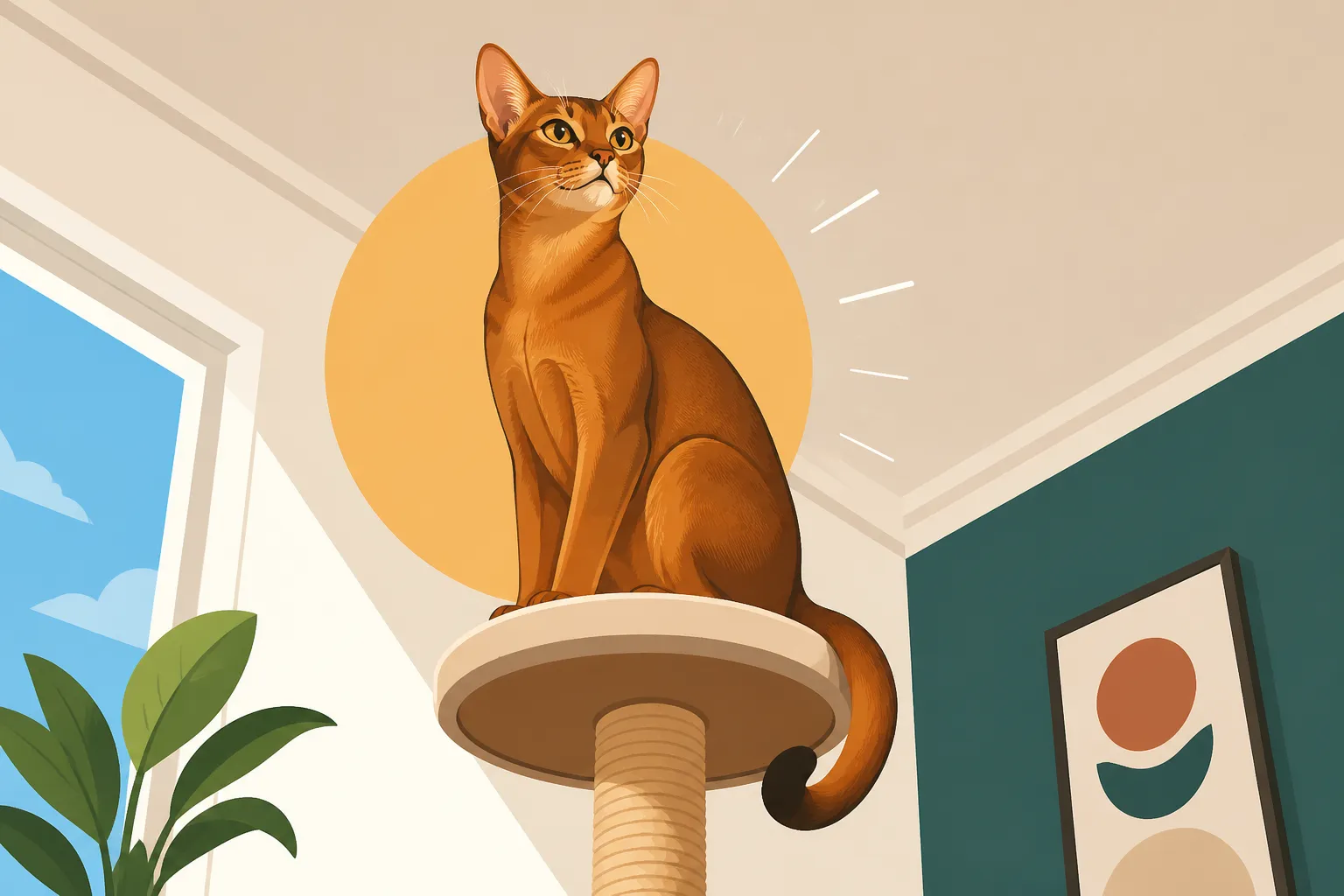
Think about it from a hunter's perspective. Being up high offers an incredible advantage. From an elevated position, your Abyssinian can scan a much wider area, spotting movement, observing household activity, and generally staying "on watch" over their territory. This isn't necessarily about hunting mice in your living room, but the instinct remains. They are observing their environment, assessing situations, and feeling completely in control. It's their way of claiming their space and ensuring they're aware of everything happening around them. This inherent desire to oversee their territory from above gives them a sense of security and power.
Security and Comfort
Beyond the predatory instinct, elevation also provides a significant sense of security. On the floor, a cat can feel vulnerable, especially if there are other pets, small children, or even just the constant movement of a busy household. Up high, they are out of the main thoroughfare, away from curious hands or wagging tails. It’s a safe retreat where they can truly relax, knowing they are less likely to be disturbed. Imagine a toddler reaching for them or a playful dog trying to initiate a game – being up high offers a clear escape route and a peaceful sanctuary where they can simply be. This elevation gives them a psychological edge, a feeling of being safe and unassailable.
Observing Their Kingdom
Abyssinians are incredibly curious and intelligent cats. They don't just exist in your home; they actively engage with it. From their elevated perch, they become the silent observers of your daily life, taking everything in. They watch you cook, read, work, and interact with family. It's like having their own personal bird's-eye view of a fascinating documentary starring you. This observation fulfills their mental stimulation needs, allowing them to stay engaged with the household without necessarily being in the thick of the action. It's their way of participating in the family unit, even if it's from the top of the wardrobe.
Physical Design for Vertical Living
It's one thing to want to climb, it's another to be physically built for it. The Abyssinian breed boasts an athletic, lithe body and incredible agility that makes climbing not just possible, but a genuine joy.
Built for Vertical Movement
If you've ever seen an Abyssinian in full flight, leaping from one surface to another, you'll understand they are exceptionally well-adapted for vertical environments. Their strong, muscular legs, powerful hindquarters, and slender, flexible bodies are perfectly engineered for jumping, climbing, and balancing in high places. They have excellent coordination, allowing them to navigate narrow ledges and awkward angles with remarkable grace. It’s not just about getting up there; it’s about doing it with confidence and flair. This physical prowess is a huge part of why they seek out heights – because they can, and they excel at it. It's a fundamental expression of their physicality.
Unmatched Agility and Balance
Their exceptional agility is truly a sight to behold. An Abyssinian can leap impressive distances, pivot mid-air, and land silently on even the smallest surfaces. Their tails act as natural counterbalances, helping them maintain equilibrium even when performing acrobatic feats. This inherent athleticism means that a high shelf or the top of a door frame isn't a challenge; it's an invitation. They revel in testing their physical limits, and vertical spaces provide the perfect playground. They're like little feline gymnasts, constantly seeking out opportunities to demonstrate their prowess. If you've ever wondered How Far an Abyssinian Can Jump, you'll quickly realize their capabilities are truly impressive.
Environmental and Social Factors
Beyond instinct and physique, various environmental and social elements within your home can amplify an Abyssinian's desire to reach the highest points. Understanding these can help you better cater to their needs.
Defining Territory
Cats, including Abyssinians, are territorial creatures. In a multi-cat household, or even with a single cat, vertical space is a crucial resource for defining and defending territory. The highest spot often signifies the most dominant position. By occupying the highest perch, your Abyssinian is staking their claim, visually asserting their presence without necessarily engaging in direct confrontation. It's a silent but powerful statement in the intricate social dynamics of your home. This can be particularly noticeable if you have more than one cat; the Abyssinian will often seek the highest spot to confirm their status.
Escaping the Mundane
Abyssinians are highly intelligent and active cats. Boredom is their enemy, and it can lead to destructive behaviors. A flat, unstimulating environment simply won't cut it for these curious creatures. Vertical spaces provide an additional dimension to their world, transforming a two-dimensional room into a three-dimensional adventure. Climbing, exploring, and perching high up breaks the monotony, offering new perspectives and challenges. When an Abyssinian gets bored, they will often find creative, and sometimes destructive, ways to entertain themselves. Providing ample vertical enrichment can significantly reduce instances of What an Abyssinian Does When It Is Bored.
Inter-Pet Dynamics
If you have other pets, such as dogs or other cats, vertical space becomes even more vital for your Abyssinian. It offers them a safe escape route and a way to avoid unwanted interactions. A dog might not be able to reach them on the top of the refrigerator, and a more timid cat might appreciate having a safe haven from a more boisterous Abyssinian. These high spots minimize stress and conflict, allowing all pets to coexist more peacefully by respecting each other's boundaries and personal space. It's a peace treaty written in elevation.
Creating a Vertical Wonderland for Your Abyssinian
Given their innate drive to climb, it's not enough to simply tolerate your Abyssinian's antics; you need to actively provide safe and stimulating vertical opportunities. This isn't just about keeping them off your bookshelves; it's about enriching their lives.
Safe and Sturdy Structures
First and foremost, any vertical structure you provide must be stable and safe. Wobbly cat trees or precariously mounted shelves are an accident waiting to happen, especially with an active Abyssinian. Invest in high-quality, heavy-duty cat trees that won't tip over during a vigorous leap. Look for models with multiple levels, perches, and scratching surfaces. For example, you can find excellent sturdy cat trees on platforms like Amazon that are designed to handle energetic climbers. Remember, An Abyssinian Needs Height More Than It Needs Floor, so make it count.
When choosing a cat tree, consider its height and features. Which Cat Tree Height Suits an Abyssinian is a crucial question. They truly enjoy being as high as possible, so aim for tall trees that almost reach the ceiling if possible, especially those with platforms they can really stretch out on.
Creating Vertical Pathways
Beyond a single cat tree, think about creating a network of vertical pathways around your room. This could involve wall-mounted shelves, cat "superhighways" made from sturdy planks, or even strategically placed furniture that allows for easy, safe progression upwards. Ensure there are clear, safe routes for them to ascend and descend. Avoid dead ends that might trap them or lead to dangerous jumps. For inspiration, consider searching for "cat wall shelves" on Amazon; many systems are designed for easy installation and cat safety. These can be even more effective than traditional cat trees, as Why Wall Shelves Work Better Than a Tree for an Abyssinian is often due to their customizable nature and ability to utilize otherwise unused wall space.
Consider the layout:
- Step-like progression: Offer shelves or platforms at varying heights, acting as steps.
- Secure mounting: Use robust brackets and anchors appropriate for your wall type.
- Texture: Add carpet scraps or sisal rope to shelves for grip and scratching.
- Multiple access points: Give them choices for how to get up and down.
When planning these installations, remember How to Make an Abyssinian's Climbing Route Safe. The stability of each component is paramount, as is the spacing between climbing elements to ensure easy, safe leaps. Which Shelves Hold an Abyssinian's Weight is not a trivial question; they are slender but surprisingly powerful.
Strategic Placement for Engagement
Where you place these vertical elements matters. Put cat trees or wall perches near windows so your Abyssinian can indulge their love of bird watching and sunbathing. Locate some near your main living areas so they can still feel part of the family while enjoying their elevated sanctuary. Place others in quieter corners for when they need a peaceful escape. The goal is to integrate these structures seamlessly into your home, making them appealing and accessible. Don't be surprised if your Abyssinian still finds its way onto the fridge, as Why an Abyssinian Ends Up on Top of the Fridge is often a testament to their exploratory nature and desire for the absolute highest spot, even if you've provided alternatives. However, by offering superior, sanctioned high places, you can often redirect this behavior.
Using puzzle feeders at various heights can also provide additional enrichment. For example, an Amazon search for "cat puzzle feeders" will reveal many options that encourage foraging and problem-solving, adding another layer to their vertical play. Placing these feeders on higher shelves encourages climbing and rewards their efforts, making the vertical space even more appealing and functional.
Ultimately, understanding Why an Abyssinian Prefers the Highest Point in a Room is about recognizing their instincts, appreciating their physical gifts, and providing an environment that allows them to thrive. By creating a rich, safe, and exciting vertical world, you’re not just accommodating their quirks; you're fulfilling a fundamental need that contributes to their overall happiness and well-being.
| Reason for Seeking Heights | Description | How to Address |
|---|---|---|
| Instinctual Vantage Point | Allows them to survey their territory like a predator, feeling safe and in control. | Provide tall cat trees with multiple platforms and enclosed spaces for observation. |
| Security & Retreat | Offers an escape from perceived threats (other pets, children, loud noises). | Create elevated hiding spots or perches in quieter areas of the house. |
| Physical Stimulation | Their agile bodies are built for climbing, jumping, and balancing. | Install wall-mounted shelves, cat ladders, and multi-level cat trees for active play. |
| Territorial Assertion | The highest spot signifies status, especially in multi-pet households. | Offer multiple high perches to reduce competition and allow all cats to claim elevated space. |
| Boredom Prevention | New perspectives and challenges prevent monotony in their environment. | Rotate toys on shelves, place puzzle feeders up high, and ensure window access from perches. |
Disclaimer
This article is for general informational purposes only and does not constitute professional advice. Laws, prices and regulations vary by location and change over time. Consult a qualified professional for guidance on your specific situation.