How an Abyssinian Behaves Around Small Pets
Bringing an Abyssinian into a home that already has smaller, more vulnerable pets can feel like walking a tightrope. You adore your Aby's playful spirit and boundless energy, but you also worry about the safety of your guinea pig, parrot, or even your beloved betta fish. This guide will delve deep into the Abyssinian's natural instincts and offer realistic insights into how they truly behave around small pets, helping you understand the inherent challenges and determine if your multi-species household can truly coexist peacefully.
The Abyssinian's Innate Hunter Instinct
It's tempting to think of our cherished Abyssinians as fluffy, playful companions, and they certainly are! But deep down, beneath that shimmering, ticked coat, lies a highly intelligent and athletic predator. This isn't a flaw in their personality; it's a fundamental part of their genetic makeup, honed over generations. Understanding this instinct is the first, crucial step in knowing how they might interact with smaller, more delicate creatures in your home.
Understanding Their Deep-Seated Prey Drive
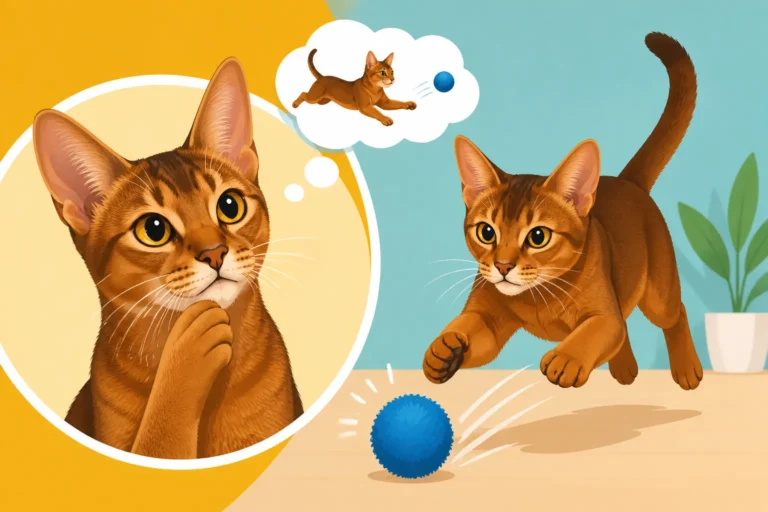
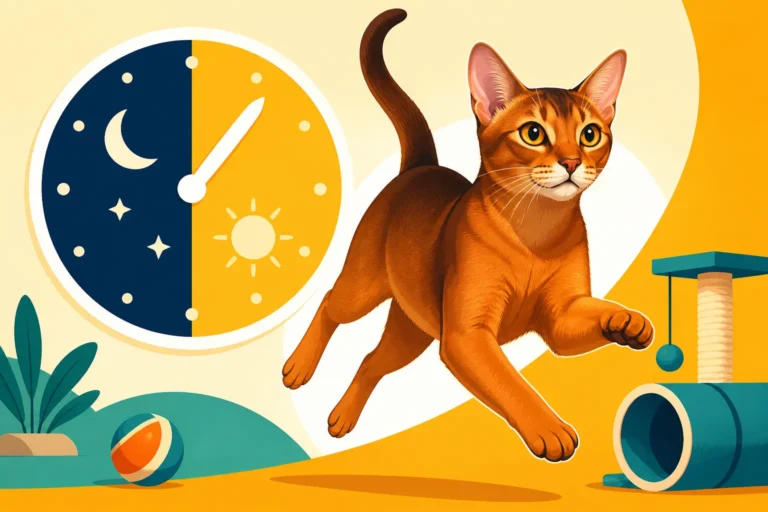
Abyssinians are known for their high energy levels and incredible agility. They love to chase, stalk, and pounce. This isn't just "play" in the human sense; it's a direct expression of their natural hunting behavior. For an Abyssinian, anything small, fast-moving, or squeaky can trigger this instinct. It’s not aggression driven by malice, but rather an unshakeable, hardwired response to potential prey. They don't see your hamster as a family member; they see it as something to pursue. This drive is so strong that even a well-fed, deeply loved Abyssinian will struggle to suppress it. You might witness them intently watching a bird outside or a fly buzzing in the window, and that same intensity is directed at any small pet within their reach. This is The Abyssinian Is the Busiest Cat in the House, and that business often translates into seeking out things to "hunt."
It's vital to differentiate this from a domestic cat's general curiosity. While any cat might bat at a new object, an Abyssinian's focus on a small pet is different. Their pupils might dilate, their body may lower into a stalk, and their tail might twitch with an almost imperceptible tremor. This isn't them trying to make friends; it's them getting ready to engage in a hunt. You might find yourself constantly on guard, which is an exhausting way to live. This innate drive is a significant reason why simply hoping your Aby will "get used to" a small pet is often a dangerous gamble, even for the most laid-back Abyssinian.
The Telltale Signs of a Hunter at Work
Observing your Abyssinian's body language around small pets is paramount. They might not be overtly aggressive, but their subtle cues can tell you everything you need to know about their intentions. Look for the "snake head" movement where their head dips and sways, tracking the prey. Their ears might swivel independently, honing in on every rustle and squeak. Often, they will attempt to approach stealthily, staying low to the ground, using furniture as cover. This isn't friendly curiosity; it's strategic stalking.
Another common sign is persistent interest, even when you try to distract them. If your Abyssinian spends an unreasonable amount of time staring at the hamster cage, pawing at it, or trying to find ways in, that's a huge red flag. They are incredibly intelligent problem-solvers; Why an Abyssinian Opens Doors and Cabinets isn't just a fun quirk, it's a testament to their ability to overcome obstacles to get what they want. If they perceive a small pet as prey, they will dedicate considerable mental and physical effort to accessing it. Ignoring these signals or hoping they'll grow out of it puts your smaller pets at severe risk.
Why Coexistence with Certain Small Pets is a Non-Starter
Given the Abyssinian's strong prey drive, some small pets are simply incompatible housemates. It's not about your Abyssinian being "mean"; it's about their fundamental nature and the inherent vulnerability of the prey animal. Trying to force these relationships often ends in tragedy, and it's a risk no responsible pet owner should take.
The Impossible Housemates: Rodents, Birds, and Reptiles
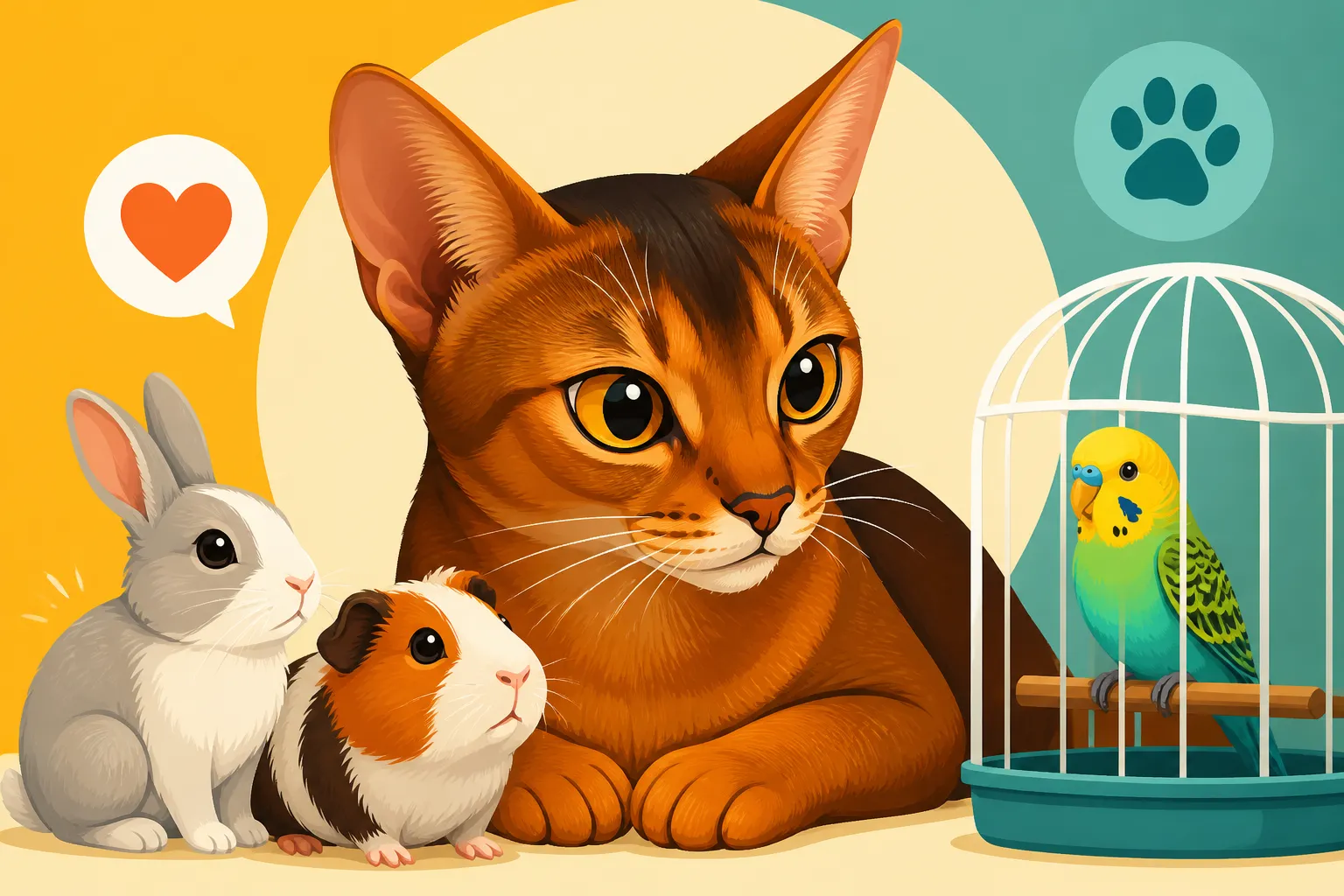
This is where the rubber meets the road. Rodents like hamsters, guinea pigs, rats, and mice are almost universally seen as prey by Abyssinians. Their size, quick movements, and often high-pitched vocalizations are precisely what triggers a cat's hunting instinct. I've had countless discussions with owners who hoped their Aby would be "different," only to face heartbreak. There's a reason we specifically advise on Why an Abyssinian Cannot Live With a Hamster – it's practically an open invitation for disaster. No cage, no matter how sturdy it appears, is truly cat-proof when an intelligent and persistent Abyssinian is determined to get in. They will chew, claw, and pry until they find a weakness.
Birds, from budgies to cockatiels, face similar dangers. Their fluttering, chirping, and perceived fragility make them irresistible targets. Even if a cat never physically harms the bird, the constant stress of being stalked by a predator can be detrimental to a bird's health, leading to anxiety, feather plucking, and even heart failure. Reptiles, like small lizards or snakes, also fall into this category. Their slithering movements and often contained environments make them a challenge for an Abyssinian to resist. Their presence is a constant source of temptation, creating an environment of perpetual stress for both your Aby and your small pet. It’s an unfair burden to place on any animal.
Fish and Amphibians: Still Not Safe
You might think a fish in a tank or a frog in a terrarium would be safe, right? After all, there's glass between them. Unfortunately, this often isn't enough to deter a curious and persistent Abyssinian. The movement of fish, the reflections on the water, and the very act of observing can be a huge source of stimulation for an Aby. They might spend hours perched by the tank, pawing at the glass, or even trying to dip a paw into the water. This constant presence can be incredibly stressful for fish, who are sensitive to perceived threats. I've heard stories of Abyssinians knocking over tanks, breaking heaters, or even managing to fish small creatures out of inadequate setups.
Amphibians like frogs or newts in open-top terrariums are equally, if not more, vulnerable. Their slow movements or sudden jumps can provoke a quick pounce. Beyond the direct physical threat, there's also the danger of contamination. Many amphibians have delicate skin and can be harmed by a cat's claws or even the bacteria from their paws. Conversely, some amphibians can secrete toxins that could be dangerous if ingested by a cat. While the direct hunting aspect might be slightly different than with a rodent, the potential for harm, stress, and accidental injury remains incredibly high.
Strategies for a Multi-Pet Household (with suitable animals)
If your heart is set on an Abyssinian and you already have small pets, or are considering adding some, the key is understanding that "coexistence" might not mean direct interaction. It often means robust management and creating entirely separate, secure environments. This is a commitment, and it requires vigilance and foresight.
Creating Impenetrable Sanctuaries: Secure Housing is Non-Negotiable
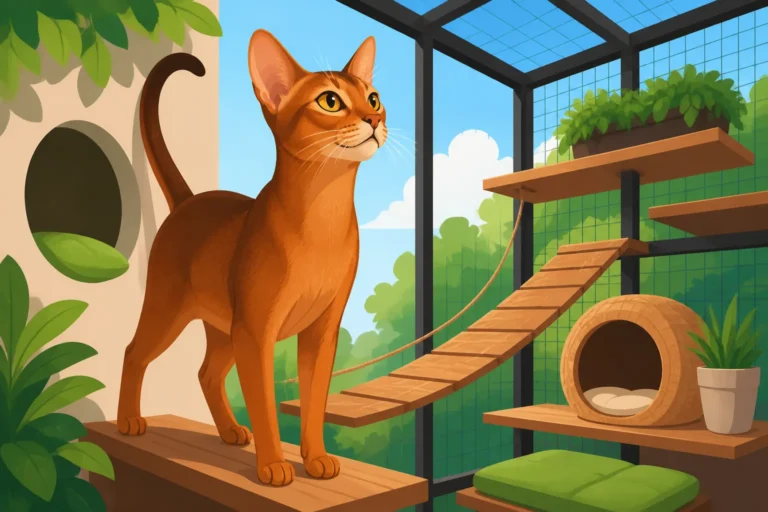
For any small pet you hope to keep alongside an Abyssinian, their enclosure must be more than just a cage; it needs to be a fortress. This means heavy-duty wire mesh, secure latches that an intelligent cat cannot manipulate, and a solid, immovable base. Think along the lines of commercial-grade enclosures, not decorative pet store cages. Placing these enclosures out of reach, on high shelves or in separate, cat-free rooms, is often the only truly safe option. However, even high shelves can be accessed by an Abyssinian, as they are expert climbers; Why an Abyssinian Prefers the Highest Point in a Room. Consider sturdy wall-mounted shelving or custom-built solutions.
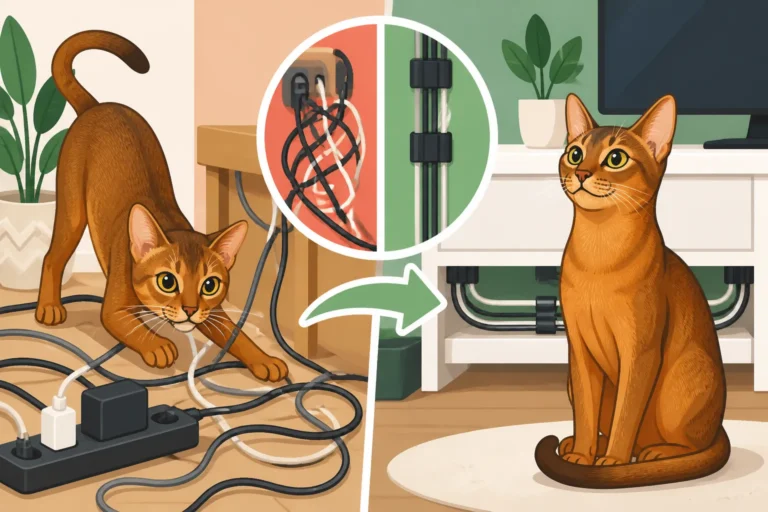
For pets like fish, a tank with a heavy, secure lid is essential, and it should be placed on a robust stand that cannot be easily tipped. You might even consider building a custom enclosure around the tank or cage, creating a physical barrier that an Abyssinian cannot penetrate. It sounds extreme, but it's the reality of preventing harm when dealing with a breed possessing such a strong prey drive. Child-proof latches, often found on places like Amazon, can be lifesavers on cabinet doors where small pets might be housed, as Abyssinians are notoriously good at opening things. How to Secure a Cupboard Against an Abyssinian details many of the tricks they pull.
Redirecting That Boundless Energy: Enrichment is Your Best Friend
Since you can't eliminate an Abyssinian's prey drive, your best strategy is to redirect it towards appropriate outlets. This means providing an abundance of interactive play, puzzle toys, and enrichment that mimics hunting scenarios. Daily dedicated play sessions, lasting at least 15-20 minutes several times a day, with wand toys, laser pointers (used responsibly, never ending on a dot), and fetch games, are crucial. How Many Hours a Day an Abyssinian Stays Active is a lot, and that energy needs an outlet. Consider investing in a variety of durable, stimulating toys. Many great options, including puzzle feeders and interactive chase toys, can be found on Amazon.
Puzzle feeders are particularly effective as they tap into an Abyssinian's intelligence and natural foraging instincts, providing a "job" that expends mental energy. Why Foraging Suits an Abyssinian's Mind beautifully. You can hide treats around the house, making them "hunt" for their food, which also provides a safe, engaging alternative to stalking a small pet. A multi-level cat tree or wall-mounted shelves also offer vertical space for climbing and observation, giving them a sense of territory and allowing them to survey their domain from a safe distance, which can sometimes reduce their need to be constantly on the prowl at ground level. This kind of consistent, high-quality enrichment is not just a luxury; it's a necessity for an Abyssinian in any home, especially one with small pets.
When an Abyssinian Isn't the Right Fit for Your Small Pet Home
Sometimes, despite our best intentions and efforts, the reality is that certain combinations of pets simply won't work. It's a tough pill to swallow, but recognizing this truth is a sign of responsible pet ownership. Trying to force an unnatural dynamic often leads to stress, fear, and potential tragedy for one or more of your beloved animals.
Realistic Expectations and Difficult Choices
It's common for people to anthropomorphize their pets, attributing human emotions and understanding to animal instincts. We want our cats to "understand" that the hamster is a friend, not food. But an Abyssinian's prey drive isn't something they can simply switch off or reason with. It's a powerful, primal urge. If you find yourself constantly supervising, feeling anxious every time you leave the room, or witnessing your Abyssinian's persistent attempts to access your smaller pets, it's time for a difficult but necessary re-evaluation. The stress of constant vigilance takes a toll on you, and more importantly, on all your animals.
Sometimes, the most loving choice is to acknowledge that an Abyssinian's natural behavior is fundamentally incompatible with the safety and well-being of a highly vulnerable small pet. This might mean rehoming one of the animals to a more suitable environment where they can thrive without constant threat or fear. This isn't a failure on your part; it's a recognition of biological realities and a commitment to providing the best possible life for all your companions. Before bringing an Abyssinian home, especially if you have small, vulnerable pets, consider spending time with an adult Aby to gauge their temperament and prey drive, and be honest with yourself about the risks involved.
Prioritizing Safety: Your Responsibility as a Pet Owner
Ultimately, the safety and welfare of all your pets rest squarely on your shoulders. It's your responsibility to create an environment where every animal feels secure and can live without undue stress. For Abyssinians and small pets, this often means strict separation, robust containment, and unwavering vigilance. Don't rely on hope or anecdotal stories; rely on proven strategies and a deep understanding of your Abyssinian's breed-specific traits. Their intelligence and agility mean they can get into places you never thought possible, a behavior explored further in What an Abyssinian Does When It Is Bored and Why an Abyssinian Steals Small Objects.
If you choose to proceed with both an Abyssinian and small pets, you are committing to a lifestyle of constant management. This means never leaving small pets unsupervised, even for a moment, and ensuring all enclosures are fortified to the highest degree. It also means providing ample enrichment for your Abyssinian to help redirect their instincts. If you cannot realistically provide this level of supervision and security, then it is far kinder to avoid the situation entirely or make alternative arrangements for one of the animals. No pet should have to live in fear, and no cat should be constantly frustrated by irresistible temptations.
Disclaimer
This article is for general informational purposes only and does not constitute professional advice. Laws, prices and regulations vary by location and change over time. Consult a qualified professional for guidance on your specific situation.