Which Harness Fits an Abyssinian’s Narrow Chest
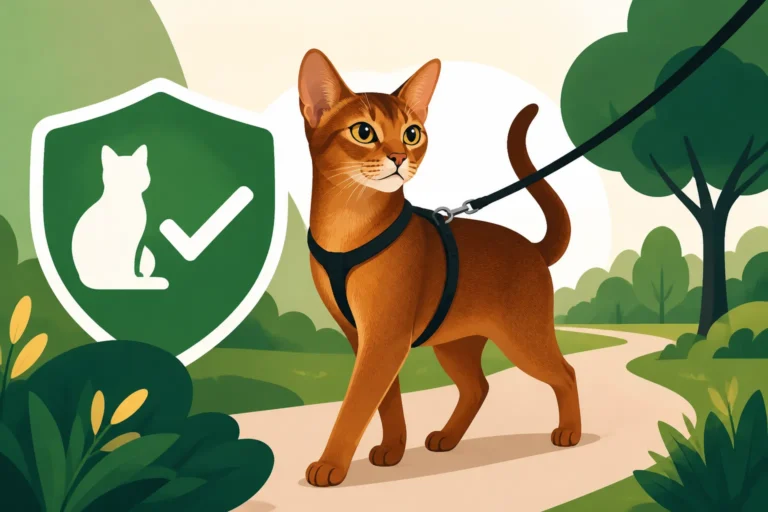
If you've ever tried to put a standard cat harness on your Abyssinian and watched them Houdini their way out in mere seconds, you know the struggle is real. Their sleek, athletic build and famously narrow chest can make finding a truly secure and comfortable harness feel like an impossible quest. This guide is here to walk you through the unique challenges of fitting an Abyssinian, explore the best harness styles that cater to their specific physique, and share practical tips to ensure your adventurous companion can explore safely by your side.
Understanding the Abyssinian Physique: Why Standard Harnesses Often Fail
Abyssinians are undeniably stunning cats, renowned for their graceful, muscular build and lithe bodies. But these very characteristics, which make them so elegant to behold, are often precisely why off-the-rack cat harnesses become frustrating escape routes. It’s not just that they're active; it’s about their specific anatomy.
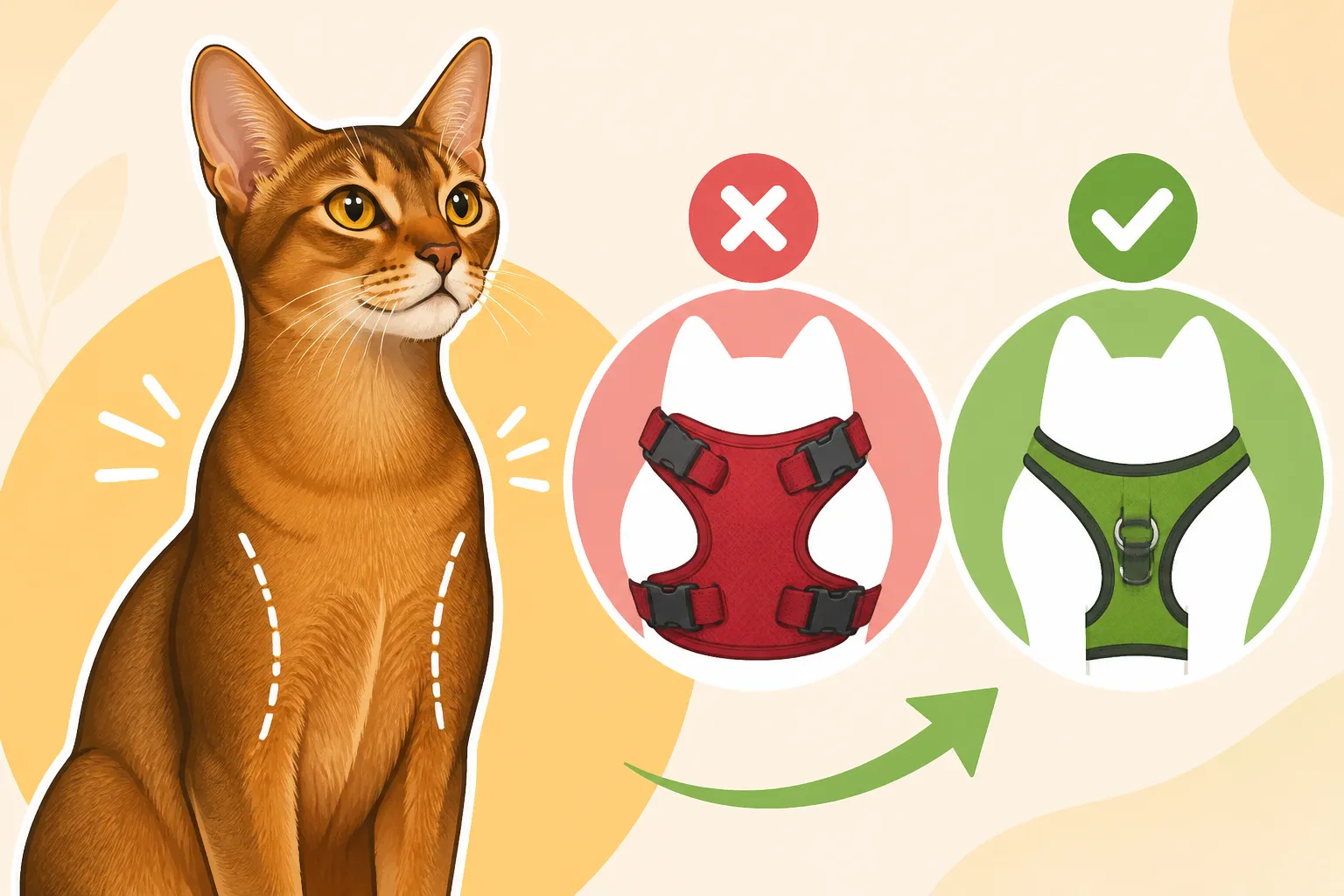
Their chests are notably deep but slender, tapering quickly towards the shoulders. Many standard harnesses are designed for broader-chested cats, meaning the neck opening might be too loose even when the body strap seems snug, or vice-versa. This anatomical mismatch creates gaps that an agile Abyssinian will exploit with astonishing speed and dexterity. They can twist, contort, and pull their way out of ill-fitting gear before you even realize what's happening. It’s like trying to put a winter coat on a greyhound – the proportions are just different.
The combination of their flexible spines, powerful hindquarters, and lean muscle mass means they are experts at wriggling. If there's any slack in the harness, they'll find it. This isn't naughtiness; it's simply their natural athleticism at play. They're built for movement, for exploring, and for scaling heights. A harness that restricts their natural movement or, worse, provides an easy escape route, is not only ineffective but can be downright dangerous if you're outside.
Beyond the physical fit, there's the mental aspect. Abyssinians are intelligent and curious cats. They don't just tolerate things; they investigate them. A poorly designed or uncomfortable harness will be seen as an obstacle to be overcome, rather than a tool for adventure. Their determination can often outmatch a flimsy buckle or a poorly positioned strap, leading to a quick disappearance act right when you least expect it. This is why a secure, well-fitted harness is non-negotiable for their safety and your peace of mind.
The Abyssinian's Narrow Rib Cage and Escape Artistry
The deep but narrow rib cage of an Abyssinian is perhaps the primary culprit in harness escapes. When you measure around their chest just behind their front legs, you'll often find a measurement that is significantly smaller than what might be expected for their overall body length and muscle. This means that a harness that fits snugly around their torso can still be loose around their neck, or vice-versa, allowing them to back out of it by simply ducking their head.
Many harnesses are designed with a single, often less adjustable, neck strap that assumes a more uniform chest-to-neck ratio. For an Abyssinian, this can be a major flaw. They are often compared to miniature cougars or gazelles, and these wild comparisons highlight their lean, athletic build. They don't have the broad, rounded chest of some other cat breeds, which means buckles and straps need to sit perfectly to avoid creating those escape gaps. It requires a bit more precision and understanding of their unique shape to get it right.
High Energy and the Need for Security
Let's be honest: an Abyssinian doesn't just walk; it bounces, pounces, and sometimes practically flies. Their boundless energy means that any harness you choose needs to withstand sudden bursts of speed, unexpected leaps, and spontaneous explorations of their surroundings. A harness that might be perfectly adequate for a more sedate cat could easily fail under the intense dynamic movements of an Abyssinian. They don't just go for a stroll; they embark on an adventure, and their gear needs to be up to the challenge.
This high energy also means that comfort is paramount. A harness that chafes, restricts movement, or feels unbalanced will quickly lead to resistance and an unhappy cat. You want something that moves with them, allowing their natural agility to shine through, rather than hindering it. Otherwise, your attempts at How to Harness Train an Abyssinian Without a Fight will be much harder from the outset, leading to frustration for both of you.
Choosing the Right Harness Style for Your Agile Abyssinian
When you start searching for the perfect harness, perhaps on a site like Amazon, you'll encounter a few main styles: H-style, vest-style, and step-in. Each has its own merits and drawbacks, but for an Abyssinian, some definitely stand out as better choices.
H-Style Harnesses: The Traditional Choice with a Catch
The H-style harness is probably the most common type you'll see. It features two loops – one for the neck and one for the chest – connected by a strap along the back, forming an "H" shape. The key to success with an Abyssinian here is adjustability. You need a harness where both the neck and chest loops can be independently adjusted to get that snug, escape-proof fit. Many cheaper H-style harnesses only offer adjustment on one loop or minimal adjustment on both, which simply won't cut it for an Abyssinian's unique proportions.
The neck strap should sit above their shoulders without being so tight it chokes them, and the chest strap should be snug enough that you can only fit two fingers underneath comfortably. The connecting strap along the back should ideally be long enough that the chest strap sits a good distance behind their armpits to prevent chafing. If you can find a high-quality H-style harness with multiple adjustment points (often found from brands specializing in small animal harnesses), it can work well, offering good freedom of movement. Many owners find good quality H-style harnesses on Amazon at a reasonable price point.
Vest Harnesses: Maximum Security, But Watch the Bulk
Vest harnesses offer more material coverage, distributing pressure more widely across your cat’s body. This can make them feel more secure and less prone to escape, as there's more fabric to hold onto and fewer specific points for a cat to wriggle out of. For an Abyssinian, a well-fitting vest harness can be an excellent choice for security.
However, the "vest" part can sometimes mean added bulk and heat, especially if the material isn't breathable. You want a vest that is still sleek and allows for the Abyssinian's natural range of motion. Look for lightweight, breathable mesh materials, especially if you live in a warmer climate or plan to use it for extended periods outdoors. Avoid anything overly stiff or padded, as this can feel restrictive to their agile bodies. Some vest harnesses offer excellent adjustability around both the neck and chest, which is crucial. These are often considered when considering How to Leash Train an Abyssinian.
Step-In Harnesses: Often a Misfit for Abyssinians
Step-in harnesses typically require your cat to step their front paws through two leg holes, then the harness is pulled up and fastened over their back. While they can be easy to put on for some cats, they often present issues for Abyssinians. The fixed leg holes or less adjustable design can mean the fit around the chest or neck is compromised.
Because Abyssinians are so active and flexible, the geometry of many step-in harnesses might not provide the precise, secure fit needed to prevent escapes. The straps might sit too close to their armpits, causing chafing, or the neck opening might be too wide, allowing them to back out. Generally, for an Abyssinian, an H-style or vest harness with superior adjustability is going to be a more reliable option.
Here’s a quick comparison of harness types for your Abyssinian:
| Harness Type | Pros for Abyssinians | Cons for Abyssinians | Ideal Fit for Abyssinian |
|---|---|---|---|
| H-Style | Lightweight, good freedom of movement if well-adjusted | Many lack enough adjustability; potential for escape | Needs independent neck/chest adjustment, sturdy buckles |
| Vest-Style | Very secure, distributes pressure, harder to escape | Can be bulky or hot if not breathable; less freedom of movement if too rigid | Lightweight, breathable mesh with ample adjustability |
| Step-In | Easy to put on for some cats | Often poor fit for narrow chest; easy to escape; can chafe | Generally not recommended due to fit issues |
Essential Features of a Secure and Comfortable Abyssinian Harness
Once you've narrowed down the style, it's time to dig into the details. Not all harnesses are created equal, and for an Abyssinian, the small features can make a huge difference in both safety and your cat's willingness to wear it. Remember, this isn't just about preventing escape; it's about comfort and making the experience positive for your cat.
Superior Adjustability in Key Areas
This is perhaps the most critical feature. As discussed, an Abyssinian's narrow chest demands a harness that can be precisely adjusted around both the neck and the girth. Look for multiple adjustment points with strong, slip-proof buckles or sliders. If a harness only adjusts in one place, it's probably not going to work for your Abyssinian.
Consider the range of adjustment as well. Some harnesses are sized for "small cats" but are still too big for a slender Abyssinian around the neck, even at their tightest setting. Always check the size charts carefully on retailer sites like Amazon and measure your cat accurately before ordering. Measure their neck circumference (where a collar would sit) and their girth (the widest part of their chest, just behind their front legs). These two measurements are your best friends in selecting the right size.
Durable, Lightweight, and Breathable Materials
Abyssinians are active and playful. Their harness needs to be tough enough to withstand their antics, but never heavy or stifling. Nylon webbing is a popular choice for H-style harnesses because it's strong and relatively light. For vest harnesses, look for breathable mesh fabrics that won't overheat your cat, especially during warmer weather explorations. Quality stitching and robust hardware are also vital. Flimsy plastic buckles or thin D-rings won't hold up to an Abyssinian's determination if they decide to pull.
Secure Buckles and Fasteners
Beyond adjustability, the quality of the buckles themselves matters. You want buckles that clip securely and don't easily unlatch under pressure. Some harnesses feature double-closure systems, like a buckle paired with a hook-and-loop (Velcro) strap, for added security. While hook-and-loop can be noisy and sometimes disliked by cats, it does offer an extra layer of "stickiness" that can prevent quick escapes. Test the buckles to ensure they feel strong and don't seem like they could pop open with a good twist or tug from your cat.
Reflective Strips for Visibility
If you plan on taking your Abyssinian out during dawn, dusk, or in areas with vehicle traffic, reflective material on the harness is a non-negotiable safety feature. Their sleek, ticked coats, while beautiful, can blend into shadows, and reflective strips significantly enhance their visibility to others. This small detail can make a big difference in preventing accidents, adding an extra layer of protection when you're exploring Where to Walk an Abyssinian Safely.
Mastering the Art of Fitting and Training for Harness Adventures
Even the best harness in the world is useless if it's not fitted correctly or if your Abyssinian isn't comfortable wearing it. Getting your cat accustomed to a harness is a process that requires patience, positive reinforcement, and a keen eye for their comfort cues. Rushing this stage can lead to a cat who despises the harness, making any outdoor adventures a battle rather than a joy.
The Two-Finger Rule, Abyssinian Edition
The classic "two-finger rule" states that you should be able to comfortably slip two fingers between the harness and your cat's body. This is a good starting point, but for an Abyssinian, you might need to lean towards the snugger side, especially on the neck strap, without restricting breathing or movement. Because their bodies are so lithe, if there's too much room, they will find a way out.
When fitting, pay close attention to:
- Neck Fit: The neck strap should sit high on their neck, above the shoulders, but not so tight that it makes them cough or impedes their swallowing. Test this by offering a treat; if they struggle to swallow, it's too tight.
- Girth Fit: The chest strap should be behind their front legs, not rubbing into their armpits. Too far back and it can become a leverage point for escape; too far forward and it can restrict their leg movement.
- Back Strap: For H-style, ensure the connecting strap on the back is not pulling tautly, which indicates a poor fit for their body length.
After the initial fitting, let them wear it indoors under supervision for short periods. Watch how they move. Do they walk normally? Are they trying desperately to shed it? These observations will tell you if adjustments are needed.
Step-by-Step Harness Training for Success
- Introduce it Slowly: Don't just slap it on and expect them to love it. Let the harness sit near their food bowl or favorite sleeping spot for a few days so they can investigate it at their leisure. Their curiosity will eventually win out.
- Positive Association: Once they're used to its presence, bring it out during meal times or treat sessions. Let them sniff it, reward them. Briefly drape it over their back for a second or two, then remove it and reward heavily. Repeat this, gradually increasing the time it's on their back.
- The First Wear: When you're ready for them to wear it, do it quickly and calmly. Give them a special treat immediately. Don't leave them unattended. Many cats will "flop" or freeze when they first wear a harness; this is normal. Distract them with toys or treats. Keep the first few sessions very short, just a few minutes, then remove it and reward again.
- Short, Frequent Sessions: Gradually increase the duration of wear. Play with them while they're wearing it, making it a positive experience. Focus on making them forget they even have it on. This is especially important for high-energy cats like Abyssinians, who need How Much Play an Abyssinian Needs Each Day to burn off steam.
- Adding the Leash: Once they're completely comfortable with the harness, attach a lightweight leash. Let them drag it around for a few minutes (under supervision, of course, to prevent snagging). Then, gently pick up the leash and let them lead the way indoors. Don't pull or drag them. Just follow.
- Outdoor Adventures: Only once they are fully comfortable and confident indoors should you consider taking them outside. Start with a quiet, enclosed space like a secure yard or a quiet park during off-peak hours. Keep initial outdoor excursions brief and positive. Your goal is for them to associate the harness and leash with fun exploration, not stress. This is crucial for their overall comfort and enjoyment when Whether an Abyssinian Travels Well.
It's a journey, not a sprint. Some Abyssinians take to harnesses quickly, while others require more time and patience. But with the right harness and a consistent, positive training approach, you can open up a whole new world of safe adventures for your curious companion.
Disclaimer
This article is for general informational purposes only and does not constitute professional advice. Laws, prices and regulations vary by location and change over time. Consult a qualified professional for guidance on your specific situation.