Why an Abyssinian Cannot Live With a Hamster
It's a common dream for pet parents to create a harmonious home where all their beloved animals can coexist peacefully. You might envision your Abyssinian, with its playful nature and dog-like devotion, gently interacting with a small, scurrying friend like a hamster. However, the reality of an Abyssinian's innate instincts makes this particular pairing not just challenging, but profoundly unsafe and stressful for the tiny rodent. This guide will delve into the deep-seated reasons why an Abyssinian cannot truly live with a hamster and offer practical advice for ensuring the safety and well-being of all your furry family members.
The Abyssinian's Innate Prey Drive: A Force of Nature
Let's be real: Abyssinians are absolutely stunning cats, full of life and an almost boundless energy. They're often described as little wildcats, and it's not just their striking ticked coat that gives them this reputation. It's their very essence, rooted deeply in their genetics and ancestry. That sleek, muscular body isn't just for show; it's the physique of a finely tuned athlete, a natural hunter built for speed, agility, and precision.
Tracing the Hunter's Instinct
When you look at an Abyssinian, it's easy to see echoes of its more distant wild cousins. Their large, alert ears, those captivating almond-shaped eyes that track every movement, and that powerful, lean frame—all point to a creature designed for active pursuit. Unlike some other domestic breeds that have had generations of less active roles, the Abyssinian has retained a particularly strong connection to its hunting heritage. They might be cuddly on your terms (sometimes!), but at their core, they are still very much predators. You can see this clearly in The Abyssinian Is the Busiest Cat in the House.
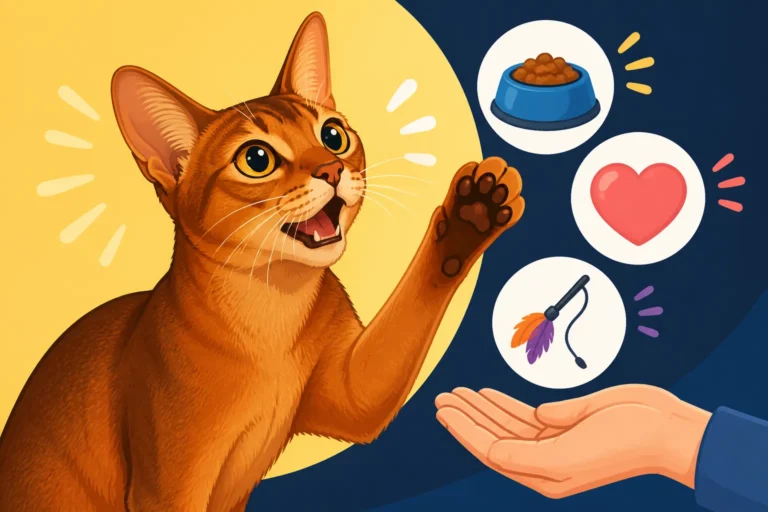
This isn't to say your Aby is a bloodthirsty monster; far from it. It simply means they possess a natural hard-wiring to chase, pounce, and "catch" small, fast-moving objects. When you play with your Abyssinian, observe how they stalk a wand toy, how their pupils dilate, and how they execute a perfect pounce. This isn't just play for them; it's a rehearsal of essential hunting skills. It's a fundamental part of their behavioral repertoire, ingrained through generations. This inherent drive is what makes them so captivating to watch, and it also shapes their interactions with their environment, including other, smaller animals.
The Unignorable Call of the Wild
Imagine putting your favorite treat right in front of you, but being told you absolutely cannot touch it. That's a tiny glimpse into the struggle an Abyssinian faces when a hamster is present. The sight, sound, and even smell of a small, scurrying creature like a hamster are powerful triggers for an Abyssinian's prey drive. It's not a choice they make; it's an instinct that arises from the deepest parts of their brain. No matter how well-fed, how pampered, or how deeply loved your Abyssinian is, that instinct will always be there, just beneath the surface.
This isn't something you can "train out" of an Abyssinian, just as you can't train a bird not to fly. While you can certainly teach an Aby tricks like fetch or how to sit, those are learned behaviors that work with their intelligence and desire for interaction. Suppressing a fundamental instinct like the prey drive is an entirely different matter, and frankly, it's unfair to expect it of them. The hamster's quick movements and small size perfectly mimic the prey an Abyssinian is hardwired to pursue, making it an irresistible, biological imperative. How an Abyssinian Behaves Around Small Pets gives further insight into their natural tendencies.
The Practical Dangers of Coexistence
While you might desperately want a fairytale ending where your Abyssinian and hamster become best friends, the reality is far more grim. The "living together" scenario isn't just inconvenient; it actively puts one animal's life at severe risk and causes significant stress to both. It's crucial to understand the very real dangers involved.
The Hamster's Perspective: Constant Terror
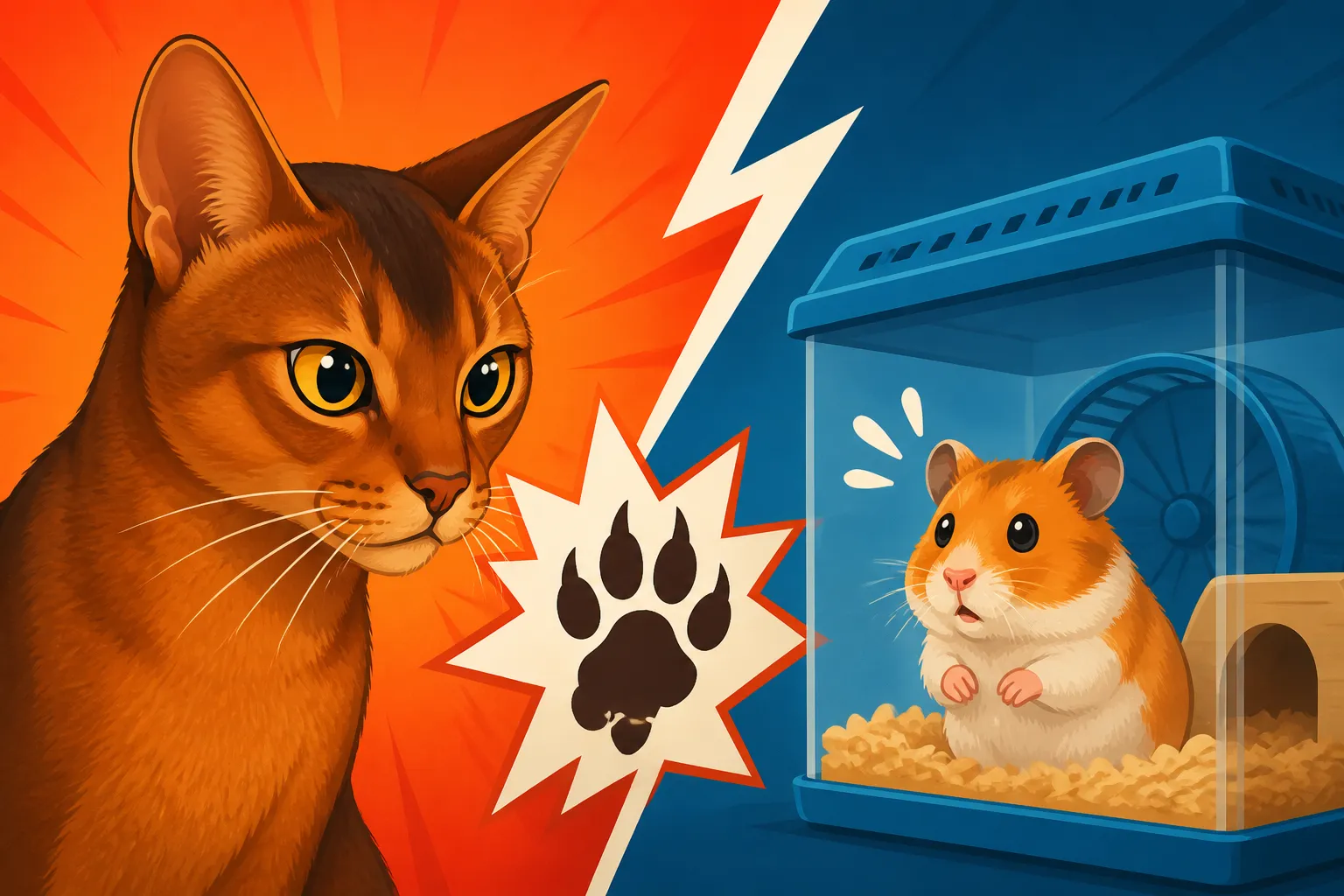
For the hamster, sharing a home with an Abyssinian is a living nightmare. Imagine constantly being watched by a large, agile predator whose every move suggests you are its next meal. Even if the hamster is in a supposedly secure cage, the sheer presence of a cat—especially one as relentlessly curious and focused as an Abyssinian—induces immense, chronic stress. Hamsters are prey animals, and their tiny bodies are not built to withstand such psychological pressure. Their instincts tell them they are in mortal danger.
This constant fear can manifest in a variety of ways: refusing to eat, compulsive burrowing, excessive hiding, pacing, or even self-mutilation. Long-term stress weakens their immune system, making them more susceptible to illness, and significantly shortens their already brief lifespan. They might become too terrified to come out and exercise, which is vital for their health. Essentially, the hamster lives in a perpetual state of fight-or-flight, even if no direct attack ever occurs. This is not a life we want for any pet.
The Abyssinian's Risk: Injury and Frustration
It might seem like the Abyssinian is the "safe" one in this equation, but that's not entirely true. An Aby driven by its hunting instinct can become obsessive, spending hours staring at the cage, pawing at it, or trying to find a way in. This unfulfilled drive is incredibly frustrating for the cat. Over time, this frustration can lead to undesirable behaviors elsewhere in the home, known as redirected aggression. For instance, an Aby constantly thwarted in its attempts to get to the hamster might become more prone to destructive scratching of furniture (see Why an Abyssinian Destroys Cheap Furniture Faster) or even act out towards human family members or other non-prey pets, not out of malice, but out of sheer, pent-up energy and frustration.
Furthermore, an Abyssinian can seriously injure itself trying to breach a hamster cage. They might scratch their paws raw, break claws, or even damage their teeth trying to chew through plastic or wire. No pet parent wants to see their adventurous cat in pain because their instincts put them in a dangerous situation. It's a lose-lose situation that compromises the well-being of both animals involved. Managing an Abyssinian's abundant energy is key, as discussed in How Much Play an Abyssinian Needs Each Day.
The Inevitable Breach: Accidents Happen
No matter how diligent you are, how sturdy the cage, or how confident you are in your cat's "good behavior," accidents are an unfortunate reality of life. A cage door might be left ajar during cleaning, a curious Abyssinian might knock a lightweight cage off a shelf, or a determined paw might find a weak point in the enclosure. Abyssinians are exceptionally clever and persistent; they are known for their ability to open doors and cabinets, and a hamster cage presents a tantalizing challenge to their intelligent minds.
Even if you go to extreme lengths, building custom, heavy-duty enclosures, the risk is never truly zero. It only takes a single moment of inattention, a momentary lapse in vigilance, for a tragedy to occur. The consequences of such a breach are almost always fatal for the hamster. It's a risk that, frankly, no responsible pet owner should be willing to take. You can find many robust pet supplies on sites like Amazon, but even the best equipment isn't foolproof against a truly determined Abyssinian.
Strategies for a Multi-Species Household (Without Hamsters)
Given the inherent risks and stress involved, the most responsible approach is to acknowledge that Abyssinians and hamsters are fundamentally incompatible housemates. If you already have both, or are considering adding an Abyssinian to a home with small rodents, a radical shift in perspective and living arrangements is essential.
Complete and Utter Separation is the Only Way
If you find yourself in the difficult position of owning both an Abyssinian and a hamster, the only truly safe solution is complete and absolute separation. This means more than just putting the hamster in a secure cage; it means housing them in entirely separate rooms, preferably on different floors of the house, with solid, locked doors between them. Ideally, the hamster's room would be one that the Abyssinian has absolutely no access to, ever. Think of it as creating two completely separate environments within your home.
Even the scent of the cat can be a stressor for the hamster, so separate ventilation might even be a consideration in extreme cases. This isn't just about preventing physical contact; it's about eliminating the constant psychological torment for the hamster and removing the source of frustration for your Abyssinian. This might involve creating a dedicated "hamster sanctuary" room that is truly off-limits to the cat, perhaps secured with a childproof latch or a sturdy pet gate purchased from Amazon that the Aby cannot scale or manipulate. Consider lessons from How to Set Up a Room for an Abyssinian Home Alone for strict containment.
Reconsidering Pet Choices: Matching Temperaments
When building a multi-pet household, compatibility should always be a top priority. Instead of trying to force two animals with conflicting innate needs and instincts to coexist, consider choosing pets that naturally complement an Abyssinian's personality. Abyssinians thrive with companionship, especially with other active, intelligent animals.
| Pet Type | Abyssinian Compatibility | Rationale |
|---|---|---|
| Hamster | Very Low/None | Strong prey drive from Aby, extreme stress for hamster, high risk of injury/death. Cannot be reliably mitigated by caging alone. |
| Other Cats | High | Often thrive with another cat, especially one with similar energy levels or an equally playful personality. Provides mental and physical stimulation. Best if introduced properly. Consider Why a Second Cat Suits an Abyssinian. |
| Dogs | Moderate to High | Can do very well with dog-friendly, calm breeds, especially if introduced young. Requires careful management and a dog that understands cat boundaries. An Aby might even try to "herd" a dog! |
| Birds/Fish | Low | While contained, still a strong visual trigger for prey drive. Abyssinians are clever and can often find ways to access enclosed spaces or containers, causing significant stress to the contained pet. |
| Guinea Pigs | Very Low/None | Similar prey animal dynamics to hamsters, larger but still vulnerable. High stress for guinea pig. |
Many Abyssinian owners find immense success with another cat, particularly another Abyssinian or a similarly playful breed. They can chase, wrestle, and expend their energy together, fulfilling their natural social and physical needs without resorting to predatory instincts on fragile housemates. Which Breeds Live Well With an Abyssinian offers further ideas for compatible feline friends. For dogs, a calm, cat-savvy breed that isn't easily overwhelmed by the Abyssinian's boundless energy can also be a good match.
Managing the Abyssinian's Energy and Instincts
Regardless of whether you have other pets, managing your Abyssinian's incredible energy and channeling their natural instincts into appropriate outlets is fundamental to their well-being and a peaceful home. A bored Abyssinian is often a mischievous, and sometimes destructive, Abyssinian. Providing ample opportunities for play and mental stimulation is paramount.
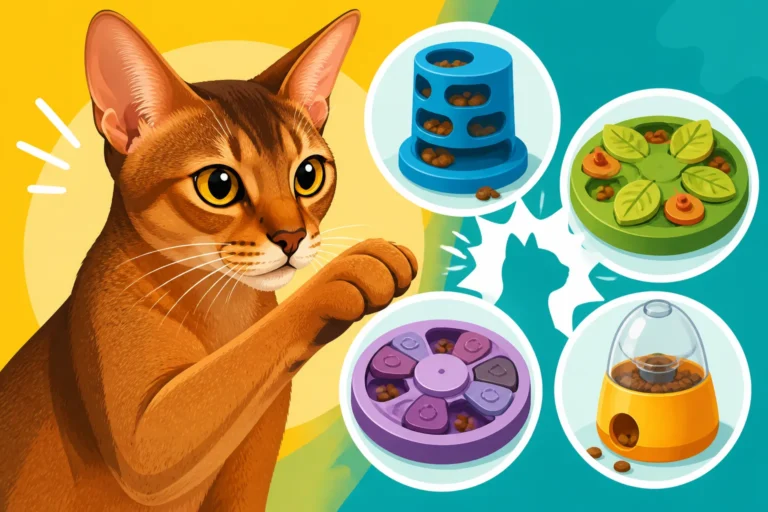
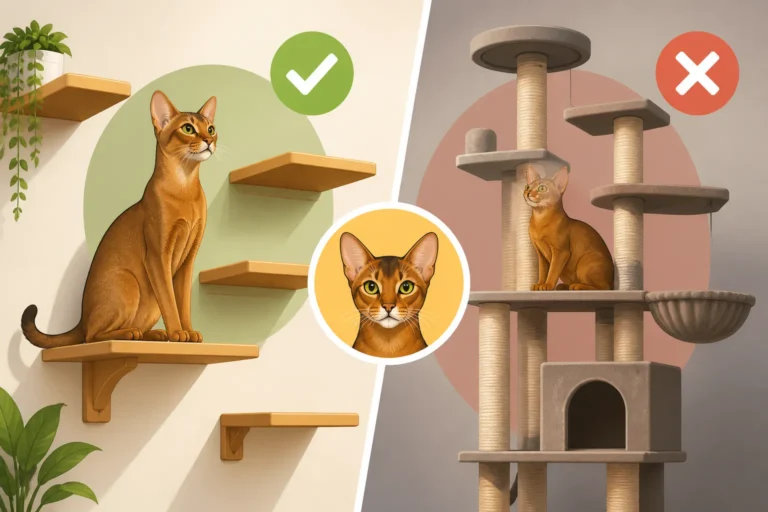
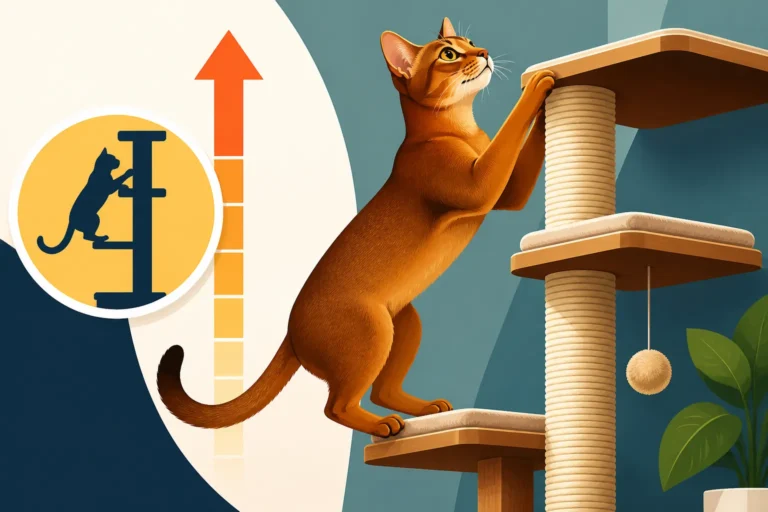
This means daily, dedicated interactive play sessions with wand toys that mimic prey. Think about varying your toys, as Abyssinians can lose interest quickly. Rotate toys regularly and consider puzzle feeders that make them work for their food, satisfying their natural foraging instincts. You can find a vast array of engaging puzzle feeders on Amazon. Vertical space is also incredibly important for Abyssinians; they love to climb and observe their world from high vantage points. Invest in sturdy cat trees, wall-mounted shelves, and window perches to give them safe outlets for their climbing prowess. Why Foraging Suits an Abyssinian's Mind and Why Wall Shelves Work Better Than a Tree for an Abyssinian both offer great advice on this front. By proactively meeting these intrinsic needs, you can ensure your Abyssinian is a happy, well-adjusted member of your family, without ever having to compromise the safety of a smaller, more vulnerable creature.
Disclaimer
This article is for general informational purposes only and does not constitute professional advice. Laws, prices and regulations vary by location and change over time. Consult a qualified professional for guidance on your specific situation.